Some people are born with a hump nose, but in other cases, it can develop into a hump-nose shape due to major or minor nasal injuries while growing up.
The nose is the highest part of the face and is made up of delicate bones, so it is easily injured when bumped. When the nasal bone is impacted and heals, abnormal bone may protrude at the junction where the hard bone meets the soft cartilage, causing the nose to take on a hump-nose appearance or the tip to point downward.
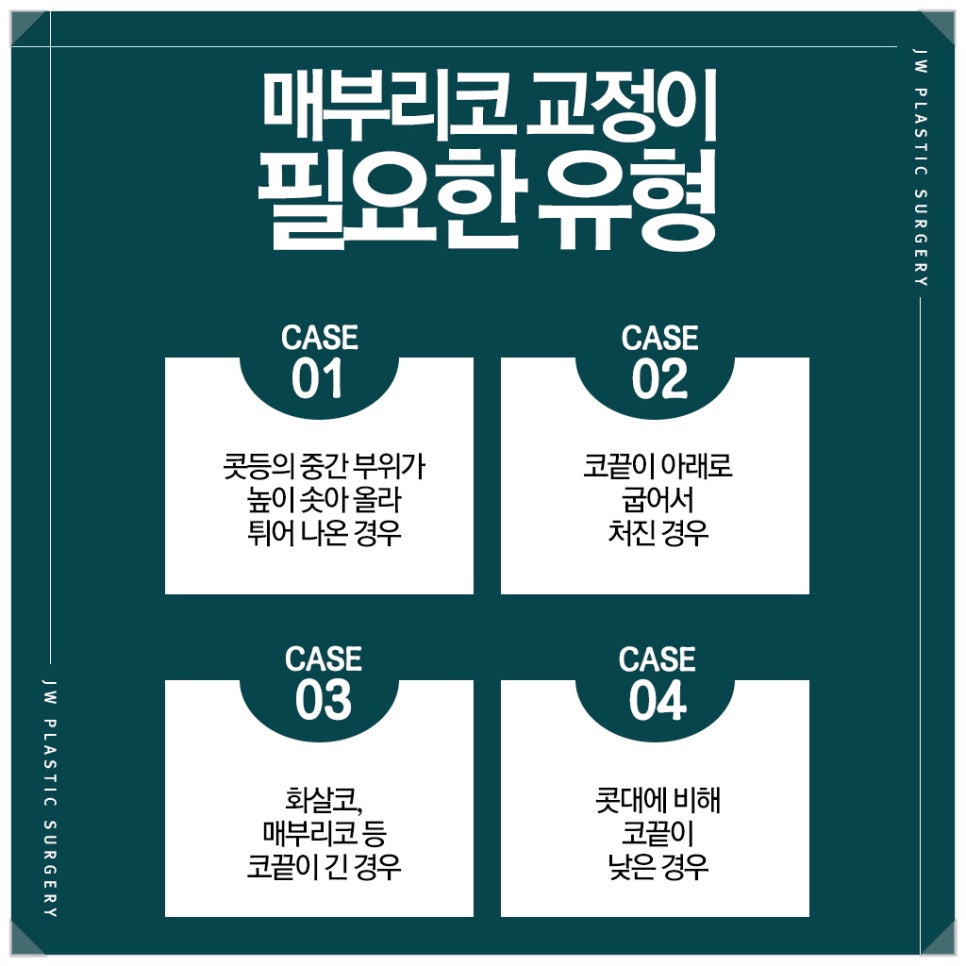
The types of cases that need hump nose correction can be summarized into four categories.
First, when the middle part of the nasal bridge rises high and protrudes
Second, when the tip of the nose bends downward and droops
Third, when the nose tip is long, such as in a hooked nose or hump nose
Fourth, when the tip of the nose is lower than the bridge
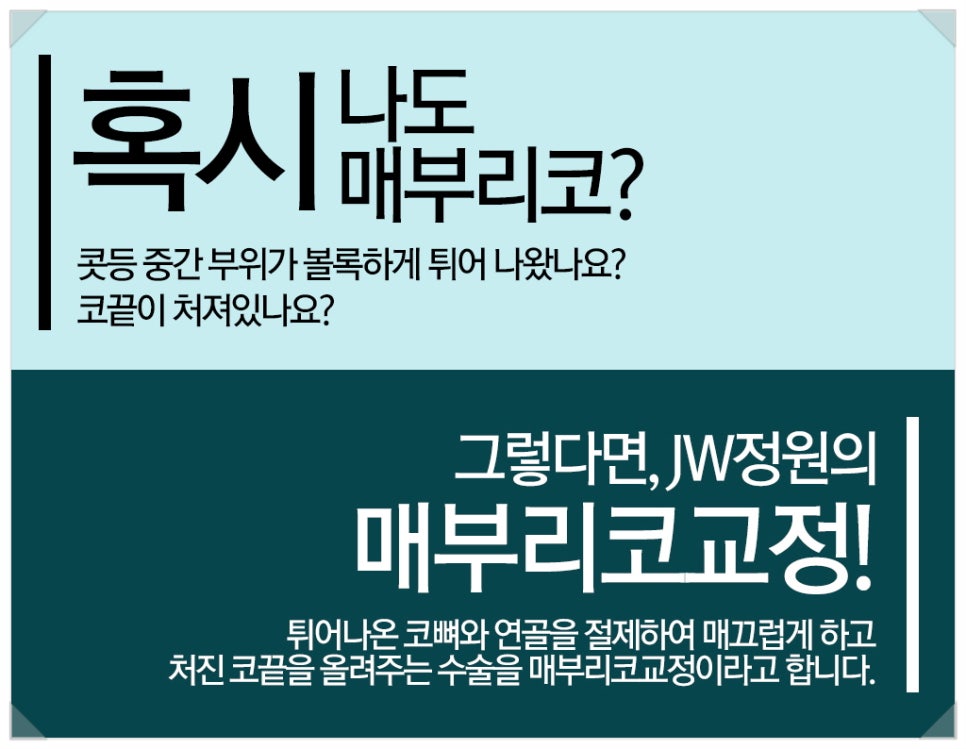
For these various types of hump nose correction, the scope and method of surgery differ depending on which of the four types above applies. To smooth out the protruding area and lift a drooping tip, hump nose correction can be performed without using any foreign materials or implants.
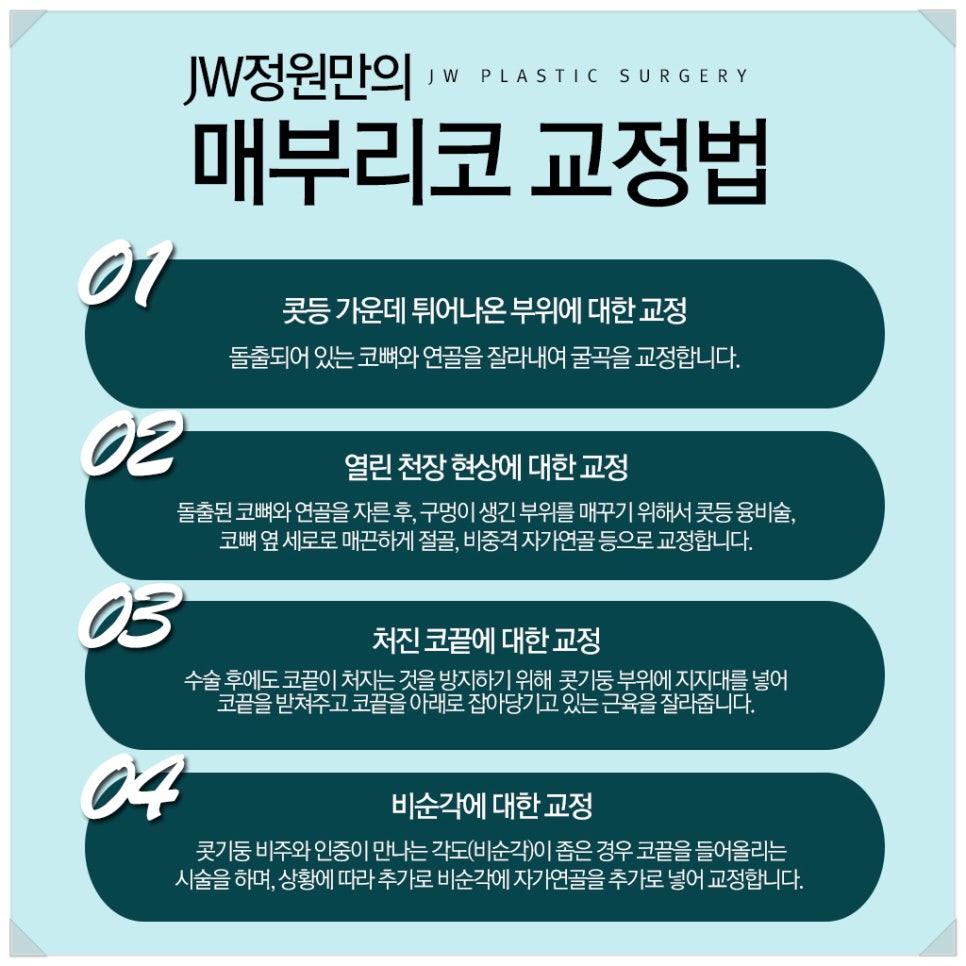
JW Garden's unique hump nose correction methods
01 Correction of the protruding area in the middle of the nasal bridge
The protruding area involves not only bone, but also the simultaneous protrusion of bone and cartilage. Correction is possible by removing the protruding nasal bone and cartilage, but if too much is removed or if the correction is insufficient, irregular contours may form, so it is important to perform the surgery precisely.
02 Correction of the open-roof deformity
Because the nasal bone is very thin, after the protruding bone and cartilage are removed, the area can be left with a hollowed-out appearance, as if a hole has been made.
If such an area is very small, it may be left alone, but if the area is wide, it may be felt when touched, may appear widened in shape, and the side of the nasal bone may feel angular, so correction is recommended.
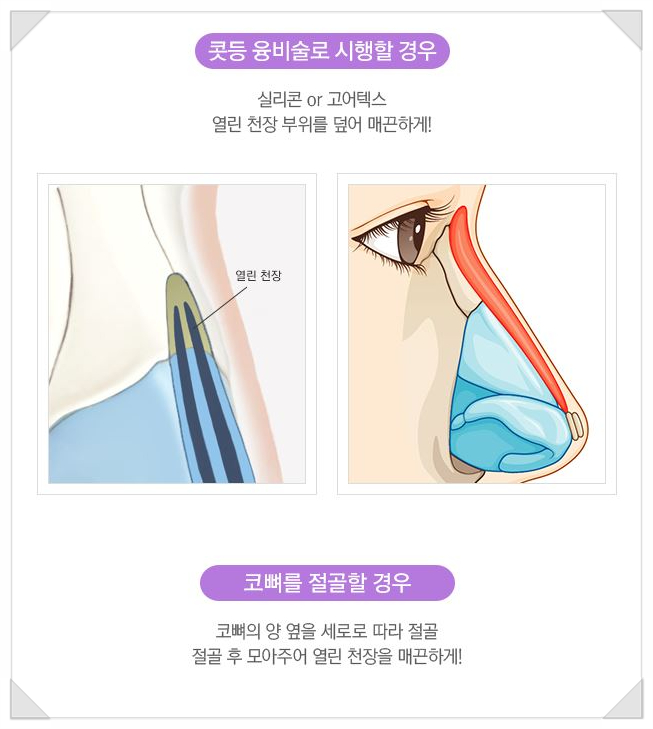
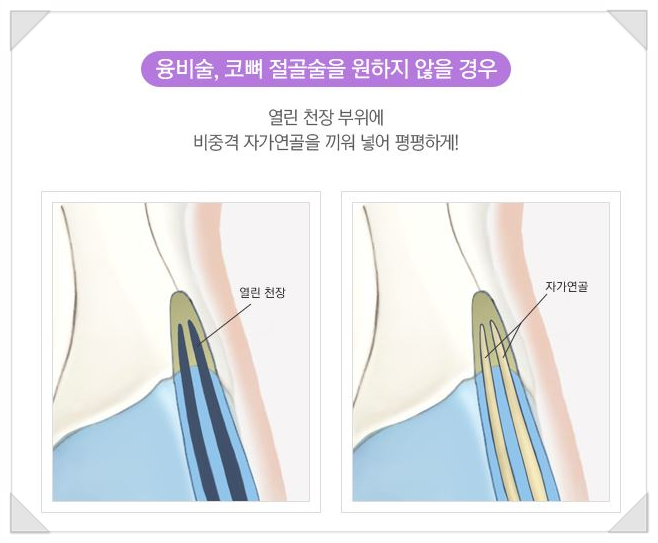
03 Correction of a drooping nasal tip
Nasal tip correction surgery is a procedure that lifts the tip by rearranging the shape and position of the structural cartilage (alar cartilage).
To prevent the nasal tip from drooping and descending again over time after surgery, a support is inserted into the columella to hold up the tip (the support uses autologous septal cartilage), and the muscle pulling the tip downward may also be cut.
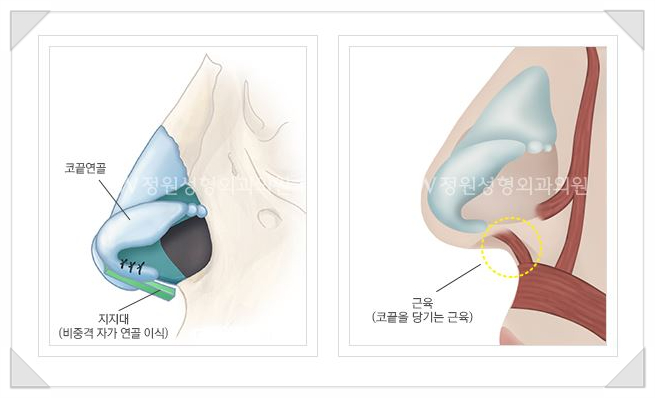
04 Correction of the nasolabial angle
Correction for a narrow nasolabial angle, the angle where the columella and the philtrum meet, is in most cases achieved simply by lifting the tip of the nose (correction for a drooping tip), which also widens the angle. However, depending on the situation, autologous cartilage is additionally inserted above the nasolabial angle for correction.
Because the scope of hump nose correction is determined differently depending on each individual's conditions and desired shape, it is advisable to make the final decision after a detailed examination and an in-depth consultation with a board-certified plastic surgeon.
-
3D CT: Before surgery, a 3D CT three-dimensional analysis is used to perform a detailed, in-depth examination of not only the nasal bone but also the shape, condition, and size of the soft tissue around the nose.
-
3D Morpheus: Through scientific facial analysis, a surgery plan tailored to the individual is established, and the surgical results can be predicted.
-
HD endoscopy: During surgery, sufficient visibility inside the nose makes precise surgery possible, and it can help reduce bleeding, supporting faster recovery.
-
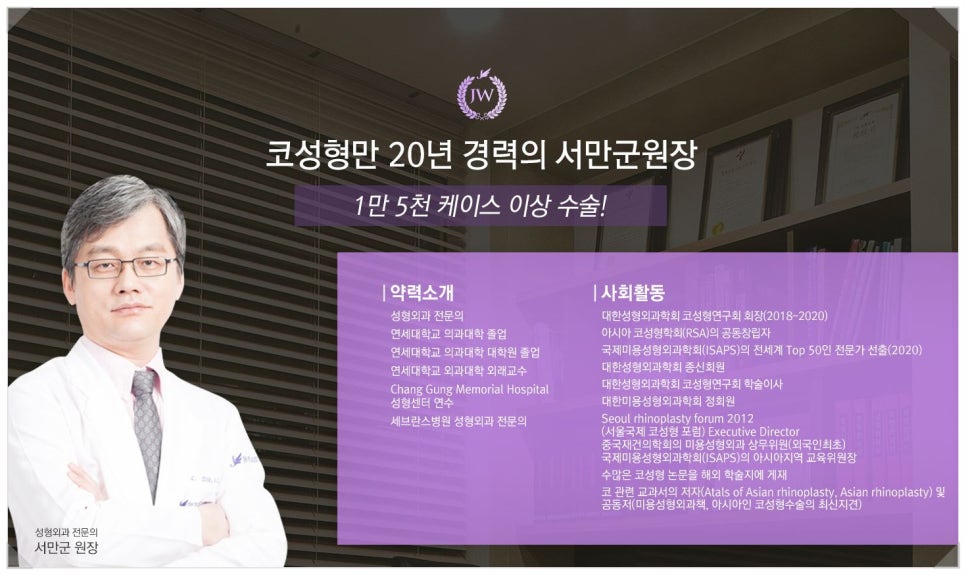
A board-certified plastic surgeon with extensive experience and know-how: Director Seoman-gun, with 20 years of experience in rhinoplasty alone, has performed more than 15,000 surgeries to date and has served as president of the Rhinoplasty Research Group of the Korean Society of Plastic and Reconstructive Surgeons, authored textbooks related to the nose, and taken part in various rhinoplasty papers and academic activities.

If you have inquiries about hump nose correction, please contact us through our website or KakaoTalk.
We will provide detailed guidance.
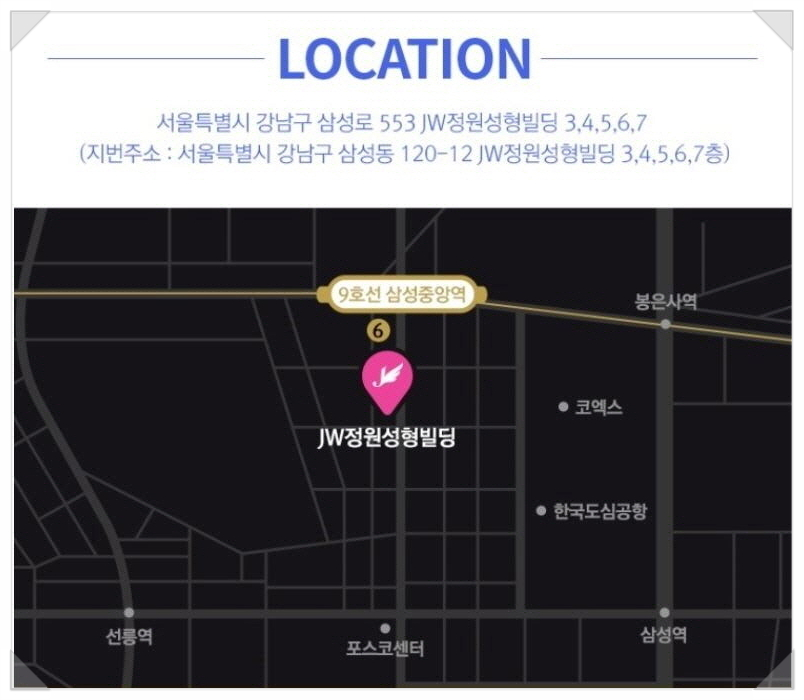
[Phone Consultation]
02.541.5114
[Hours]
Weekdays 10:00 AM ~ 7:00 PM
Saturday 10:00 AM ~ 5:00 PM
(Closed on Sundays and public holidays)