Lower eyelid fat repositioning has steadily increased in popularity over the past few years as one of the rejuvenation procedures, and it has drawn even more attention as celebrities have openly talked about having the surgery. Because of this, many people think that a single lower eyelid fat repositioning procedure can create a younger-looking eye area. However, to achieve satisfactory results, different surgical methods must be applied depending on the cause and degree of aging under the eyes.
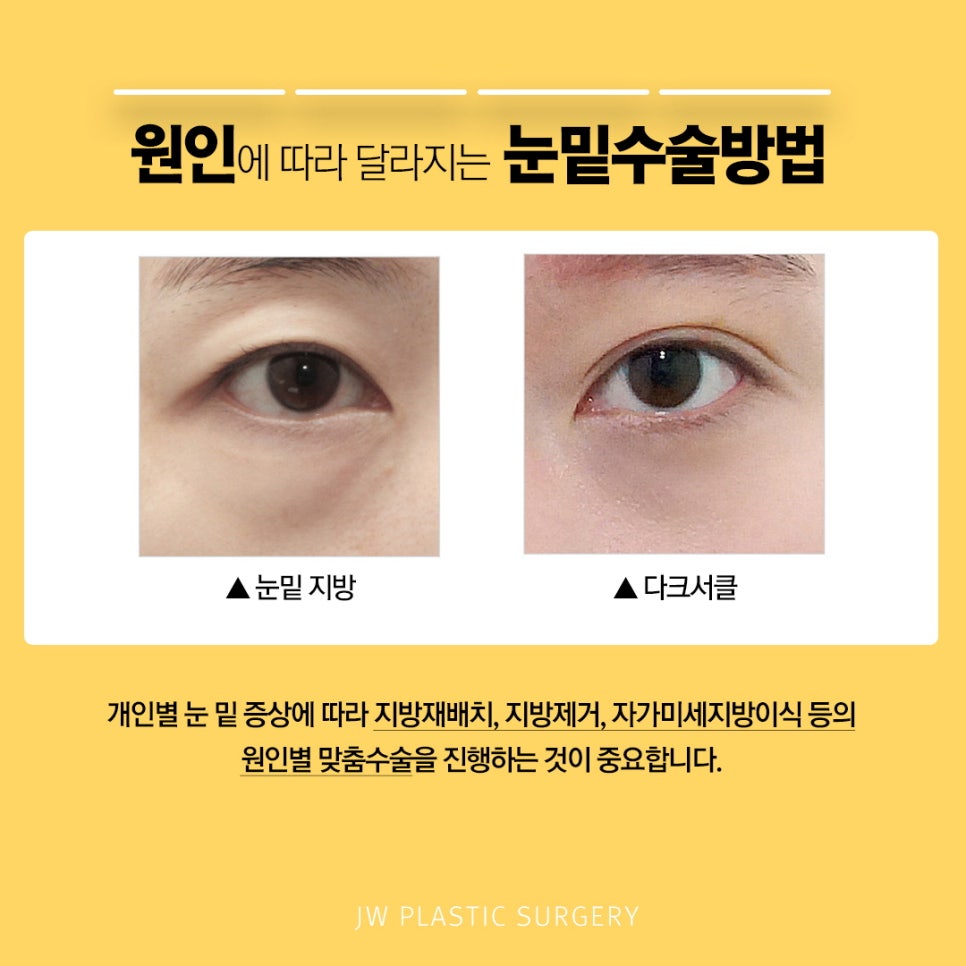
The surgical method for the under-eye area is determined by the amount of fat present under the eyes.
If you have a lot of under-eye fat from birth // if fat has become bulged due to weakened support structures under the eyes // or, conversely, if there is too little under-eye fat and the color of the muscles and tissues shows through, making dark circles look more pronounced, you may see improvement through lower eyelid fat repositioning.
However, if lower eyelid fat repositioning is performed too aggressively, the area under the eyes may instead look sunken, creating a different impression from the original one. Therefore, to maintain appropriate volume under the eyes, it is important to preserve an appropriate amount of fat rather than removing it completely.
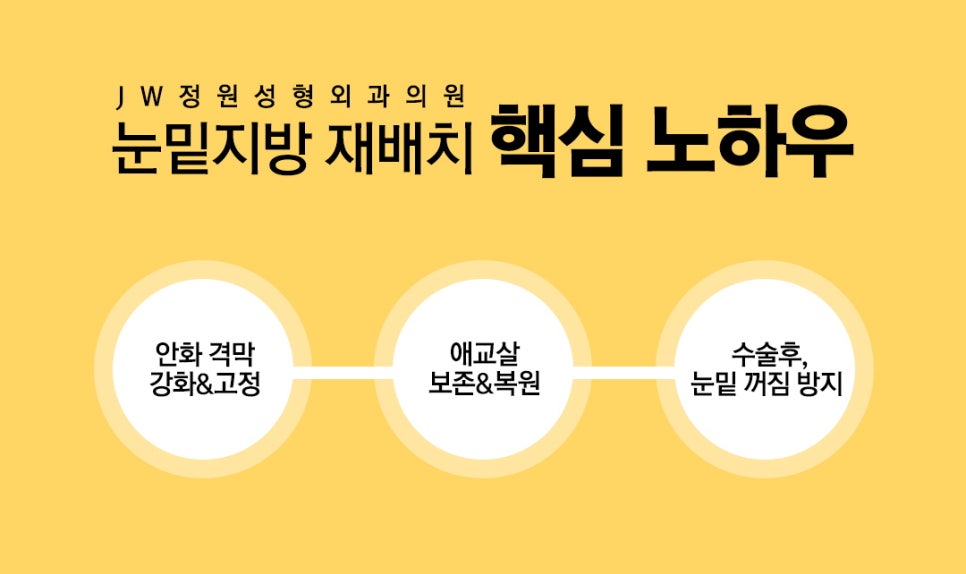
- Reinforcement & fixation of the orbital septum
Under the eyes there is a thin membrane that surrounds the fat.
This is called the orbital septum, and this membrane also stretches with age as aging progresses. As it stretches, the fat becomes more prominent. Therefore, if the procedure includes tightening the stretched orbital septum and then fixing it in place at the same time as fat repositioning, the orbital septum supports the area even if the bulging of the fat recurs, which extends the duration of the results.
- Preservation & restoration of aegyo-sal
The fullness under the eyes gives a youthful and cute impression. However, if lower eyelid fat repositioning or removal surgery is performed too aggressively, the aegyo-sal can also be removed, and the originally cute-looking eyes may be lost. Even if aegyo-sal has disappeared due to an incorrect surgery, it can be created through filler and dermal grafting.
- Preventing hollowing under the eyes after surgery
Even if lower eyelid fat repositioning in your 20s or 30s produces good results, as aging progresses, elasticity decreases and volume is lost compared to right after surgery. Therefore, to maintain appropriate volume under the eyes, it is better to preserve as much fat as needed rather than removing it completely.
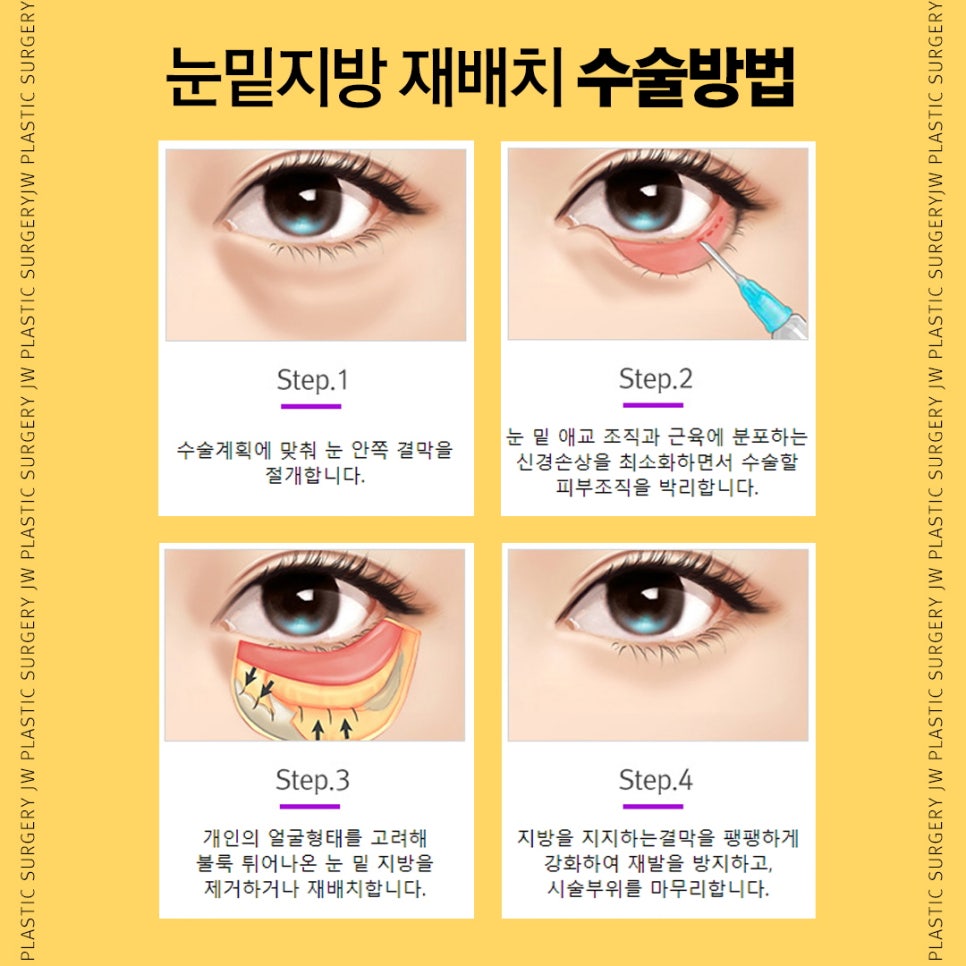
The lower eyelid fat repositioning procedure can be briefly summarized as follows.
Step 01
An incision is made in the inner conjunctiva according to the surgical plan
Step 02
The skin tissue to be operated on is dissected while reducing nerve damage distributed in the aegyo-sal area and muscles under the eyes
Step 03
Taking the individual’s facial shape into account, the bulging under-eye fat is removed or repositioned
Step 04
The conjunctiva that supports the fat is tightened and strengthened to prevent recurrence, and the procedure area is completed
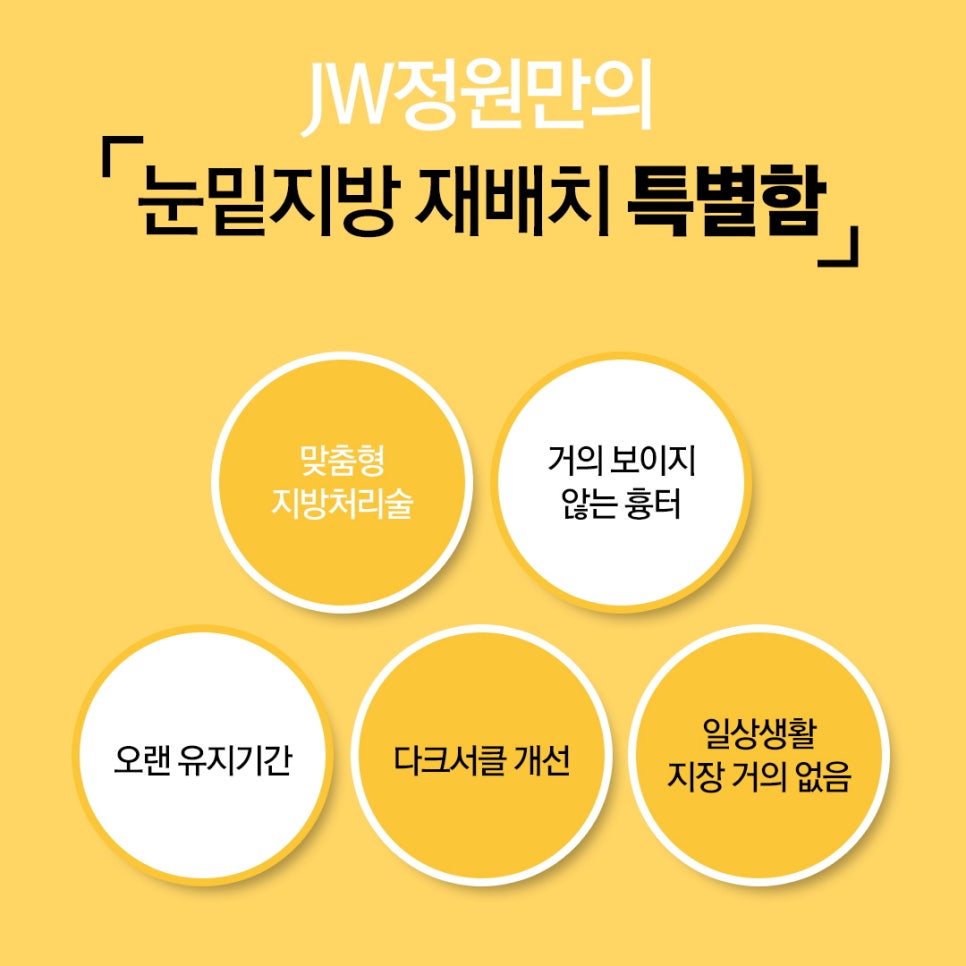
Because combined treatment is performed according to each cause, improvements in dark circles and sagging under the eyes are possible, and the effects can be maintained for a long period of time. Also, because the incision is made in the inner conjunctiva, scars are barely visible, and it has almost no impact on daily life.

Since aging of the skin and the area around the eyes appears differently for each person, to achieve stable results, it is recommended that you receive an accurate diagnosis of your individual condition from a specialist before proceeding with surgery.
JW Jeongwon Plastic Surgery Clinic demonstrates stable surgical skill through extensive clinical results and expertise, and it continues to conduct research and academic activities, identifying the characteristics of the under-eye area and striving to perform surgery suited to those characteristics.


If you contact us via the website or KakaoTalk,
we will help guide you with detailed information.
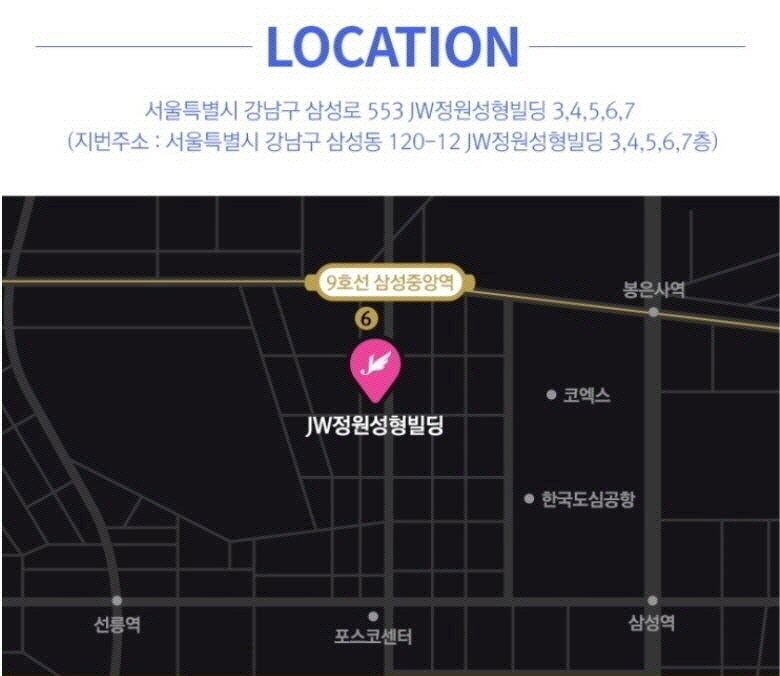
Phone 02.541.5114
Clinic hours
Weekdays 10:00 AM ~ 7:00 PM
Saturday 10:00 AM ~ 5:00 PM
*Closed on Sundays and public holidays