One of the things that worries women as much as wrinkles on the face is sagging breasts. As time passes, the skin of the breasts stretches and the elastic fibers in the breast tissue degenerate, causing firm breasts to droop downward and become lax.
The surgery performed to correct this condition is sagging breast surgery.
Breast sagging can occur due to pregnancy and childbirth, rapid weight loss, or natural aging. It is not only aesthetically unappealing, but can also cause discomfort as the skin sags.
With sagging breast surgery, it is possible not only to improve the breasts into a firmer, fuller shape, but also to reduce enlarged areolas to an appropriate size.
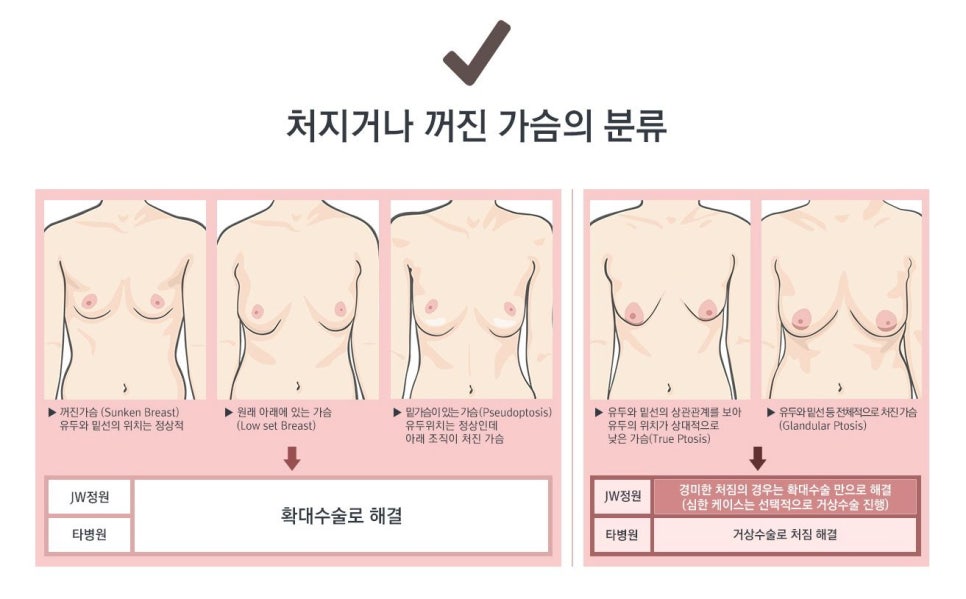
Looking at the 기준 for determining sagging breasts,
Based on the inframammary fold, the degree of ptosis can be assessed according to how far the nipple has descended.
A normal breast has the nipple positioned about 4–5 cm above the inframammary fold.
If the nipple has descended to within 1 cm below the breast crease, 1–3 cm below, or more than 3 cm below, the degree of sagging can be classified into stages.
The surgical method also changes depending on these stages.
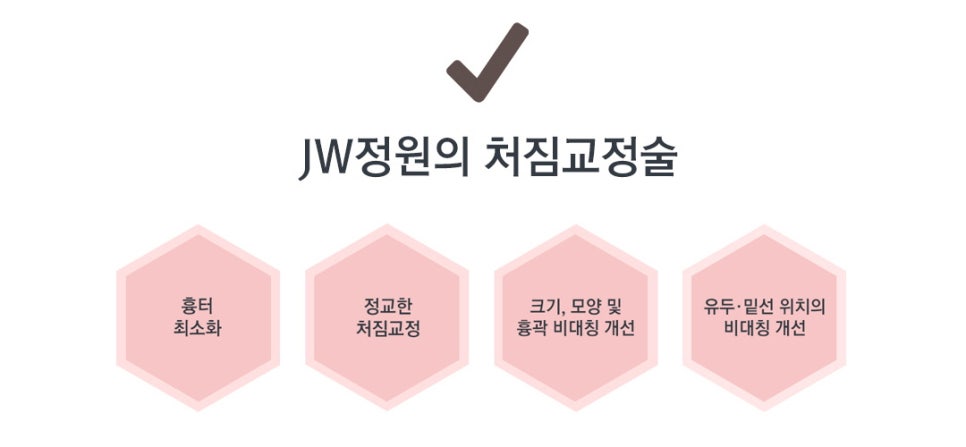
At this point, when most people think of sagging breasts, they may assume that a lifting surgery is needed for correction, but the drawback is that the scar is visible from the front.
To compensate for this drawback, our clinic narrows the range of candidates who need lifting surgery. For cases where the breasts are relatively small and the sagging is not severe, we carefully apply an appropriate augmentation method instead of a lifting procedure, and address the issue through methods such as internal lifting (adjusting the amount of muscle dissection with the dual-plane method, internal lifting fixation method).
In addition, by correcting asymmetry in breast size, chest wall shape, and nipple position, we can expect even more satisfying results.
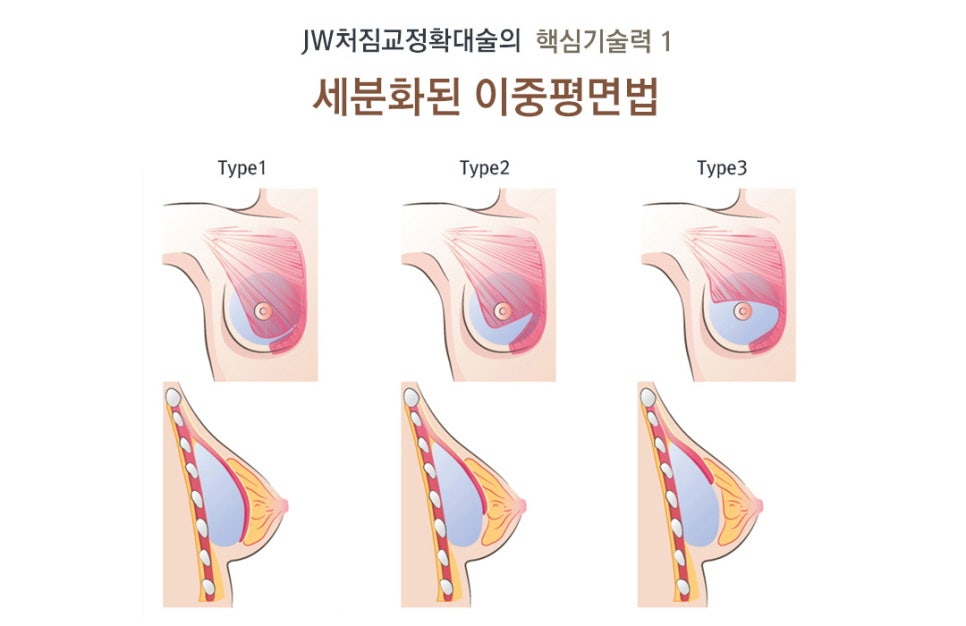
Core technology 1 of sagging breast surgery
[Refined dual-plane method]
When inserting a breast implant, placing the implant under the pectoralis major muscle allows the muscle to wrap around the implant, resulting in a more natural feel. The dual-plane method makes an incision in the lower part of the pectoralis major muscle to relieve muscle tension, helping achieve a more natural shape and feel.
In addition, the force of the incised and dissected muscle moving upward can help lift the breast along with it, making this an especially useful method for sagging breasts. This dual-plane method is applied in different types depending on the degree of breast sagging.
*Our clinic's dual-plane method is a technique developed through extensive experience. It is classified into types 0.5 to 3.0 (in 0.1 increments) and performed in finer divisions, allowing precise correction of sagging and asymmetry.
Core technology 2 of sagging breast surgery
[Effective use of inframammary fold incision]
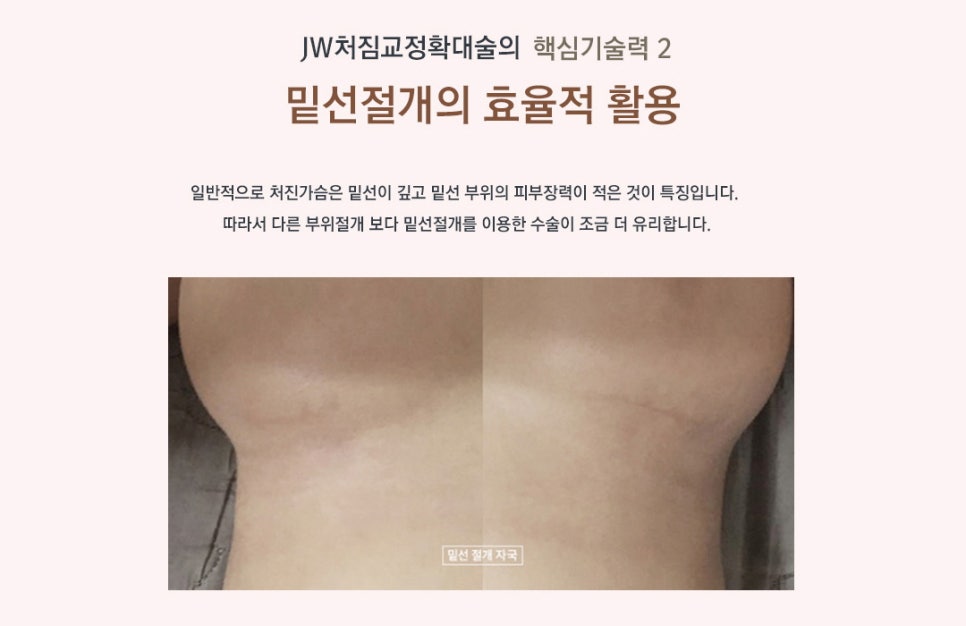
In general, sagging breasts are characterized by a deep inframammary fold and low skin tension in that area. Therefore, surgery using an inframammary fold incision is somewhat more advantageous than incisions in other areas.
"When performing sagging breast surgery with an inframammary fold incision"
01 Scarring is minimal and hidden within the inframammary fold
02 Level adjustment is easier with the dual-plane method -> nipple position asymmetry can be corrected
03 Inframammary fold asymmetry can be corrected
04 Excess skin can be removed -> resolves skin sagging and corrects asymmetry in skin volume
In addition, there is no need to wear a drain, and arm movement is easier immediately after surgery, so there is less burden on housework, childcare, and work life.

Core technology 3 of sagging breast surgery
[Implant selection]
Even implants of the same type can differ depending on the manufacturer.
Understanding the characteristics of each implant and choosing the appropriate one according to the breast condition and body type is one of the important steps in breast augmentation.
Core technology 4 of sagging breast surgery
[Asymmetry correction]
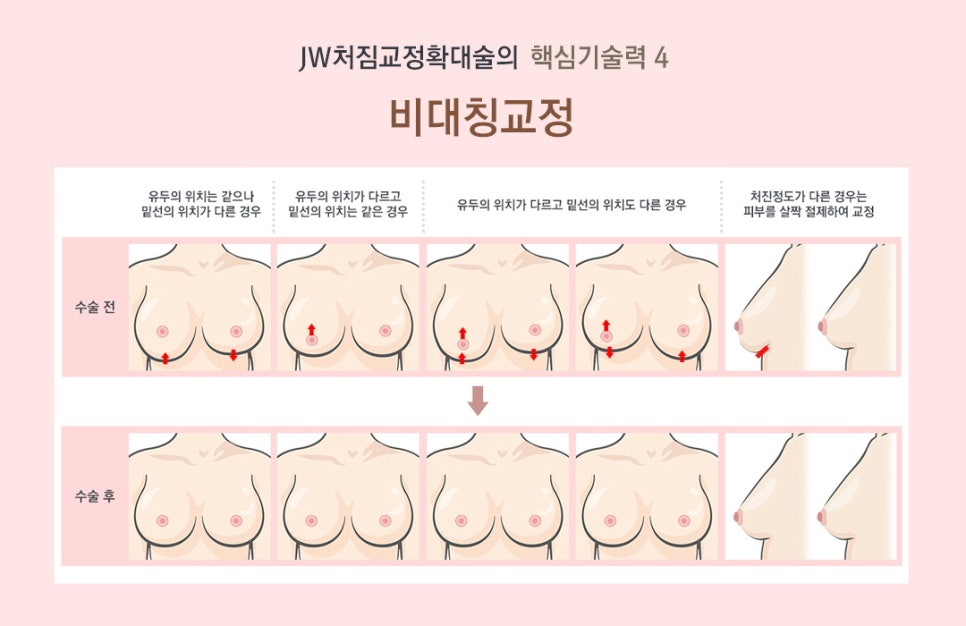
Asymmetry in breast size can be compensated for by using implants of different sizes in each breast or by performing different amounts of fat grafting. However, correcting asymmetry in nipple height, inframammary fold position, and even skin volume is highly challenging.
With differentiated technical expertise, JW Jeongwon can correct nipple position asymmetry by finely adjusting the level of the dual-plane dissection, and in cases of inframammary fold position asymmetry, improvement can be achieved by making different inframammary fold corrections on the chest wall.