To get Ultherapy well at Munjeong Dermatology
What is the important point?
Munjeong Dermatology (Department: Dermatology)
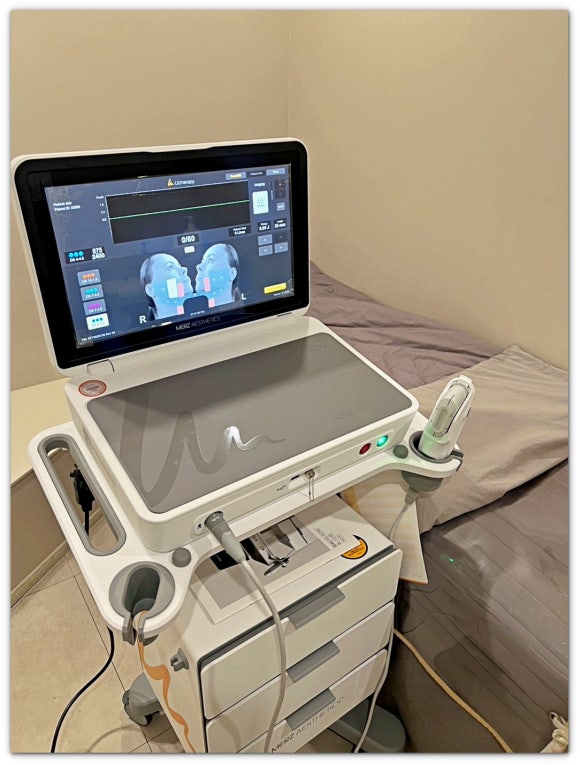
'I keep hearing about Ultherapy from everyone around me,
how can I get it more effectively?
I’m curious about what I should pay attention to.'
As Ultherapy procedures are mentioned more and more, whether through broadcasts or online, I can clearly feel that the number of people taking an interest has increased.
However, there does not seem to be much important information about how to receive it more effectively and safely, so I’m writing this today as well.
From the basic principles of Ultherapy and when you can expect to see results, to what you should pay attention to in order to receive it 'well,' I’ll explain in detail.
Munjeong Dermatology Ultherapy
What is the important point?
-
The principle of Ultherapy
-
When can you see results?
-
What is Ultherapy Prime?
-
How can you get it 'well'?
Munjeong Dermatology (Department: Dermatology)
The principle of Ultherapy
To understand Ultherapy well, it is best to first understand High-Intensity Focused Ultrasound (HIFU) technology.
If you remember using a magnifying glass as a child to focus sunlight and burn paper, it may be easier to understand.
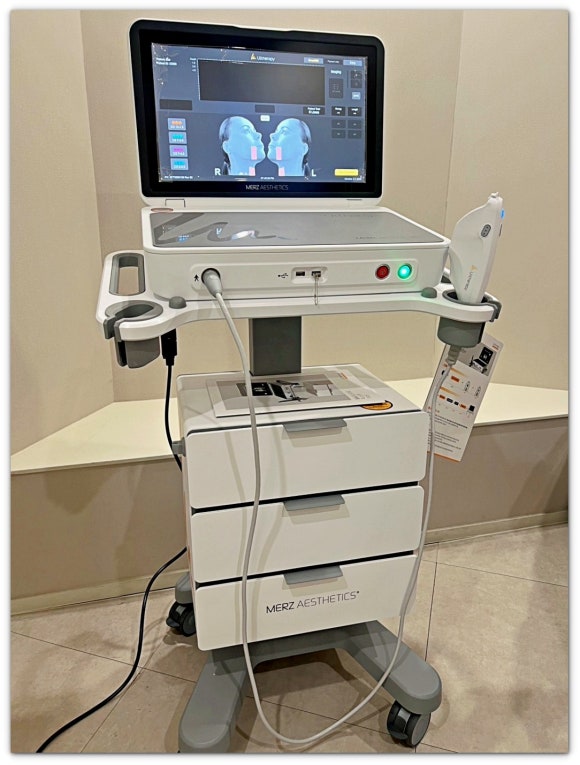
Ultherapy works in a similar way, concentrating ultrasound energy into one point to stimulate the SMAS layer deep in the skin.
At this time, the energy reaches the target fascia layer directly without damaging the skin surface.
This fascia layer plays a very important role in our face.
If this skin layer, which is connected from the scalp to the neck, becomes loose, facial elasticity can easily collapse.
Ultherapy applies 60–70 degrees of heat to this area, causing the tissue to contract and inducing new collagen production.
Simply put, it stimulates the part that serves as the framework of our skin to restore elasticity.
Munjeong Dermatology (Department: Dermatology)
When can you see results?
Usually, new collagen begins to form about 3 weeks after the procedure, and the effects become more noticeable over 3 to 6 months.
Although there are individual differences, the effects usually last for about 1 year.
That is why many people receive maintenance treatment about once a year.
Munjeong Dermatology (Department: Dermatology)
What is Ultherapy Prime?
Many people also ask about the difference between Ultherapy and Ultherapy Prime.
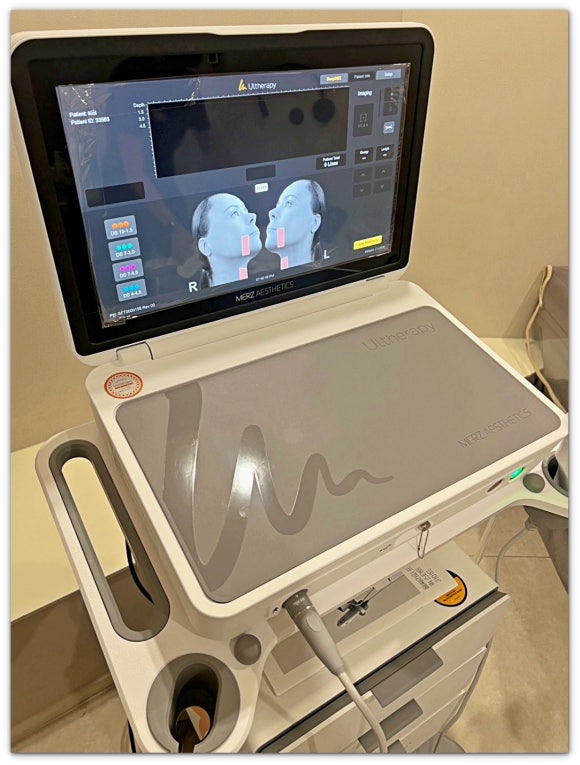
Ultherapy Prime is an upgraded version of the device compared to Ultherapy.
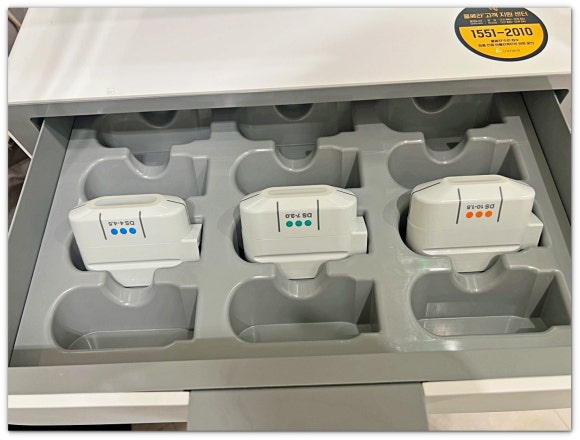
Looking at what has improved specifically, the existing Ultherapy could only observe up to a depth of 4.5 mm within the skin, while Prime has been expanded to 8 mm.
This means it can better visualize and deliver energy even in people with thicker skin or more advanced sagging.
One of Ultherapy’s defining features is that the procedure can be performed while directly viewing the skin layers on a screen, and the image quality of that screen has been greatly improved.
Noise has been reduced and resolution has increased, making it easier to identify the structure of the skin layers more clearly.
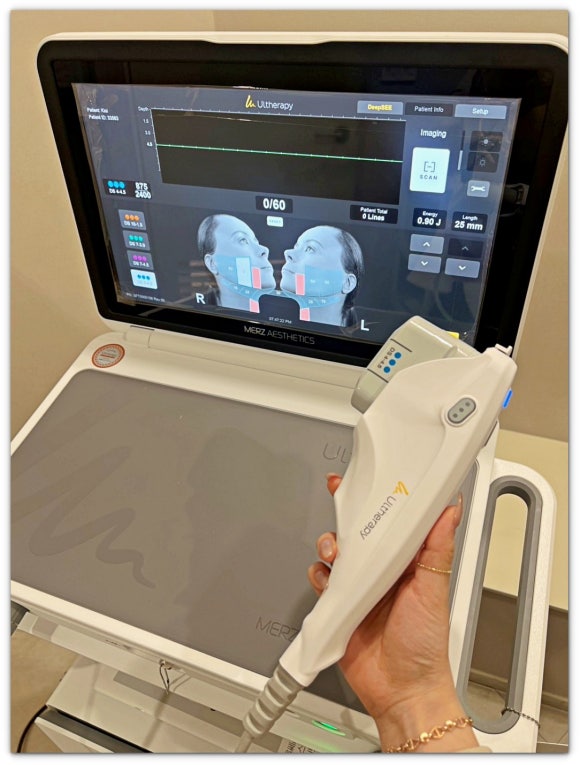
As a result, it is very helpful for delivering energy to the correct location more accurately.
It is also much more convenient for the practitioner.
Touch response is faster and screen transitions are smoother, which shortens procedure time and reduces fatigue.
Munjeong Dermatology (Department: Dermatology)
How can you get it 'well'?
Then let’s talk about how to get this Ultherapy procedure 'well.'
First of all, careful consultation is more important than anything else.
Since everyone’s skin thickness, degree of elasticity, fat distribution, and even bone structure are different, the procedure should not be performed in exactly the same way for everyone.
Therefore, it is important to check whether the clinic first carefully assesses the individual’s skin condition and structure before proceeding.
During the consultation process, it is also worth noting whether they ask about medications currently being taken or any recent procedure history.
If you recently had another lifting procedure, the interval between procedures may need to be extended to prevent skin irritation, so these details are important.
In addition, the experience and skill of the practitioner are important.
Many people tend to think that if the device is good, the results will naturally follow.
That is partly true. Of course, as the equipment is upgraded, convenience improves and the likelihood of seeing good results can increase.
However, how many shots to deliver to which area and how to set the energy level are entirely up to the practitioner’s judgment.
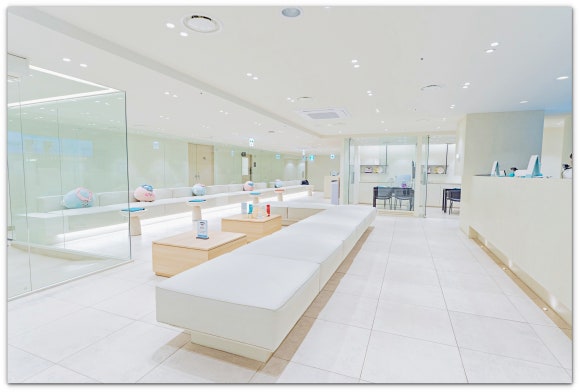
So,
'Usually, many people receive around 600 shots,
so we can proceed with that amount.'
'Your face is small, so 300 shots should be enough.'
rather than this kind of approach,
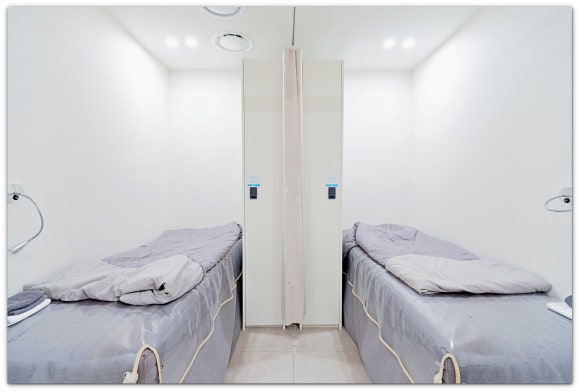
'I’ll give more shots to the jawline and the outer cheek area,
since the sagging is more severe there.'
'Because your skin is sensitive, proceeding with 600 shots
may be too much strain,
so it would be better to start with 300 shots.'
Please check whether they present a specific treatment plan tailored to your skin like this.
Today, for those considering Ultherapy at Munjeong Dermatology (Department: Dermatology), I shared what you should do to receive it 'well.'
When consulting, I hope you will be sure to check whether they take enough time to carefully assess your skin and whether they create a customized treatment plan just for you before deciding.
Thank you. This has been Jamsil UNNI^^
< How to Find a Good Dermatology Clinic in Jamsil? >
< Directions to UNNI Clinic Jamsil Branch >