Before having a mole removed in Jamsil, there are 3 things you should definitely check first.
Jamsil U&I Clinic
"I’m thinking about going to Jamsil to have a mole removed.
Is it okay to just go somewhere nearby?"
Since there are many places in the Jamsil–Songpa area that offer mole removal, many people find it difficult to make a decision once they start looking into it because there is simply too much information.
You may think that since mole removal is a simple procedure, it is fine to go somewhere nearby, but you may also worry about whether the area might become irritated or develop complications.
Today, I will summarize three points worth reviewing once more before deciding on mole removal in Jamsil.
I hope this post will be helpful to those who are unsure where to go.
Before having a mole removed in Jamsil,
3 things you should definitely check
-
First, find out what type of mole you have
-
Check whether it is in an area prone to scarring
-
Learn how to care for the area afterward
Jamsil mole removal
First, find out what type of mole you have
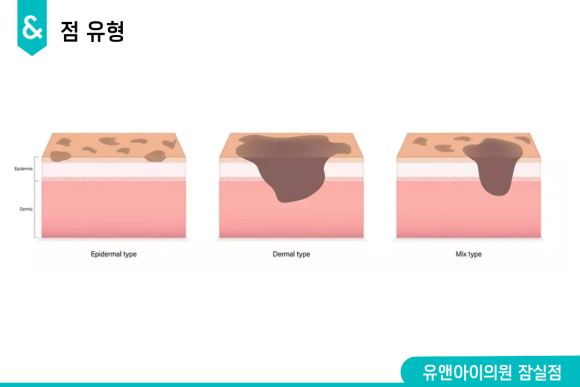
Although moles may look similar on the surface, they are located at different depths within the skin.
They can be broadly divided into three types.
These are epidermal nevi, which are located flat and close to the surface; compound nevi, which extend across the area between the epidermis and dermis; and intradermal nevi, which extend into the deeper layers of the dermis.
How can you tell them apart by appearance?
If the mole is flat and only appears darker in color, it is more likely to be located close to the epidermis.
If it is slightly raised and feels like a small bump when touched, it often extends into the dermis.
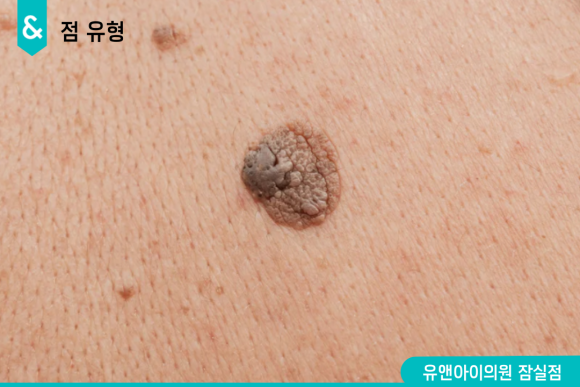
Moles that are larger than 6 mm or protrude noticeably are also often located deep in the dermis.
However, some moles are difficult to assess based on self-judgment alone.
For a mole with an irregular shape, blurred borders, or uneven color with darker areas, distinguishing whether it is benign or malignant may need to come before assessing its depth.
For such moles, it is safer to undergo a diagnostic process, such as a tissue examination, before attempting removal rather than removing them forcefully.
Jamsil mole removal
Check whether it is in an area prone to scarring
Even with a mole at the same depth, the outcome can vary depending on where it is located.
Some areas are particularly prone to scarring or leaving marks after mole removal.
These include the area between the eyebrows, the nose, around the mouth, and the chin.

These areas have a high concentration of sebaceous glands, making them more likely to leave marks during skin regeneration. They are also areas where the facial muscles move frequently, causing repeated minor irritation to the skin during recovery.
The area around the eyes and the corners of the mouth, where the skin is thin, should likewise be evaluated carefully.
For moles in these areas, it is often safer to approach them gradually over several sessions rather than going deeply in at once.
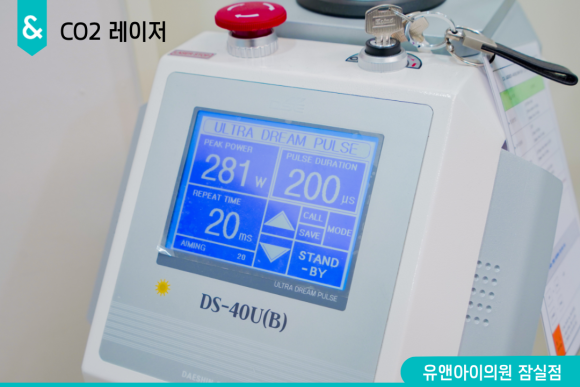
By adjusting the depth without exceeding the skin’s ability to recover on its own, and allowing recovery intervals before the next session, the likelihood of scarring can be reduced.
This is why the recommendation that a mole should be removed “in multiple sessions” is often a clinical judgment intended to reduce skin damage while improving the outcome, rather than simply a way to charge more.
Jamsil mole removal
Learn how to care for the area afterward
Many people think of the day the mole is removed as the “end,” but the outcome is determined by the recovery process that follows.
The scab that forms immediately after the procedure usually falls off naturally within 7–10 days.
If you remove the scab intentionally or irritate the area during this period, it is more likely to lead to hyperpigmentation or a lasting mark.
After the scab falls off, new skin continues to form. During this period, sun protection is especially important.
If recovering skin is exposed directly to ultraviolet rays, the area can darken easily, so you should apply sunscreen carefully for at least one month after the procedure.
Also, if the mole appears to have returned after the procedure, two possibilities need to be distinguished.
It is necessary to determine whether the color is temporary hyperpigmentation occurring during the recovery process or whether the mole has actually regrown because its root remains.
Hyperpigmentation often fades over time, but if it is a true recurrence, additional treatment in a subsequent session may be needed.
This can be determined by checking the area again one month and three months after the procedure.
Jamsil mole removal is not simply the act of removing a mole. It is a process of “accurately understanding your mole, examining where it is located, and monitoring it afterward as well.”
If even one of these three points is overlooked, the outcome may differ even with the same procedure.
Choosing a place that considers what type of mole you have, where it is located, and how it recovers afterward is a way to save both time and money.
I hope this post will be of some help to those looking into mole removal in Jamsil as they make their decision.
Thank you. This was Jamsil U&I Clinic^^
< How to Find a Good Dermatology Clinic in Jamsil? >
< Jamsil U&I Clinic Hours >
Weekdays: 10:00 a.m. – 8:30 p.m.
Saturdays: 10:00 a.m. – 5:00 p.m.
(Consultations available without a lunch break)
< Directions >
Jamsil U&I Clinic
is located in the Lotte World Wellbeing Center.