Songpa Ultherapy lifting,
Why the procedure is performed while viewing the inside of the skin
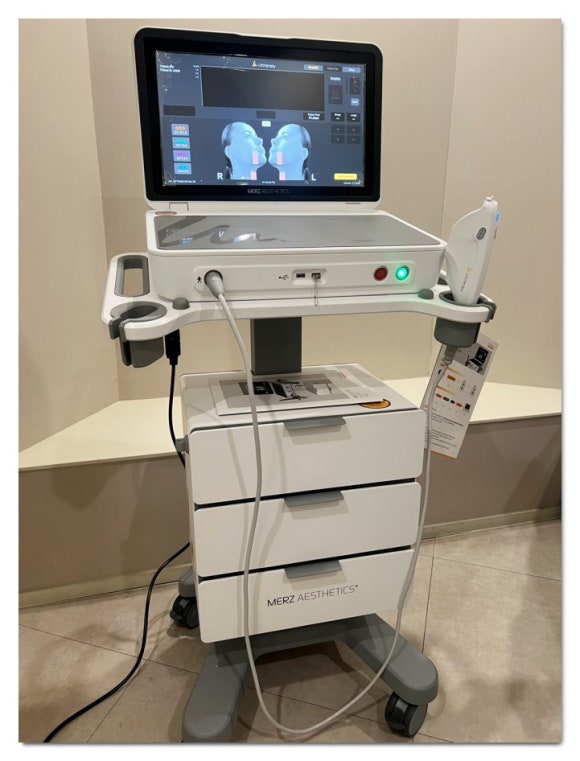
Second-generation Ultherapy Prime
"Among the many lifting devices,
why is Ultherapy known for producing good results?"
Ultherapy is a representative ultrasound lifting device and is one of the procedures widely known for its effectiveness.
However, I am writing this column today because I would like to point out that there are many important features to consider, rather than choosing it simply because it is well known.
Above all, its greatest feature is that the tissue beneath the skin can be viewed on an ultrasound screen. This allows for a more precise procedure and tends to produce good results.
From now on, I will explain step by step how Ultherapy works beneath the skin and why the same approach cannot be used for everyone.
Table of Contents
-
What are the principles and features of Ultherapy Prime?
-
Why are multiple depths necessary?
-
Is a higher number of shots better?
-
Songpa
What are the principles and features of Ultherapy Prime?
Ultherapy uses microfocused ultrasound to create small thermal coagulation points at predetermined depths beneath the skin.
In simple terms, rather than heating the entire surface of the skin at once, it creates small, point-shaped areas of thermal stimulation at the targeted depth.
The treated tissue may then undergo a response in which collagen is newly produced and reorganized.
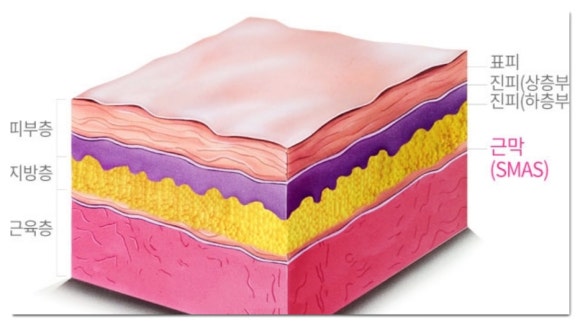
Ultherapy delivers energy to the deep fascial layer of the skin, the SMAS layer.
You may have encountered this explanation in descriptions of other ultrasound lifting procedures as well.
One more point I would like you to know when understanding Ultherapy is its “ability to perform the procedure while directly viewing the inside of the skin.”
Ultherapy uses real-time ultrasound imaging to view the dermis and subcutaneous tissue beneath the skin.
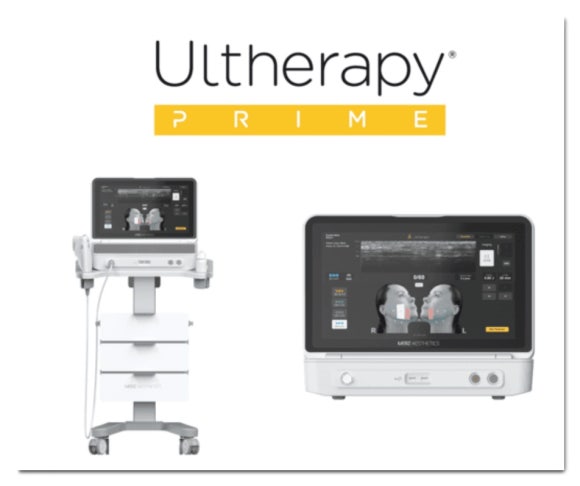
The second-generation Ultherapy Prime has a wider and clearer display.
The imaging function makes it possible to check the layers beneath the skin, determine whether the depth is appropriate, and deliver energy precisely to the targeted area.
The information obtained by looking at the facial contours from the outside is different from that obtained by directly viewing the tissue layers beneath the skin, and this can also affect the results.
In particular, the second-generation Ultherapy Prime has a larger display with less noise and greater clarity, which is very helpful when referring to the screen during the procedure. ^^
Songpa Ultherapy
- Why are multiple depths necessary?
Ultherapy has transducers that deliver energy at different depths, such as 1.5 mm, 3.0 mm, and 4.5 mm.
Looking only at the numbers, it is easy to think, “Since 4.5 mm is the deepest, isn’t it the strongest and most effective?” However, it cannot actually be viewed that simply.
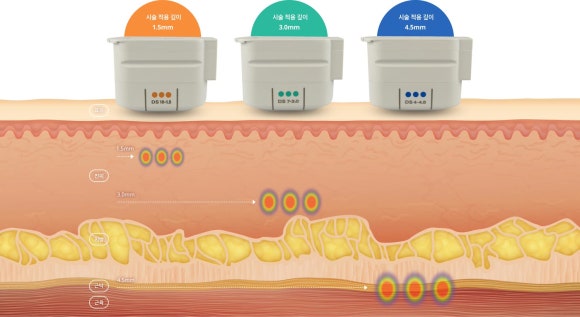
Different skin layers are treated using transducers with different depths.
The three transducer depths do not represent differences in intensity; rather, they target different tissue layers.
-
1.5 mm targets the upper dermis just below the epidermis and contributes to improving fine lines and skin texture,
-
3.0 mm stimulates the deeper dermal layer to improve firmness, and
-
4.5 mm reaches the SMAS, the fascial layer, and helps lift sagging at a structural level.
In other words, 4.5 mm is not a stronger transducer. It is a transducer suited to a specific problem: sagging of the deep fascial layer beneath the skin. ^^
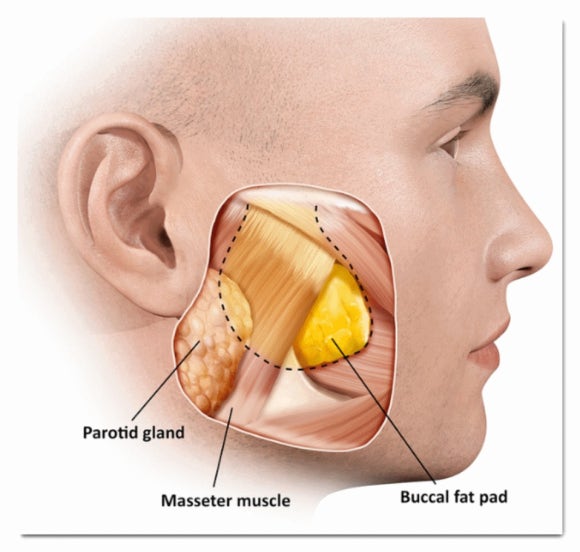
For this reason, if the thickness of the skin layers and the depth at which the tissue is distributed differ from person to person, the results may vary even when the same 4.5 mm transducer is used.
In lifting consultations, some people may have a jawline that appears less defined, while others may have sagging cheeks that make the area around the nasolabial folds look heavier.
Conversely, some people may appear hollow-faced due to volume loss rather than sagging. In such cases, another approach may be more appropriate than an approach focused on lifting the SMAS.
Songpa Ultherapy
- Is a higher number of shots better?
When learning about Ultherapy, the easiest number to compare is the number of shots.
Because the number is clearly stated—such as 300 or 600 shots—it is easy to expect a greater change with a higher number.
However, even with the same number of shots, the results can vary greatly depending on which areas are treated and which depth of tip is used to deliver the energy.
In particular, if the number of shots is increased excessively in areas where the face is already significantly hollow or the fat layer is thin, this may instead lead to side effects such as cheek hollowing, so caution is necessary.
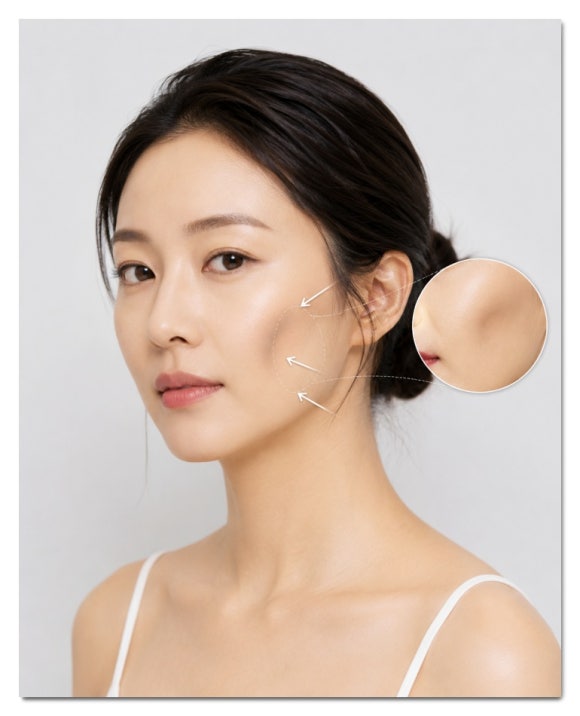
When there is little fat, excessive Ultherapy treatment may raise concerns about side effects such as cheek hollowing.
It is true that Ultherapy can be an option that helps with lifting, but this does not mean that a single device can address every facial concern.
Therefore, the key factor affecting the results is not the number of shots itself, but “where and how precisely they are distributed.”
For this reason, during a consultation, I recommend checking not only the total number of shots but also which areas will be treated, which tips will be used, and how the shots will be distributed.
Today, we looked at the differences in treatment depth and shot numbers through the principles and features of Songpa Ultherapy.
Because the thickness and distribution of the tissue layers vary depending on age, treatment area, and skin characteristics,
the fact that the same device, Ultherapy Prime, is used does not mean that every face can be assessed under the same conditions.
Therefore, I hope you will begin with a careful assessment of your skin condition. I will wrap up here.
Thank you. This was U&i Jamsil. ^^
< How to Find a Good Dermatology Clinic in Jamsil? >
< U&i Jamsil Clinic Hours >
Weekdays: 10:00 a.m. to 8:30 p.m.
Saturdays: 10:00 a.m. to 5:00 p.m.
(Consultations are available without a lunch break)
< Directions >
U&i Clinic’s Jamsil branch
is located in Lotte World Wellbeing Center.