Hello, this is S Leader Dental Hospital located in Gwangjin-gu, Konkuk University Orthodontic Clinic.
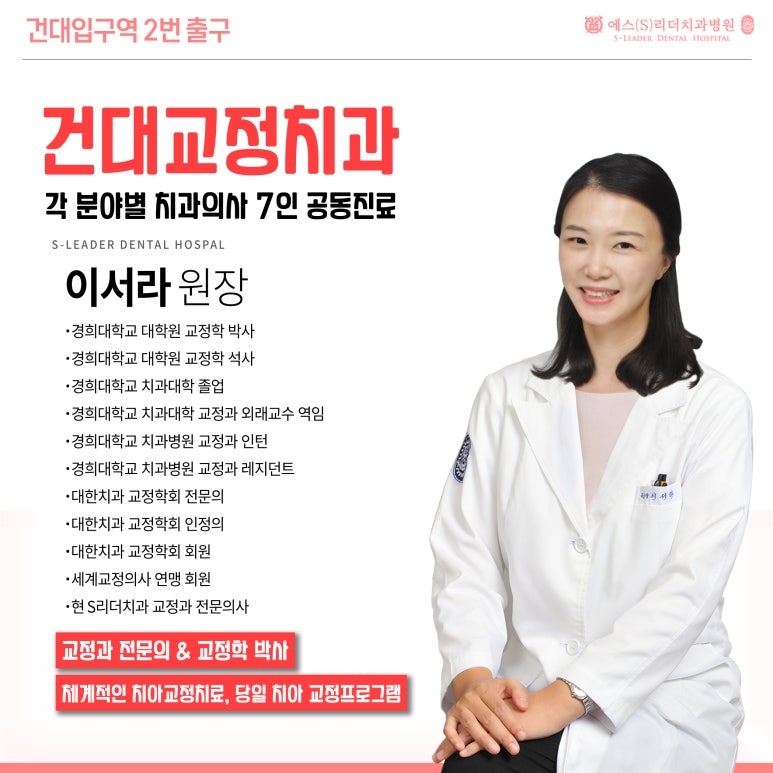
Orthodontic treatment is not only for cosmetic purposes, such as creating straight teeth, but also an important treatment for improving functional problems in the teeth and temporomandibular joints and maintaining long-term oral health. Many people mistakenly think orthodontic treatment can only be done in childhood, but in reality the demand for adult orthodontics is steadily increasing, and thanks to advances in technology, more efficient and precise orthodontic treatment is now possible regardless of age.
If the teeth are not evenly aligned, chewing function may decline, food can easily get stuck between the teeth, increasing the likelihood of cavities and gum disease, and in severe cases it may lead to secondary symptoms such as jaw joint disorders, headaches, and indigestion. For that reason, it should not be dismissed as merely an appearance issue.
Orthodontic treatment is a procedure that fundamentally addresses these problems, and different methods are applied depending on the patient’s condition.
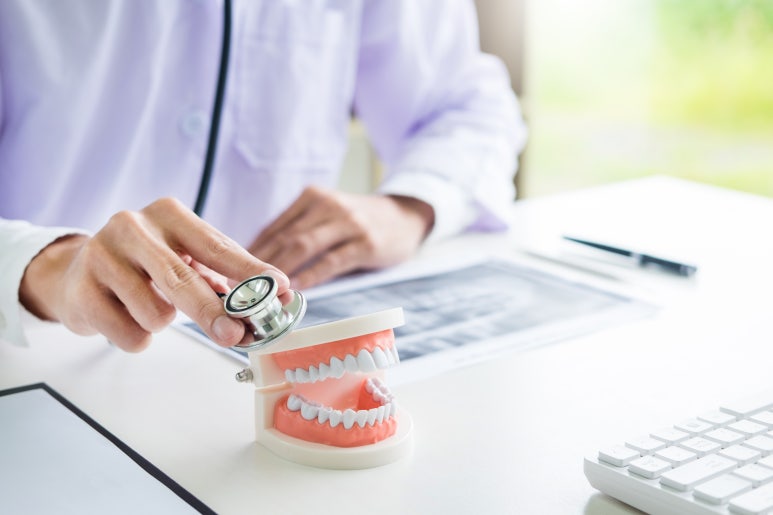 Orthodontic treatment offers a variety of appliances.
The most common method is the classic approach of attaching metal brackets to the teeth and moving them with wires, and it is still widely used because it is relatively affordable and its effectiveness has been proven. Recently, as aesthetic demands have grown, orthodontic methods that are less visible from the outside, such as clear aligners, ceramic brackets, and lingual braces, have also been widely used. In particular, clear aligners have attracted a great deal of interest because they are removable, reduce inconvenience in daily life, and make oral hygiene easier to manage.
However, orthodontic methods cannot be chosen based on appearance or convenience alone. It is advisable to decide after professional consultation and examination, taking into account various factors such as the area requiring correction, the condition of the teeth and jawbone, age, lifestyle habits, treatment period, and budget.
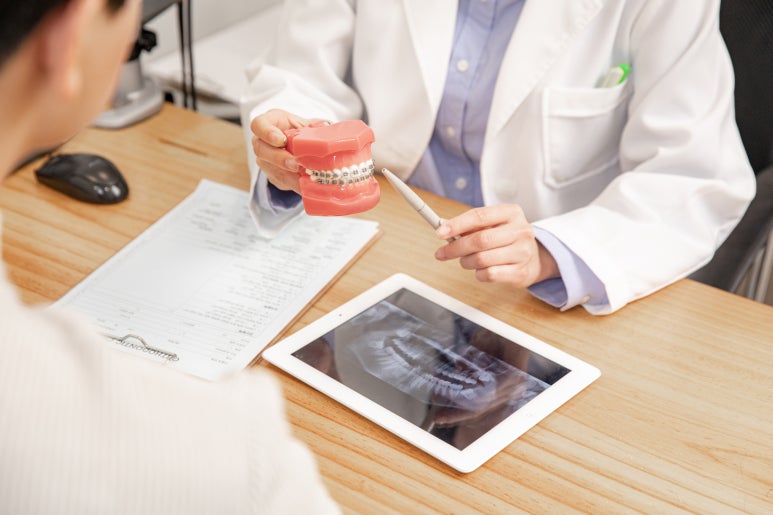
Orthodontic treatment begins with an accurate diagnosis.
Orthodontic treatment usually begins with a precise diagnosis. To do this, not only an oral examination but also radiographic imaging such as 3D CT and panoramic X-rays, as well as intraoral scanning, are used to analyze tooth alignment, bone condition, and bite relationship. After that, a customized treatment plan is established, orthodontic appliances are attached, and the actual tooth movement begins. Treatment generally takes about 1 to 2 years, though in some cases it may end with short-term partial orthodontic treatment, and in more complex cases treatment may continue for more than 2 years.
During orthodontic treatment, regular visits are necessary, and the direction of treatment is continuously adjusted through appliance adjustments and checks of oral condition. Many people think orthodontic treatment is painful and uncomfortable, but it is true that pain and discomfort have been significantly reduced compared with before thanks to smaller appliances and advances in pressure-control technology. Of course, there are differences depending on each person’s pain sensitivity and ability to adapt, so it is important to communicate with the medical team and make adjustments as needed.
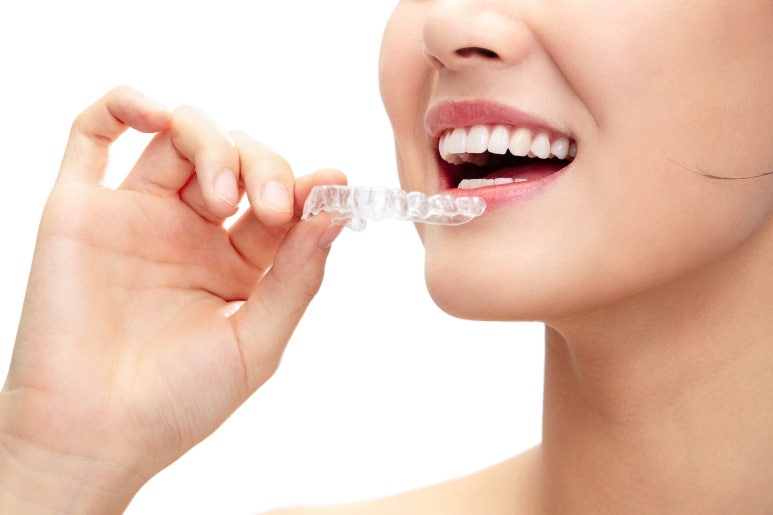
Do not neglect retainers even after orthodontic treatment is finished.
Even after orthodontic treatment ends, retainers must be worn for a certain period. This is a very important step to prevent the moved teeth from returning to their original position. Retainers are generally provided as removable or fixed types, and immediately after orthodontic treatment they are worn all day before gradually reducing the wearing time. If maintenance is neglected, years of effort and time can be wasted, so it is advisable to follow the medical team’s instructions closely and wear them faithfully while also attending regular checkups.
Another point I want to emphasize is that orthodontic treatment is not simply about changing the arrangement of the teeth, but about improving overall oral health. When the teeth are straight, brushing becomes much easier, food is less likely to get stuck, and the risk of cavities and periodontal disease can be greatly reduced. It may also have a positive effect on improving speech and jaw joint function. In particular, for children and adolescents in the growth stage, early diagnosis makes it possible to consider the direction of jaw growth as part of orthodontic treatment, so rather than thinking of it only as a tooth-alignment issue, it is beneficial to establish a treatment plan that also includes overall facial balance.

Finally, because orthodontic treatment requires both cost and time, a careful approach is needed when choosing a hospital. It is a good idea to thoroughly check the medical team’s experience and expertise, the accuracy of diagnostic equipment, communication with patients, and the aftercare system before receiving a consultation.
In addition, comparisons between hospitals and price advertising are restricted under medical law, so rather than relying only on online information, the safest approach is to visit in person, receive treatment, and find a treatment plan that suits you. Since orthodontic treatment is an important procedure that affects lifelong oral health, it is most important to begin with sufficient understanding and preparation.