Facts Every Smoker Should Know About Implants
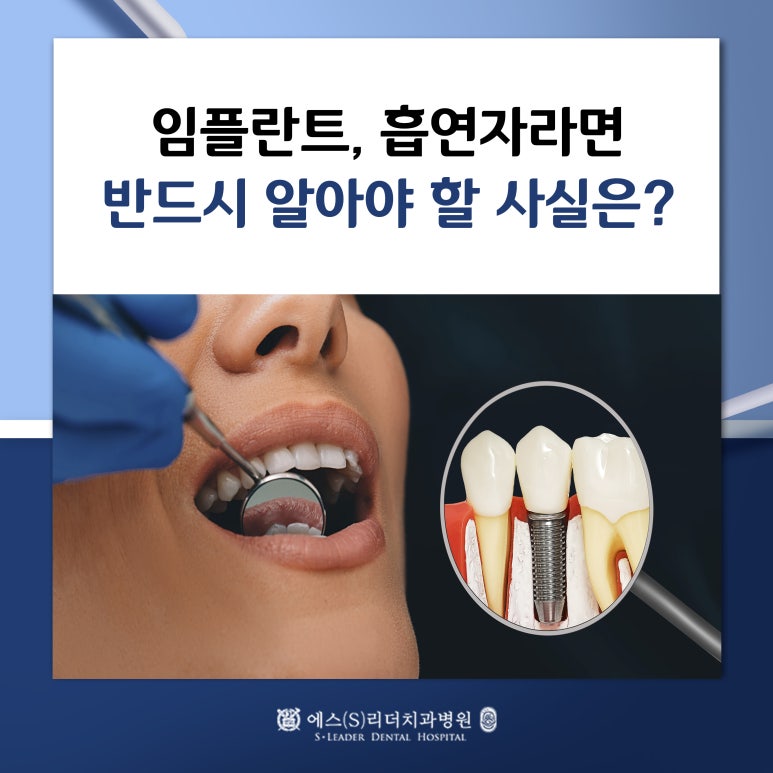
Hello, this is S Leader Dental Hospital in Jungang-dong.
Tooth loss affects more than just chewing function; it also impacts overall quality of life, including appearance, speech, and self-confidence. One of the most effective treatments for addressing these problems is a dental implant.
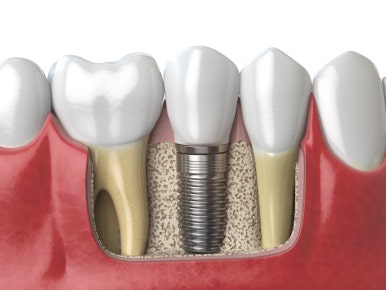
Implants offer functionality and aesthetics close to natural teeth, and they have the advantage of being an independent prosthetic treatment that does not damage surrounding teeth. However, not every patient can expect the same success rate and prognosis from implant treatment. In particular, smokers require a careful approach before treatment.
The Effect of Smoking on Implant Success Rates
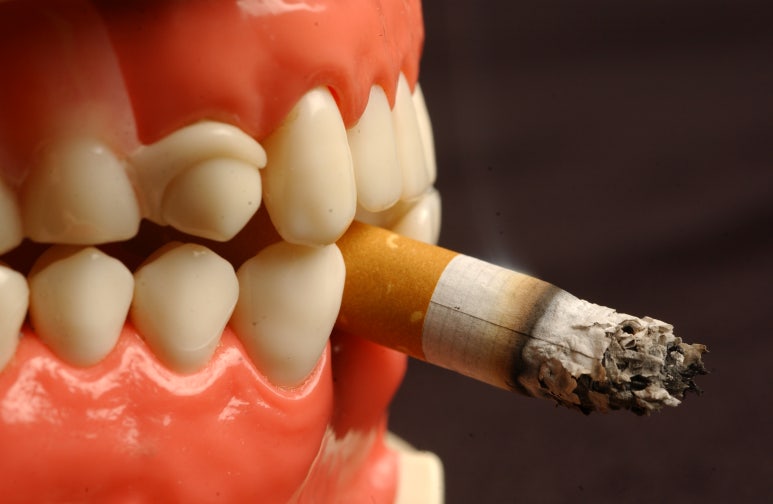
According to many studies, smoking is a major risk factor that lowers implant success rates. Nicotine constricts blood vessels and reduces blood flow, impairing the supply of oxygen and nutrients to tissues. As a result, wound healing is delayed, and the osseointegration process is disrupted. In fact, if initial osseointegration does not occur properly after implant surgery, the stability of the implant decreases significantly, which can ultimately lead to failure.
Smoking also weakens the oral defense mechanisms, creating a state that is more vulnerable to infection. If the soft tissue around an implant is continuously exposed to harmful substances in cigarette smoke, inflammatory reactions can be excessively triggered, increasing the likelihood of peri-implantitis. Peri-implantitis is not easy to treat, and if it progresses, it can eventually lead to implant loss due to bone resorption around the implant.
The Risk for Smokers Becomes Greater in Complex Procedures.
For smokers, the risks are compounded when complex procedures such as bone grafting, sinus lift surgery, or block grafting are performed in addition to a standard implant surgery. Graft integration may be impaired, or the infection rate at the surgical site may increase significantly, which may require repeated reoperations. In particular, the maxillary sinus membrane is an area sensitive to blood supply, and smokers have a higher risk of membrane perforation or secondary infection than non-smokers.
In addition, smokers have reduced systemic immune responses, so recovery after surgery is slower, and responses to medications such as antibiotics or anti-inflammatory drugs may differ. For this reason, a detailed treatment plan by the dentist becomes even more important.
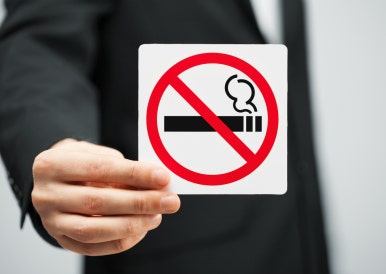
Smoking Before and After Treatment Is Not a Choice but a Necessity
The most basic and important condition for increasing implant success rates is quitting smoking. As long as the smoking habit continues, even the most precise surgery and advanced materials will eventually face limits in success.
In general, it is recommended to stop smoking at least one week before the procedure and remain smoke-free for 8 to 12 weeks after surgery. However, some periodontists advise that maintaining smoking cessation for four weeks before surgery can lead to more stable results. In fact, research has shown that the implant success rate in patients who have remained smoke-free for more than three months can recover to a level similar to that of non-smokers.
Before treatment, smoking status must be disclosed to the medical staff, and the timing of treatment, choice of procedure, and recovery period should be adjusted accordingly. Also, if quitting smoking seems difficult, an active cessation plan is needed, such as connecting the patient with a smoking cessation clinic or combining nicotine replacement therapy.

The Importance of Patient Education Before Implant Surgery
Implant treatment is not something that ends in a short period of time. It is a complex process that continues over months to years, from preoperative planning to surgery, prosthesis placement, and long-term follow-up care. During this process, smokers need even more thorough preoperative education and cooperation.
The dentist should fully explain the effects of smoking on implants and provide objective data and imaging materials to emphasize the need for smoking cessation. It is important to motivate the patient to adjust their lifestyle for the success of the treatment. Rather than a simple warning, providing specific information about how quitting smoking can improve treatment outcomes is more effective.
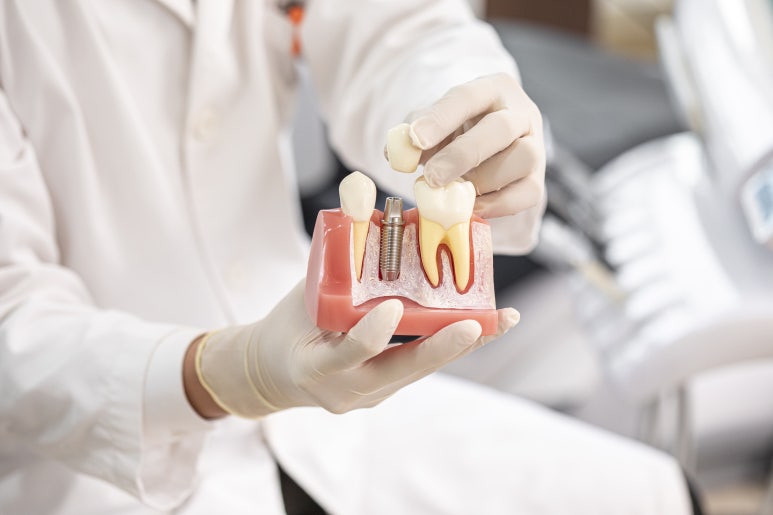
What Smokers Must Keep in Mind for Long-Term Implant Maintenance
Even after treatment has been completed successfully, smokers must continue diligent oral hygiene management and regular checkups. Since implants do not have the same sensation as natural teeth, it is difficult to notice early inflammation or pain. If left unattended without professional regular maintenance, the risk of recurrence is high.
In particular, smokers should consistently follow the items below.
1 Thorough brushing and the use of interdental cleaners and a Waterpik
2 Regular checkups and scaling at intervals of at least 3 to 6 months
3 Visit the clinic immediately if there is gum bleeding, swelling, or discomfort
4 Continue quitting smoking, and if you start smoking again, notify the medical staff immediately
Implants are not simply about placing artificial teeth; they are a comprehensive treatment that requires overall coordination and management of the patient’s lifestyle habits and oral health.
Because implant treatment requires advanced technique, equipment, and a precise plan, the patient’s cooperation and lifestyle habits are also important factors that determine the success or failure of treatment. In particular, smokers need to prepare in advance before treatment and be determined to improve implant success rates by quitting smoking.
Even a short period of smoking cessation can improve the chances of recovery, and with professional guidance and management, implants can be used stably for a long time.
If you are a smoker considering implants, now is the time to start preparing. The treatment outcome does not depend solely on the clinician.
It is only when your own effort and determination are added that healthy, long-lasting results can be achieved.