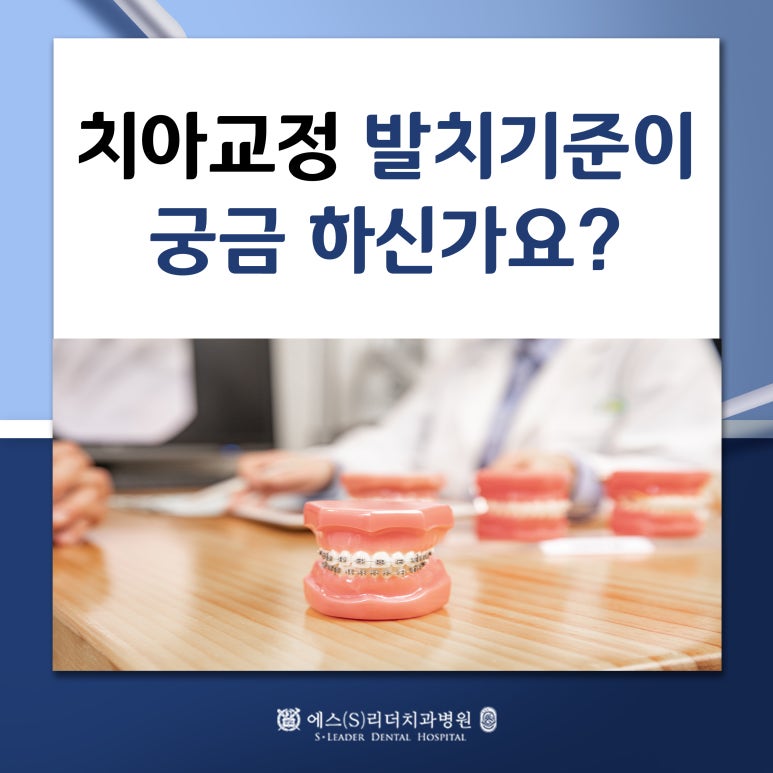
Are you curious about the criteria for tooth extraction in orthodontic treatment?
Hello, this is S Leader Dental Hospital, Myeonmok Station Dental Clinic and Myeonmok Station Orthodontics.
When considering orthodontic treatment, one of the most common questions is, “Do I have to have teeth extracted?” When people hear that a tooth needs to be removed, they usually start worrying first. However, in orthodontic treatment, it is important to understand that extraction is not simply about pulling teeth, but rather a means of creating a functional, harmonious bite and facial balance.
So in what cases is extraction necessary? Conversely, what are the criteria for when extraction is not absolutely necessary? Below, let’s take a closer look at the criteria used to decide whether extraction is needed during orthodontic treatment.

- When there is not enough space for tooth alignment - securing space comes first.
The most typical criterion for extraction is when there is not enough space for the teeth to be aligned evenly. In general, an adult dental arch has a limited size, and it is often difficult to arrange all the teeth neatly within that space. In particular,
when the teeth are large or the jawbone is small, crowding, rotated teeth, and protruding front teeth can occur.
In such cases, the proper treatment direction is to secure space through extraction and then move the teeth into alignment. If there are cases where sufficient space cannot be secured simply by moving the teeth forward or backward, trying to force alignment can cause the front teeth to protrude further or make the bite unstable.
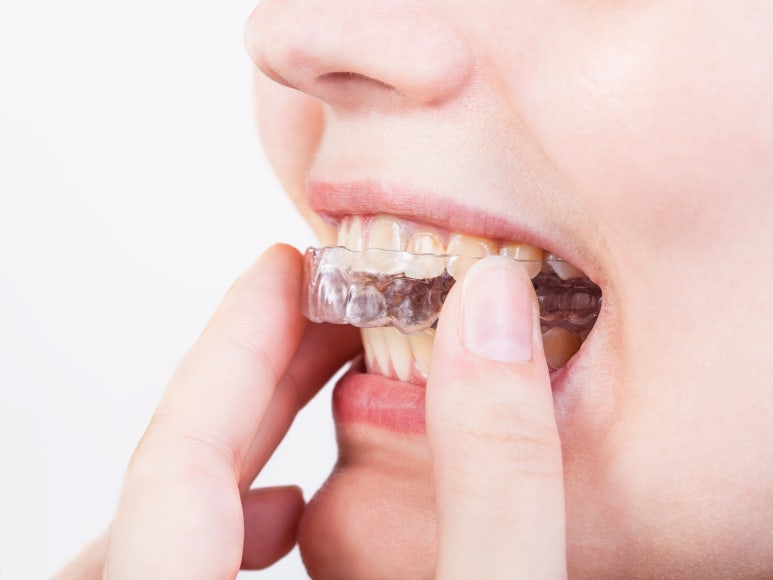
- When you want to improve protruding lips - considering aesthetics and function together
A protruding mouth, or “protruding lips,” is one of the facial types commonly seen among Koreans. In such cases, extraction may also be considered, and the decision is made by comprehensively evaluating the degree of lip protrusion, the angle of the teeth, and the position of the jawbone, rather than simply for appearance.
In particular, if the anterior teeth are severely inclined or the lips are already significantly protruded, extraction may be needed to create space for moving the teeth backward. Through this kind of extraction-based orthodontic treatment, you may expect not only improvement in the side profile, but also easier lip closure and a more refined jaw and neck line.
- When the teeth are even but there is a problem with the bite - functional reasons are also considered
Even if there is no noticeable crowding, extraction may still be necessary when the bite between the upper and lower teeth is abnormal. For example, if the maxilla (upper jaw) is overly developed compared with the mandible (lower jaw) and there is excessive overjet (when the upper front teeth cover the lower front teeth significantly), the upper teeth need to be moved backward, and in such cases extraction becomes a useful treatment option.
In other words, extraction is performed not only for simple aesthetic improvement, but also based on consideration of chewing function, temporomandibular joint stability, and long-term tooth retention.
- When there are asymmetrical teeth or damaged teeth - selective extraction according to the orthodontic plan
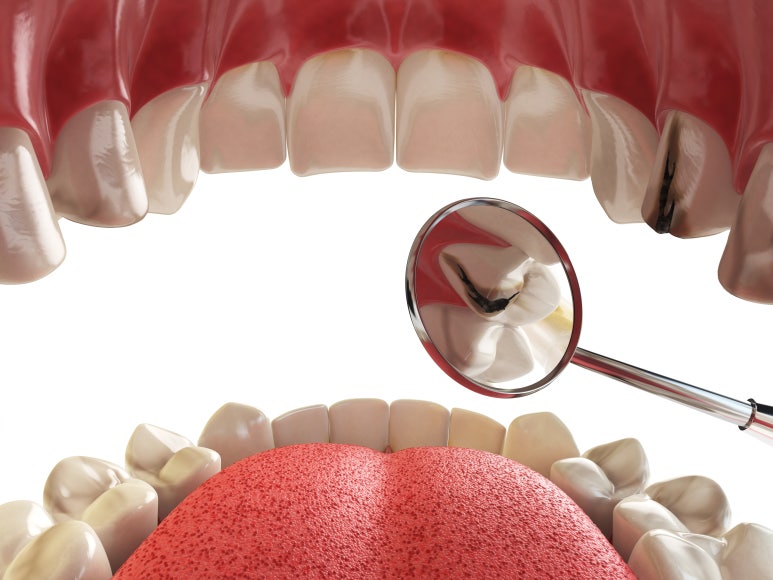
Overall orthodontic space may be needed, but not every tooth is evaluated in the same way. If some teeth are excessively asymmetrical or have a poor prognosis due to a history of cavities or root canal treatment, those teeth may be selectively extracted and the treatment plan adjusted accordingly.
For example, if the positions of the left and right canines are asymmetrical, or if one premolar is badly damaged by severe decay, that tooth may be selected for extraction and the dental arch adjusted accordingly. This makes it possible to achieve overall harmony without unnecessary tooth loss.
- On the other hand, there are many cases where treatment is possible without extraction.
Not all orthodontic treatment requires extraction. Today, with advances in technology and appliances, there are many cases where non-extraction orthodontic treatment is possible. Extraction can sometimes be avoided by using methods such as minimally reducing the space between teeth (stripping), appliances that move the molars backward, or, in growing patients with flexible skeletal structures, appliances that expand the jaw.
Also, even in cases of protruding lips, many can still be improved sufficiently without extraction depending on tooth inclination, lip thickness, and muscle force. Therefore, it is difficult to decide on extraction by yourself without a detailed diagnosis from a specialist.
Extraction is not a ‘choice’ but a ‘plan.’
In orthodontic treatment, extraction is not simply the idea of pulling teeth, but part of a treatment plan that comprehensively considers each individual’s skeletal structure, dental arch condition, facial proportions, and aesthetic and functional goals.
There is no correct answer in either always extracting or always avoiding extraction. The most important thing is to find the optimal treatment method that suits you through an accurate diagnosis and consultation tailored to your individual condition.
If you have fears or misunderstandings about extraction, we recommend deciding on the direction through 충분한 consultation with a trustworthy orthodontic specialist.