Hello, this is S Leader Dental Hospital, a dental clinic near Konkuk University Entrance Station.
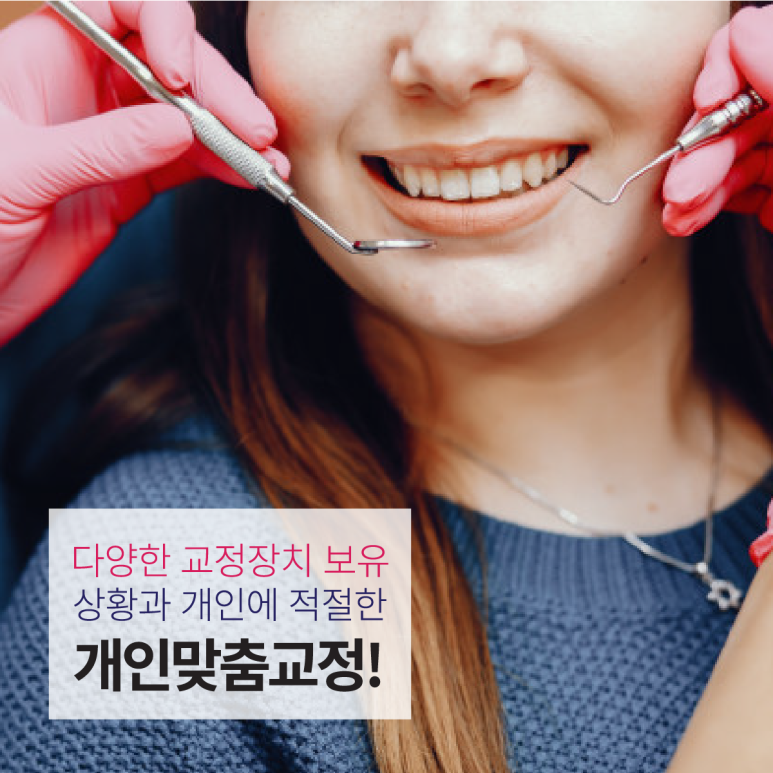
Orthodontic treatment is often thought of simply as a treatment for a “beautiful smile,” but in fact it is a comprehensive treatment that considers not only tooth alignment but also the facial skeleton, the temporomandibular joint, and overall chewing function.
Many people start with the light thought of, “My front teeth are a little crooked, so should I try orthodontic treatment?” and then find that the treatment period and management are longer and more cumbersome than expected, making it difficult to complete the process well.
Especially if you are looking for a dental clinic near Konkuk University Entrance Station, accessibility is certainly an advantage, but it is even more important to know the basics properly and prepare before starting.
In this post, we will organize the essential pre-treatment items that anyone considering orthodontics should check.

It is good to understand the purpose of orthodontic treatment accurately.
Many people think of orthodontic treatment only as, “My teeth are slightly twisted and look unattractive, so I attach appliances to make them straight.”
But in reality, a much broader perspective is needed.
Teeth that do not fit together properly (malocclusion) can reduce chewing function and eventually place strain on the temporomandibular joint or the chewing system.
Also, when teeth move out of their proper positions, force is not distributed evenly on both sides, which can overload one side of the gums or bone, or accelerate tooth wear.
By correcting the bite through orthodontic treatment and restoring function, you can expect benefits beyond simply having “pretty teeth,” including improved oral health and a longer lifespan for your teeth.
Therefore, when considering orthodontics, it is important to look at it not only as “improving appearance,” but as “restoring function + improving health.”
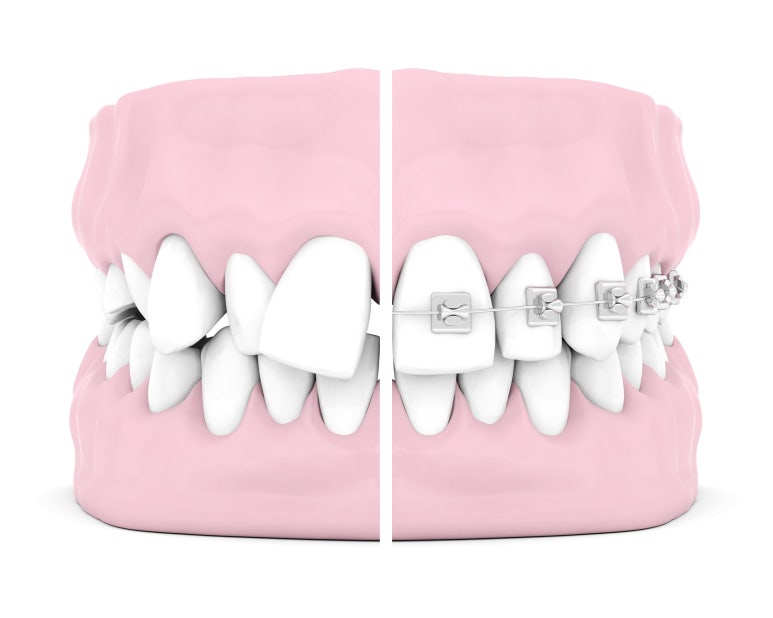
Pre-treatment diagnosis and preparation that must be done before starting
Before starting orthodontic treatment, the following preparation steps should never be skipped. Without this preparation, unexpected problems may arise during treatment, or the results may be unsatisfactory.
- Overall oral condition diagnosis
First, it is necessary to check whether there are cavities or gum disease. Once orthodontic appliances are attached, there are many areas that are difficult to reach with a toothbrush or floss, increasing the risk of cavities and periodontal disease.
In particular, if the gums are weak or there is insufficient bone, the gum and bone support may become even weaker during treatment, so prior treatment is important.
- Detailed diagnosis and consultation
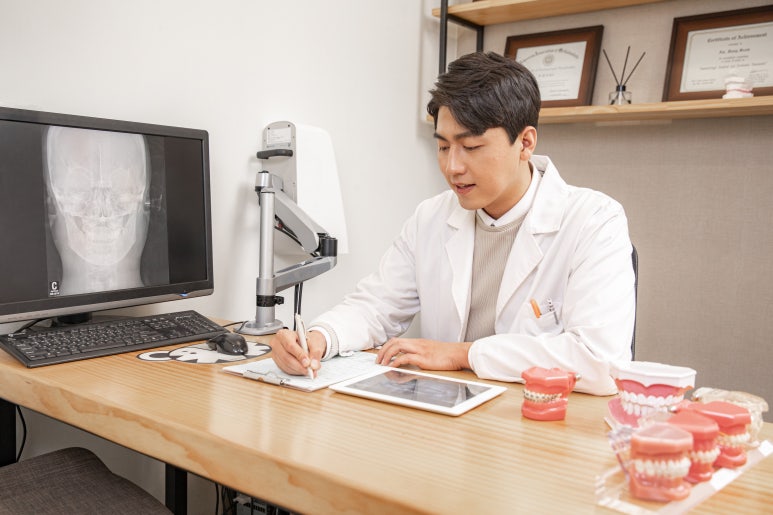
Using diagnostic equipment such as panoramic X-rays, cephalometric X-rays, and 3D scanners, the condition of the tooth roots, the position of the jawbones, and their relationship to the current facial shape must be analyzed.
Based on these diagnostic results, the need for extraction, the type of orthodontic appliance, the expected treatment period and cost, and the retention plan should be discussed.
- Selecting the orthodontic appliance and treatment method
There are various types of orthodontic appliances, including metal brackets, ceramic brackets, lingual orthodontics (the inside of the teeth), and clear aligners. Each method differs in cost, aesthetics (how visible it is), wearing period, and level of management difficulty, so you should choose the one that suits you best.
When selecting an appliance, it is good to consider your lifestyle patterns (for example, if you often attend company dinners or are concerned about your appearance) and decide through consultation with the medical staff.
- Preparation of eating habits and oral care
Once braces are attached, your usual brushing may not be enough. Therefore, it is a good idea to prepare orthodontic toothbrushes, interdental brushes, and a Waterpik (oral irrigator) in advance.
Also, hard and sticky foods (such as nuts, dried squid, taffy, caramel, etc.) can damage orthodontic appliances, so you may need to adjust your eating habits.
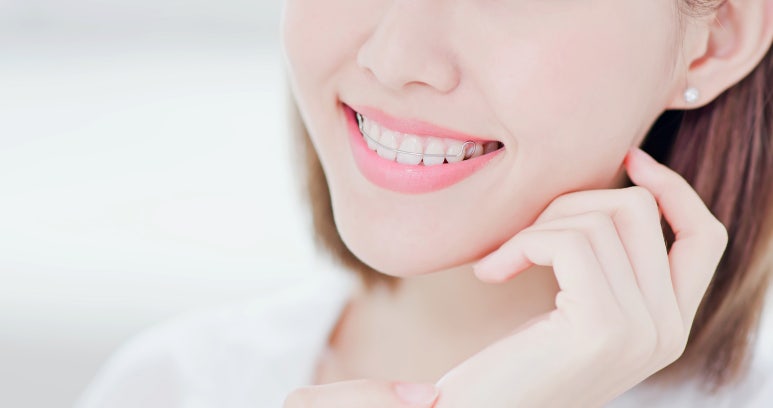
[You need to adjust your expectations regarding treatment duration and management]
Orthodontic treatment is not something that ends with “attach the appliance and done,” but rather a long process that continues through diagnosis → strategy planning → appliance placement → regular adjustments → retention management.
In general, full orthodontic treatment (improving the entire upper and lower teeth alignment and bite) can take from 1.5 to 2 years or longer. The treatment duration varies depending on the individual’s gum and bone condition, the type of appliance, and cooperation.
During treatment, visits for appliance adjustment are usually needed every 4 to 6 weeks, and if you do not faithfully attend these visits, the treatment period may become longer, so please keep this in mind.
Even after treatment is finished, a period of wearing a retainer is necessary, and if this is neglected, the teeth may shift again.
So rather than thinking, “It will be over in a few months,” it is important to adjust expectations by thinking, “Depending on my oral condition, it may take longer than expected.”
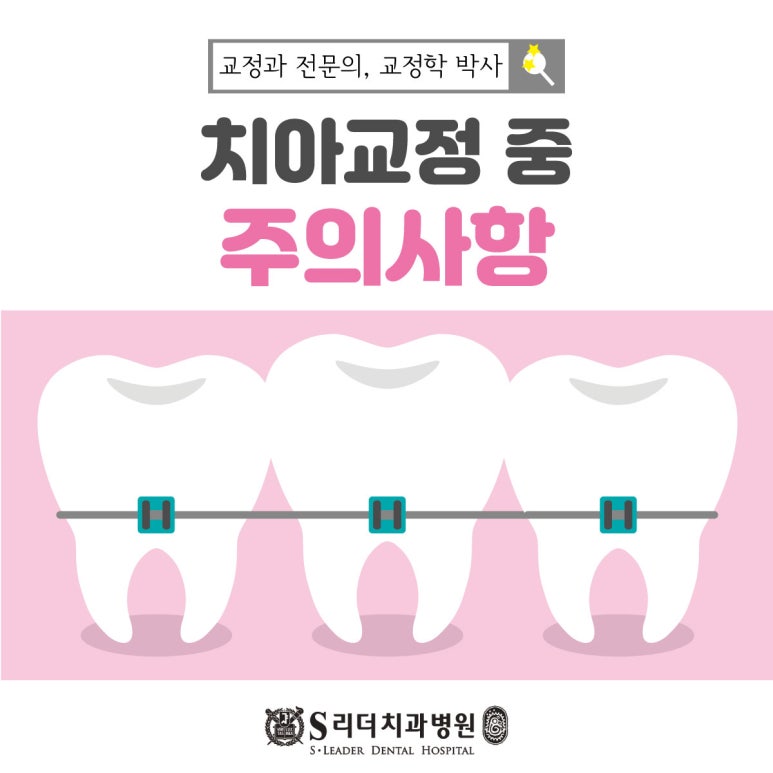
Lifestyle habits and management points to be careful about during orthodontic treatment
During orthodontic treatment, you should always keep in mind that appliances are attached and make small changes to your daily habits as well.
It is best to avoid habits that put stress on the teeth or appliances, such as biting your nails, chewing on pencils, or biting ice.
After eating, you should clean especially carefully around the braces. If food debris accumulates in the gaps of the appliance, the risk of demineralization (erosion of the tooth surface) or cavities increases.
If the appliance or wire breaks, the direction of tooth movement may become distorted, so if you discover damage, contact the dental clinic immediately.
In particular, with clear aligner treatment, there are often set minimum wearing hours per day (for example, 20 hours or more per day), so it is important to follow the wearing time.
What should you აუცილებლად ask about during a cost consultation?
Orthodontic treatment is a medical procedure, but it can also be a treatment that places a fairly large burden in terms of cost and time. During consultation, be sure to check the items below.
-
Total treatment period (appliance placement period + adjustment period + retainer period)
-
Total cost breakdown: whether it includes appliance fees, extraction fees, screw (mini-implant) fees, retainer costs, etc.
-
Additional costs that may arise during treatment: appliance damage, emergency visits, re-treatment, etc.
Cost differences and pros/cons by appliance option
Whether the post-treatment maintenance program is included (for example, number of visits, whether scaling is included)
It is best to hear this information clearly and receive it in writing.
[Checkpoints when choosing a dental clinic near Konkuk University Entrance Station]
There are many dental clinics around Konkuk University Entrance Station, so you have a wide range of choices. When considering orthodontics, rather than simply looking at “closeness,” please first check the following factors.
-
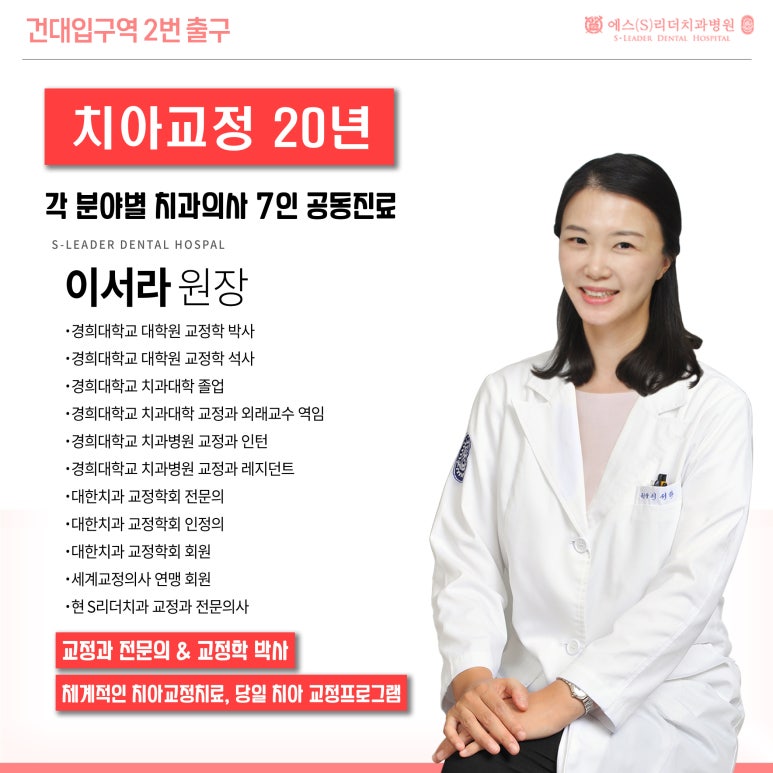
Whether the clinic has an orthodontic specialist (certified by the orthodontic society)
-
Whether diagnostic equipment is available (3D CT, oral scanner, etc.)
-
During consultation, do they show and explain diagnostic materials such as photos, models, and X-rays?
-
Are treatment cases or patient reviews publicly available?
-
Is there a post-treatment maintenance system (regular checkups, retainer checks, etc.)?
※ A dental clinic that meets these criteria can inspire more trust than simply being “nearby.”
Orthodontic treatment at a dental clinic near Konkuk University Entrance Station,
Start with S Leader Dental Hospital
Orthodontic treatment is not a short-term cosmetic treatment, but a treatment process that must be managed steadily over a long period of time.
Therefore, before starting, the key is to sufficiently prepare by completing cavity and gum treatment → detailed diagnosis → treatment plan establishment → understanding the visit and management schedule → checking the cost and maintenance plan.
It is best to consult thoroughly with an experienced orthodontic specialist and choose an orthodontic method that fits your lifestyle, budget, and oral condition.

Konkuk University Entrance Station dental clinic :: S (S) Leader Dental Hospital