Hello, this is S Leader Dental Hospital, a dental clinic near Konkuk University Station.

After wearing braces for a long time and finally having them removed, anyone would feel relieved and a sense of accomplishment. Looking at the straightened teeth, you may think, “Now orthodontic treatment is over!” But in fact, orthodontics does not end the moment the appliance is removed; the real finishing stage is the follow-up “retention” process.
Right after orthodontic treatment, the teeth may look aligned on the outside, but internally they are still in an unstable state. This is because it takes time for the gum tissue and alveolar bone (the bone surrounding the tooth roots) around the moved teeth to adapt to their new positions.
If proper care is not provided during this period, the teeth will gradually be pulled back toward their previous positions.
In other words, if you do not wear a retainer, the results of orthodontic treatment can be undone.
That is why it is not an exaggeration to say that the true completion of orthodontic treatment comes not from “removing the braces,” but from “wearing the retainer.” With consistent retention care, you can maintain the effects of orthodontic treatment for a long time and prevent the hassle of needing treatment again.
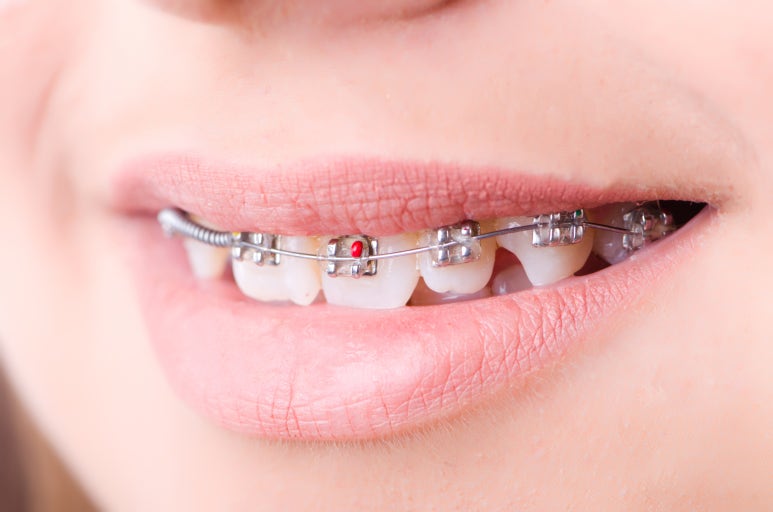
Why are retainers after orthodontic treatment so important?
A retainer is a device that helps teeth stay in place after orthodontic treatment is finished.
Teeth are held in place by ligaments in the gums, and because these ligaments are elastic, they tend to try to return to their original positions for a period of time after movement. This is called “relapse.”
Retainers help prevent this backward movement and allow newly aligned teeth to settle stably.
They also play a role in preventing tooth movement until the surrounding gums and bone have fully adapted to the new arrangement.
If you do not wear a retainer, teeth can return to their pre-treatment appearance in just a few months. In particular, the lower front teeth are one of the areas where relapse commonly occurs after orthodontic treatment, so retainers for this area are especially important.
In other words, wearing a retainer as the final stage of orthodontic treatment is not simply an option, but an essential process for maintaining the results of treatment for a long time.
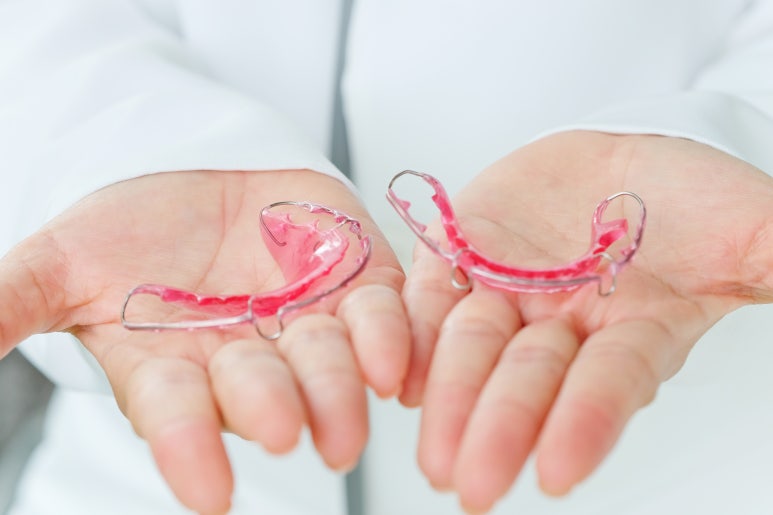
Types of retainers - Fixed vs. removable
Retainers can be broadly divided into two types: fixed retainers and removable retainers.
Understanding the advantages and disadvantages of each can help you choose the right one for you.
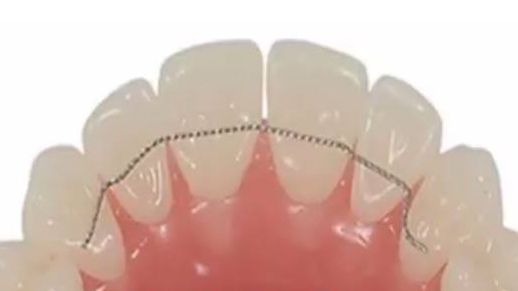
🔹 Fixed retainer
A fixed retainer is a thin wire-like device that is usually bonded to the back side of the front teeth. Because it is attached to the back of the teeth, it is hardly visible, so it creates less aesthetic burden.
Most of all, since you cannot remove it yourself, you do not need to worry about wearing time separately, which is its biggest advantage because its retention effect is maintained at all times.
However, if a fixed retainer is not properly cared for, tartar can build up or gum inflammation can occur. Since many areas are difficult to reach with a regular toothbrush, oral hygiene should be managed carefully using interdental brushes and water flossers.
Also, if the teeth receive a small impact or the adhesive comes off, the retaining effect may decrease, so regular checkups are absolutely necessary.
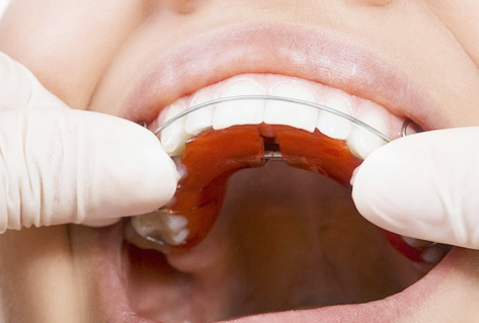
🔹 Removable retainer
As the name suggests, a removable retainer is a type of retainer that can be taken in and out. Common examples include the Hawley retainer and the clear retainer (Essence retainer).
This device can be removed freely when eating or brushing, making it convenient to manage. In particular, clear retainers are hardly visible, so they are also popular for aesthetic reasons.
However, if you do not consistently follow the wearing time, the effect may decrease, and there is also a risk of loss or damage.
Therefore, it is important to wear it for a certain amount of time every day and make it a habit to wear it before going to bed.

How to care for your retainer
No matter how good the retainer is, its effectiveness can decrease if care is neglected.
If you have a fixed retainer, bacteria can remain even with brushing alone, so it is a good idea to use interdental brushes, water flossers, and mouthwash together.
Also, regular scaling can remove tartar and help prevent inflammation around the appliance.
Removable retainers should be cleaned with cold water. Hot water may deform the appliance, so be careful, and using a dedicated cleanser or retainer cleaning solution once or twice a week can help maintain cleanliness and prevent bad breath and bacterial growth.
When not wearing it, store it in a case to prevent loss. Wrapping it in tissue is very dangerous.
Above all, regular dental visits are important.
If a retainer becomes loose or breaks, leaving it untreated may allow tooth movement to start again.
Periodic examinations and necessary adjustments at the dental clinic are key to preventing relapse.
[How long should it be worn?]
The duration for wearing a retainer varies depending on the difficulty of the orthodontic case, age, and degree of tooth movement, but in general, it is recommended to wear it consistently for at least 1 to 2 years.
Right after orthodontic treatment, it should be worn all day, and after a certain period, it may be possible to switch to wearing it only during sleep.
However, because teeth move slightly throughout life, long-term retainer use is a more stable option for adult orthodontic patients.
By observing this period properly, you can maintain the straight tooth alignment and balanced bite achieved through orthodontic treatment for a long time.
At S Leader Dental near Konkuk University Station,
Completing post-orthodontic care
Orthodontic treatment is not just a process of making teeth straight.
Only when care and retention afterward are properly followed can it truly be considered complete orthodontic treatment. At S Leader Dental near Konkuk University Station, we deeply recognize the importance of post-orthodontic care and provide customized retainers and management plans that take each patient’s lifestyle and orthodontic history into account.
In addition, through our regular checkup system, we periodically check the stability of teeth after orthodontic treatment and provide careful care so that any deformation or detachment of the retainer can be addressed immediately.
If you are looking for a dental clinic near Konkuk University Station that provides thorough post-orthodontic maintenance as well, please consult with S Leader Dental.

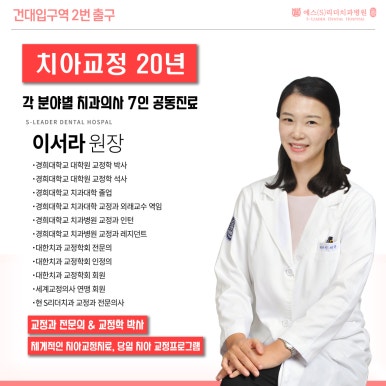

Konkuk University Station dental clinic :: S Leader Dental Hospital