Hello, we greet you from S Leader Dental Hospital, Konkuk Univ. Station implant clinic.

When a tooth is lost, the most reliable and long-lasting replacement option is an implant.
However, implants cannot always be placed right away in every case.
In particular, if it has been a long time since a tooth was extracted, or if the gum bone has become thin, there may not be enough bone to secure the implant, making an additional procedure called bone grafting necessary.
Because an implant is placed by inserting an artificial root into solid bone and connecting a prosthetic restoration on top of it, if the foundation bone is
weak or insufficient, it is difficult to maintain stability no matter how good the materials are.
That is why it is no exaggeration to say that the success of an implant depends not only on surgical technique, but also on the amount and quality of the bone and the recovery state.
So how long do you need to wait after bone grafting for recovery? And what process does the bone go through to become strong during that period?
Today, we will take a closer look at the recovery period after bone grafting for implants at Konkuk Univ. Station, along with management methods and points to be careful about.
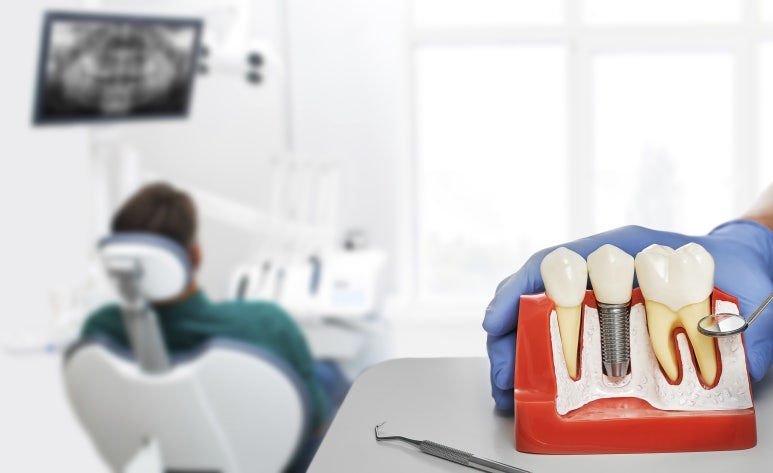
Why is bone grafting needed before an implant?
If a missing tooth is left untreated for a long time, the alveolar bone that supported it gradually gets resorbed and decreases.
Because this bone becomes thinner and lower when it is not used, it is common to be told that there is “not enough bone” when trying to place an implant.
Also, in the upper molar area, there is an air cavity called the maxillary sinus, and because of this space, there are many cases where there is not enough bone height to place an implant.
In the lower molar area, the inferior alveolar nerve runs through the jaw, so if an implant is placed too deeply, there is a risk of nerve damage.
This is when bone graft surgery is needed.
It is a process in which artificial bone (or autogenous bone) is grafted into the area with insufficient bone to create an environment where the implant can be securely fixed.
In other words, bone grafting can be seen as the “foundation work” that lays the groundwork for an implant.
Just as a building can only last if its foundation is solid, an implant also settles stably only on healthy bone.
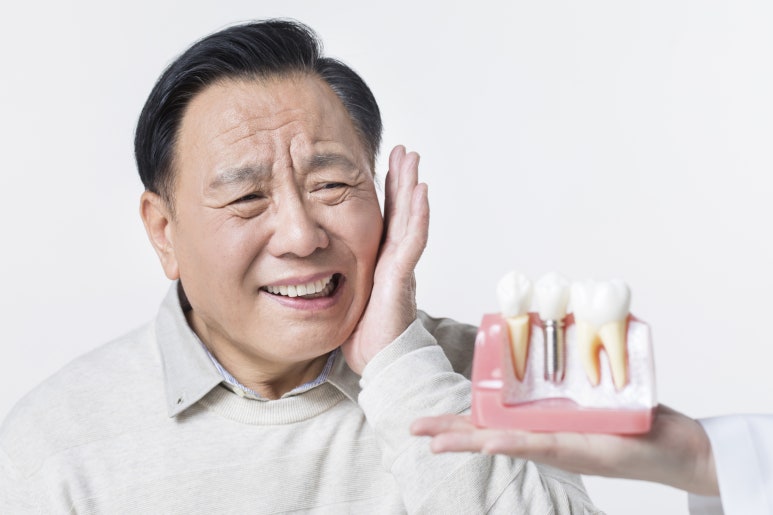
How long is the recovery period after bone grafting?
The recovery period after bone grafting varies from person to person, but it is generally said to take about 3 to 6 months.
The reason is that it takes quite some time for the grafted artificial bone to fully integrate with the existing bone.
However, the period varies slightly depending on the extent and condition of the graft.
• Small-volume reinforcing bone graft: about 2–3 months
• Medium-sized bone graft: about 4–5 months
• Extensive bone grafting or when combined with a sinus lift: about 6 months or longer
After surgery, the bone and gums must heal stably, and the grafted bone needs time to gradually regenerate like natural bone through new blood vessels and cells.
If enough time is not given during this period, the implant may become loose or the grafted area may weaken, so trying to shorten the recovery period can instead be risky.
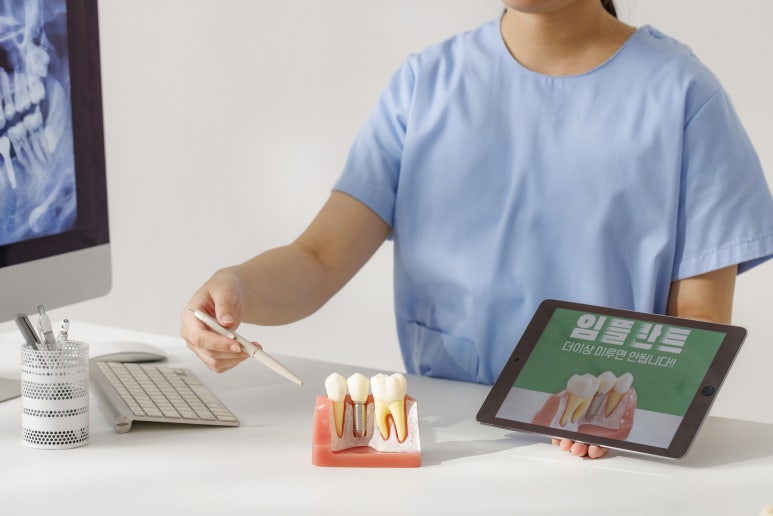
Curious about what changes occur during the recovery period after implant bone grafting?
Right after bone grafting, most people may experience swelling, mild pain, and a bruised feeling.
This is a normal inflammatory response and usually eases in about 2 to 3 days. If you apply ice packs and take the prescribed medication properly, it will stabilize more quickly.
About 2 weeks after surgery, the color of the gums gradually returns to normal, and pain while chewing almost disappears.
However, just because the outside looks fine does not mean the bone inside has become completely firm, so during this period you must avoid strenuous foods, smoking, and drinking alcohol.
During the recovery period, proper blood circulation in the body is important for the grafted bone to fuse well with the existing bone. Smoking interferes with blood flow,
slows recovery, and caffeine or alcohol may also trigger inflammatory responses, so caution is needed.
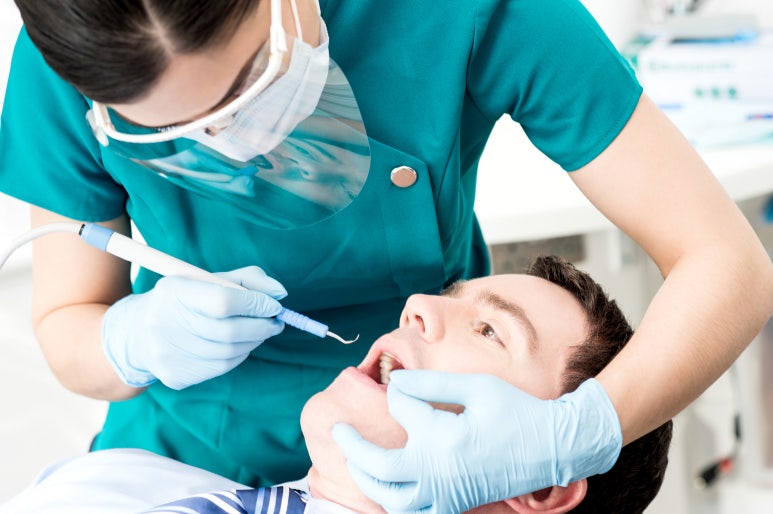
The process from bone grafting to implant placement
Implant bone grafting is not simply the concept of “attaching bone”; success requires an accurate diagnosis and a systematic plan.
- Detailed diagnostic stage
Through CT scans, the height, thickness, and density of the bone are checked, and a detailed analysis is made of which area needs bone grafting and how much is required.
- Bone graft surgery stage
Artificial bone or autogenous bone is grafted into the necessary area, and the grafted site is covered with a membrane so it does not move.
Because this process requires delicate technique, the experience of skilled medical staff is important.
- Stabilization and recovery stage
For about 3 to 6 months while the grafted bone integrates with the existing bone, you will receive regular follow-up checks at the dental clinic.
During this time, the gums must heal well, and ongoing management is needed to ensure there is no inflammation.
- Implant placement stage
Once the grafted bone has firmly settled, the implant is finally placed. After that, when the gums recover again over about 2 to 3 months, the final prosthetic restoration (crown) is placed and the treatment is completed.

Lifestyle care tips to help recovery faster
To shorten the recovery period after bone grafting and manage it in a healthy way, every part of your daily habits has a major impact.
• Smoking is absolutely prohibited!
Nicotine constricts blood vessels, interferes with oxygen supply, and is a major cause of delayed bone regeneration.
• Maintain a balanced diet
Protein, calcium, vitamin D, and magnesium help bone regeneration. Avoid overly hard foods and choose a soft diet.
• Maintain oral hygiene
If bacteria enter the surgical site, recovery slows down. It is important to keep it clean with mouth rinse or gentle brushing.
• Get enough sleep and rest
Since growth hormone is secreted during sleep and promotes bone recovery, it is best to avoid all-nighters and stress.

What should you do if pain continues after bone grafting?
Usually, pain eases within a few days, but if pain, swelling, pus, or fever persist for more than a week or become worse,
you should visit the hospital immediately.
This is because it could be a sign of infection, inflammation, or graft failure. If detected early, it may be resolved with simple medication or cleaning, but if left untreated, the grafted area may weaken and require reoperation.
Therefore, during the recovery period, it is most important not to miss even minor changes and to receive regular checkups carefully.
Systematic
implant bone graft management at S Leader Dental Hospital
Here is how to do it
Konkuk Univ. Station implant S Leader Dental Hospital carries out the entire process systematically, from implant bone grafting to placement and aftercare, based on extensive clinical experience and advanced equipment.
Through 3D CT imaging, the condition of the bone is precisely diagnosed, and a customized treatment plan is established by considering each patient’s recovery speed and health condition, which helps reduce unnecessary waiting time.
In addition, after surgery, the dedicated medical staff continuously monitors the recovery progress and carefully
manages pain, inflammation, and the graft condition.
Through this, they help the implant settle stably. An implant is not simply a process of placing a tooth; it is a process of restoring lost function and confidence.
Accurate diagnosis, careful management, and sufficient recovery time create healthy and long-lasting results.
If you are curious about the recovery period after implant bone grafting or want to know exactly what condition you are in, please receive professional consultation at S Leader Dental Hospital, the implant clinic at Konkuk Univ. Station.

Konkuk Univ. Station Implant :: S (S) Leader Dental Hospital