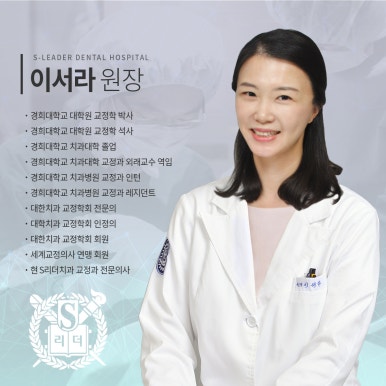
Hello, this is S Leader Dental Hospital, Konkuk Orthodontic Clinic.

A few months after starting orthodontic treatment, patients often say things like this.
"At first, it seemed like my teeth were moving quickly,
but these days there’s hardly any change."
"Even when I look in the mirror, they seem the same.
Has the orthodontic treatment stopped?"
In fact, this kind of concern is a “normal process” that anyone undergoing orthodontic treatment experiences at least once.
There are periods when teeth seem to move day by day, and then suddenly it feels as if they have stopped.
The reason is not simply that the orthodontic force is weak, but that the teeth are adapting to their new positions.
In this post, we’ll take a closer look at the reasons teeth may seem not to move, what changes happen at each orthodontic stage, and how to manage this period well.
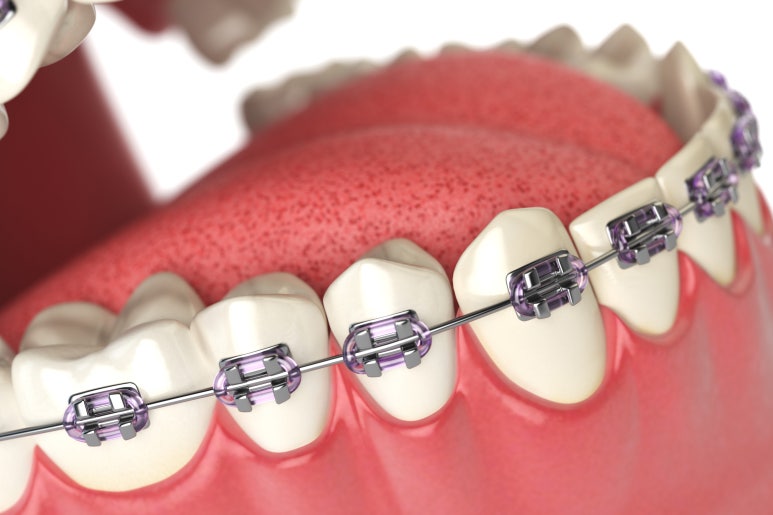
Why there is rapid change in the early stage and a “plateau” in the middle stage
In the early stage of orthodontic treatment, the alveolar bone in the gums that holds the teeth in place is stimulated and changes quickly.
In particular, areas where the front teeth were crooked or spaced apart become visibly more aligned.
So during the first few months, the “visible changes” are quite clear.
But things change as you move into the middle stage. Teeth do not simply change shape on the surface; they go through a complex process in which the roots and surrounding tissues are slowly remodeled as well.
During this period, while the bone is becoming firm again, fine movement and reorganization continue internally even if, on the outside, it looks as though movement has stopped.
This is commonly called the “orthodontic plateau,” and it naturally appears about two to three times during the entire treatment period.
In other words, there is no need to worry just because teeth seem not to be moving.
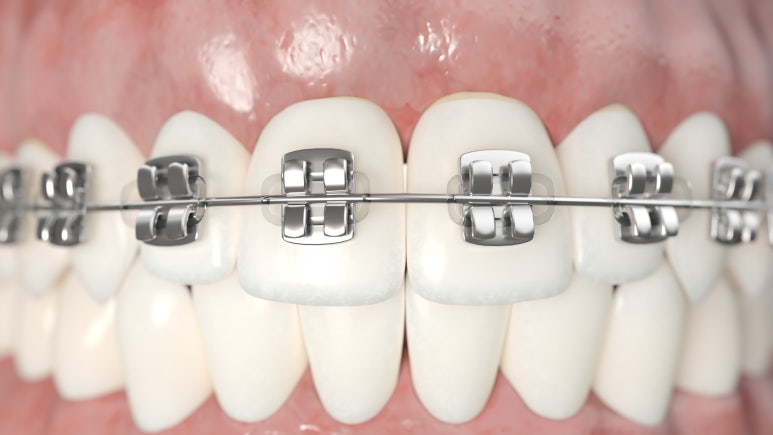
Tooth movement does not progress in a straight line, but more like a curve
Many people think that once orthodontic treatment starts, the teeth will move steadily at a constant speed, but that is not actually the case.
The speed of tooth movement varies greatly depending on factors such as a person’s bone density, age, the strength of the orthodontic force, and lifestyle habits.
In particular, with adult orthodontic treatment, bone metabolism is slower than during growth, so tooth movement tends to be more gradual.
This is why people often feel that “the change has stopped” in between adjustments.
However, the orthodontic force is always maintained at a consistent level, and movement continues steadily beneath the surface where it cannot be seen.
It helps to remember that orthodontic treatment is not simply a matter of “applying force so the teeth move,” but a cell-level regeneration process in which bone is resorbed and then formed again.
In other words, even if it is not visible, the teeth are still “moving.”
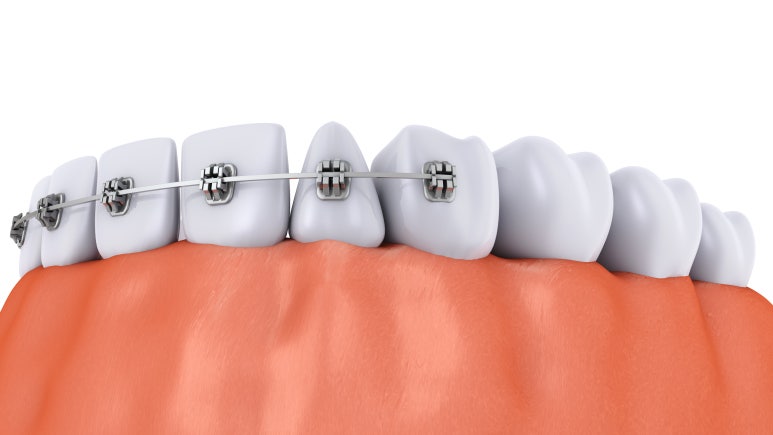
Let’s look at how tooth movement changes by orthodontic stage
1️⃣ Early stage (1–3 months)
-
This is the period when crooked tooth alignment is corrected quickly.
-
Even visually, you can feel the teeth becoming more evenly aligned.
-
Because the orthodontic effect is easy to see, satisfaction is usually highest at this stage.
2️⃣ Middle stage (4–10 months)
-
As the teeth settle into place to some extent, the speed of movement noticeably slows.
-
In reality, root direction is being adjusted and the bite is being fine-tuned, but because the appearance changes very little, it can feel like a “plateau.”
-
Mild gum swelling or reduced pain is also characteristic of this period.
3️⃣ Alignment and bite completion stage (after 10 months)
-
This is the period when the bite (the way the upper and lower teeth fit together) is finely adjusted.
-
Because small changes can greatly affect the overall orthodontic result, the specialist repeatedly makes subtle adjustments.
-
Even if it is not noticeable, this is a key stage that determines the success of orthodontic treatment.
What should you check when it feels like orthodontic treatment has stopped?
- Are you keeping your regular appointment schedule?
-
Orthodontic appliances need to be replaced or adjusted regularly.
-
If appointments are delayed, the orthodontic force may weaken and movement can feel slower.
- Is there any appliance damage or reduced attachment?
-
If a bracket has come off or a wire is bent, the orthodontic force is partially interrupted.
-
In the case of clear aligners, tooth movement may slow if the appliance is not seated properly or if wear time is insufficient.
- Are there any lifestyle issues?
-
Hard foods, appliances that frequently come off, and habits such as pushing teeth with your fingers or tongue can interfere with force transmission.
-
In particular, clear aligners are based on wearing them for at least 20 hours a day. If this is not followed, there may be little to no visible change.

Let’s look at the right way to manage the “plateau” period
Maintain careful oral hygiene with floss and a water flosser
- If food gets trapped around orthodontic appliances, inflammation can occur and tooth movement may slow further.
(At this stage, maintaining a stable environment is more important than visible changes.)
Check progress through regular visits and photo records
- Even if you can’t see changes in the mirror yourself, comparing oral photos taken at the clinic can clearly show subtle movement. (Confirming progress visually like this can reduce anxiety.)
Avoid unnecessary self-adjustments
-
If you handle loose appliances on your own, it can create an imbalance in orthodontic force.
-
In such cases, the safest option is to visit the clinic and have it checked.

In the end, the key to orthodontic treatment is “consistency” and “precise adjustment by a specialist.”
Orthodontic treatment is not a short-term cosmetic procedure, but a biological process in which the teeth and bone structure gradually change. Therefore, even the moment when it seems like the teeth are not moving is actually an essential process for moving on to the next stage.
Just because visible changes pause for a while does not mean the orthodontic treatment has failed; it means the tissues are stabilizing.
If you get through this period well, the orthodontic results will last much longer.
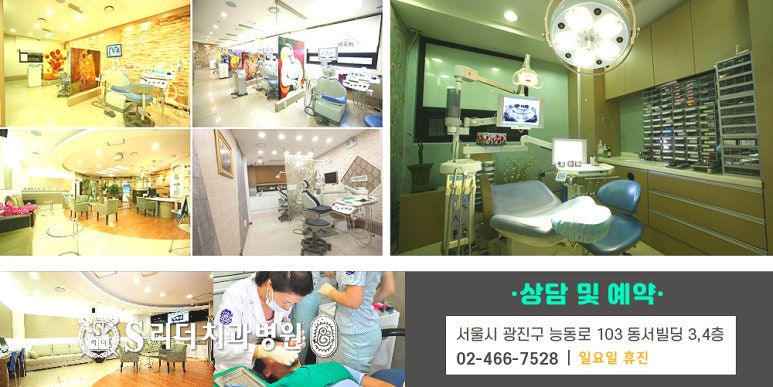
Konkuk Orthodontic Clinic / S Leader Dental Hospital
S Leader Dental Hospital, Konkuk Orthodontic Clinic
carefully manages the entire orthodontic process.
At S Leader Dental Hospital in Gwangjin-gu, Konkuk Orthodontic Clinic, every stage of orthodontic treatment is precisely managed through 3D digital scanning and occlusion analysis systems.
During periods when tooth movement slows, orthodontic force and bone response are analyzed together so that the treatment can move naturally to the next stage without unnecessary delay.
In addition, a specialist directly checks secondary issues such as gum inflammation, cavities, and bite imbalance during orthodontic treatment, and provides scaling or gum treatment when necessary.
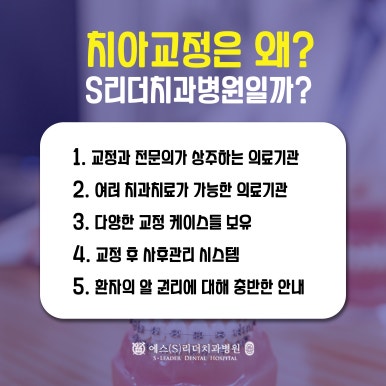
The strength of S Leader Dental Clinic is not simply “moving teeth,” but managing oral health so it remains stable throughout orthodontic treatment.
S Leader Dental Hospital, Konkuk Orthodontic Clinic in Gwangjin-gu, carefully analyzes each patient’s orthodontic speed and oral condition to provide the safest and most efficient treatment process.

Konkuk Orthodontic Clinic :: S (S) Leader Dental Hospital