Hello, this is Seoul Orthodontic Clinic, greeting you from S Leader Dental Hospital.
Children’s teeth change much faster—and in more complex ways—than parents may think.
Even if things look orderly on the outside, it is common for teeth to move crookedly inside the gums, or for jaw growth to become unbalanced. That is why orthodontic treatment is not simply about “when to start,” but about “when to get diagnosed.”
In other words, the key is catching the problem at the right time.
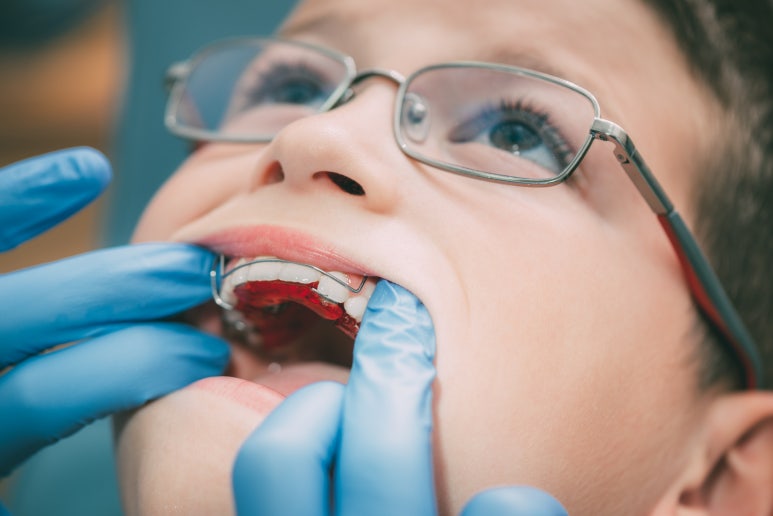
Many parents feel reassured, saying, “It’s okay because baby teeth are still there,” or “Won’t the teeth settle into place on their own once all the permanent teeth come in?” But once teeth in a growing child begin to become misaligned, the progression can accelerate, and if the skeleton grows in the wrong direction, orthodontic treatment alone may not be enough in adulthood, sometimes leading to the need to consider jaw surgery.
That is why the growth period from elementary school through early middle school is an extremely important time that must not be missed.
Today, at Seoul Orthodontic Clinic, S Leader Dental Hospital, we will explain in detail the five key points parents should check so that a child does not miss the right time for orthodontic treatment.
In fact, many elementary school patients who visit S Leader Dental Hospital already have these signs, and parents often say, “I didn’t know this,” or “I wish we had come a little earlier.”

- Frequently keeping the mouth open or breathing through the mouth.
If your child’s mouth is often open, it is rarely just a simple habit.
Children who cannot breathe well through the nose because of rhinitis, enlarged adenoids, tonsil issues, and similar problems will inevitably breathe through the mouth.
This habit affects not only tooth alignment but also the entire facial shape, so it is a very important sign when deciding the timing of orthodontic treatment.
Problems that can occur if mouth breathing continues include the following:
- The upper jaw grows longer, creating a protruding mouth shape.
- The mouth dries out, making cavities and mouth sores more likely.
- The jaw becomes narrower, making it easier for teeth to erupt in a crowded way.
- It can become fixed into a growth pattern that makes the entire face look longer.
Parents often say, “The mouth is only open while sleeping,” but if a child sleeps with the mouth open, it is already a sign that mouth breathing is likely happening during the day as well.
Because mouth breathing changes the direction of jaw growth, it is one of the 대표적인 reasons not to delay orthodontic timing.
Especially for lower elementary school children, combining orthodontic appliances with treatment to correct breathing habits can produce even better results.

- The front teeth are spaced apart or severely crowded.
Some spacing between teeth is common, but when the gap is too large or the teeth are severely crowded, it is a sign that there is not enough space and that an orthodontic consultation is needed in the early stage.
Typical symptoms a child may experience include the following:
- Difficulty brushing properly and plaque keeps building up
- Teeth erupting in a “blade-like” overlapping pattern with a crooked shape
- Not enough space for all permanent teeth to erupt, so they remain trapped in the gums
- Baby teeth that should have fallen out long ago but are still present
In particular, when the canine teeth erupt in a crowded way, parents may think, “They’ll come down later,” but if there is not enough space at this stage, the teeth may shift even more outward or inward, and the malocclusion can become worse.
In such cases, space-making treatment such as expansion therapy or partial orthodontics is often needed before all permanent teeth have erupted.
A good early diagnosis alone can shorten the orthodontic treatment period and increase the likelihood of avoiding extraction-based treatment.
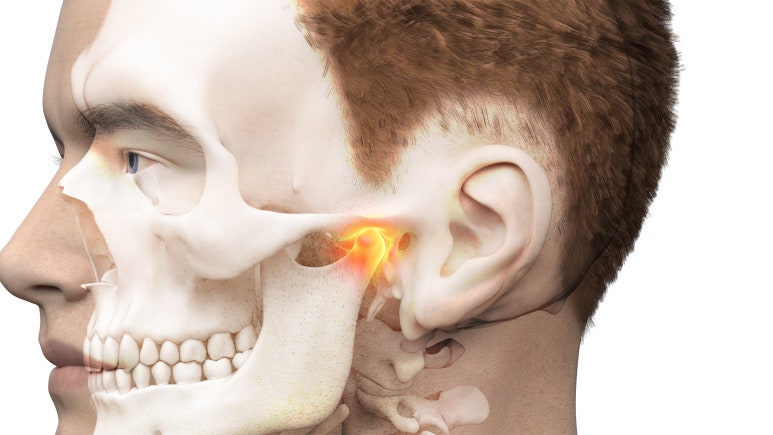
- The jaw is asymmetrical, or the lower jaw sticks out too far.
If, when looking at your child from the front, the chin point is tilted to one side, or if the lower jaw appears unusually forward from the side, this is a sign that should not be ignored.
Jaw asymmetry is easier to guide with orthodontic growth control at a younger age, but by the later middle school to high school years, the skeleton becomes more fixed, treatment becomes more difficult, and moving the teeth alone may not solve the problem, sometimes leading to the need to consider jaw surgery.
Signs parents can easily notice include the following:
- Tending to chew only on one side
- The teeth looking shifted to one side when smiling
- The jawline looking crooked in front-facing photos
- An underbite, where the lower front teeth are in front of the upper front teeth
In particular, a prognathic jaw pattern often worsens as the child grows, so the treatment window is often around 2nd to 4th grade in elementary school.
If this timing is missed, growth control becomes impossible, so if there is even a slight suspicion, a diagnosis should definitely be obtained.
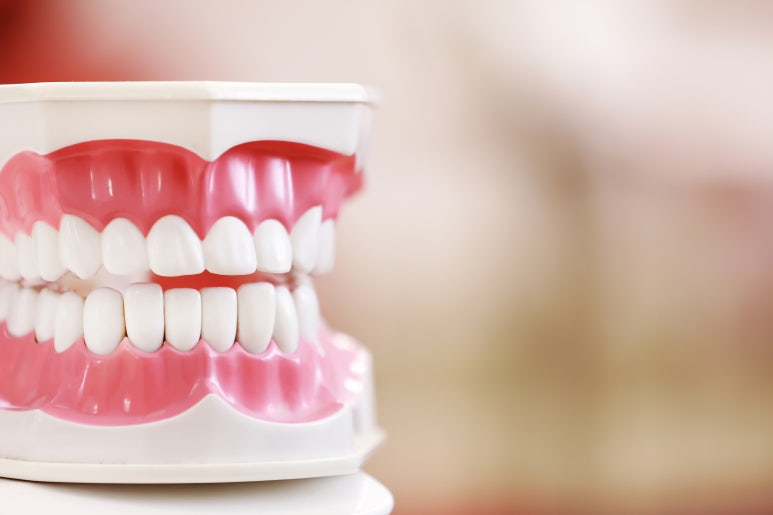
- The bite is abnormal. (Crowded teeth, underbite, open bite)
Even if bite problems do not look severe on the outside, they must be checked because they can directly affect the temporomandibular joint and jawbone growth over the long term.
▷ Crowded teeth
There is not enough space for the permanent teeth to erupt, so they come in overlapping. In this case, cavities, plaque, and gum inflammation tend to repeat, the alignment becomes increasingly complex, and the orthodontic treatment period later on becomes longer with a higher chance of extraction.
▷ Underbite
This is a condition in which the lower front teeth are in front of the upper front teeth, and it may be an early sign of a prognathic jaw.
If it is left untreated because the child “chews well,” the skeletal problem deepens, so early orthodontic treatment is essential.
▷ Open bite
This is a condition where the front teeth do not touch and remain apart. It is closely related to tongue thrusting, thumb sucking, mouth breathing, and similar habits.
In this case, not only orthodontic treatment but also correction of bad habits and growth control are needed at the same time.
Because all of these problems can be corrected in the direction of healthy growth through early consultation, a diagnosis during elementary school can often lead to a much simpler treatment plan.

- Your child may not be in pain, but still cannot chew well.
Adults usually speak up right away if chewing causes pain, but children do not often say much.
Instead, they show it through these behaviors.
1 They try to cut food using only their front teeth.
2 They avoid chewy side dishes.
3 They make loud chewing sounds.
4 They chew food for a long time and have trouble swallowing it.
5 They try to chew using only one side.
These symptoms are often not just a matter of eating habits, but may begin with temporomandibular joint dysfunction or bite imbalance.
If left untreated, they can also affect jawbone development during the growth period, so they are a sign that early diagnosis is necessary.
[The most common misconception parents have: “We can just do orthodontic treatment once the permanent teeth have all come in,” right?]
To be clear, the answer is NO.
By the time all permanent teeth have erupted, jaw growth has often already become somewhat fixed, making growth control difficult, lengthening the orthodontic treatment period, and increasing the likelihood of jaw surgery or extractions.
On the other hand, during the elementary school years, the jaw can be widened and growth can be guided in the right direction, helping the child develop a more natural facial shape and healthy bite as an adult.
When it comes to orthodontics, it is more important when you get checked than when you start.
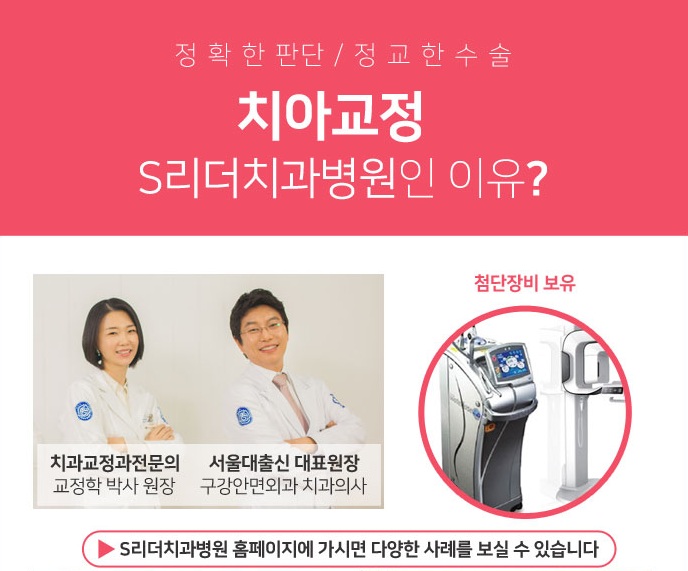
Seoul Orthodontic Clinic S Leader Dental Hospital’s
Growth-phase orthodontic diagnosis method
At Seoul Orthodontic Clinic, S Leader Dental Hospital, we carry out a precise and systematic diagnosis through the following process to accurately determine the right time for orthodontic treatment in growing children.
- Analyze jaw growth direction with a lateral X-ray
- Evaluate space for permanent teeth eruption and arch width
- Check temporomandibular joint function and chewing patterns
- Check bad habits such as mouth breathing and tongue habits
- Determine the timing of treatment by predicting growth rate
Rather than simply saying, “Start orthodontic treatment now,” we find the optimal timing that matches the child’s growth curve.
[Smart choice to avoid missing the right time for orthodontic treatment]
If even one of the signs below applies, it means your child has likely already moved past the stage of merely “thinking about orthodontics” and is approaching the time to actually get a consultation.
- Mouth breathing
- Teeth spacing/crowding
- Jaw asymmetry
- Bite problems
- Difficulty chewing
Growth-phase orthodontics is not just about straightening teeth; it is a process that helps guide a child’s facial shape, jaw, and breathing to grow properly as well.
If you have any questions, we encourage you to visit Seoul Orthodontic Clinic, S Leader Dental Hospital, for a growth-phase orthodontic consultation and receive an accurate check.



Seoul Orthodontic Clinic :: S (Leader) Dental Hospital