Hello, this is S(S) Leader Dental Hospital in Sungsu-dong.
One of the most surprising moments for patients after finishing orthodontic treatment is when they look in the mirror and notice a small black gap between their teeth.
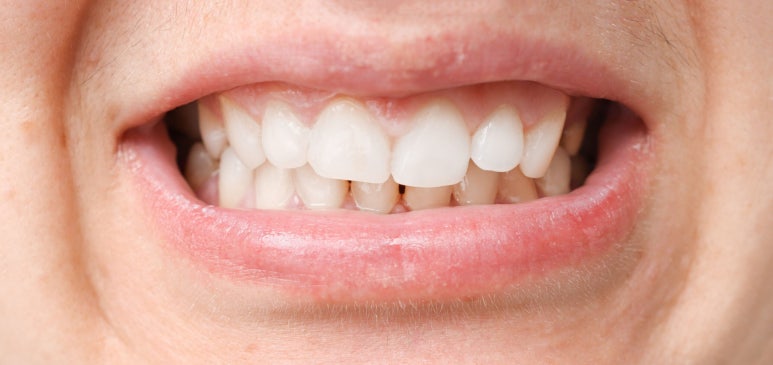
The teeth are clearly much more aligned than before, and the lip shape looks more natural, but one day while brushing, they suddenly notice a triangular gap that looks empty and dark between the teeth.
Many people see this gap and come to the clinic worried, saying, “It looks like the stitches came undone,” “Did a new space open between my teeth?”, or “Why does it look even stranger after orthodontics...?”
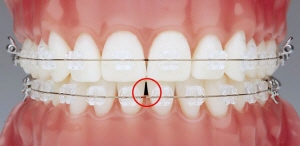
In dentistry, this phenomenon is called a ‘Black Triangle,’ and it is one of the relatively common changes observed after orthodontic treatment.
However, most patients do not know exactly how this change occurs, and often conclude that it is a ‘side effect of orthodontics’ or a ‘failed treatment.’
But a black triangle is not simply a problem caused by orthodontics. More often, it is a natural phenomenon that appears when the structural characteristics of the teeth, gums, and bone meet the orthodontic treatment process.
At S Leader Dental Hospital, this is treated as a very important part of the orthodontic consultation stage. That is why, before starting orthodontic treatment, we carefully analyze the patient’s periodontal condition, tooth shape, bone height, and other factors to inform them in advance about the possibility of black triangle formation.
 What is a Black Triangle?
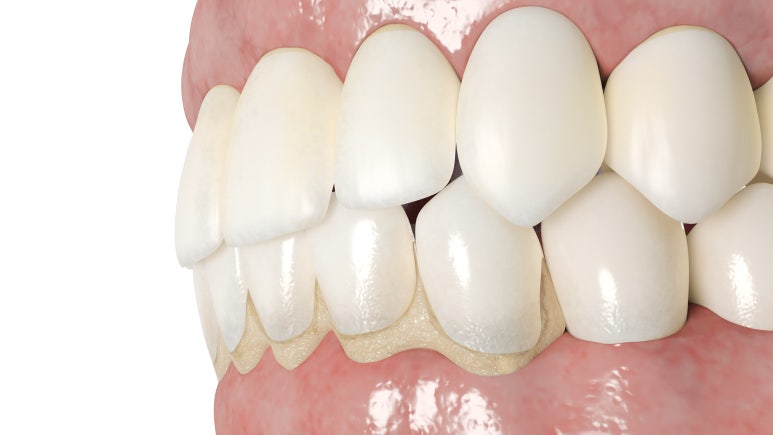
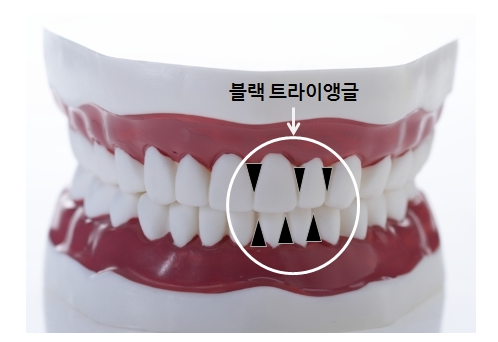
A black triangle literally refers to a triangular space between teeth that appears dark because the gum tissue does not fill the area.
When we look at the teeth of a patient with healthy gums, the space between the teeth is filled with a triangular piece of gum called the interdental papilla, which helps prevent food from getting trapped and creates a naturally shaped dental arch when smiling.
However, if this interdental papilla recedes, the bone decreases, or the teeth move in a way that the gums cannot fully follow, the space can look empty.
A black triangle is not just a cosmetic issue. It can also create structural discomfort, making food more likely to get stuck and plaque easier to accumulate, which makes oral hygiene more difficult to maintain.
So it is natural for many patients to ask, “Can’t it be removed?” or “Wasn’t the orthodontic treatment done wrong?”
But because this phenomenon results from multiple factors acting together, understanding the cause accurately makes it much easier to manage with peace of mind.
4 Main Reasons Black Triangles Appear After Orthodontics
- When periodontal disease or bone loss was already present
The most common reason black triangles appear after orthodontics is that the gum bone was already lower beforehand. Bone does not regrow through orthodontic treatment. Moving the teeth does not restore the gums to their original height either.
Therefore, patients who had gum inflammation before orthodontics, bled during scaling, or often had swollen gums often already had slightly reduced bone height.
When the bone has decreased, the support needed for the interdental papilla to fill the space between the teeth is lacking, which makes black triangles more likely to appear.
At S Leader Dental Hospital, we always check bone height with CT during orthodontic consultations, and if necessary, we first stabilize the inflammation through periodontal treatment before starting orthodontics.
Healthy gums allow the teeth to move healthily, and the gum shape after orthodontics is also much more stable.
2) When the teeth themselves are triangular in shape
Tooth shapes differ from person to person. In particular, when a person has triangular teeth with a wider crown edge and a narrower root area, black triangles are much more noticeable after orthodontics.
This is because before orthodontics, the teeth are not aligned, so the narrow parts overlap and are less visible. After the teeth are lined up neatly in a row, that shape is revealed as it is.
In such cases, the black triangle is a result of the tooth’s natural shape and does not mean there was a particular problem during orthodontic treatment.
In these situations, aesthetics can be improved through resin shaping or interproximal reduction (IPR), which naturally complements the tooth shape. In many cases, simply refining the tooth shape slightly can greatly reduce the black triangle.
- When the gums do not follow after spaced teeth are brought together
Black triangles are especially common in patients with diastema, where the front teeth were spaced apart.
If the teeth have been spaced apart for a long time, the gum tissue between them may already have stretched or lost elasticity.
As orthodontics moves the teeth quickly, the gum tissue cannot recover or reorganize at the same pace, leaving a small empty space in between.
In some cases, the gums may gradually fill in over time, but in most cases they do not fully close.
Therefore, if a patient originally had gaps between the teeth, it is important to be informed about this in advance before starting orthodontic treatment.
At S Leader Dental Hospital, we always explain the possibility of black triangles to patients with spaced front teeth and, if necessary, establish a gum-support plan in advance.
4) Age, gum thickness, and individual tissue characteristics
As people get older, gums naturally tend to become thinner, and gum bone also tends to lower slightly. In particular, the lower front tooth area has naturally thin gums and bone, so it is sensitive to even small changes.
Therefore, even patients in their 20s and 30s can have a structure in which black triangles are more likely to stand out after orthodontics if their gums are thin or bone thickness is limited.
Because this is an anatomical characteristic of the individual, it is more accurate to see it as a feature of that person rather than a problem.
So, does a black triangle mean the orthodontic treatment was done wrong?
Many patients worry, “I think the orthodontic treatment was done wrong,” or “Were the teeth brought together incorrectly?” but a black triangle is not evidence that orthodontic treatment failed.
As mentioned above, it appears as a natural result of the interaction between
gum bone
gum elasticity
tooth shape
pre-existing dental arch issues
Even when orthodontic treatment is performed perfectly, black triangles can still form. The important thing is to determine accurately whether the space is within a normal range of change or whether it requires additional correction.
At Sungsu-dong Dental Clinic, S Leader Dental Hospital closely monitors these changes through a cooperative treatment system between the orthodontic and periodontic departments.
How should black triangles be addressed?
- Stabilize the gums and periodontal condition first
If there is gum inflammation, the priority is to resolve it first. When the gums are swollen, the interdental papilla does not return to its proper position, and plaque buildup can make the black triangle look even larger.
Scaling, periodontal treatment, and gum care alone can produce visible improvement in many cases.
- Adjusting tooth shape (resin shaping)
If the teeth are triangular in shape, widening the lower part of the tooth can greatly reduce the black triangle visually. This is done by gently adjusting the shape without lasers or major equipment, and it is one of the methods with the highest patient satisfaction among orthodontic patients.
- Space design through interproximal reduction (IPR)
IPR is the process of very lightly refining the area between teeth to create a more natural shape. When applied to teeth that are too angular and narrow, it helps create space for the gums to fill in and can reduce black triangles.
- Gum regenerative procedures or gum grafting (when necessary)
If bone loss is severe or the gums are too thin, a more specialized surgical approach may be needed.
A peptide-based gum regenerative procedure or connective tissue grafting can be used to support the interdental papilla.
Because case selection is important for this method, it is safest to consult with an experienced periodontist.
Is it really possible to prevent black triangles after orthodontics?
Complete prevention is difficult, but the likelihood of occurrence can be greatly reduced depending on how well the orthodontic plan is designed.
At Sungsu-dong Dental Clinic, S Leader Dental Hospital applies the following systematically:
1 Analyze gum bone and gum thickness with CT before orthodontics
2 Start orthodontics after controlling inflammation
3 Analyze tooth shape and plan IPR if needed
4 Inform patients in advance about the possibility of black triangles
5 Check gum care during orthodontic treatment
All of these steps are not simply about “straightening the teeth with orthodontics,” but are part of a patient-tailored process that also considers the health and appearance of the teeth and gums after treatment.
Black triangles that appeared after orthodontics,
Please have them checked at Sungsu-dong Dental Clinic, S Leader Dental Hospital
A black triangle may be a concern for patients, but the condition itself is not necessarily a problem.
What matters is accurately distinguishing whether the change that has appeared is a normal change in gum structure or a condition that needs improvement through treatment.
At Sungsu-dong Dental Clinic, S Leader Dental Hospital, our orthodontic and periodontal specialists work together to comprehensively analyze the patient’s gum structure, bone thickness, tooth shape, and characteristics of the original dental arch to provide solutions for the most stable and natural result.
If you are worried about black triangles after orthodontics, please have the current change professionally checked to understand what it means and whether there are ways to improve it.



 Sungsu-dong Dental Clinic :: S(S) Leader Dental Hospital