Hello, we’re S Leader Dental Hospital, a best dental clinic in Seoul.
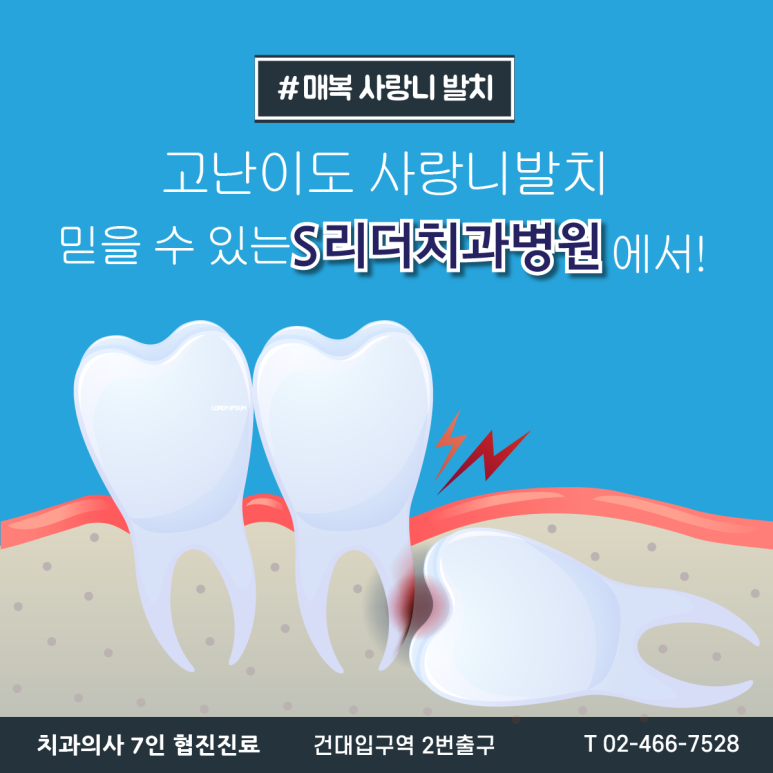
Wisdom teeth are something that can cause concern for almost anyone at least once. Many patients think, “It’s just a wisdom tooth, so I can have it removed when it hurts.” In actual treatment, however, the difficulty of care can vary greatly depending on the wisdom tooth’s position, shape, root direction, and the condition of the surrounding tissues.
Among these, the distinction that causes the most confusion is between impacted wisdom teeth and simple wisdom teeth. Although both are wisdom teeth, the treatment process, recovery speed, difficulty, and possibility of complications can be completely different.
Today, at S Leader Dental Hospital, a best dental clinic in Seoul, we’ll explain the difference between the two in an easy-to-understand way, and take a detailed look at what kind of treatment is needed in each situation and how dentists actually approach them.
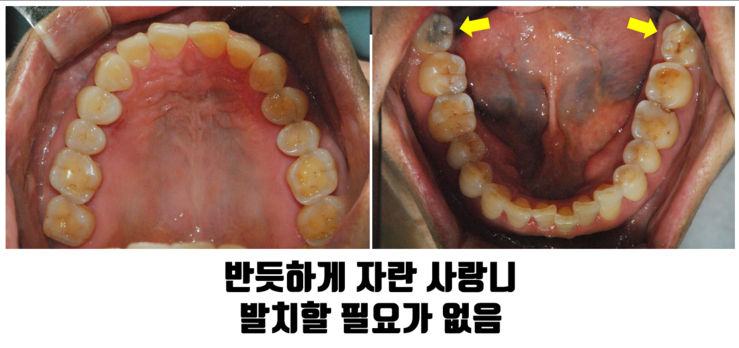
What Is a Simple Wisdom Tooth? - Neatly Extracting a Straightly Erupted Wisdom Tooth
A simple wisdom tooth refers to a wisdom tooth that has erupted normally without being buried in the gums or bone. In other words,
it has grown straight upward like a regular molar, so extraction is relatively simple. The entire wisdom tooth is exposed in the mouth, and because the crown can be grasped and pulled out well, the extraction time is short and recovery is generally quick.
Simple wisdom teeth are recommended for extraction when they are in a position where cavities are likely to develop, or when brushing is difficult and gum inflammation keeps recurring. In particular, if food often gets stuck between the back molars or if there is pain when opening the mouth, removing it before it gets worse is a way to make treatment simpler. Simple wisdom tooth extraction usually takes around 5 to 10 minutes, and because there is no need to significantly disturb the bone,
it is also characterized by a quick return to daily life.
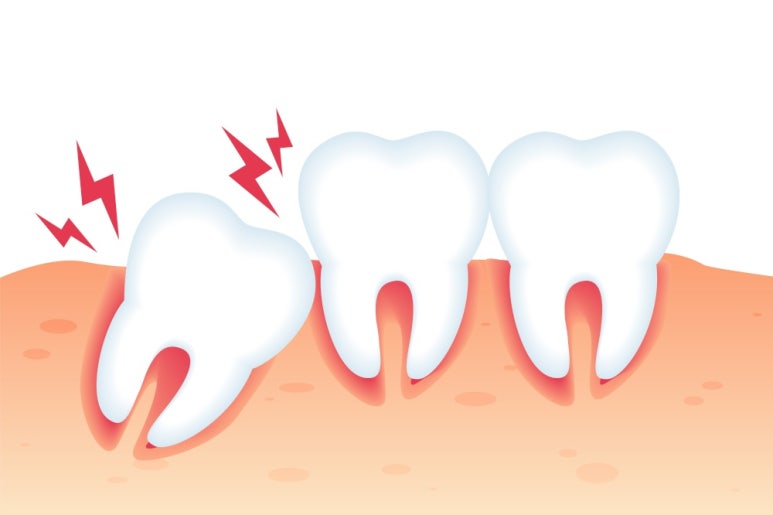
What Is an Impacted Wisdom Tooth? - A Tooth Buried in Bone and Tilted Out of Position
By contrast, an impacted wisdom tooth refers to a tooth that has not erupted properly because part or all of it is buried in the gums or bone. If the wisdom tooth crown is only partially visible, or if it is lying horizontally, it is also considered an impacted wisdom tooth. The problem is that this tooth is not merely buried; in most cases, the root direction is tilted or it is pushing against the neighboring tooth.
Impacted wisdom teeth often cause the following problems.
-
Pushing against the second molar and causing cavities
-
Repeated gum swelling and pus formation
-
Jaw joint pain, headaches, and bad breath
-
Cysts forming around the wisdom tooth
-
Chronic inflammation caused by food constantly getting trapped between the teeth
Because of these risk factors, impacted wisdom teeth usually require surgical extraction. The gum must be incised, and if necessary the crown and root are separated before the bone is slightly opened to remove the tooth, so the procedure is more difficult. Surgery takes longer than a simple wisdom tooth extraction,
and recovery also takes a little more time.
[How Are the Extraction Methods Different for the Two Types of Wisdom Teeth?]
● Simple wisdom tooth extraction
Simple wisdom tooth extraction is performed using the basic method of grasping the tooth and wiggling it out. Because the tooth is already exposed outside the gums, instruments can be inserted easily and the tooth can be moved out smoothly, so the procedure takes less time. In many cases, no incision or suturing is needed, so there is less bleeding and relatively less pain after the extraction.
● Impacted wisdom tooth extraction
By contrast, impacted wisdom tooth extraction includes a surgical process.
The main steps are as follows.
-
Incise the gums
-
Remove the minimum amount of bone covering the tooth
-
Separate the crown and root
-
Remove the tooth in pieces
-
Suture the gums
Most cases are performed under local anesthesia, but if the patient has severe fear or needs all four wisdom teeth removed at once, sleep extraction
or sedation may also be chosen.
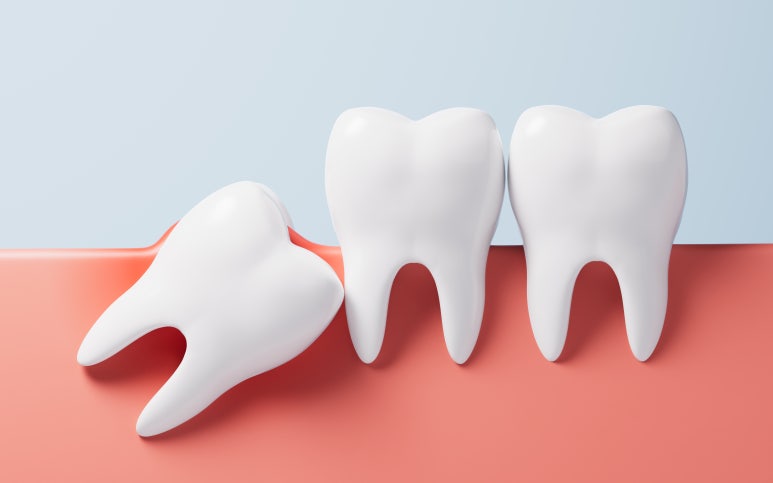
Problems That Can Occur If Impacted Wisdom Teeth Are Left Untreated for Too Long
Just because a wisdom tooth does not hurt does not mean it should be left alone; doing so can actually lead to bigger problems. Around an impacted tooth, there is less oxygen and bacteria can multiply easily, leading to chronic inflammation. A wisdom tooth lying sideways can also push the front molar and cause the bite alignment to collapse, and in patients with frequent inflammation, the infection may even spread to the jawbone in severe cases.
In particular, if cavities develop between the wisdom tooth and the second molar, the second molar is damaged before the wisdom tooth, and eventually root canal treatment may be needed or the lifespan of the tooth may be greatly shortened. The problem is that these cavities form in a place that cannot be seen from the outside, making them difficult for patients to detect on their own. As a result, they are often discovered only later on X-rays,
which also means longer treatment time and higher cost.
[Do Simple Wisdom Teeth Always Need to Be Removed? It Depends on the Case]
Simple wisdom teeth do not always have to be extracted.
They may be kept if the following conditions are met.
-
Gum inflammation does not recur
-
It is in a position that allows proper brushing
-
There is no interference with the surrounding teeth
-
There is no cavity and it does not interfere with chewing function
However, even simple wisdom teeth are often recommended for extraction if they are in a difficult-to-manage location, because the risk of cavities or gum disease eventually increases. In other words, rather than whether it is simple or impacted, how manageable it is can also become the key criterion.

How Does Recovery Differ After Extraction?
After a simple wisdom tooth extraction, most people can go about their daily life without major pain after about a day, and swelling is minimal.
By contrast, recovery from an impacted wisdom tooth extraction is slower because more surgical work is involved.
Swelling: Most severe on day 2 or 3, then gradually decreases
Pain: About 3 to 7 days
Food intake: Soft foods only for 2 to 3 days
Suture removal: Usually after 7 days
Of course, this varies from person to person, but having the procedure performed at an experienced dental clinic can greatly reduce discomfort, and recovery may be faster depending on infection control, medication prescriptions, and surgical technique.
The Wisdom Tooth Treatment That’s Right for Me,
The Most Important Thing Is an Accurate Diagnosis at S Leader Dental Hospital, a Best Dental Clinic in Seoul.
Wisdom teeth may all look similar, but in reality, the treatment method differs completely depending on many factors such as the direction of the tooth, root shape, thickness of the surrounding bone, and the position of the nerves. In some cases, they can be removed easily like a simple wisdom tooth, but in cases that require surgery like an impacted wisdom tooth, the judgment of medical staff with accurate diagnosis and sufficient experience is very important.
In particular, impacted wisdom teeth can cause various problems such as damage to the front molars, chronic inflammation, cysts, and collapse of the bite alignment, so getting an accurate examination as soon as possible is the safest choice.
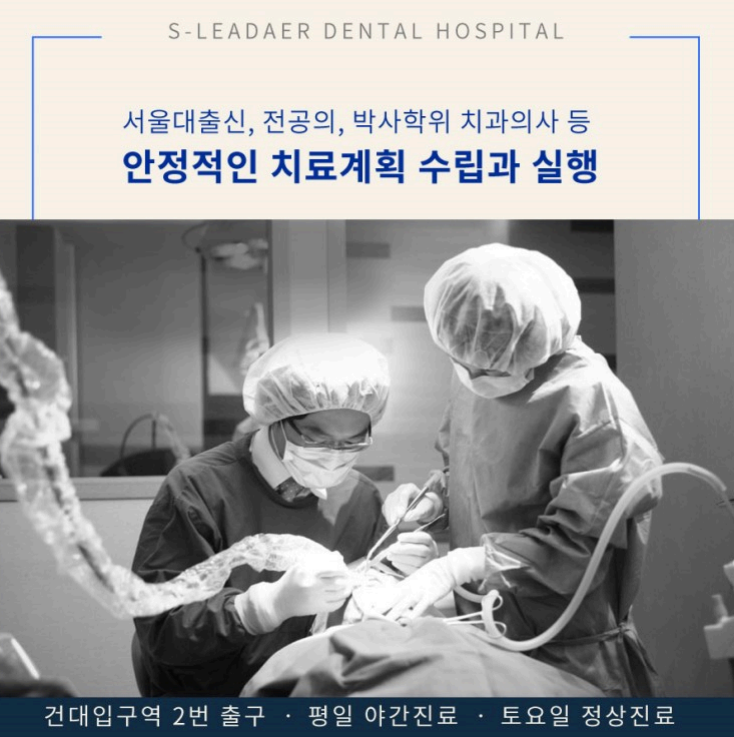
At S Leader Dental Hospital, a best dental clinic in Seoul, we use 3D CT to precisely check the positions of the nerves and bone, and suggest the most appropriate extraction method according to the condition of the wisdom tooth. Based on extensive clinical experience ranging from simple extractions to highly difficult impacted wisdom tooth extractions, we provide treatment that improves safety and recovery speed, and we also systematically guide patients through post-surgical care so they can recover without discomfort.
Ultimately, wisdom tooth treatment is not just about “a tooth that you simply pull out,” but a specialized treatment that requires a plan tailored to the condition of your gums, bone, and nerves.
If you are experiencing discomfort, please do not delay and get an accurate examination.


Best Dental Clinic in Seoul:: S Leader Dental Hospital