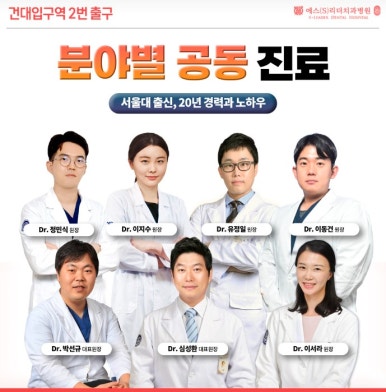
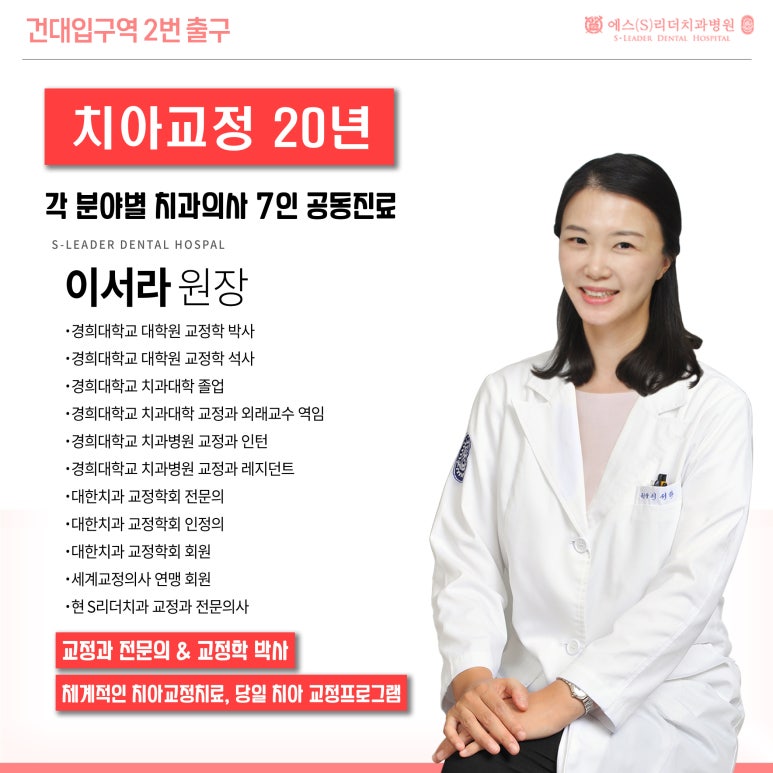
Hello, this is Nungdong Dental Clinic and S Leader Dental Hospital.
When the orthodontic appliance is first removed, many people think, “Finally, it’s over!” After enduring discomfort for so long, it feels great to see neatly aligned teeth. But in fact, this moment is not the end—it is the beginning.
This is because teeth do not become truly stable just by changing their appearance; they can only settle after becoming established within the bone, gums, and periodontal tissues.
That is why, after orthodontic treatment, you need to wear a retainer for a certain period to help keep the teeth in place.
From here on, let’s look at why a retainer should be worn for at least 1 year, and what changes occur inside the teeth and gums during that time.
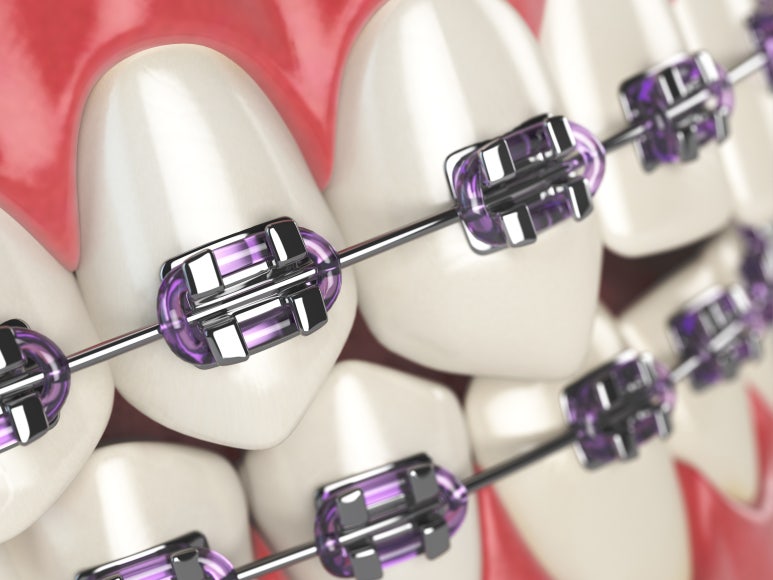
Teeth have a kind of “memory” that makes them want to return to their original position.
When teeth are moved through orthodontic treatment, the visible changes can be confirmed right away, but the surrounding tissues cannot keep up with that speed.
Teeth are anchored in the bone through ligaments and fibrous tissue, and these tissues retain a long-term “memory,” giving them a strong tendency to return to their original position (relapse tendency).
The moment braces are removed after treatment ends, this relapse tendency tries to push the teeth out freely, making the first 3 to 6 months especially risky.
In other words, a retainer is not just something that holds the teeth in place; it is a kind of “brake” that suppresses the teeth’s tendency to move back to their original position. Because it takes at least 6 months to 1 year or more for this force to weaken, wearing a retainer becomes an absolutely essential step.
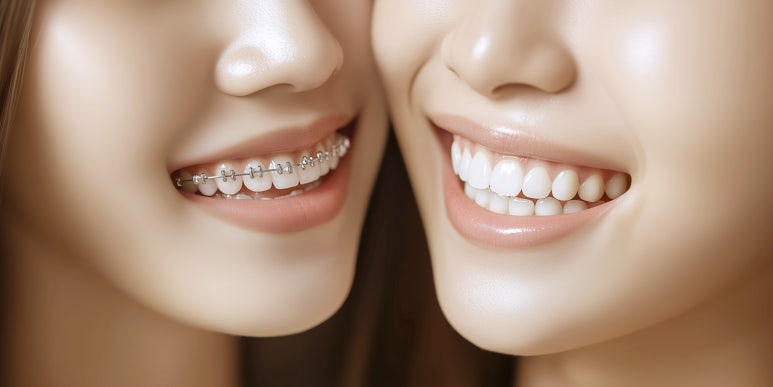
[Why do teeth feel unstable even after orthodontic treatment?]
When teeth move, many structures such as the alveolar bone (jawbone around the gums), periodontal ligament, and gingival fibrous tissue are all affected. The movement itself happens relatively quickly with appliances, but it takes much longer for these tissues to accept the teeth’s new position as their “proper place.”
One especially important tissue is the periodontal ligament (PDL). It is a very thin and elastic tissue surrounding the tooth, and it has the ability to remember the direction the tooth was in before moving. It takes a considerable amount of time for this periodontal ligament to stabilize in the new position, and during that period the retainer must hold the teeth securely in order to address relapse.
In addition, gingival fibrous tissue is highly elastic and exerts a fairly strong force that pulls teeth back toward their original direction. The rearrangement of this tissue can take as little as 1 year for some people, and more than 2 years for others, so there is a wide individual difference. For this reason, retainer wear cannot end in a short period.
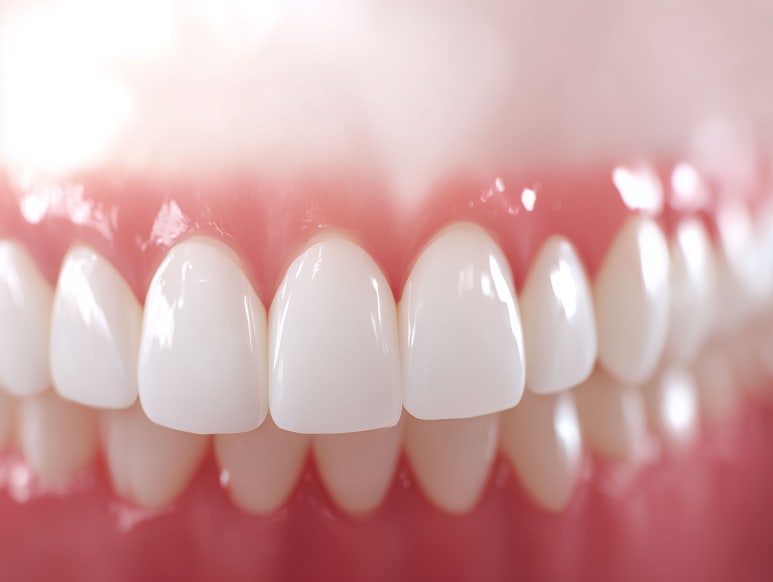
Are you curious about how long it takes for the jawbone to settle into its new place?
When teeth move during orthodontic treatment, the bone in the previous position is resorbed and bone is formed again in the new position. This bone remodeling is a very slow process, and in adults it is even slower. It takes at least 1 year for the alveolar bone to form strongly enough to support the new alignment, and in some cases it can take more than 2 years.
If you do not wear a retainer before this process stabilizes, teeth can easily twist or become spaced, and small changes can accumulate until they return to a shape not very different from before treatment.
In other words, the retainer protects the teeth while the bone is fully settling into place.
[Why do lifestyle habits affect tooth movement?]
Even if your teeth have been neatly aligned through orthodontic treatment, if the patient’s original lifestyle habits remain unchanged, the teeth are once again exposed to forces in an unstable direction.
- Habitually pushing the teeth with the tongue without realizing it
- Mouth breathing
- Chewing mainly on one side
- Bruxism or clenching the teeth tightly
- Resting the chin on the hand or watching TV while lying down
Because these behaviors are long-standing habits, they do not disappear quickly. Retainers act as a safeguard that minimizes the effects of these habits and helps the teeth gradually settle into a stable center.
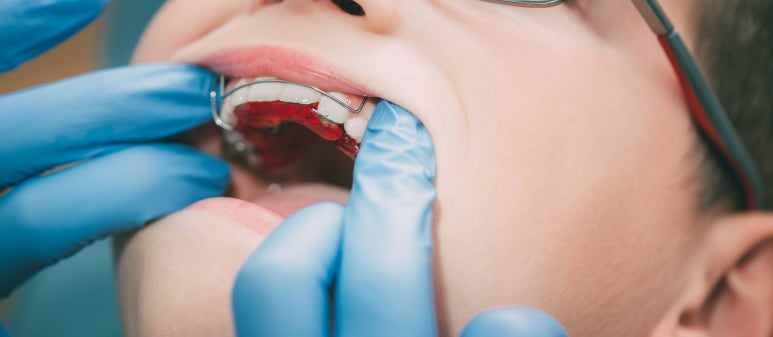
['Why should a retainer be worn for a long time?']
Orthodontic treatment is broadly divided into three stages.
-
Stage of moving the teeth
-
Fine adjustment and finishing stage
-
The “retention stage” that preserves the orthodontic result for life
Many patients think that stages 1 and 2 make up 100% of the entire treatment, but in fact stage 3, the retention stage, is so important that it accounts for more than 40% of the whole process.
Because teeth are not just stones but living tissue, the process of staying in the new position and stabilizing there takes the longest time.
That is why you should not suddenly stop wearing a retainer; the general rule is to gradually reduce wear as follows.
First 6 months after orthodontic treatment: wear all day
6 months to 1 year: mainly wear at night
After 1 year: gradually reduce depending on individual condition
For some patients: lifelong nighttime wear is recommended
In particular, adult orthodontics, extraction orthodontics, correction of protrusion, and cases with severe crowding may require a longer retention period.
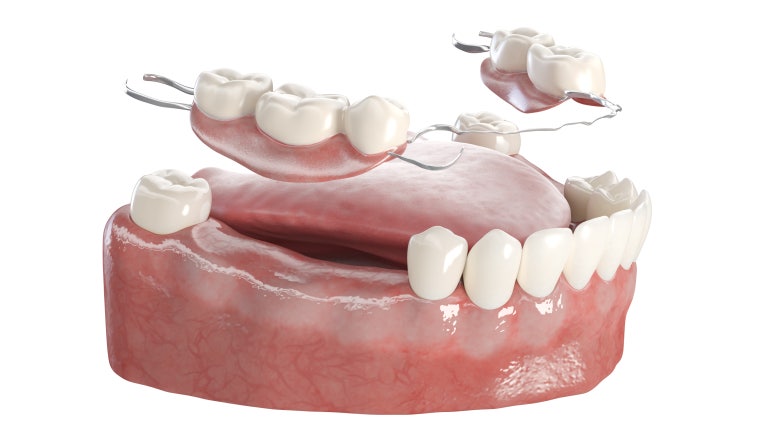
You can preserve the value of orthodontic treatment only by consistently wearing the retainer.
If you neglect retainer wear, teeth move surprisingly quickly. Some people say, “It feels like my teeth have opened up” even after not wearing it for just 2 to 3 days, and this is actually a common change.
If these small gaps accumulate, the entire alignment becomes disorganized, and in the end, you may even reach a point where re-orthodontic treatment is needed.
Considering the time, cost, and effort invested in orthodontic treatment, wearing a retainer is the minimum investment needed to protect the result.
The retention stage is not an appendix to orthodontics; it is the completion of orthodontic treatment.
Why do Nungdong Dental Clinic and S Leader Dental Hospital place importance on management after orthodontic treatment as well?
Nungdong Dental Clinic and S Leader Dental Hospital never consider the moment the orthodontic appliance is removed to be the “end.”
Teeth are living tissue, and some patients have a higher risk of teeth shifting again, while others recover more slowly in the jawbone and gums, so the retention strategy must also be different for each person.
That is why, for each patient, we comprehensively evaluate all of the following factors and provide a customized retention management plan.
- Retainer wear schedule
- Checkup intervals
- Gum and temporomandibular joint condition
- Effects of lifestyle habits
- Risk of relapse
The most important period in orthodontic treatment is not the moment when the visible appliance is removed, but the period afterward when the teeth stabilize.
Nungdong Dental Clinic and S Leader Dental Hospital take responsibility for post-treatment care so that patients can maintain the orthodontic results they worked hard to achieve for a long time.


 Nungdong Dental Clinic :: S Leader Dental Hospital