Hello, this is Gunja Station Dental Clinic, S Leader Dental Hospital.
Even if you brush and care for your teeth well, when the spaces between your teeth suddenly start to look black and empty, anyone would worry. You may wonder, “Why did this space suddenly appear?” or “Is there some kind of disease?” The hollow, black triangular space that appears between teeth is called a black triangle, and it is actually a common oral change that many people experience.
It can appear after orthodontic treatment, show up when the gums become weaker, or even look natural because of the shape of the teeth even when there is no special problem. On the surface, it may seem like a simple cosmetic issue, but there are actually various tooth and gum changes behind it.
Today, we will explain one by one why black triangles form and how they can be addressed.

When the gums weaken, these spaces appear.
The biggest cause of black triangles is changes in gum health.
The gums do not simply surround the teeth; they are an important tissue that gently fills the space between teeth. When the gums are healthy, the spaces between teeth are firmly filled, so black gaps are not visible. But if inflammation develops in the gums or damage continues to accumulate, the gums gradually begin to shrink and become thinner.
In particular, gum inflammation (periodontitis) is often mild at first, so people often leave it alone thinking, “It will get better soon.” As the jawbone gradually decreases during this process, the gum tissue that supports the teeth also moves downward with it. As a result, the spaces between teeth that were once tightly filled by the gums become empty.
Also, because the jawbone is not visible, patients have difficulty knowing the exact condition of their gums. Even if things look fine from the outside, detailed examinations often show that a significant portion of the bone between the teeth has already been absorbed. In this way, the health of the gums and jawbone is one of the most important factors in the development of black triangles.
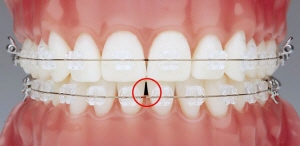
[Can it be more noticeable after orthodontic treatment?]
Many people who have undergone orthodontic treatment ask, “It wasn’t there before treatment, so why can I see it now?”
To put it simply, orthodontic treatment itself is not the cause of black triangles.
In fact, it is much more common that the teeth become aligned and the previously hidden gum shape or tooth root shape becomes more clearly visible.
Before orthodontic treatment, teeth may have been overlapping or tilted, making it seem as if the spaces between the gums were not visible. But once treatment is complete and the teeth are neatly aligned, the spaces between them become clearly visible. During that process, if the gums are slightly recessed, the tooth roots are narrow, or the spaces between the teeth are slightly open, black triangles can become more noticeable.
Another important point is the shape of the tooth root. If a tooth that was rotated before treatment is straightened during orthodontic treatment, its naturally narrow root shape may become exposed and appear as a triangular space. So black triangles after orthodontic treatment are a very natural change, and it is worth remembering that many patients experience this.
Sometimes it is simply due to the natural shape of the teeth.
Just as everyone’s face shape is different, tooth shape is different for everyone too.
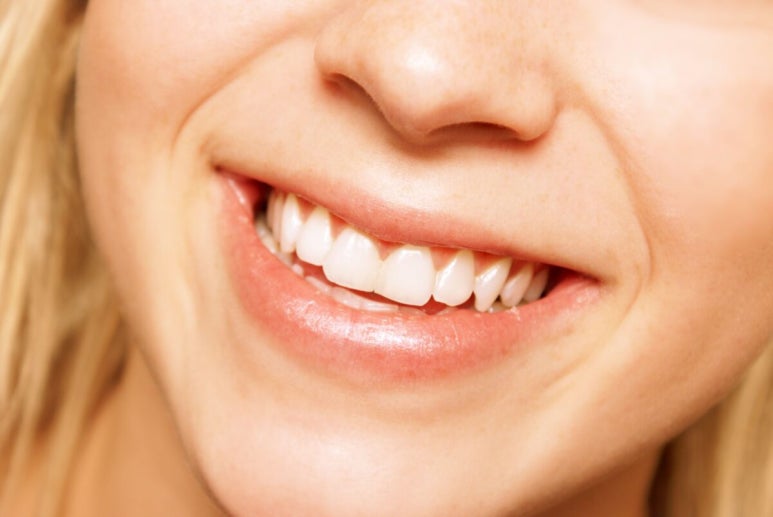
Some people have teeth that are closer to a square shape and do not easily create spaces, while others have cone-shaped teeth that are wider at the top and narrower near the root.
The issue is that when a person has teeth shaped this way, the “space between the roots” that was not visible before because the teeth were overlapping or tilted becomes exposed after orthodontic treatment, making black triangles very likely to form.
Natural changes that occur with age, such as the gums gradually becoming thinner or receding, also play a role. This is a natural physiological change, and when combined with the original root shape of the teeth, black triangles can appear more easily. This is not anyone’s fault, and it does not mean care was lacking. It is simply the natural result of an inherent tooth structure combined with changes in the gums.
Brushing habits and lifestyle habits can also have an effect.
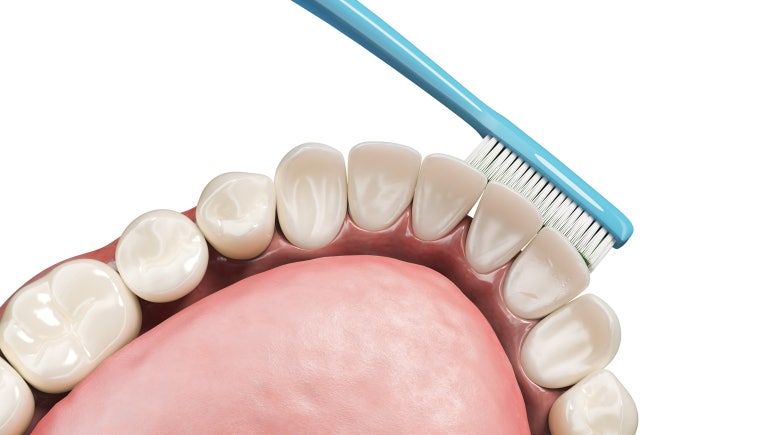
Brushing is the foundation of oral health care, but brushing too hard can actually create problems.
If you continue to scrub the gums with too much force, the gums become more vulnerable to friction and slowly recede, and in that process the gum volume that filled the spaces between the teeth decreases, leading to black triangles.
On the other hand, if you do not clean between the teeth well enough and tartar builds up, gum inflammation can develop. This inflammation weakens the gums and eventually creates space.
In addition, smoking, teeth grinding, excessive force caused by temporomandibular joint issues, and irregular gum care can all accelerate gum recession. Lifestyle habits have a bigger impact than people think, so regular checkups and learning the correct brushing method are very important.
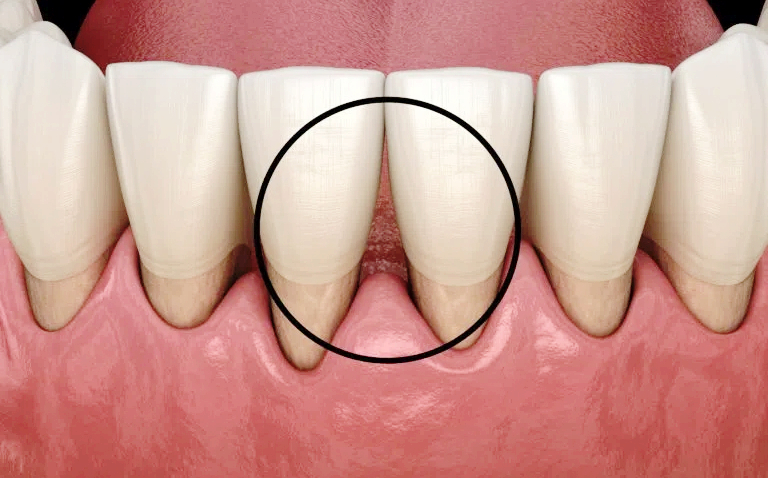
Black triangles: how can they be treated?
Treatment options for black triangles vary depending on the cause.
Rather than simply filling the space, the treatment choice is determined after accurately diagnosing why it formed.
● Treatment to improve gum health
If inflammation needs to be controlled first, the priority is to restore the gums to a healthy state through scaling and gum treatment. As the swelling subsides and the tissue stabilizes, the space may become slightly smaller in some cases.
● Naturally filling the space with resin
This is the most commonly used treatment. The tooth shape is adjusted naturally to softly fill the triangular space so that it is not noticeable. The treatment time is short, there is almost no pain, and the immediate improvement often leads to high satisfaction.
● Fine adjustment of tooth angle with partial orthodontics
If the cause is the tilt of the teeth, the angle can be adjusted slightly with partial orthodontic treatment to reduce the space. This may be possible even if you have already had orthodontic treatment.
● Restoring gum volume with gum grafting
If the gums have receded significantly, a microsurgical gum graft can also be used to restore gum volume. Gum grafting requires specialized expertise, so it is best to consult a clinic with extensive experience.

At S Leader Dental Hospital, Gunja Station Dental Clinic,
we identify and address the exact cause of black triangles
Black triangles are not resolved simply by fixing the visible issue.
To create a stable long-term result, we need to look at various factors together, such as why it formed, the condition of the gums, the shape of the teeth and roots, and lifestyle habits.
Gunja Station Dental Clinic, S Leader Dental Hospital, uses a collaborative system across departments such as orthodontics, periodontics, and prosthodontics to diagnose each patient and accurately analyze the cause, then suggest the treatment direction that fits that cause.
In particular, we do not stop at simply filling the space; we also place importance on long-term treatment that helps prevent the gums from receding further in the future.
If you are worried about black triangles, we encourage you to visit Gunja Station Dental Clinic, S Leader Dental Hospital, for a consultation without hesitation.




Gunja Station Dental Clinic :: S Leader Dental Hospital