Hello, this is S Leader Dental Hospital in Guui-dong.
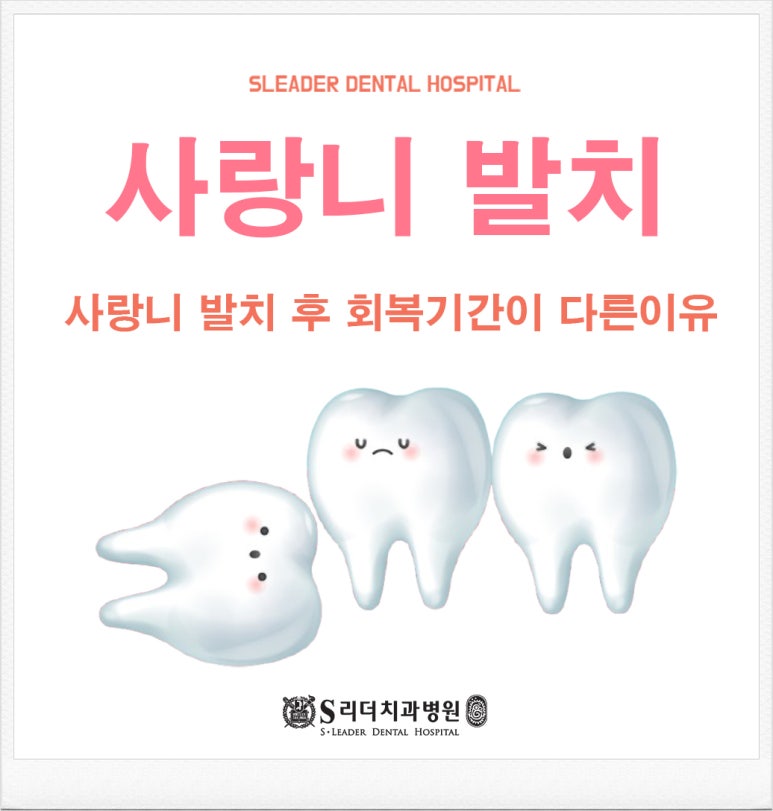
After having a wisdom tooth removed, some people return to their daily lives normally in just two days, while others suffer from swelling and pain for several days. Even when similar wisdom teeth are extracted, why does recovery happen at such different speeds?
In fact, it is because recovery is greatly affected by various conditions such as the shape of the wisdom tooth, gum condition, bone density, and lifestyle habits, rather than the extraction itself. That is why recovery after wisdom tooth extraction is not simply a matter of “being lucky,” but rather the result of each person’s oral environment, the treatment process, and the level of care afterward combined.
Today, Guui-dong Dental Clinic, S Leader Dental Hospital, will explain the main factors that create these differences in recovery in an easy-to-understand way from the patient’s perspective.
 The shape of the wisdom tooth determines recovery speed.
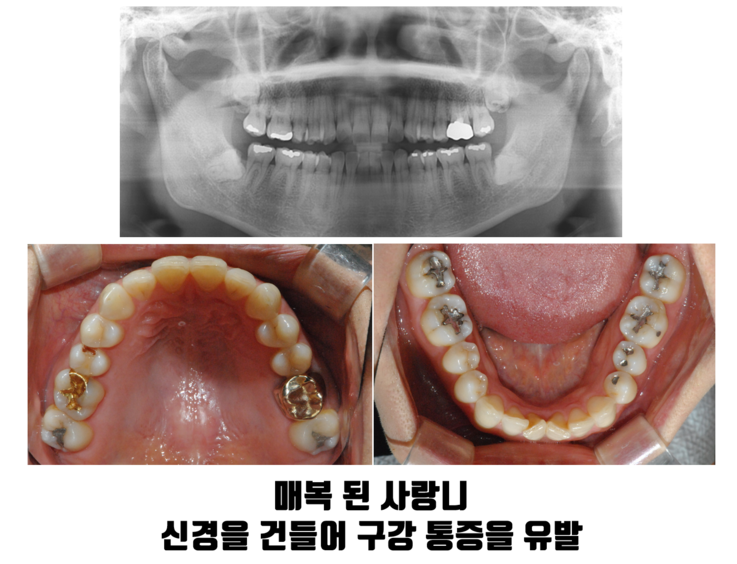
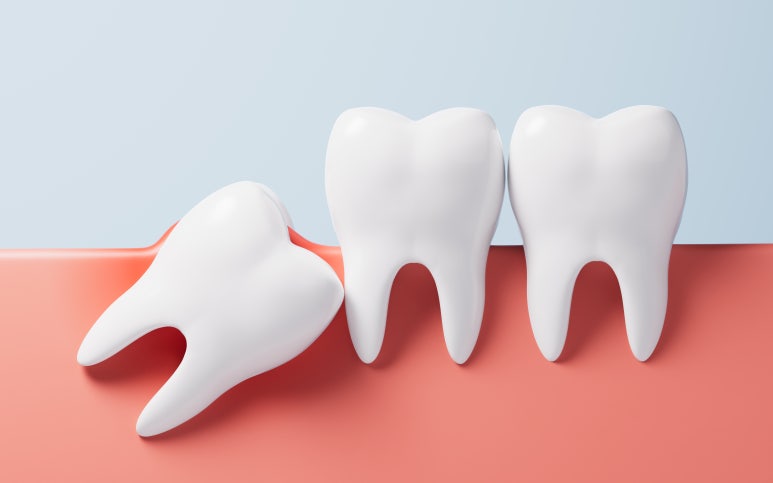
Unlike other teeth, wisdom teeth often do not come in straight and normally. It is common for them to be lying down, tilted sideways, or deeply impacted in the gum. Such impacted wisdom teeth may require gum incisions and tooth sectioning during extraction, which naturally lengthens the recovery period.
The shape of the tooth root is also very important. A wisdom tooth with a single, straight root can usually be extracted relatively easily, but if the root is split into two branches or curved, the procedure becomes a little more complicated. These structural differences directly affect the time it takes for gum tissue to heal, so swelling and pain can vary from patient to patient.
If the wisdom tooth is close to the nerve canal, a more careful approach is needed for safe extraction. In such cases, the surgery may take a little longer and tissue damage may be relatively greater, which can slow recovery. In the end, the condition of the wisdom tooth itself is one of the most fundamental and important factors determining recovery speed.
 Difficult extractions may lead to slower recovery.
The difficulty of wisdom tooth extraction is determined not only by the tooth structure, but also by its relationship with the surrounding tissues. If the gums around the wisdom tooth are already weakened by inflammation, or if the bone around the tooth has been unevenly resorbed, the extraction process requires more care and time.
When extraction difficulty is high, the procedure usually includes gum incision, partial bone removal, and tooth sectioning, so the wound area is wider and the recovery period is generally longer. This does not mean the procedure is dangerous or bad, but it is helpful to understand that the recovery period can naturally differ.
Even when the difficulty is the same, tissue damage can be minimized depending on the surgical method and the operator’s skill. That is why many patients consider not just the extraction itself, but who performs it and how it is done.
 Gum health can have a major effect on recovery differences.
Recovery after wisdom tooth extraction can vary greatly depending on the overall condition of the gums. Patients whose gums are normally weak, or who have gum inflammation (gingivitis or periodontitis), are more likely to experience longer swelling and pain after extraction.
Because the gums are the tissue responsible for healing, if inflammation or swelling is already present, more time is needed for the wound to close. On the other hand, patients with healthy gums tend to have a faster tissue response and better blood circulation, making recovery much easier.
For this reason, scaling or gum treatment is often performed before extraction. This is because the principle is not simply to remove the tooth, but to remove it in the healthiest possible environment so that recovery is easier as well.

 Immune function and lifestyle habits can also change recovery speed.
Recovery after wisdom tooth extraction is not determined only by conditions inside the mouth. Your usual immune function, sleep patterns, stress, and eating habits all affect the healing process.
During periods of poor sleep or high stress, immune responses may weaken and inflammation can last longer. Smoking constricts blood vessels, slows wound healing, and increases the risk of infection. Alcohol can also affect recovery, so it is best to avoid it for at least a few days.
Also, how well you follow basic aftercare—such as icing, maintaining oral hygiene, and taking prescribed medication properly—can make a significant difference in the amount of swelling and pain.
Even with the same wisdom tooth extraction, the recovery difference between a patient who follows care instructions well and one who does not can be surprisingly large.
 Post-extraction care is the key to recovery.
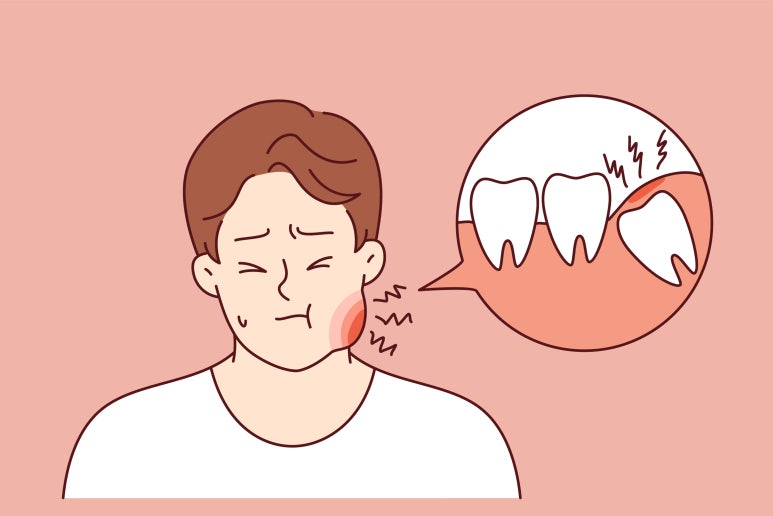
The first 48 hours after wisdom tooth extraction are the most important stage of recovery. During this period, using ice packs to reduce swelling and biting firmly on gauze to stop bleeding are important. If you do not follow instructions properly, or if you engage in improper actions such as eating hot food, smoking, or sucking through a straw, complications like dry socket may occur and recovery may take longer.
Also, failing to take medication on time, touching the extraction site with your fingers, or rinsing too vigorously can interfere with wound healing. Since each of these small habits affects the recovery period, it is very important to follow post-extraction instructions accurately.
One useful point to know is that for most patients, pain decreases noticeably within a day or two after extraction. However, individual differences do exist, so if the pain becomes worse than usual, or if there is pus or continuous bleeding, you should contact the dental clinic immediately. Early response makes recovery much faster and more comfortable.
 Accurate diagnosis and delicate extraction help recovery happen faster.
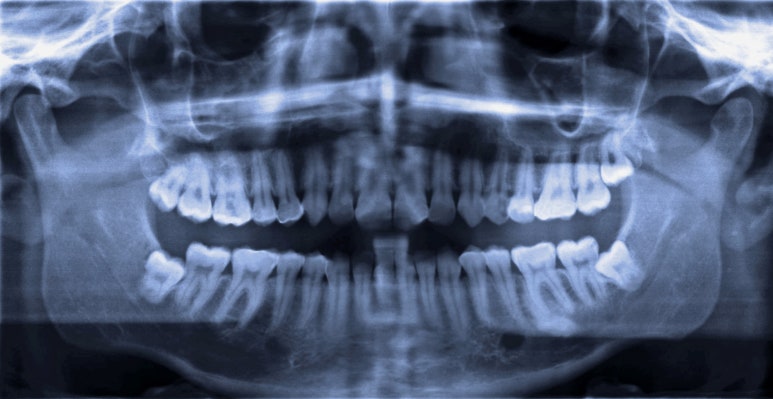
How comfortable recovery is after wisdom tooth extraction often depends not on the difficulty of the extraction itself, but on how stably the tissues were handled during surgery. By accurately assessing the distance to the nerve, root shape, and bone thickness through CT imaging before extraction, tissue damage can be minimized. As a result, swelling and pain are reduced, and the recovery process becomes easier.
The delicacy of the procedure also helps greatly not only with recovery speed, but also with reducing the risk of infection. That is why wisdom tooth treatment is not just a simple extraction, but a treatment process connected to accurate diagnosis, planning, procedure, and aftercare.

Guui-dong Dental Clinic, S Leader Dental Hospital
Will take responsibility for your wisdom tooth recovery.
Wisdom tooth extraction is not simply the process of removing one tooth. Only when accurate diagnosis, safe extraction, and recovery care afterward are all connected as one can the patient experience a comfortable recovery.
At Guui-dong Dental Clinic, S Leader Dental Hospital, we minimize tissue damage through CT-based precise diagnosis and extraction plans tailored to the patient’s condition, and we provide detailed guidance for post-extraction care to reduce unnecessary pain and swelling.
We also consider each person’s individual conditions, such as gum health, immune function, and lifestyle patterns, to provide customized extraction and recovery guidance, making the overall healing process much more stable and comfortable. If you are preparing for wisdom tooth extraction, choosing a clinic that can minimize discomfort after the procedure may be the wisest choice.
Guui-dong Dental Clinic, S Leader Dental Hospital, will support you through that process with care.
 Guui-dong Dental Clinic :: S Leader Dental Hospital