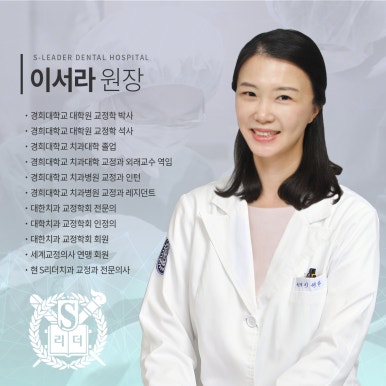
Hello, this is Jayang Station Orthodontics, from S Leader Dental Hospital.
One of the biggest concerns for people considering orthodontic treatment is cavities.
You may have heard the saying, “Orthodontics causes cavities more easily,” and it is true that some people do develop cavities during orthodontic treatment. Because of this, many people feel anxious even before starting orthodontics, and some end up hesitating to begin treatment.
However, orthodontic treatment itself does not cause cavities. The problem is that the environment inside the mouth changes once orthodontic treatment begins, and the risk of cavities increases when proper care is not provided for those changes.
From now on, at Jayang Station Orthodontics, S Leader Dental Hospital, let’s look at why cavities seem to develop more easily during orthodontic treatment and what causes them, one by one.
The inside of the mouth changes once orthodontic appliances are attached.
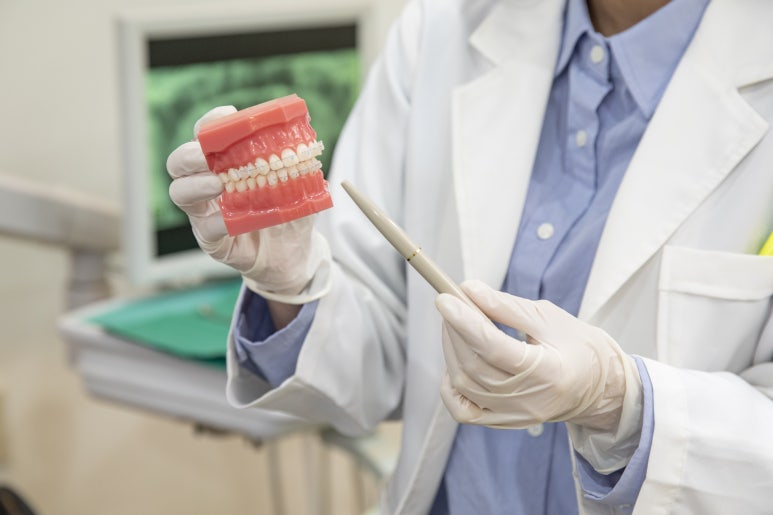
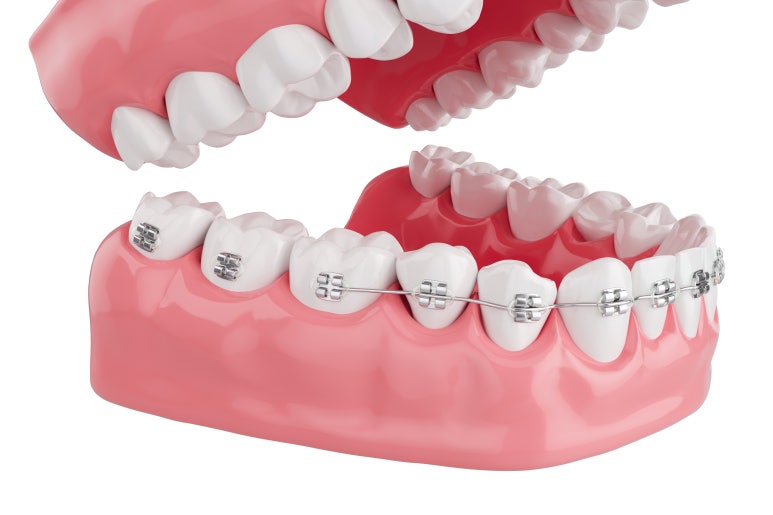
When orthodontic treatment begins, brackets are attached to each tooth, and wires are connected across them. These appliances are necessary to move the teeth into alignment, but they also make the structure inside the mouth much more complex than before.
Before orthodontics, the tooth surfaces were relatively smooth and simple, with fewer spaces where food could remain for long periods. But after orthodontic treatment begins, new spaces suddenly increase around the edges of the brackets, under the wires, and around the rubber bands, making it easy for food to get trapped.
These spaces do not just trap food more easily; they also make other problems more likely.
The longer food debris remains in the mouth, the more actively bacteria multiply and produce acids that attack the tooth surface.
In particular, the areas around the brackets are hard for a toothbrush to reach, so bacteria can build up without being removed.
This is why, even when the surface looks clean, cavities often start quietly behind the orthodontic appliances.
Why is brushing the same way not enough?
Among people undergoing orthodontic treatment, many ask, “I brush more often and spend more time brushing, so why are problems still happening?”
This question gets to the heart of orthodontic care.
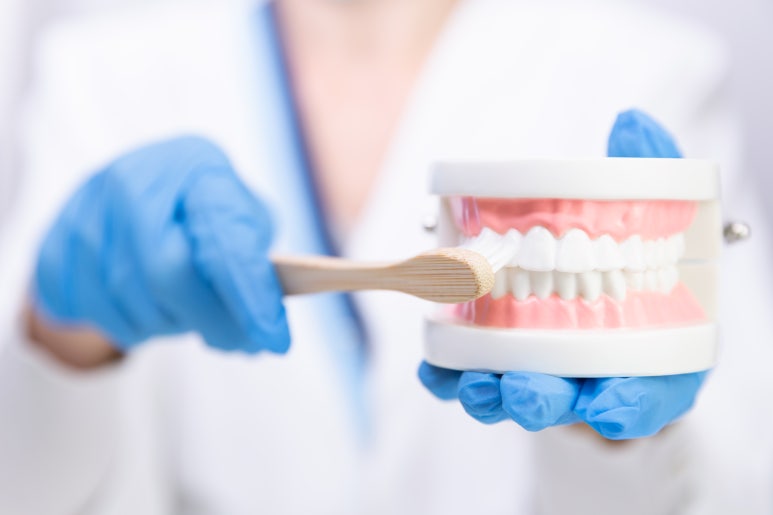
After orthodontic treatment begins, simply brushing for a longer time does not mean care is sufficient. The actual effect varies greatly depending on the angle of the toothbrush, how you brush around the appliances, and whether you use auxiliary tools.
In particular, the lower part of the brackets and the gumline are areas where both cavities and gum inflammation can begin at the same time. If these areas are not cleaned properly, white spots may appear on the tooth surface, or the gums may become swollen and bleed easily.
Many people think, “I’m brushing well,” but in reality, they are often just maintaining the same brushing routine they used before orthodontic treatment. Over time, this difference leads to different results.
Eating habits also change during orthodontic treatment.
Once orthodontic treatment begins, eating habits naturally change as well. People tend to avoid hard or chewy foods for fear that the appliances might come loose, and they often choose foods that are easier to chew.
As a result, many people end up eating more soft foods that stick to the teeth easily, such as bread, noodles, porridge, and snacks. The problem is that these foods can get stuck between orthodontic appliances easily and are not easy to remove.
In particular, if you frequently eat foods or snacks containing sugar, the mouth stays in an acidic environment for a long time. If you also frequently sip coffee, sweet drinks, or sports drinks, the teeth have very little time to recover.
It may feel like an ordinary daily routine, but from the teeth’s perspective, they are exposed to cavity risk all day long.
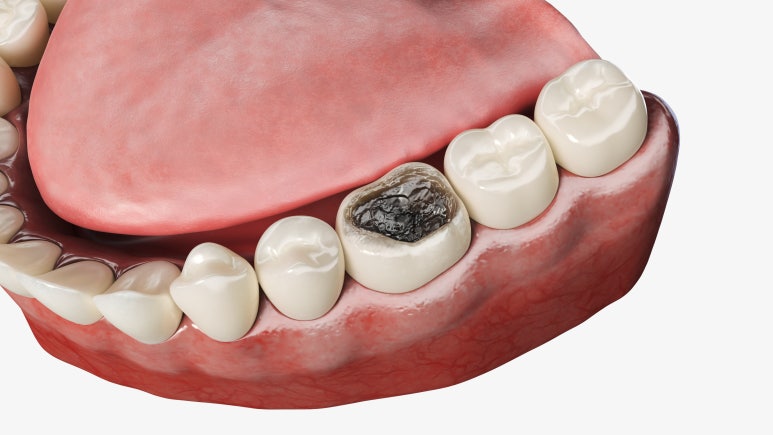
[When the mouth is dry, the risk of cavities increases]
Many people also feel that their mouths become dry more often during orthodontic treatment. This can happen because appliance discomfort makes them keep their mouths open longer, or because they unconsciously breathe through their mouth.
Saliva does more than simply keep the mouth moist. It plays an important protective role by washing away food debris, neutralizing acids, and suppressing bacterial growth.
However, when saliva production decreases, these protective functions also weaken.
If saliva’s protective effect is reduced in a mouth that is already harder to manage because of orthodontic appliances, the environment that allows cavities to develop becomes even easier to create.
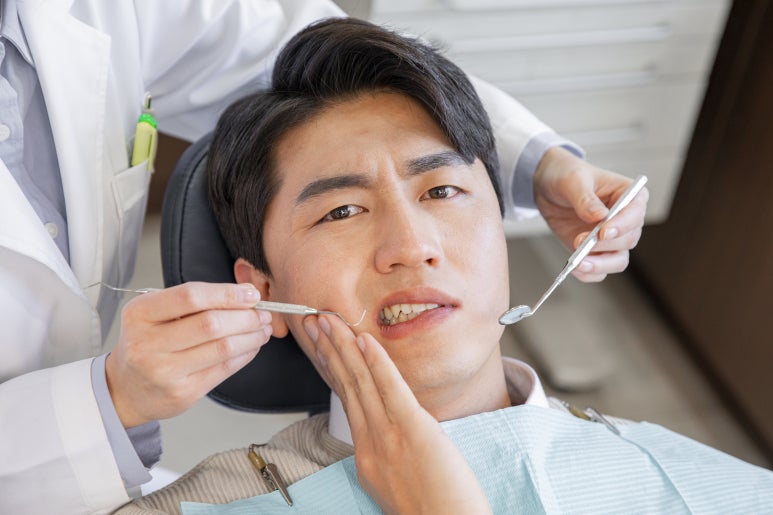
Why are cavities found late during orthodontic treatment?
The reason cavities are more problematic during orthodontic treatment is that they progress quietly and are not easy to see. Early cavities cause little to no pain, and the orthodontic appliances make them difficult to check directly.
Because of that, many people think there is no special discomfort and continue as usual. Then, after orthodontic treatment is finished and the appliances are removed, they may discover white spots on the tooth surface or cavities.
By that point, many cases have already progressed beyond the early stage and may require additional treatment. When a person is expecting to see the results of orthodontics, hearing that more treatment is needed can be very disappointing.
[Cavities can still be prevented during orthodontic treatment]
At first glance, it may seem as though cavities will definitely occur during orthodontic treatment. But the important point is that cavities are preventable.
If you learn the proper brushing method for your orthodontic condition and consistently follow a care routine suited to your teeth and lifestyle, you can sufficiently reduce the risk of cavities.
The key is not simply to “brush hard,” but to ask whether you are caring for your teeth in a way that matches your current orthodontic situation.
What really matters in orthodontic treatment is not only the result of straightening the teeth, but also keeping the teeth and gums healthy throughout the process.
At Jayang Station Orthodontics, S Leader Dental Hospital, we also take care of the treatment process.
At Jayang Station Orthodontics, S Leader Dental Hospital, orthodontic treatment is not viewed simply as a process of aligning the teeth. Because orthodontic treatment requires a long period from start to finish, we believe that how the teeth and gums are cared for during that process determines the quality of the final result. That is why, even before orthodontic treatment begins, we first check for cavities and gum condition and carry out a thorough diagnosis to determine whether orthodontic treatment is possible.
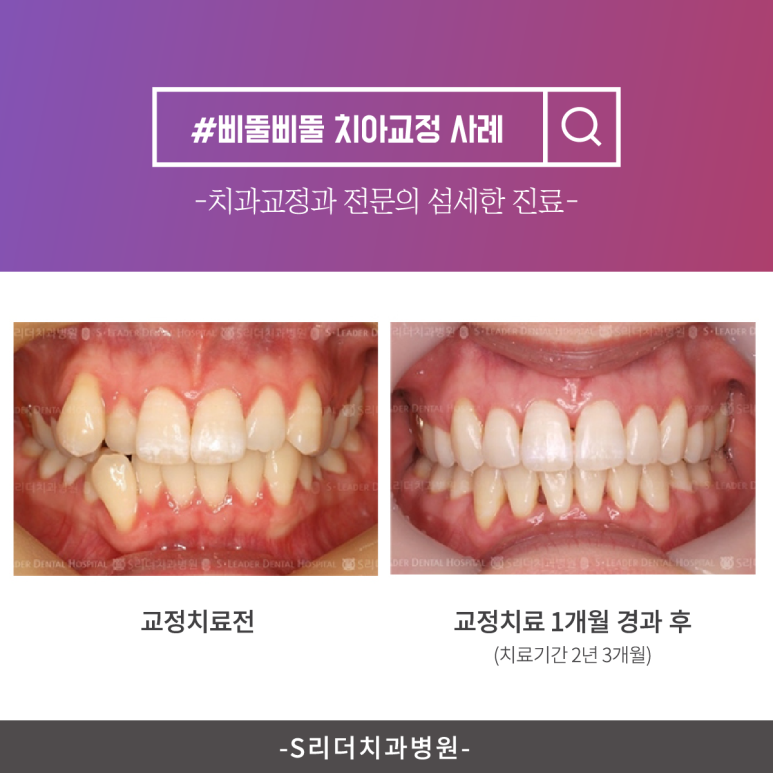
Even after orthodontic treatment has started, we do not focus only on appliance adjustments. At Jayang Station Orthodontics, S Leader Dental Hospital, we regularly check the oral condition during treatment to identify areas at risk of cavities, sections that are difficult to care for, and changes in the gums. We also continue to guide each patient on brushing methods and care points suited to their oral condition, with an emphasis on preventing problems that may occur during orthodontic treatment in advance.
If, by the end of orthodontic treatment, the teeth are aligned but cavities or discoloration remain, the treatment cannot be considered complete. At Jayang Station Orthodontics, S Leader Dental Hospital, we provide process-focused orthodontic treatment so that teeth can stay healthy not only until the treatment is finished, but afterward as well.
If you value not only the final result of orthodontics but also the overall treatment process, please consider a consultation at S Leader Dental Hospital.

Jayang Station Orthodontics :: S Leader Dental Hospital