Hello, this is S Leader Dental Hospital in Sangbong-dong, specializing in implants.
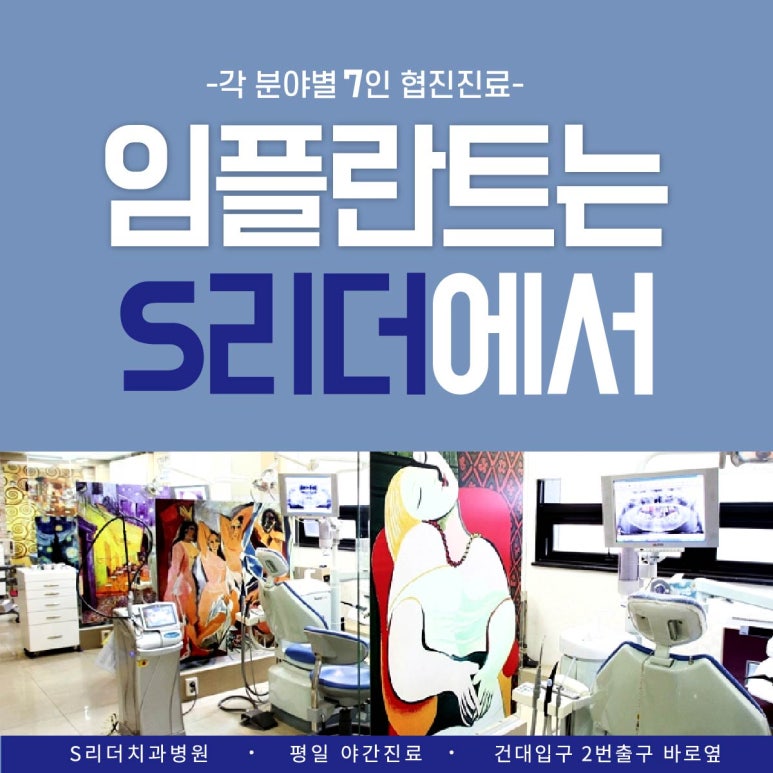
Losing even one tooth can have a bigger impact on daily life than expected.
At first, you may think you can just chew on the other side and move on. But as time passes, food keeps getting stuck, and you begin to notice that your chewing strength has changed. Then, at some point, even eating itself becomes uncomfortable, and you naturally start considering implant treatment.
However, implants should not be approached simply as “a treatment that places one artificial tooth.”
Among those looking into Sangbong-dong implant treatment, many are older or have had previous treatment experiences, making it difficult to make a decision right away.
Today, we will explain step by step what implant treatment is at S Leader Dental Hospital, why it matters, and what people aged 65 and older should pay closer attention to.
What Is an Implant?
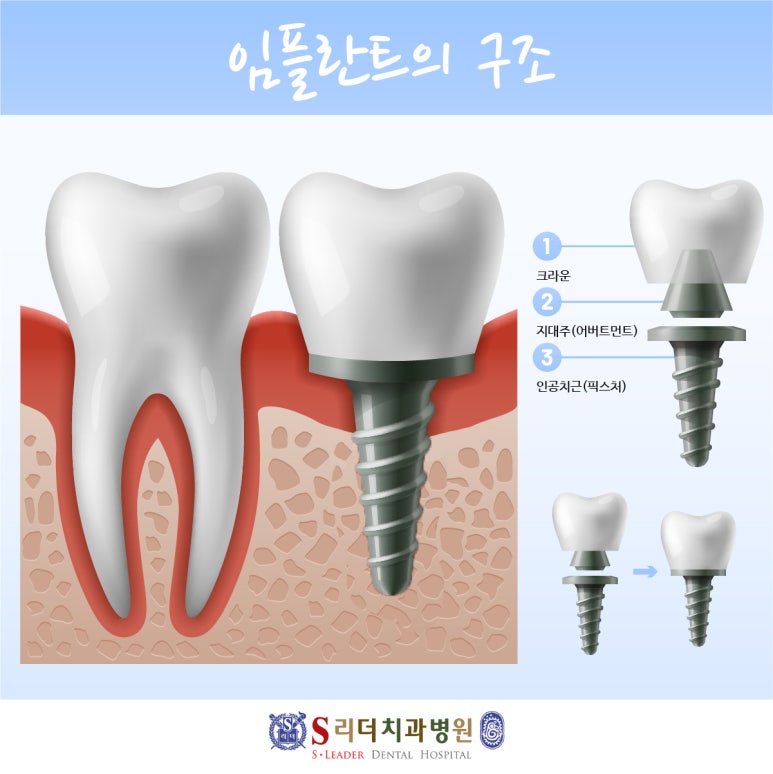
An implant is a treatment that restores function similar to natural teeth by placing an artificial root into the jawbone where a tooth has been lost, then attaching a prosthetic tooth on top of it. It is not simply about filling an empty space; the goal is to restore chewing function and maintain balance in the oral structure.
Compared with traditional dentures or bridge treatments, implants have the advantages of not damaging adjacent teeth and providing strong fixation. Because they can deliver chewing force close to that of natural teeth, they have recently become one of the most commonly considered treatment options after tooth loss.
However, since implants involve placing artificial materials directly into bone, long-term stability is difficult to expect unless the condition of the gums, the amount and quality of the jawbone, and the bite are thoroughly considered. That is why, for implants, how accurately they are planned in advance is even more important than the procedure itself.
[The Importance of Implants]
If a missing tooth is left untreated for a long time, several problems can occur one after another. First, the other teeth around the missing tooth may shift toward the empty space, causing the alignment of the teeth to become disturbed. As a result, food gets stuck more easily, brushing becomes more difficult, and the risk of cavities and gum disease also increases.
Another important change is bone resorption in the jaw. Teeth transmit stimulation to the jawbone during chewing, but when a tooth is missing, the bone in that area is used less and gradually shrinks. If a long time passes and the bone is significantly resorbed, implant treatment itself may become difficult, or bone grafting may be needed additionally.
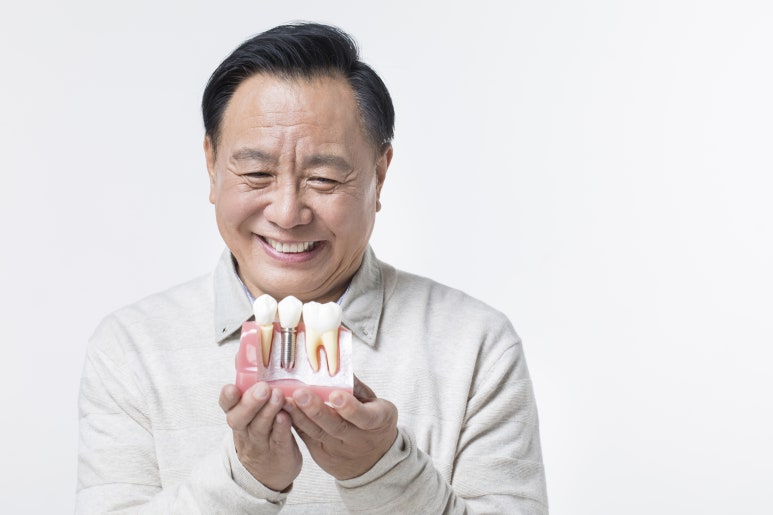
The importance of implant treatment is not just about solving current discomfort. It lies in preventing structural changes and functional decline that can result from tooth loss, and in protecting future oral health.
Sangbong-dong Implants: Extra Care Is Needed for Those 65 and Older.
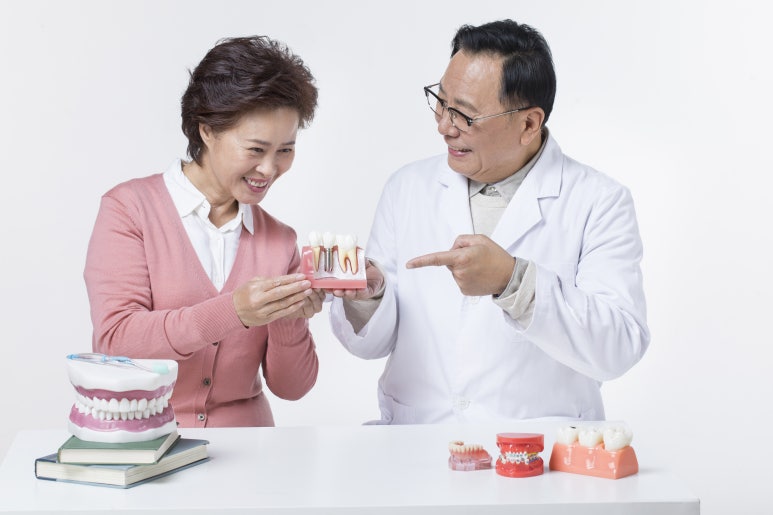
Implant treatment for people aged 65 and older should be approached differently from that for younger age groups. This is because, as people get older, jawbone density often decreases and gum conditions become weaker. Even if there does not appear to be a major problem on the surface, detailed examinations often reveal that there is not enough bone.
In addition, many patients are also managing systemic conditions such as high blood pressure, diabetes, and osteoporosis, so more careful planning before and after dental treatment is necessary. If implants are performed aggressively without considering these factors, recovery may be delayed and long-term maintenance may become difficult.
That is why, for implants in people 65 and older, an approach that prioritizes safety and stability over speed is important. Depending on the bone condition, treatment may need to proceed step by step, and it is best to plan with 충분한 consideration for recovery time so that no undue strain is placed on the patient.
For older adults considering Sangbong-dong implants, rather than asking, “Can I get an implant?” it is better to first ask, “Can you design a treatment plan that suits my condition?”
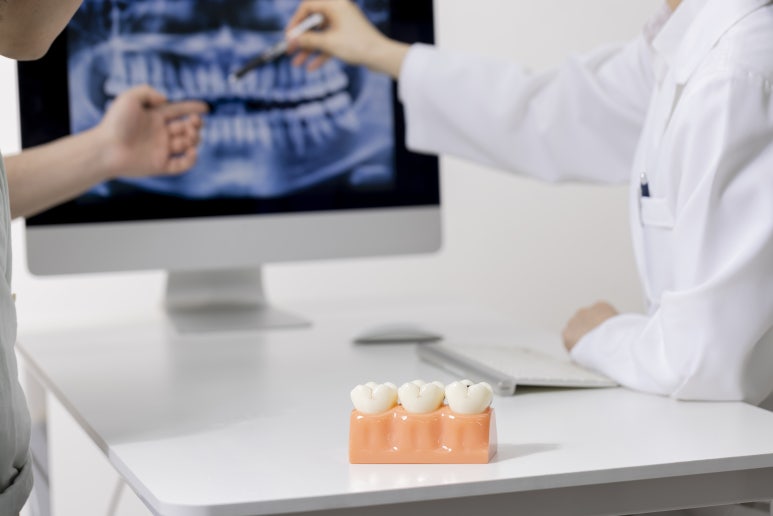
This Is How S Leader Dental Hospital Performs Implant Treatment.
At S Leader Dental Hospital in Sangbong-dong, the most important part before starting implant treatment is a precise diagnostic process. Through 3D CT imaging, we accurately check the condition of the jawbone and the location of nerves, and through oral examinations and interviews, we also consider the patient’s lifestyle habits and overall health condition.
Based on this diagnosis, we establish a treatment plan that is truly necessary for the patient. Rather than applying the same implant method to every patient, we adjust the placement position, number of implants, and treatment stages according to bone condition, age, and the environment in which the implants will be used. If necessary, we may also divide the treatment into stages to reduce the burden of recovery.
Care continues even after implant surgery. To help the implant settle stably and be used for a long time, we continuously check oral conditions through regular follow-up examinations and aftercare.
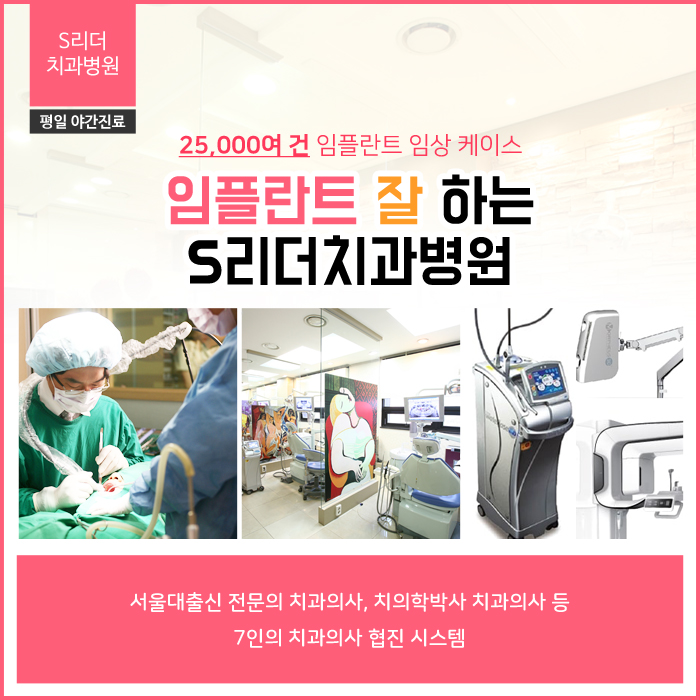
Sangbong-dong Implants :: S Leader Dental Hospital
Treatment Is Not Complete Without Care.
Implants are not a treatment that ends with surgery.
Only when every step—from diagnosis to surgery and then ongoing care—is carried out together can the result be satisfying. This becomes even more important as the patient gets older.
S Leader Dental Hospital manages the entire process, from diagnosis to surgery and aftercare, through a one-on-one customized system. If you are considering implants in Sangbong-dong, rather than focusing only on whether treatment is possible, we recommend making your decision carefully from a broader perspective.
Sangbong-dong implants :: S Leader Dental Hospital will help each patient continue a more comfortable daily life through implant treatment tailored to their individual condition.
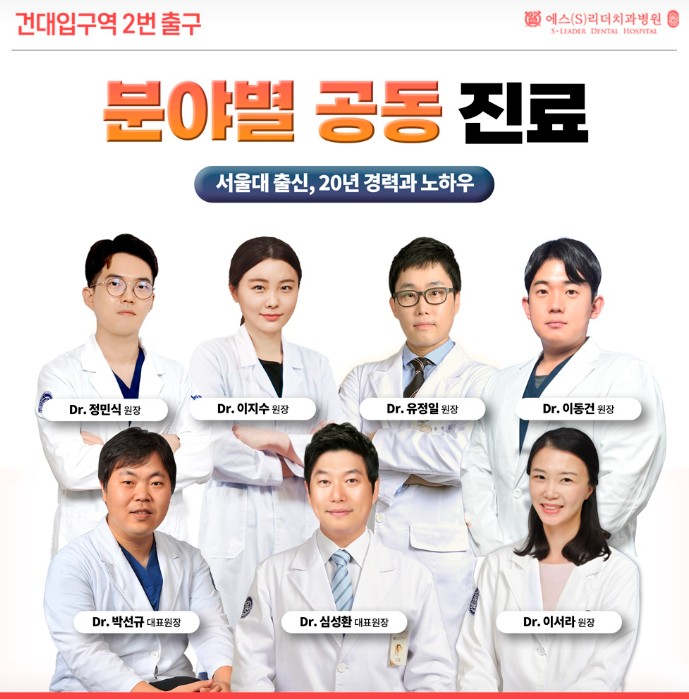
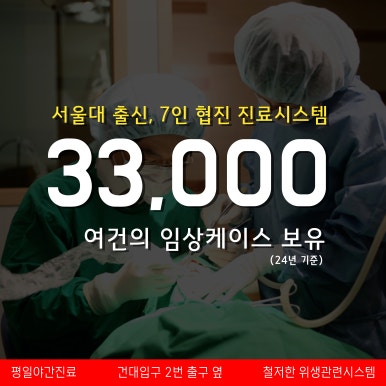

Sangbong-dong Implant Dentistry :: S (S) Leader Dental Hospital