When the braces come off, is the treatment really over?
Hello, this is S Leader Dental Hospital, Myeonmok-dong Dental Clinic.
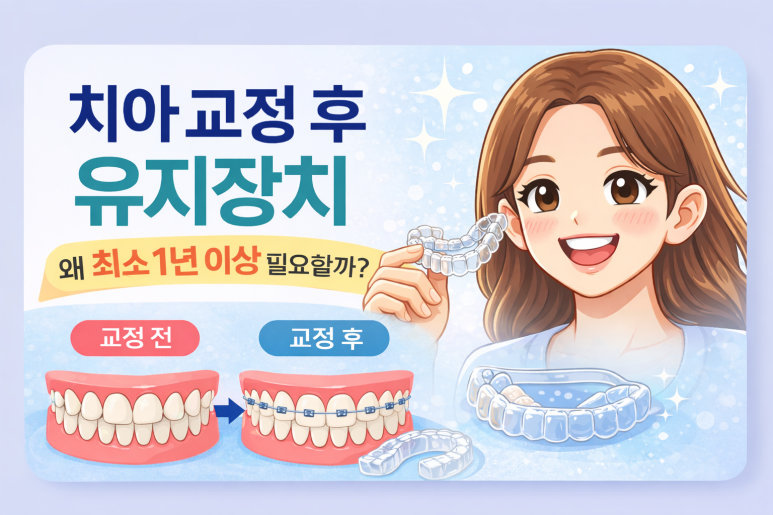
If you have undergone orthodontic treatment, you probably know very well how long you waited for that final day. The discomfort of eating with braces, mouth sores caused by orthodontic wires, the tension at each regular visit... After enduring all of that and working hard, when the day finally comes to remove the braces, it is natural to feel relieved and think, “It’s finally over!”
However, orthodontic treatment does not simply end with aligning the teeth.
Orthodontic treatment is only complete when it also includes ‘maintenance care’ to help the teeth settle into place and stay there for a long time. And the key role in this maintenance care is played by the ‘retainer.’
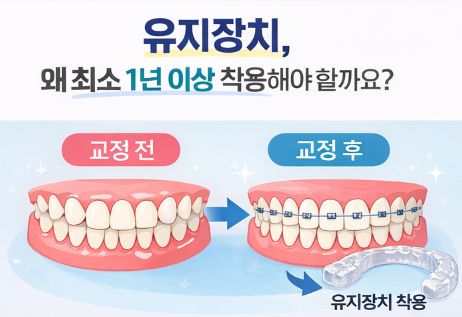
Why should you wear a retainer for at least 1 year?
When teeth move through orthodontics, it is not just their position that changes. The gums, alveolar bone, ligaments, and other structures supporting the teeth also change. During orthodontic treatment, teeth move under force, and the bone repeatedly undergoes resorption and regeneration in response to that force.
However, at the time the braces are removed, the bone and gum tissues are still not completely stable. Although the teeth may look neatly aligned on the surface, the internal structures are still in a transition period and continuing to adapt.
If they are left without any protection in this state, teeth tend to move back toward their original positions. We call this phenomenon ‘relapse,’ and it is a natural physiological response rather than a failed orthodontic treatment. Just as a stretched rubber band tends to return to its original shape when released, teeth also tend to return to their previous positions.
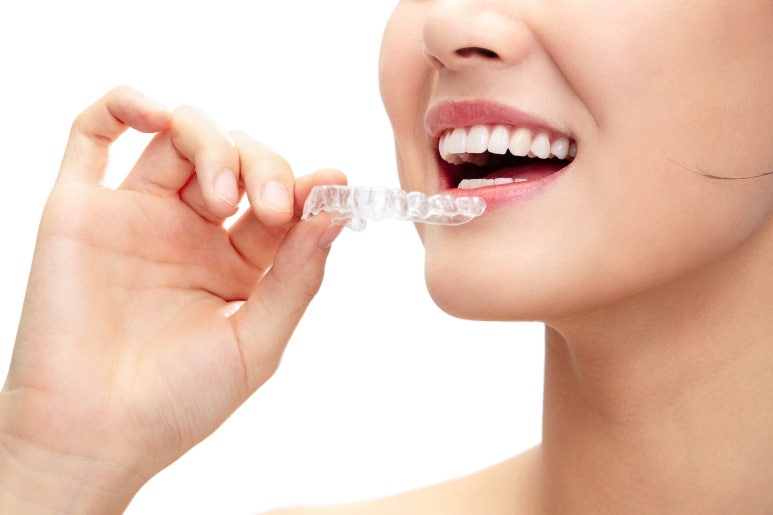
Retainers are the ‘last shield’ that protects orthodontic results
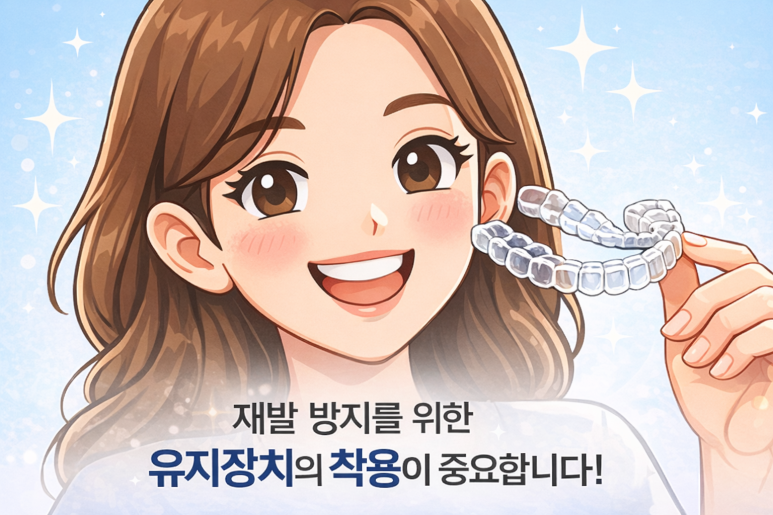
A retainer fixes the newly aligned teeth in place so they can maintain their position after orthodontic treatment. In particular, areas like the front teeth, where even small changes are noticeable, can quickly become misaligned if left without the help of a retainer. At first, the change may be noticeable only to you, but over time it will clearly become visible.
Over time, teeth gradually adapt to their new positions. The reason the adaptation period is viewed as at least 1 year is that it takes about that long for the bone and gum tissues to naturally settle into the new place. If you wear it only for a short time and stop, there is a risk that the orthodontic results will gradually fade.
[Orthodontics may be over, but treatment continues]
Many people think they do not need to visit the dental clinic after the braces come off, but during the retainer-wearing period, regular checkups are absolutely necessary. If the appliance becomes loose or no longer fits properly, it can instead apply negative force to the teeth.
At S Leader Dental Hospital, Myeonmok-dong Dental Clinic, we carefully check the patient’s tooth alignment, whether the retainer has been distorted, and gum health even after orthodontic treatment is complete. We do not simply stop at recommending that you wear the appliance; we provide thorough guidance on why it matters, its importance, and the correct way to wear it.
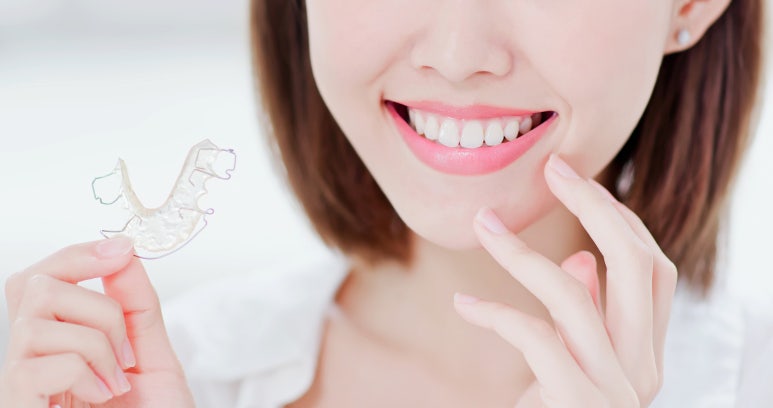
Why does the retention period differ from person to person?
Wearing a retainer for ‘at least 1 year’ is the baseline, but it cannot be exactly the same for everyone.
Not every person who has undergone orthodontic treatment wears a retainer for exactly 1 year.
Depending on individual factors such as tooth condition, the complexity of the original alignment, lifestyle habits, age, and gum health, the required retention period may vary.
For example:
-
When the teeth were severely crowded before orthodontic treatment
-
When many rotated teeth were moved
-
When there is a habit of grinding or clenching the teeth
-
When gum recovery is slower due to older age
People with these conditions have a higher risk of relapse, so wearing the retainer for a certain period even after 1 year is recommended.
On the other hand, if only simple alignment correction was performed and oral health is stable, the wearing time can be gradually reduced.
However, what matters is not the time but the condition. A more important question than “How long do I need to wear it?” is “Have my teeth stabilized yet?”
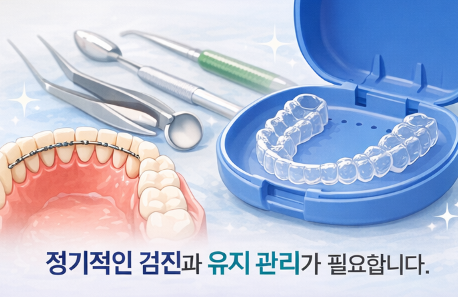
Maintenance may be more important than wearing the retainer.
No matter how long you wear a retainer, if it has become distorted or no longer fits properly, it can have the opposite effect.
-
When the appliance becomes loose and no longer fits closely against the teeth
-
When it has bent due to heat or impact but is still worn as is
-
When bacteria have multiplied because the appliance was not cleaned
Continuing to wear it in this condition can apply harmful force to the tooth alignment, which may eventually lead to a situation where orthodontic treatment is needed again.
Therefore, regular visits are essential even after orthodontic treatment is over. At S Leader Dental Hospital, Myeonmok-dong Dental Clinic, we check whether the retainer fits properly and, if necessary, carefully verify whether it needs remaking or adjustment, as well as whether there has been any tooth movement.
[Why S Leader Dental Hospital focuses on maintenance care]
Orthodontic treatment is a process, not just a treatment.
And the final puzzle piece that completes that process is wearing the retainer.
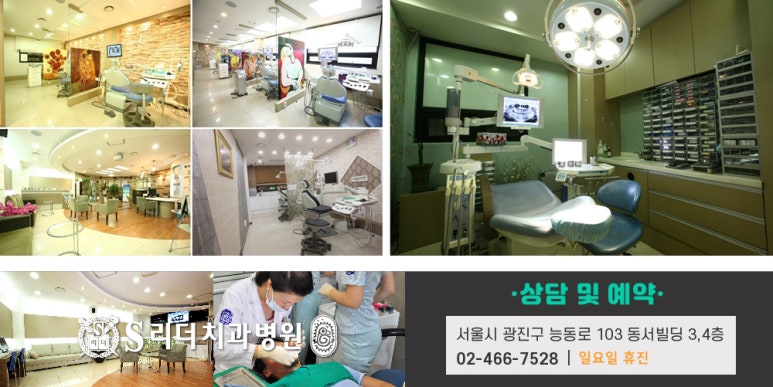
S Leader Dental Hospital, Myeonmok-dong Dental Clinic, views orthodontic treatment as one continuous flow from the start to the end, and even through the maintenance care afterward.
-
A collaborative system of specialized medical staff responsible from beginning to end
-
Personalized maintenance schedules after orthodontic treatment ends
-
Checking and providing feedback on subtle tooth changes through regular checkups
-
Friendly education on how to care for the appliance and precautions when wearing it
In this way, the goal is not simply to make the teeth look even, but to maintain healthy and beautiful teeth for a long time.
The last stage of orthodontics is ‘maintenance,’ and the clinic you go through that process with matters.
Orthodontic treatment does not end merely by attaching and removing appliances.
Maintenance after that is also part of the treatment, and in fact that period can be said to be the time that determines the completeness of orthodontics. Because teeth remember the places they have been in for a long time and have the tendency to move again even with small stimuli, delicate management during the stabilization period is essential.
Wearing a retainer is not optional; it is an extension of orthodontic treatment.
And depending on how this important period is managed, the results may last a lifetime, or orthodontic treatment may be needed again.
S Leader Dental Hospital, Myeonmok-dong Dental Clinic, deeply understands this point and has a treatment philosophy that takes responsibility for everything from the start of orthodontic treatment, through the retention period after appliance removal, and even the care afterward.
Rather than simply providing an appliance, we help patients feel trust and satisfaction with orthodontic treatment through tailored retention plans based on each patient’s tooth condition, prevention of relapse through regular checkups, careful follow-up care such as checking for appliance distortion and wearing condition, and sufficient explanations and communication about the principles and process of treatment.
If you have become complacent because the orthodontic treatment is over, now is the time to fasten the treatment’s ‘true final button.’
S Leader Dental Hospital, Myeonmok-dong Dental Clinic, will continue to stand by you until the very end, even through the time after orthodontics, to protect your healthy and beautiful smile.
From the beginning of treatment to the very end — S Leader will always be with you.
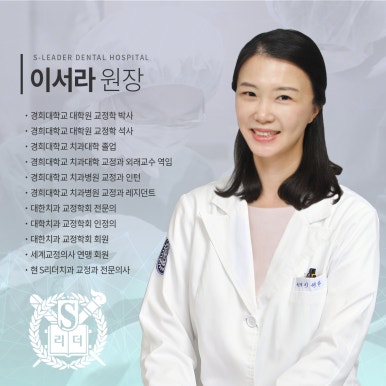


Myeonmok-dong Dental Clinic :: S (S) Leader Dental Hospital