Hello, this is S Leader Dental Hospital, a Gwangjin-gu dental clinic, saying hello.
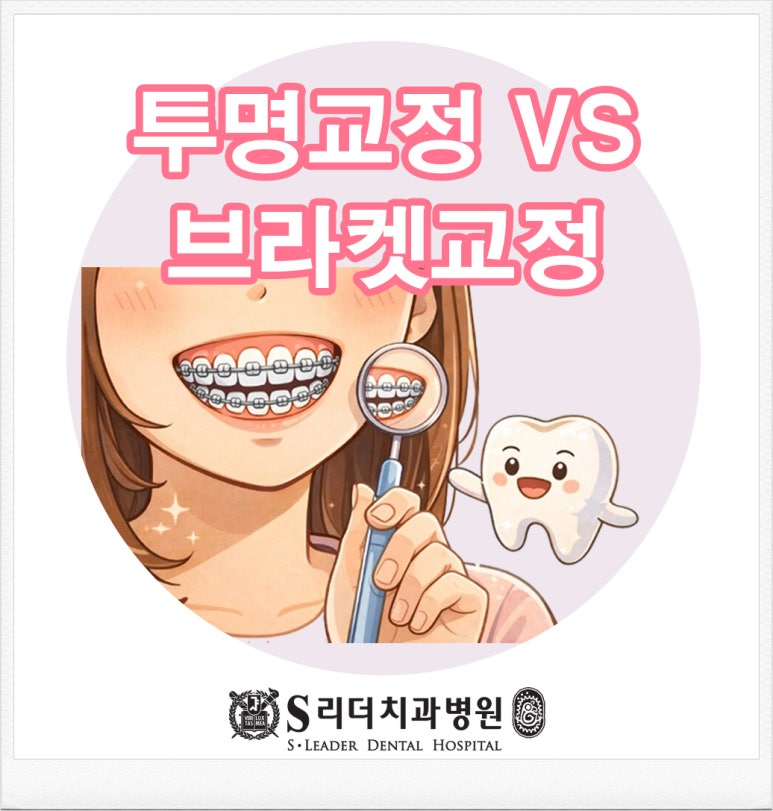
What’s the difference between clear aligners and bracket braces?
Many people considering orthodontic treatment ask the same question at their first consultation.
“Clear aligners are available these days, but are they better than brackets?”
This question goes beyond simple curiosity and is an important concern directly related to the treatment method and results. Orthodontic treatment is not only for outward cosmetic purposes; it also includes functional bite improvement and long-term dental health maintenance. That is why choosing the right method for yourself is the starting point of treatment and a key factor that determines the quality of the outcome.
So, how are ‘clear aligners’ and ‘bracket braces’ different?
Today, at S Leader Dental Hospital, a Gwangjin-gu dental clinic, we will take a close look at appearance, effectiveness, pain, hygiene management, treatment period, and cost... one by one.
✅ Visible vs. invisible: differences in appliance form and perception
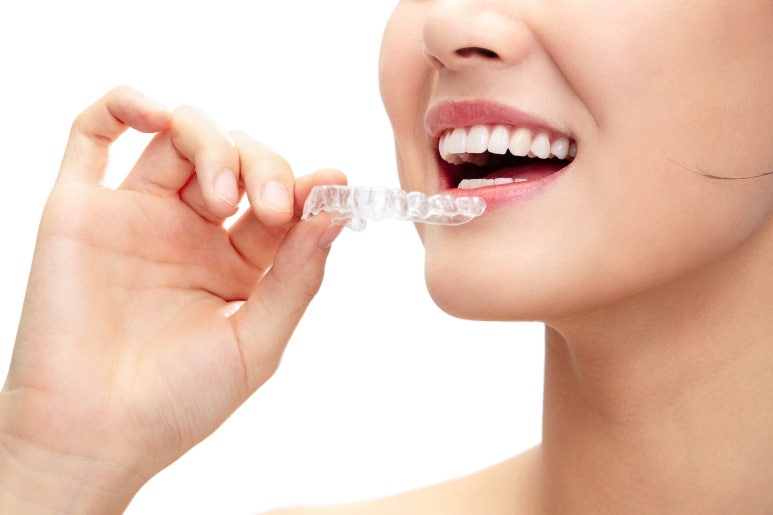
The biggest difference between bracket braces and clear aligners is whether they are visible or not.
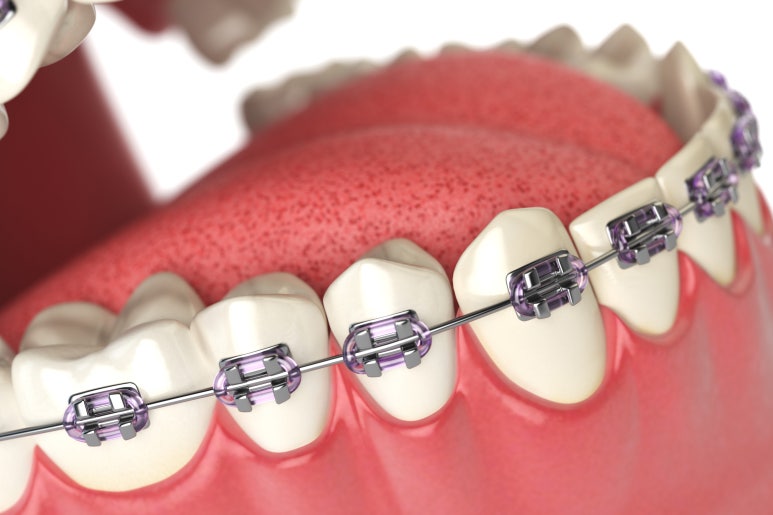
Bracket braces are a traditional method in which metal or ceramic brackets are attached to the teeth and connected with wires to move the teeth. Because the appliance is clearly visible even from outside the mouth, it can feel psychologically burdensome for those sensitive to changes in appearance. In particular, it can be a major concern for people whose jobs involve frequent social activities such as employment, dating, presentations, lectures, or broadcasting.
On the other hand, clear aligners use a mouthpiece-style appliance made of thin, transparent plastic. Literally, even while wearing the appliance, it is so subtle that people around you may hardly notice that you are undergoing orthodontic treatment. This advantage in appearance is one of the biggest strengths of clear aligners, and they are currently especially popular among adult women, entertainers, and office workers.
✅ Fixed vs. removable: structural differences in treatment method
Bracket braces are fixed appliances, so patients cannot remove them on their own. Once attached, they remain in place until treatment is complete, and the patient visits the clinic at regular intervals to have the wire tension adjusted. Thanks to this structure, a steady and continuous force is delivered to the teeth without the patient having to worry about it, allowing treatment to progress stably. However, at the same time, it can create significant discomfort when eating or brushing, and issues such as appliance damage or oral hygiene management may also arise.
On the other hand, clear aligners are removable appliances. Patients can freely take them out when eating or brushing, and the teeth are moved by replacing them with new aligners according to the treatment plan at set intervals. In other words, if worn properly for a certain amount of time (20 to 22 hours a day), they offer the freedom to remove them temporarily in specific situations such as going out, gatherings, or photo shoots.
However, this freedom can also become a drawback in that treatment outcomes depend heavily on the patient’s self-management. If the wearing time is not followed, tooth movement may be delayed and the plan may go off track, so diligent wear is absolutely necessary.
Range of application and orthodontic force: which cases are they more effective for?
Orthodontic treatment is not just about making teeth look better; it is a complex process that guides the bite into proper function and even adjusts the position of the jaw. Because of this, the appropriate orthodontic method can vary depending on the condition of the teeth.
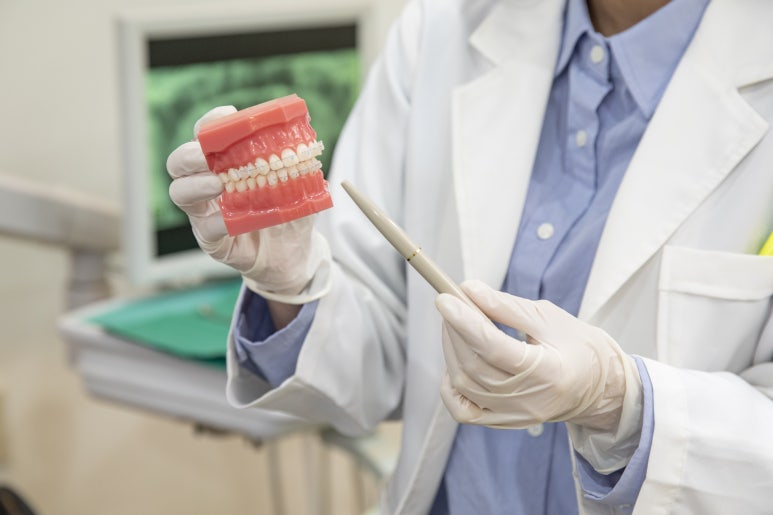
Bracket braces traditionally provide the strongest orthodontic force. Because brackets are directly attached to each tooth and the wire can be used to precisely adjust angles, they are very effective for complex or more severe cases such as rotated teeth, severe crowding, skeletal malocclusion, open bite, and crossbite. In cases where the jaw position also needs to be moved, bracket treatment is often preferred together with auxiliary devices.
On the other hand, although advances in technology have greatly expanded the range of cases that clear aligners can treat, limitations still remain in severe cases. In particular, when there is significant tooth rotation, severe protrusion, or underlying skeletal problems, bracket treatment may lead to more accurate and faster results. Therefore, the orthodontic method must be decided based on the diagnosis of an orthodontic specialist, and it can be risky to judge based only on whether the treatment is “invisible.”

✅ Differences in pain, adaptation, and comfort
Because all orthodontic appliances move teeth with consistent force, it is not possible to have zero pain at all. However, depending on the type of appliance, the nature of the pain and the pattern of discomfort can differ.
With bracket braces, metal or ceramic brackets continuously contact the soft tissues inside the mouth, which can cause cuts on the lips or inner cheeks or lead to ulcers (mouth sores). Especially in the beginning, many people also feel discomfort from brackets scraping or wire ends protruding. In addition, because the sense of having something foreign in the mouth is strong, speech may also become slightly slurred.
On the other hand, clear aligners are made to fit snugly in the mouth and are made of soft plastic, so they irritate the soft tissues much less. The edges are also finished smoothly, so initial adaptation is relatively quick, and the effect on speech is minimal. However, when the appliance is first worn or immediately after being replaced, there may be a feeling of pressure and mild pain from tooth movement, but this is generally something that the body adapts to within 1 to 2 days.
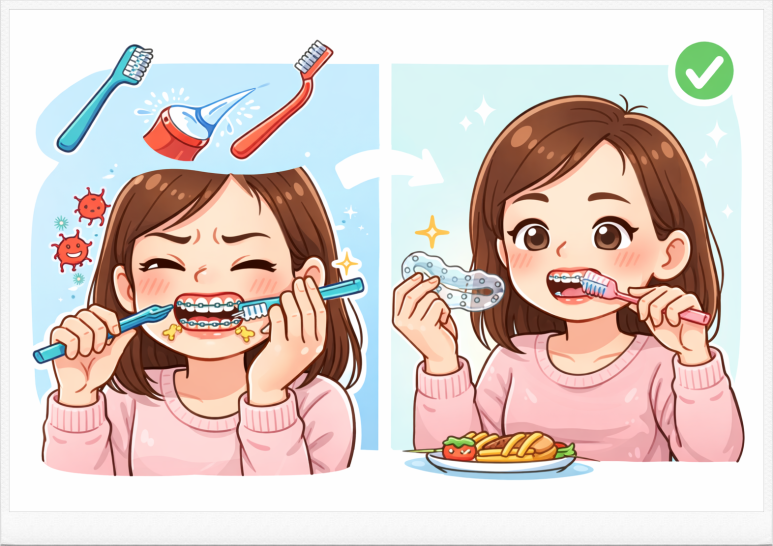
✅ Ease of hygiene management and freedom in daily life
Another concern during orthodontic treatment is hygiene management. Food debris can get trapped in orthodontic appliances and bacteria can multiply, which may lead to cavities or gum disease.
With bracket braces, the appliance is fixed to the teeth, so food getting stuck after meals happens very frequently. It is difficult to clean perfectly with a regular toothbrush alone, so auxiliary tools such as interdental brushes, a Waterpik, and special toothbrushes are essential. As a result, brushing takes longer than usual and the burden of oral care increases. In particular, busy office workers or students may have difficulty brushing immediately after meals, which can increase the possibility of cavities.
On the other hand, with clear aligners, you remove the appliance before eating and put it back on after brushing, so they are much more advantageous in terms of hygiene management. Food does not get trapped in the appliance, and you can brush as usual, which lowers the risk of cavities and gum disease. However, the appliance itself also needs to be cleaned, and if it is handled with unclean hands, bacteria can enter the mouth, so proper care methods must be understood.
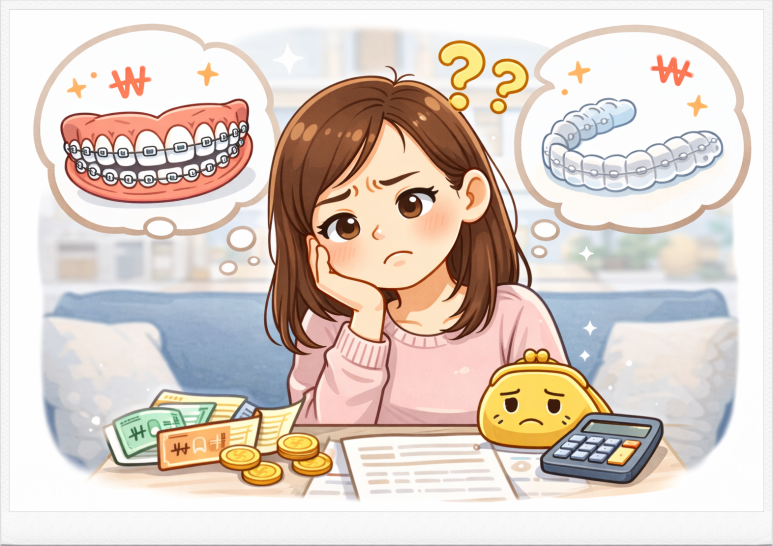
✅ Cost and treatment period: practical concerns
Many patients worry about the cost. In general, bracket braces tend to be less expensive than clear aligners. Metal brackets have lower material costs, and ceramic brackets cost a bit more, but they are still less of a financial burden than clear aligners.
On the other hand, clear aligners require multiple custom-made sets, and a digital 3D analysis system is often needed, so the overall treatment cost can be relatively higher. In particular, imported brands (for example, Invisalign) are priced at a premium, so the total treatment cost can increase by several million won.
The treatment period varies depending on the patient’s condition, but in complex cases, brackets tend to be faster. However, clear aligners can also achieve the same results in a similar amount of time if the treatment plan is well designed and the wearing time is strictly followed.
✅ What treatment plan would S Leader Dental Hospital recommend?
At S Leader Dental Hospital, a Gwangjin-gu dental clinic, orthodontic treatment is not viewed simply as a matter of “choosing an appliance.”
After analyzing the patient’s tooth alignment, bite condition, jaw position, hygiene habits, job characteristics, aesthetic needs, and budget, we establish a treatment plan in the most suitable way.
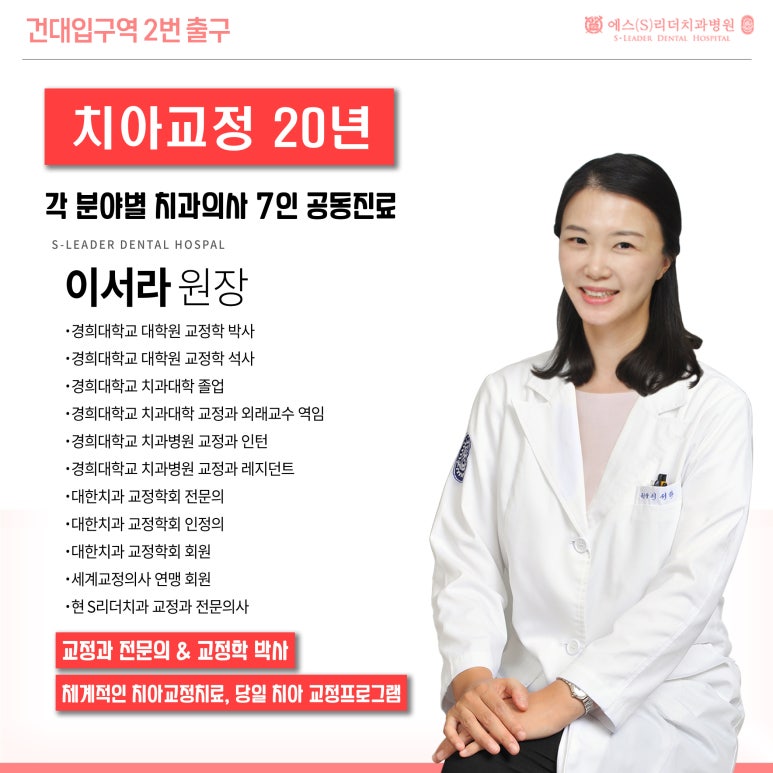
Through a one-on-one detailed diagnosis by orthodontic medical staff,
-
whether clear aligners are possible,
-
which method is more effective for complex cases,
-
and how much the treatment period and cost are expected to be,
we explain every factor and guide patients so they can make a reasonable decision for themselves.
In addition, we provide systematic care not only during orthodontic treatment but also after treatment completion, including wearing retainers and follow-up management, and we strive for long-term patient satisfaction.
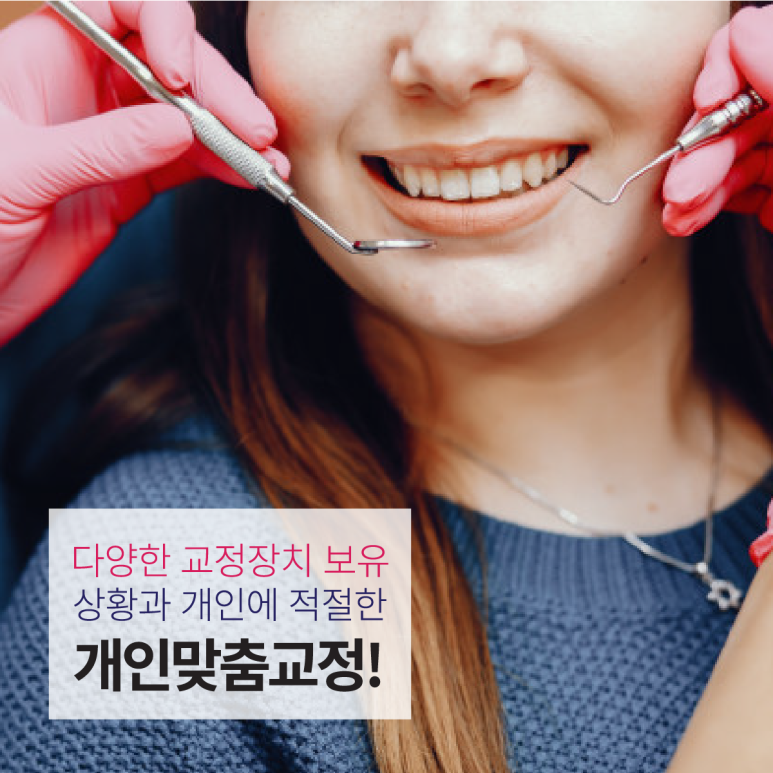
The right orthodontic treatment for me starts with an accurate diagnosis
Orthodontic treatment is not a procedure performed solely for aesthetic purposes.
It is a comprehensive treatment for restoring proper bite, chewing function, facial balance, and confidence.
Clear aligners are excellent in terms of aesthetics and convenience, but they are not suitable for everyone. On the other hand, bracket braces remain a strong option because they allow precise adjustment and have a broader range of applications, even if they are somewhat inconvenient.
The important thing is to accurately analyze and decide, together with a specialist, which method is most appropriate for you right now.
S Leader Dental Hospital, a Gwangjin-gu dental clinic, will do our best to support your orthodontic journey from beginning to end, and even after that, so that you can complete a healthy and beautiful smile.


 Gwangjin-gu Dental Clinic :: S Leader Dental Hospital