Don’t miss anything, from the process to the materials and precautions.
Hello, this is Nowon-gu Implant, S Leader Dental Hospital.

Many people do not feel a major inconvenience immediately after losing just one tooth.
Especially in areas that are not very visible, such as the molars, people often put off treatment, thinking, “It’s a bit inconvenient, but I’ll wait and see.”
However, as time passes, many changes occur in the mouth.
Because of the empty space, adjacent teeth begin to tilt, the balance of the upper and lower teeth that bite together becomes disrupted, and eventually the entire dental arch is affected. If you are unable to chew food properly, this can place a burden on the digestive system and may also lead to secondary problems such as jaw joint pain, abnormal occlusion, and overloading of the opposite teeth.
A representative way to prevent these complex problems and restore the function of lost teeth is implant treatment.
However, many people simply think of implants as just “placing an artificial tooth.”
In fact, implant treatment is a complex process that includes precise diagnosis, surgery, prosthetics, and long-term maintenance.
Today, for those considering implants for the first time, we will organize the information you need to know before starting, step by step.
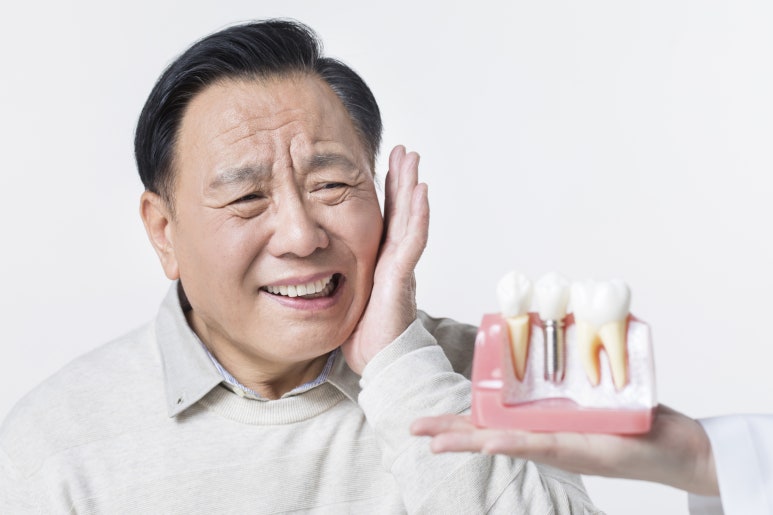
The Implant Process from Start to Finish
A more precise “scientific tooth restoration” than you might expect
An implant is not simply a procedure that places one artificial tooth.
Because many factors must be considered, such as the condition of the alveolar bone (jawbone), overall health, occlusion position, and the shape of the prosthesis, diagnosis and treatment planning before treatment become the most important starting point.
📍 Diagnosis (Step 1)
-
Precise analysis of the height, thickness, and nerve position of the jawbone is performed using 3D CT scans and panoramic X-rays.
-
The jaw movement, occlusion status, and distance from surrounding teeth are also checked and used in the design.
-
Whether the patient has systemic conditions such as diabetes, hypertension, or osteoporosis also has a major impact on the treatment direction.
📍 Placement Surgery (Step 2)
-
The implant body made of titanium is placed into the jawbone.
-
Methods vary, including flap surgery, flapless surgery, and guided surgery, and are selected according to the patient.
-
The average surgery time is within 30 minutes to 1 hour, and sedation is also possible.
📍 Osseointegration Period (Step 3)
-
The osseointegration process, in which the placed implant firmly bonds with the bone, takes about 2 to 4 months.
-
Properly going through this period is necessary to secure long-term stability, and an immediate-loading approach may be applied in some cases.
📍 Prosthesis Attachment (Step 4)
-
The artificial tooth (crown) is made to match the surrounding natural teeth in color, translucency, and texture.
-
Its shape is adjusted by considering the patient’s chewing habits, upper-lower bite relationship, and aesthetic factors.
📍 Maintenance (Step 5)
-
Even after placement, regular checkups and gum health management are essential.
-
Prosthesis fracture, peri-implantitis, and occlusal changes can be detected early and prevented.
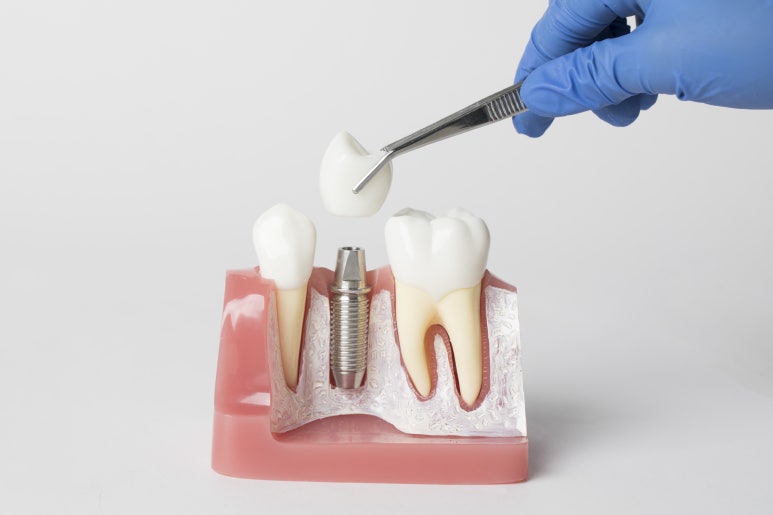
Five Reasons Implants Fail
Because implants are structured to bond directly with bone, they have excellent fixation, but the misconception that they are “permanent” is dangerous.
In actual clinical practice, cases in which problems occur within 1 to 2 years after placement are not uncommon.
The five most representative causes of failure are
-
Overly aggressive placement while ignoring bone quality
-
If the procedure is forced despite weak or insufficient bone, the risk of osseointegration failure increases
-
Smoking
-
Tobacco reduces blood flow in the gums, leading to weakened immunity and delayed recovery
-
Poor management of diabetes or systemic conditions
In patients with weakened immune function, the risk of infection increases and inflammation may occur more often.

How to Care for Implants for Long-Term Use
What matters more than the procedure is what comes after it.
The lifespan of a Nowon-gu implant is known to be more than 10 years on average, but without thorough care, many do not even last half that long.
If you make the following habits part of your daily routine after treatment, you can greatly extend its lifespan.
✅ Essential care habits
1 Brush your teeth within 3 minutes after meals
2 Clean between teeth using interdental brushes and a water flosser
3 If you grind your teeth at night, a mouthguard is recommended
4 Be careful with hard foods (meat with bones, taffy, shellfish shells, etc.)
5 Regular scaling (once every 6 months to 1 year)
6 Photo examination of the implant area and inflammation checks
A small care habit can extend the lifespan of an implant by 5 or 10 more years.
[Implant prohibitions you must avoid]
Because implants are less painful and more convenient, people tend to overtrust them unconsciously.
But the following behaviors must be avoided.
-
Using your teeth to open hard objects like a bottle opener
-
Frequently chewing dried squid or squid jerky
-
Using only mouthwash instead of brushing
-
Skipping regular checkups for more than a year
-
Leaving a habit of clenching your teeth unconsciously while sleeping at night untreated
You need to recognize that an implant is different from your natural teeth and always live with the understanding that it is an “artificial tooth.”
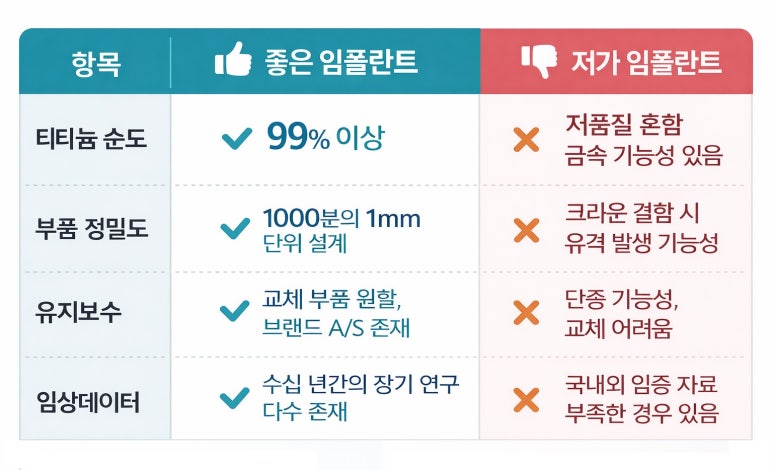
Good Implant vs. Low-Cost Implant Table Criteria
What is the difference between a good implant and a low-cost implant?
Can you really choose just anything because it is not visible?
An implant only shows the prosthesis on the outside, but in reality it is a structure embedded inside the jawbone, so the true basis of the price difference is hard to see and can be confusing.
An implant is not simply a “structure that replaces a tooth,” but a treatment used for several years to several decades. That is why, when choosing one from the start, the purity of the materials, the precision between components, and whether there is a system that allows future maintenance and repair are very important.
In particular, implants with sufficient clinical data accumulated are very helpful in predicting long-term stability and prognosis.
On the other hand, products with insufficient validation may later require additional treatment due to issues such as screw loosening, play, or fracture.
When choosing a Nowon-gu implant, it is advisable to carefully check not just the cost, but how long it can be used stably and whether smooth management is possible if a problem arises.
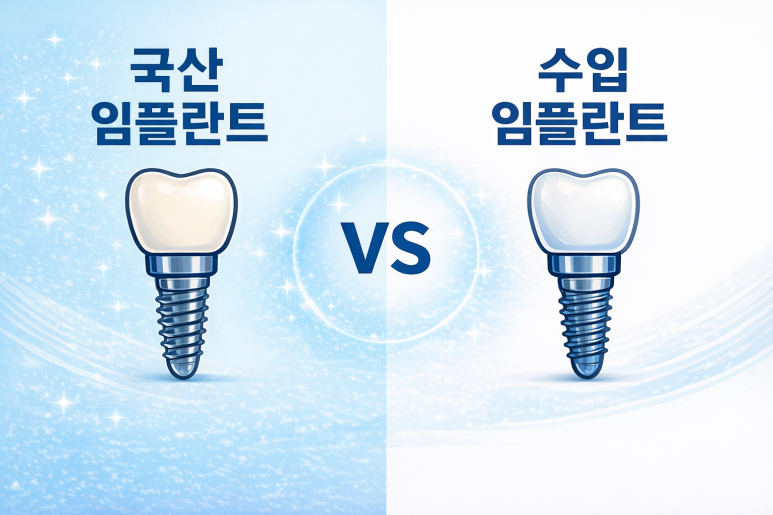
Domestic vs. Imported Implants
Performance gap? These days, it is almost gone
In the past, there was a strong perception that imported products were better, but now domestic brands have also improved greatly in quality to the point that they are exported around the world.
Domestic: Reasonable price, easy after-sales service, customized to domestic bone structure
Imported: Rich long-term clinical experience, firmer material feel, expensive
In fact, the difference between domestic and imported implants is now at a level where there is little difference in user satisfaction or success rate.
The most important thing is the clinician’s experience and accurate application to the oral structure.
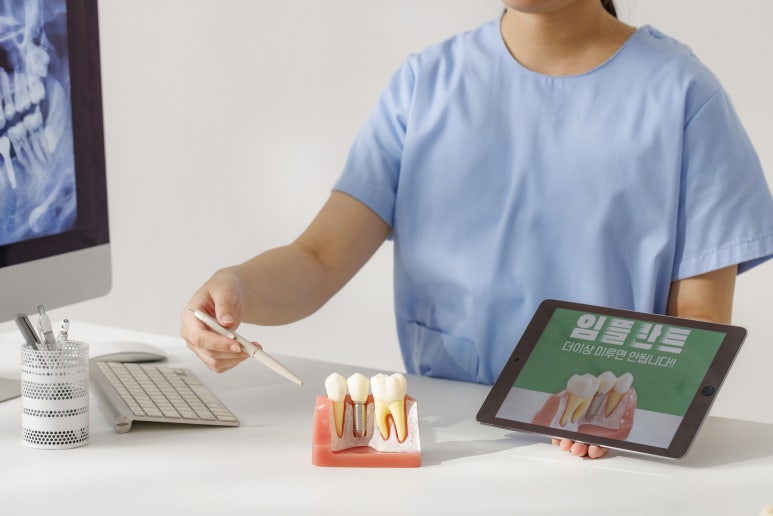
Can an Implant Be Placed Immediately After Extraction?
Can it really be placed right away?
Many people ask, “If the tooth is coming out, please just place it right away.”
The so-called “immediate implant” is possible in some cases, but it can only be attempted if the conditions are right.
-
Conditions under which it can be performed
-
There must be no inflammation in the extraction site
-
Bone loss must not be severe
-
Rapid aesthetic recovery is needed (such as for front teeth)
If the conditions are met, the total treatment period can be shortened by 2 to 3 months, which is a major advantage.
However, because the procedure is highly difficult, it must be carefully judged at an experienced dental clinic.
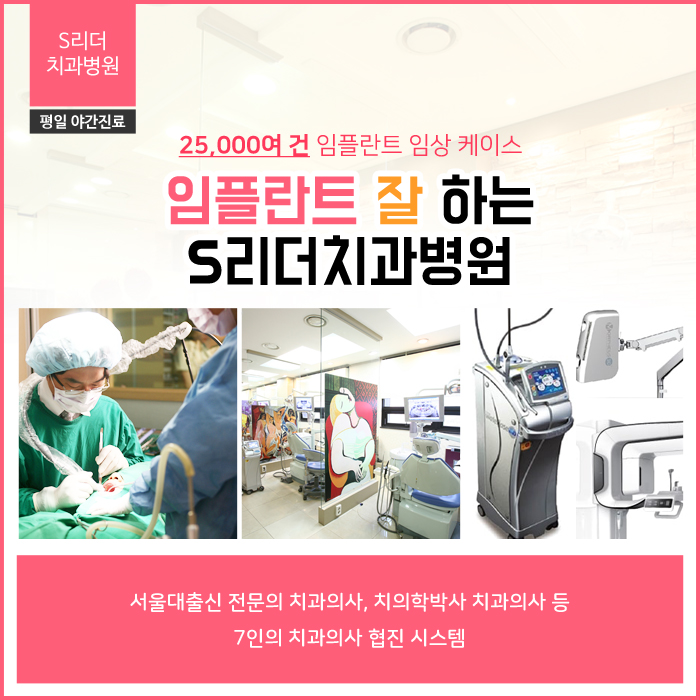
Nowon-gu Implant, as Seen by S Leader Dental Hospital
The standard for a “long-lasting implant”
Nowon-gu Implant, S Leader Dental Hospital, thinks of implants this way.
An implant is not simply about “filling in” one tooth.
It is a precise restorative procedure that considers the overall dental structure, occlusion, jawbone height, and aesthetics.
And to successfully carry out this precise restorative procedure,
✔️ accurate diagnosis,
✔️ personalized treatment planning,
✔️ stable placement,
✔️ detailed prosthetic design,
✔️ continuous maintenance
all processes must work together organically.
S Leader Dental Hospital
- Over 20 years of clinical experience,
- Digital 3D diagnostic system,
- A precise placement and prosthetics collaboration system
use these to design the safest and longest-lasting implants for each patient.
Treatment is better when it is faster, but more important than that is starting with the right design.
If you are considering implants, please consult with S Leader Dental Hospital.
We will think together about more than just treatment.
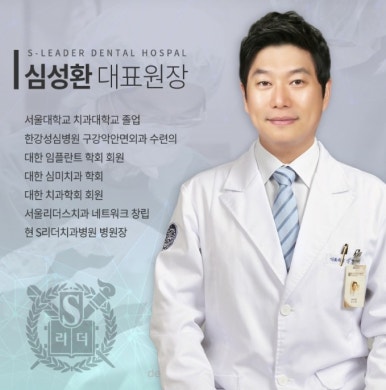


Nowon-gu Implant :: S Leader Dental Hospital