�
Hello, this is Seoul Dental Clinic Recommendation, greetings from S Leader Dental Hospital.
�
�
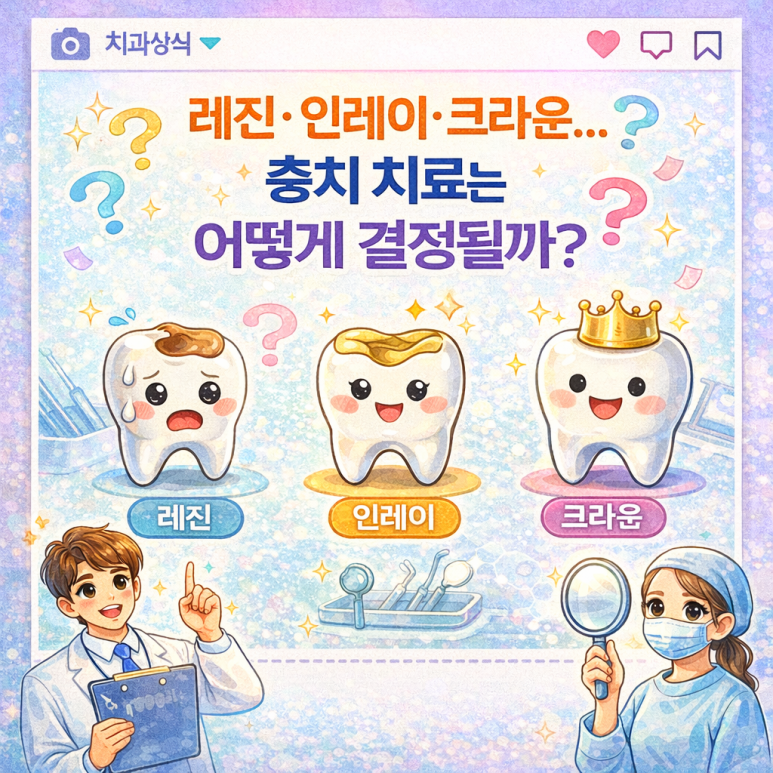
One phrase everyone has probably heard at a dental clinic at least once: “You have a cavity.”
But even if it’s the same cavity, the treatment method is often different.
�
Some people are treated with a simple resin filling, while others are told they need prosthetic treatment such as an inlay or crown.
-
“Why can’t I get resin and have to get a crown?”
-
“Can’t you just fill it simply?”
-
“Could different treatment methods be due to overtreatment?”
These are completely reasonable questions from a patient’s point of view.
�
�
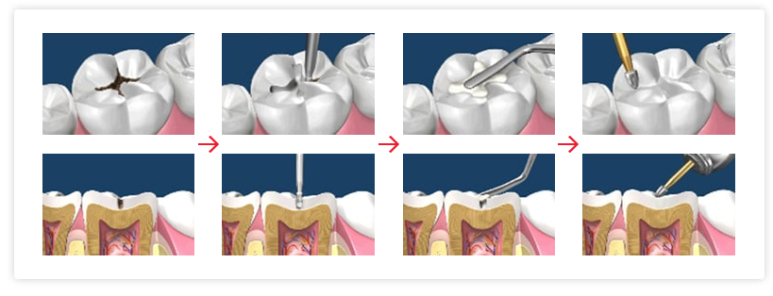
However, cavity treatment is not simply a matter of “filling a hole.” It is a professional process in which the most appropriate method is determined according to the condition of the tooth and the degree of damage.
�
Today, at S Leader Dental Hospital, a Seoul dental clinic recommendation, we’ll clearly explain the differences between resin, inlay, and crown—along with their application criteria and why each treatment is needed—in a way that is easy for patients to understand.
�
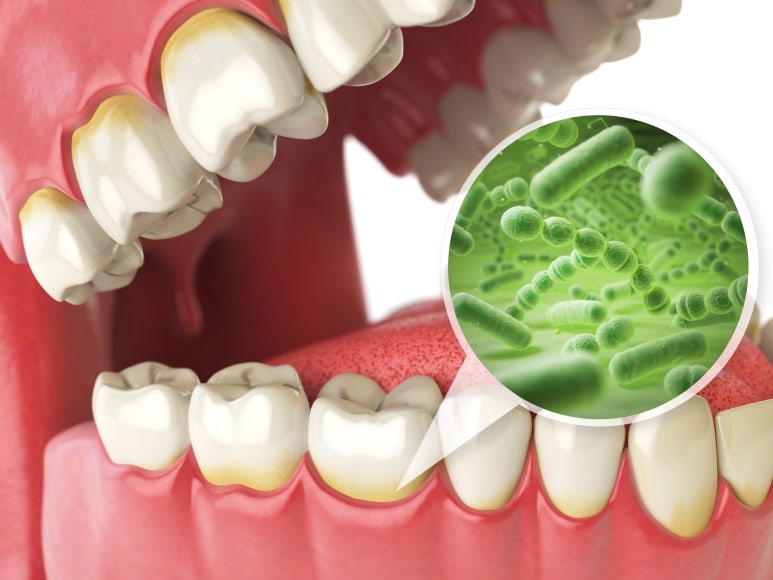 Cavity treatment: Why do the methods differ?
Cavity treatment is not determined simply by whether a cavity “exists” or “does not exist.”
�
To restore the tooth’s structure and function, the treatment range, depth, location, and the condition of the surrounding tissues must all be considered comprehensively,
and the treatment method must therefore vary accordingly.
�
Key factors that influence treatment selection
-
How deep and extensive the cavity is
-
Whether it is on a chewing surface or a front tooth
-
Whether it has reached the nerve (pulp)
-
Previous treatment history or the condition of tooth wear
-
Occlusion with the surrounding teeth
Based on these criteria, the dentist decides whether to use resin, inlay, or crown treatment.
�
�
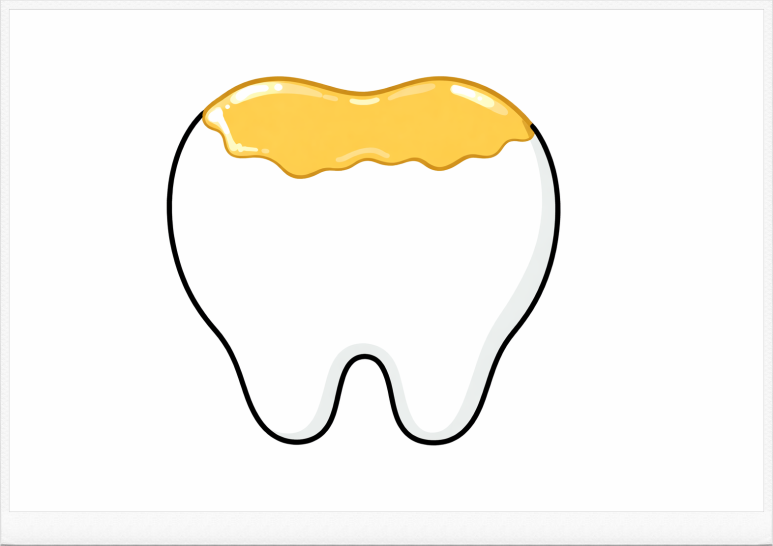
✅ Resin treatment – for small, shallow cavities
Resin treatment is the most basic treatment method used for early cavities or minor damage.
A tooth-colored resin material is used to fill the area where the cavity has been removed, restoring the tooth naturally.
�
Advantages
�
Disadvantages
👉 Appropriate for early cavities, front teeth, and small, shallow cavities in molars.
�
�
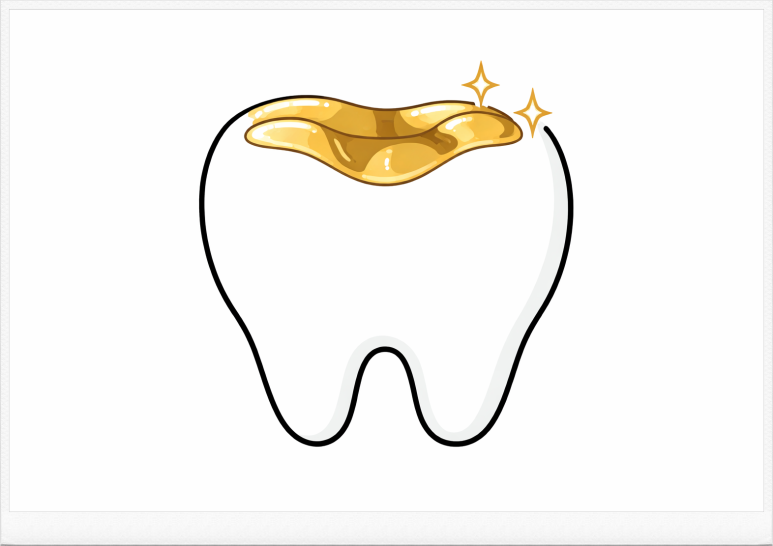
✅ Inlay treatment – for cavities that have become larger and deeper
An inlay is used when the cavity has spread widely but is not large enough to cover the entire tooth.
After removing the cavity, an impression is taken and a custom prosthesis (such as gold or zirconia) is fabricated and bonded inside the tooth.
�
Advantages
�
Disadvantages
👉 Suitable for moderate cavities and damage to the chewing surface of molars; it can be considered an intermediate treatment that preserves as much tooth structure as possible while also securing strength.
�
�
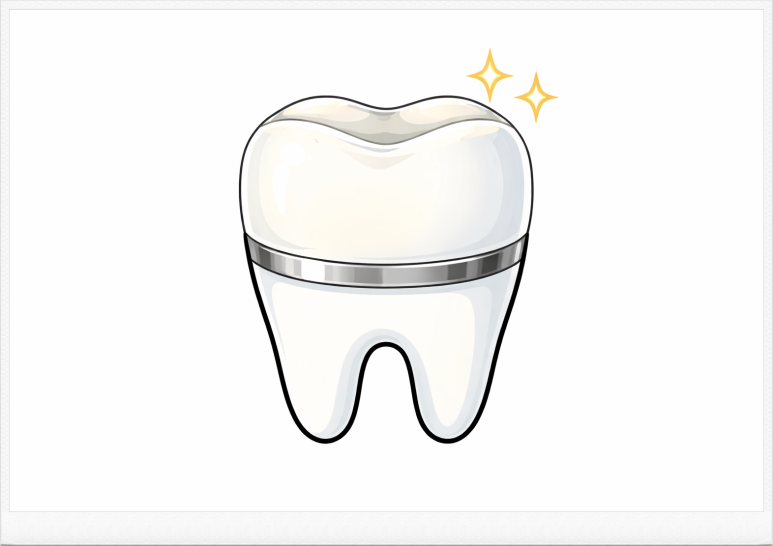
✅ Crown treatment – when the entire tooth needs protection
If the cavity has spread throughout the tooth or the tooth has become weakened after root canal treatment, crown treatment is necessary.
The tooth is shaped and then covered with a cap-like prosthesis (a crown) to encase the entire tooth.
�
Advantages
The strongest treatment, suitable even for molars that endure strong chewing forces
Can protect teeth weakened after root canal treatment
Long lifespan and excellent prevention of fracture
�
Disadvantages
Some healthy tooth structure must still be removed
Usually the most expensive option
👉 Essential to consider in cases such as teeth after root canal treatment, severely broken teeth, or cavities that are too extensive.
�
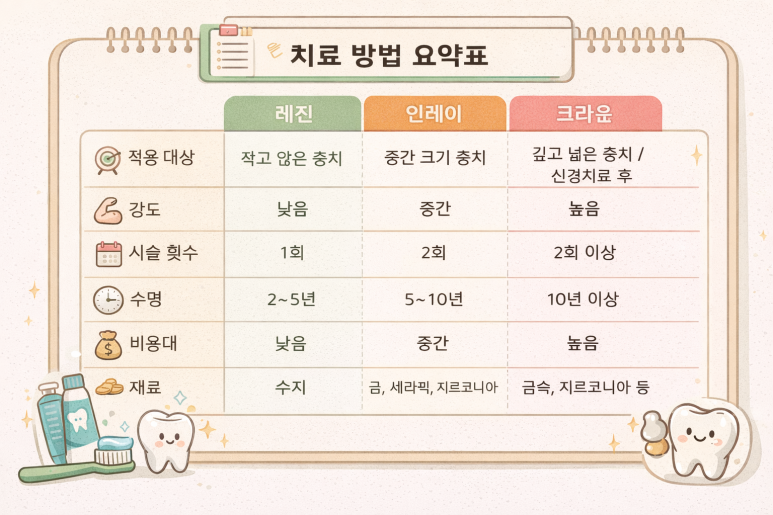
Summary table of cavity treatment methods
The table above provides a quick overview of the three representative treatment methods that dental clinics choose based on the extent and depth of the cavity, its location, and the condition of the tooth.
�
Treatment is not simply about “filling” the tooth; it also requires considering how much of the tooth can be preserved and how strongly it can be used in the long term.
Because every patient has different oral structures, habits, and previous treatment histories, the key is to choose the optimal method for your own teeth.
�
�
From here on, let’s address some of the questions patients often ask.
�
- [Frequently asked questions from patients]
Q. “Doctor, even if the cavity is large, can’t you just do resin?”
→ If resin treatment is used for a deep or wide cavity, it may come off quickly or lead to secondary decay.
In fact, retreatment could cost more, so we recommend the appropriate treatment method from the beginning.
�
Q. “Can cavities still develop after inlay or crown treatment?”
→ Yes. If bacteria enter around the edge of the prosthesis, secondary decay can occur.
Floss, interdental brushes, and regular checkups are essential!
�
Q. “Do I really need a crown after root canal treatment?”
→ In most cases, yes. Teeth after root canal treatment lose moisture and break easily, so covering them with a crown is key to preserving the tooth’s lifespan.
�

Seoul dental clinic recommendation, S Leader Dental Hospital’s
principles for cavity treatment and diagnostic system
Cavity treatment is not simply “filling.”
�
It is a specialized treatment that requires choosing the most appropriate method while considering the tooth’s structure, function, aesthetics, and long-term stability.
�
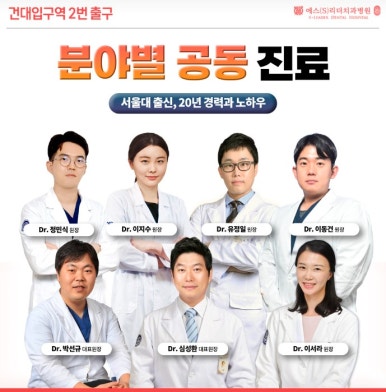
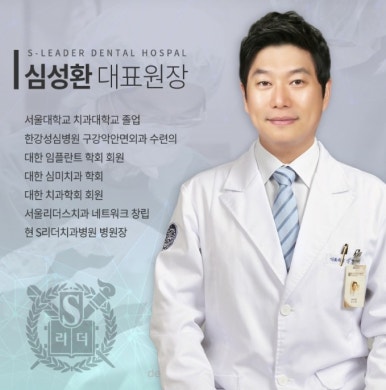
At S Leader Dental Hospital, a Seoul dental clinic recommendation located right next to Exit 2 of Konkuk University Station in Gwangjin-gu, Seoul,
✔️ based on precise diagnostic equipment (3D CT, intraoral scanner),
✔️ and a collaborative system among specialists in conservative dentistry, prosthodontics, and oral and maxillofacial surgery,
we propose accurate and reasonable treatment methods according to each patient’s tooth condition.
�
We do not recommend only expensive treatments, nor do we blindly recommend cheap ones.
Our treatment philosophy is to help you keep your teeth healthy and usable for a long time.
�
If you need cavity treatment, now is the best time to get it.
Please receive an accurate diagnosis and consultation at S Leader Dental Hospital, a Seoul dental clinic recommendation.
�

�
 Seoul dental clinic recommendation :: S Leader Dental Hospital