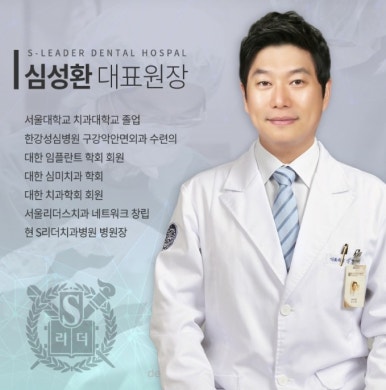
Hello, this is Janghanpyeong Station Dental Clinic, S Leader Dental Hospital.
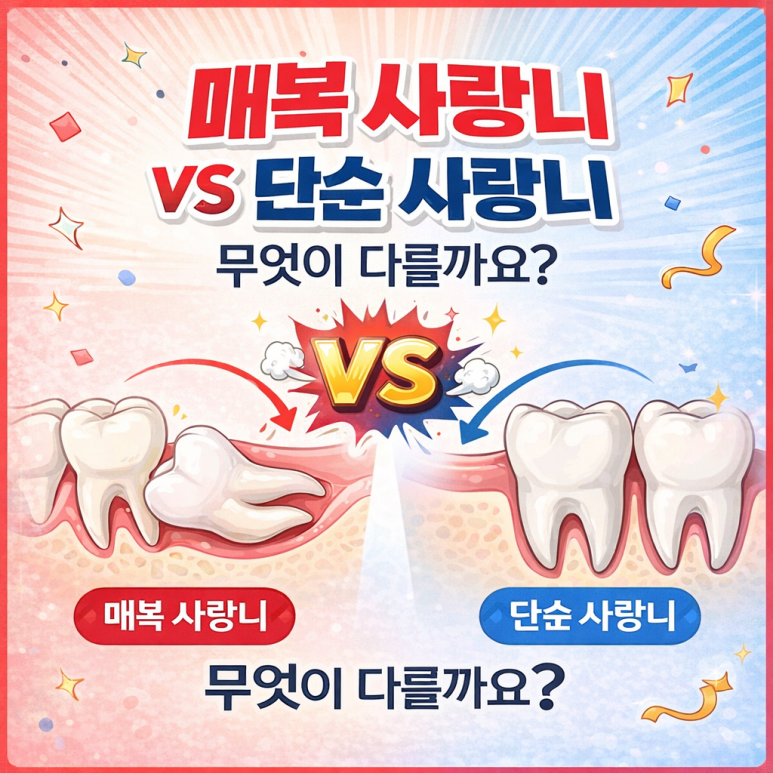
Most people have probably experienced, at least once in their lives, “going to the dentist because of a wisdom tooth.”
At first, you may think, “Is my gum swollen?” when the back of a molar throbs, your mouth feels stiff when opening, or food keeps getting stuck.
But by the time you actually visit the dentist, they may say things like:
“Because this is an impacted wisdom tooth, we need to be careful when removing it.”
“This is a simple wisdom tooth, so it can be extracted quickly.”
“It’s close to a nerve, so a CT scan is needed.”

If it’s the same wisdom tooth, what exactly is the difference between “simple” and “impacted,” and why can some people have it removed easily while others need surgery?
Today, at S Leader Dental Hospital near Janghanpyeong Station, we’ll explain the difference between impacted wisdom teeth and simple wisdom teeth, which situations require caution, and how the treatment process differs in an easy-to-understand way.
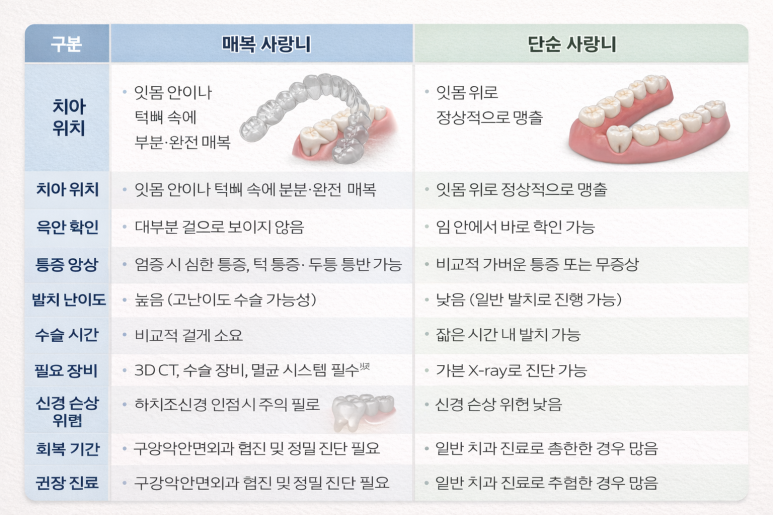 Simple Wisdom Tooth vs. Impacted Wisdom Tooth - They are different from the definition.
What is a simple wisdom tooth?
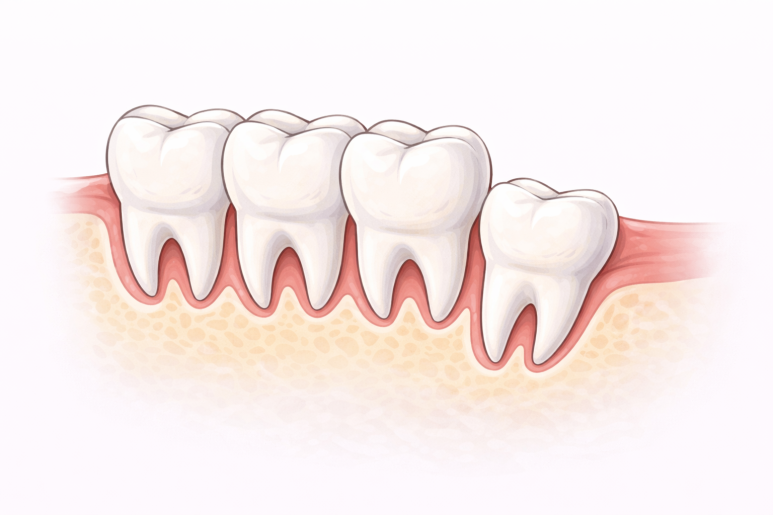
A simple wisdom tooth is one that has erupted in the normal direction, with the crown (cusps) visible above the gum line. In most cases, it can be removed with a standard extraction without needing a large gum incision or bone removal, and the extraction time is short with relatively quick recovery.
What is an impacted wisdom tooth?
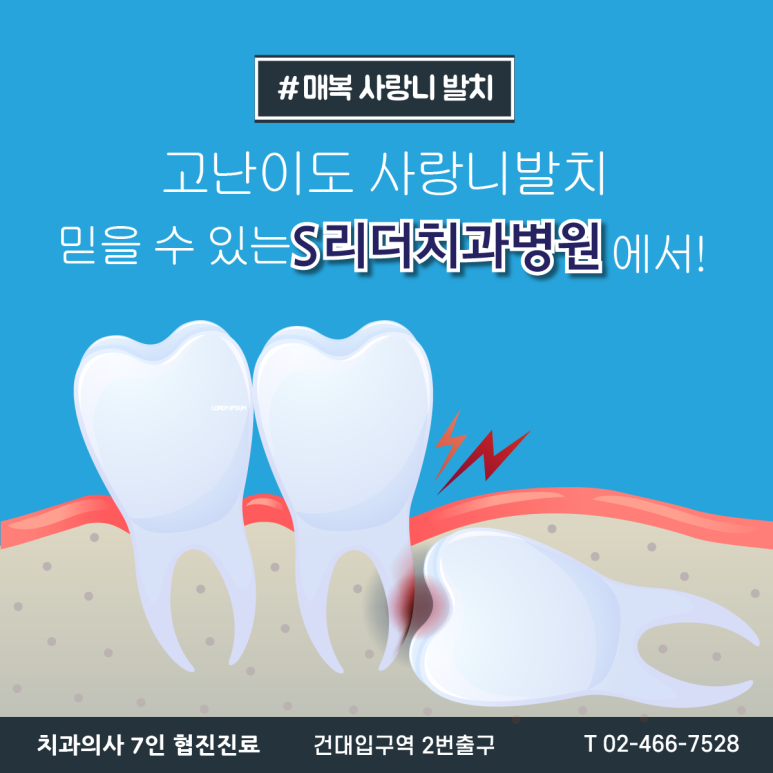
An impacted wisdom tooth refers to one that has not erupted properly and is partially or completely embedded in the gum or jawbone.
Impacted wisdom teeth are often:
so surgical extraction (impacted tooth extraction) is often necessary, and a precise diagnosis before extraction is essential.
✔ Simple wisdom tooth: a condition that is easy to remove.
✔ Impacted wisdom tooth: a condition that is difficult to remove and requires careful planning.
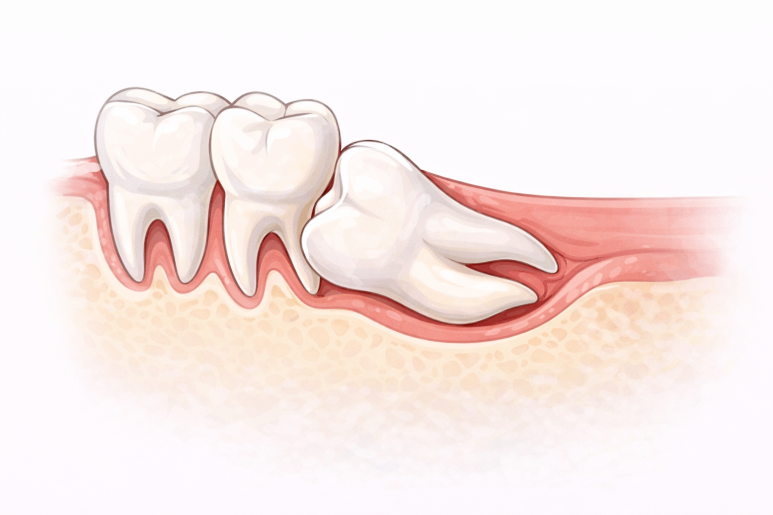 Why are impacted wisdom teeth more dangerous?
⚠ They push against neighboring teeth and cause pain and damage
Impacted wisdom teeth can push against the second molar next to them, dissolve the tooth root, or create gaps between teeth that can affect your bite.
If the tooth root is damaged, you may even lose that tooth as well, and the longer you delay wisdom tooth extraction, the more risk there may be to the surrounding teeth.
⚠ They can cause inflammation, pus, and jaw pain
Because the passage for an impacted wisdom tooth to erupt is not fully open, food particles and bacteria can accumulate between the tooth and gum, causing inflammation, abscesses, and bad breath.
In particular, when immunity is lowered, such as during a cold, sudden wisdom tooth pain often leads to emergency visits.
⚠ Close to a nerve → risk of numbness
If a lower wisdom tooth is adjacent to the inferior alveolar nerve canal, the nerve may be damaged during extraction, which can lead to reduced sensation or numbness in the lip and chin.
For this reason, impacted wisdom teeth must be surgically removed only after confirming the distance from the nerve through 3D CT imaging, and they should not be approached as easily as a simple extraction.

The difficulty of extraction varies depending on the position and direction of the wisdom tooth.
Wisdom teeth are located in both the maxilla (upper jaw) and mandible (lower jaw), and the difficulty of extraction varies not only based on whether they are impacted but also on the direction and depth in which they are embedded in the bone, as well as the surrounding structures.
✔ Common types of impacted wisdom teeth
Horizontal impaction: the wisdom tooth lies down and grows toward the neighboring tooth
Partial impaction: only part of the tooth is visible outside the gum
Complete impaction: completely buried in the gum and bone
Reverse impaction: the wisdom tooth grows downward rather than upward
Adjacent to the jaw nerve: the lower wisdom tooth overlaps with the nerve and requires highly complex surgery
In these situations, the procedure is not a simple forceps extraction.
Instead:
✔ the gum is incised
✔ the tooth is divided into several pieces and removed
✔ the bone socket is cleaned and then sutured
This surgical extraction approach is used.
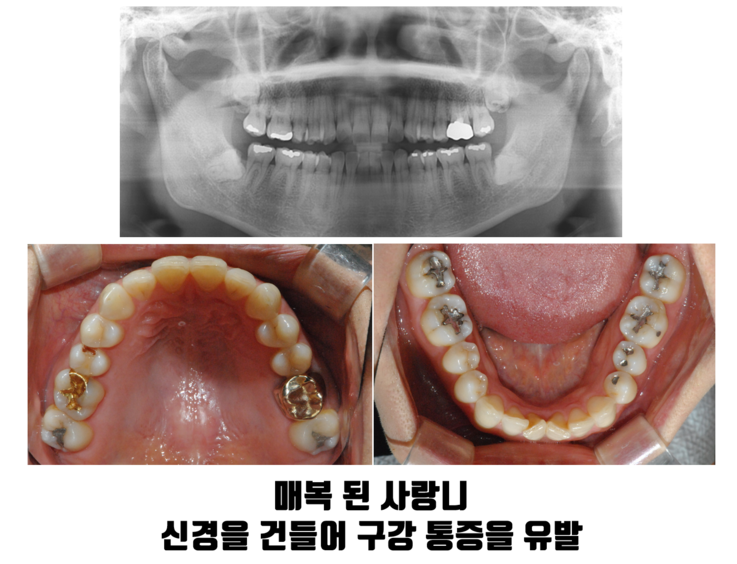
When should an impacted wisdom tooth be removed?
Many people also ask, “If it doesn’t hurt, do I still have to have it removed?”
For impacted wisdom teeth, it is best to remove them in advance before symptoms appear.
💡 The reasons are as follows.
-
Once symptoms appear, inflammation, swelling, and pain make surgery more difficult and slow recovery
-
If removal is done after infection, the risk of bleeding or temporomandibular joint pain increases
-
If nerve damage is a concern, early removal can help secure distance from the nerve
-
The second molar can only be protected before the neighboring tooth is damaged
In particular, people in their 20s are generally the most suitable candidates for impacted wisdom tooth extraction because the bone is less hardened and recovery is faster.
If it is a simple wisdom tooth, you can plan for extraction along with regular checkups, but if it is an impacted wisdom tooth, a detailed surgical plan must be established after CT diagnosis.
 Three things to check before wisdom tooth extraction
📌 1. Whether a 3D CT scan is taken
For impacted wisdom teeth, it is difficult to accurately determine the position and depth using only a flat X-ray. A 3D CT scan is needed to analyze the condition of the nerves, bone, and adjacent teeth in three dimensions, which improves the safety and accuracy of surgery.
📌 2. Whether there is a medical team dedicated to surgery
Unlike a simple extraction, impacted wisdom teeth require oral surgery skills and experience. Choosing a hospital that can collaborate with departments such as periodontics and prosthodontics allows treatment that considers not only before and after wisdom tooth surgery, but also the overall oral structure.
📌 3. A thorough sterilized surgical environment
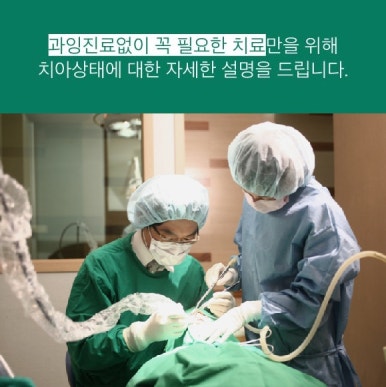
Because wisdom tooth surgery involves incising the gum and working on bone, infection control is very important. Be sure to check whether the hospital has a separate operating room, sterilized equipment, and an infection control system.
Janghanpyeong Station Dental Clinic, S Leader Dental Hospital’s
wisdom tooth diagnosis and extraction system
Wisdom teeth are often dismissed as “teeth that hurt for a while when you’re young,” but if not properly managed, they can become a high-risk factor affecting the jawbone, nerves, and surrounding teeth.
In particular, impacted wisdom teeth are a complex dental treatment that requires consideration of the timing of extraction, the surgical method, and the equipment system.
At Janghanpyeong Station Dental Clinic, S Leader Dental Hospital in Gwangjin-gu, Seoul,
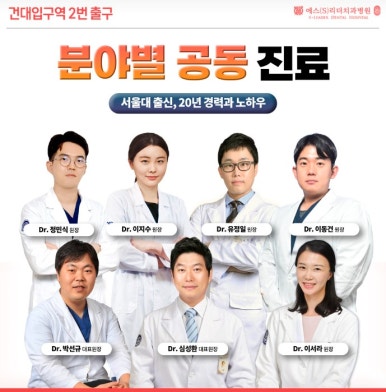
✔️ specialists in oral and maxillofacial surgery, prosthodontics, and periodontics
✔️ provide precise diagnosis based on 3D CT imaging
✔️ safely treat everything from simple wisdom teeth to highly difficult impacted wisdom teeth,
✔️ and have a complete system for sedation anesthesia, sterilized surgery, and post-treatment care,
so we provide the optimal extraction treatment tailored to each patient’s oral structure.
Before your wisdom tooth hurts, before it becomes difficult to remove, diagnosing and preparing in advance is the wisest approach.
If you are worried about your wisdom teeth, we hope you can resolve them safely with S Leader Dental Hospital.

 Janghanpyeong Station Dental Clinic :: S Leader Dental Hospital