Hello, this is Sagajeong Station Dental Clinic, S Leader Dental Hospital.
“Have you ever noticed the other person subtly turning their head when you speak?”
“Why does your mouth feel sticky when you wake up in the morning, making you not want to meet people?”
“What makes you unconsciously keep your mouth closed after taking off your mask?”
Bad breath, commonly called halitosis, affects our daily lives in far more situations than we might dismiss as a simple hygiene issue.
Ironically, though, halitosis is something that is hard for the person themselves to notice, while others can detect it quickly, which makes it even more sensitive.

Even though halitosis is such a sensitive issue that it can affect a person’s first impression in conversations with others, at work meetings, on blind dates, or in job interviews, many people still go through life without knowing, “Do I really have bad breath?”
“Why is that even though I brush my teeth diligently three times a day?”
“Could it be because of my stomach?”
“Is it because of stress?”
If you have these questions, you should definitely read what follows. In fact, most cases of halitosis
stem from “dental causes,” and in many cases, they can improve with surprisingly simple diagnosis and management.

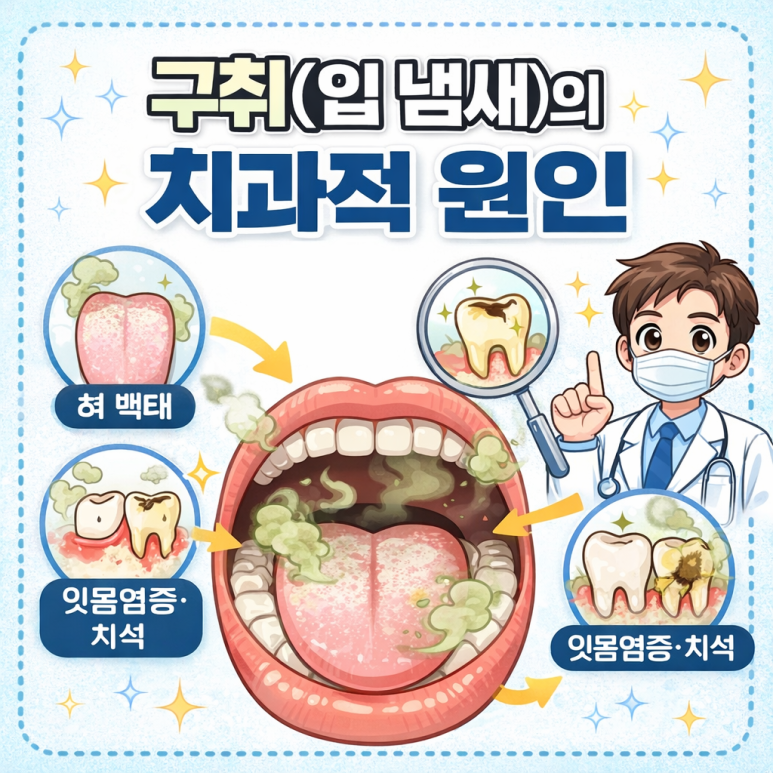
80-90% of bad breath starts in the mouth.
Many people think that when bad breath develops, it must be due to a stomach problem or an inherent body odor.
However, according to the World Workshop on Periodontology and other organizations, about 80-90% of halitosis actually originates inside the oral cavity.
So what oral causes create bad breath?
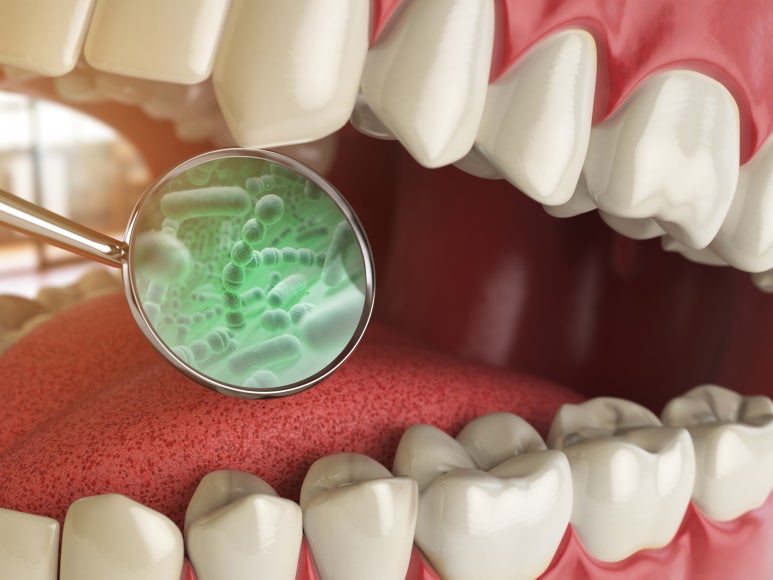
The problem is a gas called “volatile sulfur compounds (VSCs).”
These gases are byproducts produced when oral bacteria break down
-
dead cells,
-
food debris,
-
proteins in saliva
and other substances.
These compounds create smells such as rotten eggs (hydrogen sulfide), rotten onions (methyl mercaptan), and a metallic fishy odor (dimethyl sulfide). They make other people feel unpleasant, while the person themself becomes desensitized and unable to notice it.
In other words, the problem may be in the mouth, not the stomach.
Four common causes of halitosis seen in dental clinics
Halitosis can arise for many different reasons, but the four causes most commonly seen in dental clinics are as follows.
✔ ① Gum inflammation and periodontitis
Gum disease is a condition that progresses quietly and slowly.
In the early stages, it may only cause the gums to swell or bleed when brushing, but if left untreated, periodontal pockets (gum pockets) form deep in the gums, and bacteria, pus, and food remnants accumulate inside them, making the odor worse.
In moderate to severe periodontitis, a distinctive bad breath with a “fishy smell mixed with the taste of blood” can appear, which goes beyond simple bad breath and can be seen as a pathological sign.
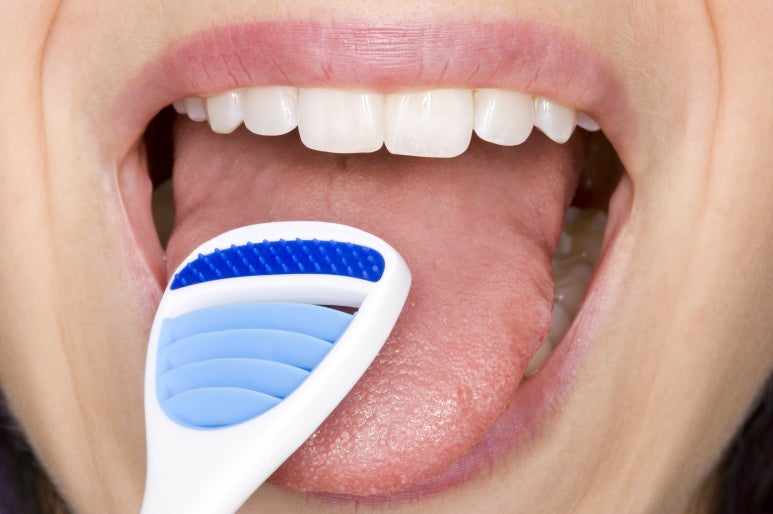
✔ ② Tongue coating
The tongue is the organ with the largest surface area in the oral cavity.
But the white coating that builds up on the tongue is a mixture of dead cells, food, bacteria, and saliva residue, creating an ideal environment for anaerobic bacteria to thrive.
Tongue coating is difficult to notice on your own, and it cannot be removed by brushing alone, making it the most common yet most overlooked cause of bad breath.
✔ ③ Old prosthetics and crowned teeth
If crowns, bridges, implants, or other prosthetics are old or have lost their adhesive strength, bacteria can multiply inside, or food and saliva can enter through tiny gaps and decompose, causing bad breath.
Even if they look fine on the outside, prosthetics that are more than 5 years old should definitely be checked.
✔ ④ Food debris + tartar
Especially in the deep areas of molars, between teeth, and along the gumline, there are areas that brushing three times a day still may not reach.
Plaque that accumulates in these places hardens into tartar within 2-3 days and becomes a breeding ground for bacteria and the starting point of odor.

Self-check list for bad breath – Could this be me?
Could it be that bad breath is progressing without you even realizing it?
If three or more of the items below apply to you,
→ even if you do not notice it now, you may soon start worrying about bad breath.
□ When you wake up in the morning, your mouth feels sticky and your mouth feels tacky
□ Your tongue is covered with a white, thick coating
□ Even after brushing, you quickly notice bad breath
□ When using floss, foul-smelling food debris comes out
□ Your gums bleed and swell often
□ You have old prosthetics, crowns, or bridges
□ Your mouth gets dry often, and you drink more beverages than water
□ You have dry mouth or the habit of sleeping with your mouth open
□ Someone has once subtly turned their head while you were speaking
If three or more of these apply,
→ it is necessary to check for dental causes through an oral examination.
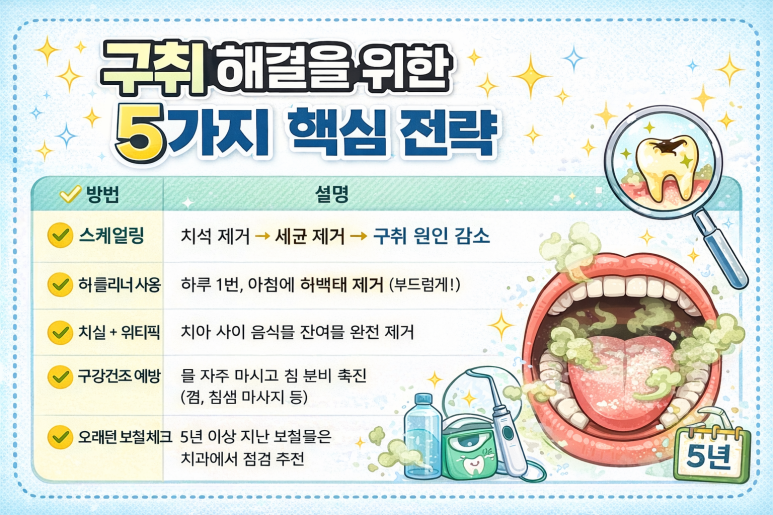
Do not cover it up with mouthwash - the real solution starts at the dental clinic.
If you have bad breath, covering it with mint gum, mouthwash, or air fresheners
→ only masks the smell and leaves the cause untreated.
The five strategies above go beyond simple hygiene management and are key practices for directly removing the causes of halitosis and creating a healthy oral environment.
※ If you are wearing orthodontic appliances or have many prosthetics, regular scaling and oral examinations must be performed together.

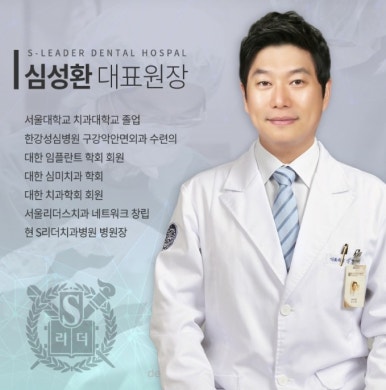
Sagajeong Station Dental Clinic, S Leader Dental Hospital
The “real cause of bad breath”
Halitosis is an embarrassing issue, but it is also a sign of oral health that is easiest to diagnose and quickest to improve.
At S Leader Dental Hospital, located near Konkuk University Entrance Station in Gwangjin-gu, Seoul,
✔️ a testing system that scientifically analyzes the causes of halitosis,
✔️ comprehensive diagnosis of gum health, tongue coating, and prosthetic condition,
✔️ scaling, prosthetic replacement, periodontal treatment, lifestyle improvement, and more
we provide personalized halitosis improvement programs for each patient.
If you have been thinking, “I want to speak, laugh, and live comfortably without worrying about bad breath,” please do not worry about it alone anymore.
Sagajeong Station Dental Clinic, S Leader Dental Hospital, will find the cause and work with you toward a solution 😊


 Sagajeong Station Dental Clinic :: S Leader Dental Hospital