Hello, this is Songjeong-dong Dental Clinic, greetings from S Leader Dental Hospital.
“Even though I brush well and don’t feel any discomfort, do I really need to go to the dentist?”
“I’m worried that if I go for a regular checkup, I might end up needing more treatment.”
Have you ever thought this way? In fact, many people think of the dentist as a place to go when they are in pain, when cavities appear, or when gums swell and bleed.
But the earlier you visit the dentist, before pain starts, the less actual treatment you need.
Teeth, unlike bones, are tissues that do not regenerate on their own. Once damage begins, it is difficult to fully restore them no matter how well they are treated.
In particular, because cavities and gum disease often progress without pain, by the time discomfort is felt, the “golden time” for treatment has often already been missed.
Regular checkups while you are healthy are the surest way to detect dental problems early and finish treatment with something simple.
Today, at Songjeong-dong Dental Clinic, S Leader Dental Hospital, we’ll explain why regular oral examinations are important, what effects they have, and how often you should get them—covering everything actual patients usually want to know.
 Oral diseases progress quietly.
One of the biggest characteristics of dental health is its “silent progression.”
Both cavities and periodontitis usually have almost no symptoms in the early stages. They are so-called “silent diseases.”
Cavities rarely cause sensitivity or pain until they pass through the enamel and reach the dentin, and gum disease may cause slight swelling and bleeding, but pain is barely felt.
→ Then one day, a tooth suddenly breaks, or the gums collapse and the teeth become loose.
In particular, the lesions below are typical examples that are easy to detect late without regular checkups.
| Lesions that can be detected early | Why are there no symptoms? |
|---|
| Early cavities (enamel caries) | No pain because they are far from the nerve |
| Gingivitis | Only mild bleeding, hard to notice in daily life |
| Early periodontitis | Gum bone destruction is progressing, but sensation is dull |
| Tartar under the gums | Not visible, but causes inflammation |
| Fracture at the margin of a prosthesis | No feeling in daily life, can be confirmed by X-ray |
💡Because these conditions can only be identified through a dentist’s visual examination + radiographic diagnosis + periodontal measurements, without regular checkups, patients usually do not notice them at all while they progress.
Regular checkups are prevention, not treatment.
The concern, “Won’t I end up needing more treatment if I go for a checkup?” is something we often hear in actual clinical settings.
But data shows that the people who receive regular checkups actually have
✔ fewer cavities,
✔ longer-lasting prostheses, and
✔ healthier gums.
✅ What regular checkups help reduce
| Item | Description |
|---|
| Treatment cost | If detected early, it may end with one resin treatment |
| Pain | Prevention before discomfort appears, and minimal anesthesia may be possible |
| Time spent | Since treatment is simple, the number of visits is minimized |
| Anxiety | Reduced trauma related to the dentist; you can feel reassured by knowing your condition in advance |
Regular checkups are like changing your car’s engine oil on time.
They are not about fixing a breakdown after it happens, but about checking in advance so it doesn’t break down in the first place—that is the essence of regular checkups.
[The “golden time” for saving teeth is determined by checkups]
For oral diseases such as cavities and periodontitis, there is a period when they can still be reversed.
But if that period is missed, the scope of treatment and the cost become much greater.
For example…
If a cavity is in its early stage, it can be simply finished with resin,
→ but if it reaches the nerve, root canal treatment + crown = time and cost increase by 5x
If it is found when the gums are only slightly swollen, scaling may be enough,
→ but if the bone starts to dissolve, periodontal surgery + bone grafting may need to be considered
If you manage swelling around an implant right away, peri-implantitis can be prevented,
→ but if left untreated, it may lead to implant failure
Regular checkups are the most accurate compass for helping you not miss that “time you can still return from.”
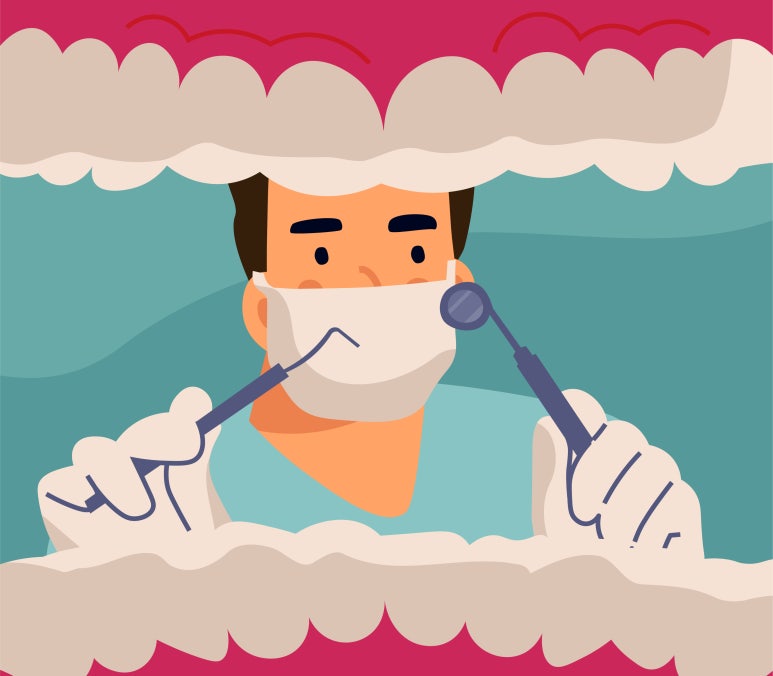 How often, and what should be checked?
🗓 Recommended checkup intervals
General adults: once every 6 months
Implant, orthodontic, and prosthetic patients: every 3–4 months
Those with a history of gum disease: quarterly checkups recommended
| Main checkup items |
|---|
| Examination item |
| Visual examination |
| Radiographic examination |
| Periodontal pocket measurement |
| Scaling |
| Oral hygiene guidance |
| Occlusal analysis |
🟡 Tip: At your first visit, check whether the dental clinic offers a “regular checkup package.”
The more a clinic emphasizes preventive care, the more actively it recommends regular checkups, and the better its management system tends to be.
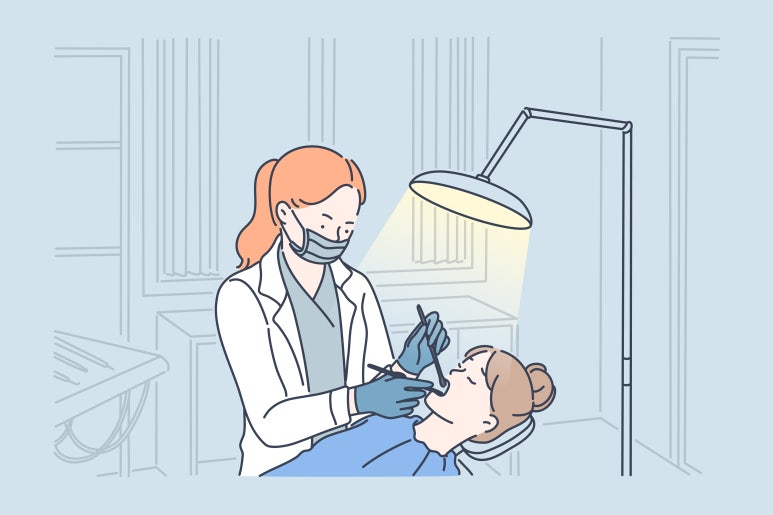 For those with dental phobia, regular checkups are even better.
When we tell people who are afraid of the dentist, “At least come in for a checkup,” they often say, “That’s even scarier….”
But unlike treatment, regular checkups do not require anesthesia, and if you brush well, they usually end with a short examination. They are also an opportunity to talk 충분히 with the medical staff.
In fact, the fear often comes from the anxiety of having gone too long without a visit, so getting accustomed to the clinic through regular visits greatly helps reduce the psychological distance from the dentist.
“Building a regular checkup habit with Songjeong-dong Dental Clinic, S Leader Dental Hospital”
Dental checkups are not the beginning of treatment, but the surest way to protect healthy teeth.
Even just regular checkups can reduce the number of treatments and pain, lower medical costs, and most importantly, prevent major problems that may arise later.
At Songjeong-dong Dental Clinic, S Leader Dental Hospital, located near Konkuk University Station in Gwangjin-gu, Seoul,
✔ Precise diagnosis using 3D digital X-ray and panoramic equipment
✔ A collaborative system with specialists in periodontics, prosthodontics, and orthodontics
✔ Based on a preventive, regular-care system rather than treatment alone
we operate a care environment where patients can comfortably receive preventive management in advance.
“Checking your teeth when they are fine is what really counts as doing it right.”
At Songjeong-dong Dental Clinic, S Leader Dental Hospital, let’s begin a regular oral checkup habit that stays one step ahead of treatment.
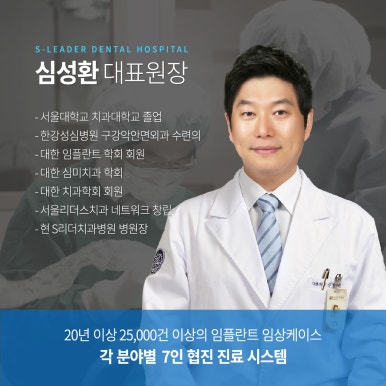



 Songjeong-dong Dental Clinic :: S Leader Dental Hospital