Hello, this is S Leader Dental Hospital, a recommended Seoul orthodontic dental clinic, greeting you.

As soon as a parent notices that their child’s teeth or jaw looks even slightly unusual, the first concern that comes to mind is, “Is now the right time to start orthodontic treatment?”
But when you listen to people around you, the opinions are all different—“If you do it too early, you’ll have to do it twice,” “It’s more accurate after the growth period,” “Middle school age is the best time,” and so on—so it only becomes more confusing.
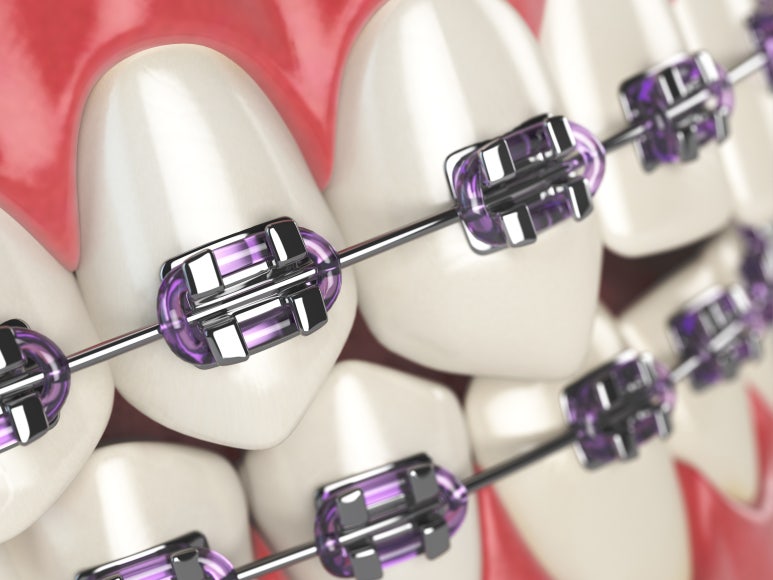
So, when is the real golden time?
The most ideal orthodontic timing, from an orthodontic perspective, refers to a period when a child’s growth direction and pattern can still be predicted even if all of the teeth have not yet erupted, and when full-fledged tooth movement becomes easier by making use of the growth period.
Today, at S Leader Dental Hospital, a recommended Seoul orthodontic dental clinic, we will summarize information that can be practically helpful in planning your child’s orthodontic treatment, including the need for and benefits of adolescent orthodontics, problems that may arise if the golden time is missed, and recommended orthodontic methods by age.
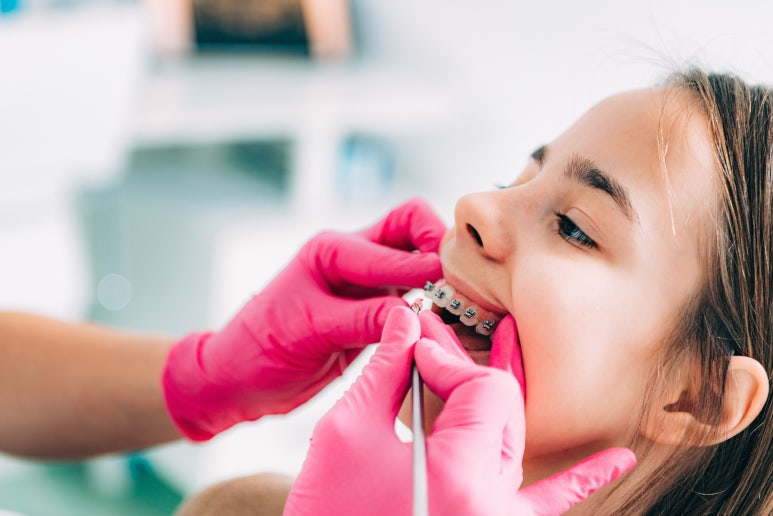
Why is orthodontic treatment during adolescence important?
Orthodontics is not simply about straightening crowded teeth.
Its real purpose is to achieve healthy tooth alignment, functional bite, and facial balance at the same time.
During childhood and adolescence, not only the teeth but also the jawbone and facial skeleton are growing rapidly.
Therefore, if this period is used well, space can be secured without excessive tooth extraction, jaw asymmetry can be improved by guiding growth direction, and treatment time and complexity may be reduced compared with orthodontic treatment in adulthood.
Above all, by closely analyzing the skeleton during the growth period and the transition from primary teeth to permanent teeth, it becomes possible to make a medically grounded decision about whether orthodontic treatment should begin now, whether it is better to wait 1 to 2 years, or whether early orthodontic treatment (phase 1) should be followed by adult orthodontic treatment.
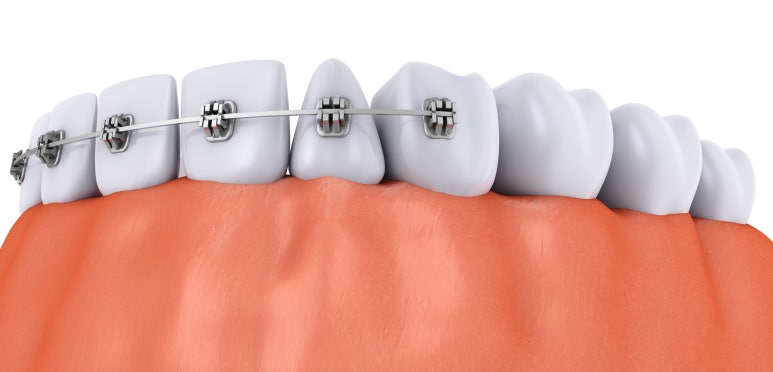
When is the orthodontic golden time? What is the exact age?
In general, around ages 7 to 8 is recommended as the time for the “first detailed analysis.”
This does not mean that all orthodontic treatment should begin right away, but rather that it is a time to analyze growth direction and tooth replacement cycles and determine whether early intervention is needed if problems are expected.
The actual golden time can be divided as follows depending on the situation.
| Age group | Features | Recommended orthodontic approach |
|---|
| Ages 7–9 (lower elementary school) | A period when primary teeth fall out and the first permanent teeth settle in | Phase 1 early orthodontics, jaw guidance, space securing, etc. |
| Ages 10–13 (upper elementary school to first year of middle school) | Major permanent teeth such as the front teeth and canines settle in / skeletal growth can still be adjusted | Skeletal growth control + start aligning the teeth |
| Ages 14–17 (second year of middle school to high school students) | Growth plates are nearly complete; facial maturity increases | Full orthodontic treatment focused on tooth alignment and bite |
💡 Key point
Adolescence is a period when bones are growing and the gums are still flexible, so orthodontic force (the force that moves teeth) is delivered more stably. In addition, because there is less sensitivity to pain and recovery is faster, treatment results are better and long-term prognosis is excellent.
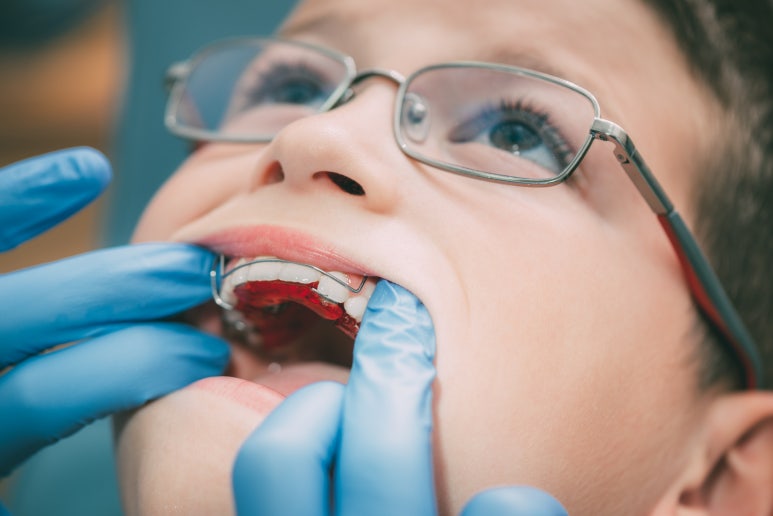
Problems that can arise if the golden time is missed
Many people think, “They’re still young, so we can wait,” or conversely, “It’s not too late to do it when they’re older.”
But if the golden time is missed, it is not simply a matter of treatment taking longer; the difficulty of treatment itself can increase, and situations may arise where even bone surgery must be considered.
In the case of underbite (mandibular prognathism)
→ If growth is not controlled by around the upper elementary school years, surgical orthodontic treatment (including double-jaw surgery) may be needed in adulthood.
When the upper jaw is narrow
→ During the growth period, it can be widened simply with an expansion device, but in adulthood surgical expansion may be required.
Impacted canines
→ Around age 10, they can be brought into place easily, but after age 14, the roots may become entangled, increasing the risk of tooth damage.
In other words, orthodontics does not often become “impossible,” but to achieve the same result, more time, cost, and invasive treatment may be required.
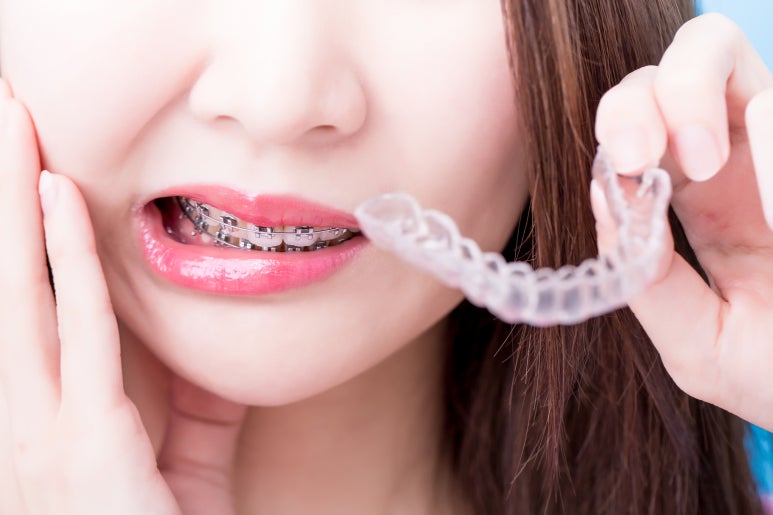
*The misconception that adolescent orthodontics has to be done twice?*
One of the common concerns parents have is, “If we do it now, won’t we have to do it again later?”
This is half true and half a misunderstanding.
“Phase 1 early orthodontics” and “Phase 2 full orthodontics” are treatments with different purposes.
▪ Purpose of Phase 1 early orthodontics
▪ Purpose of Phase 2 full orthodontics
After all permanent teeth have erupted
→ Complete tooth alignment and bite correction
→ Finish balancing the facial shape
In other words, the goal of orthodontic treatment now is not necessarily to finish everything in one go; the key is to divide treatment in a way that is least burdensome and most effective for the child, in line with the flow of growth.
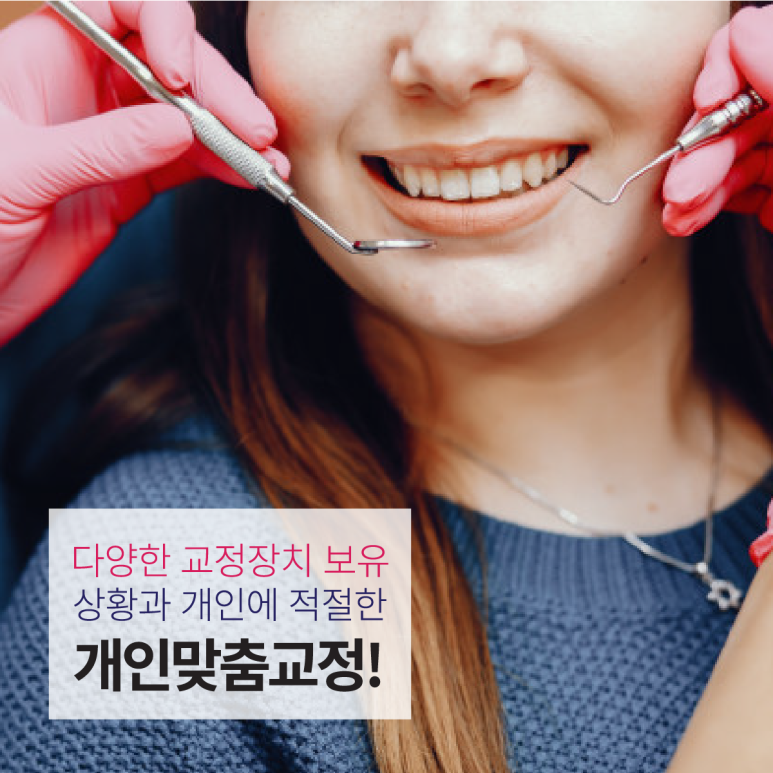
How the orthodontic timing is decided through precise diagnosis at S Leader Dental Hospital, a recommended Seoul orthodontic dental clinic
The golden time for adolescent orthodontics cannot be uniformly described by saying, “This age is the best.”
That is because every child has a different facial shape, different timing of tooth replacement, different growth speed, and different degree of skeletal imbalance.
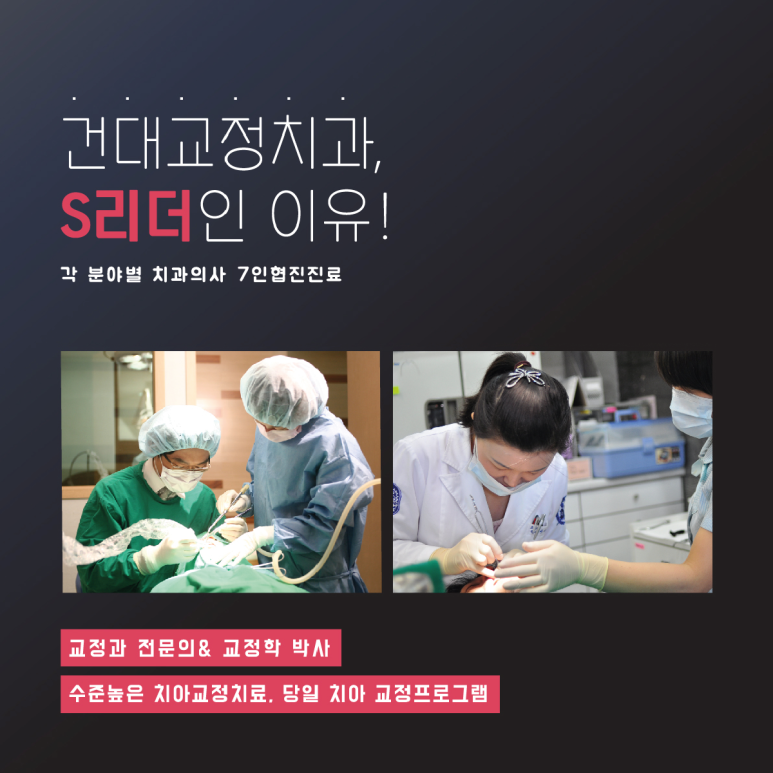
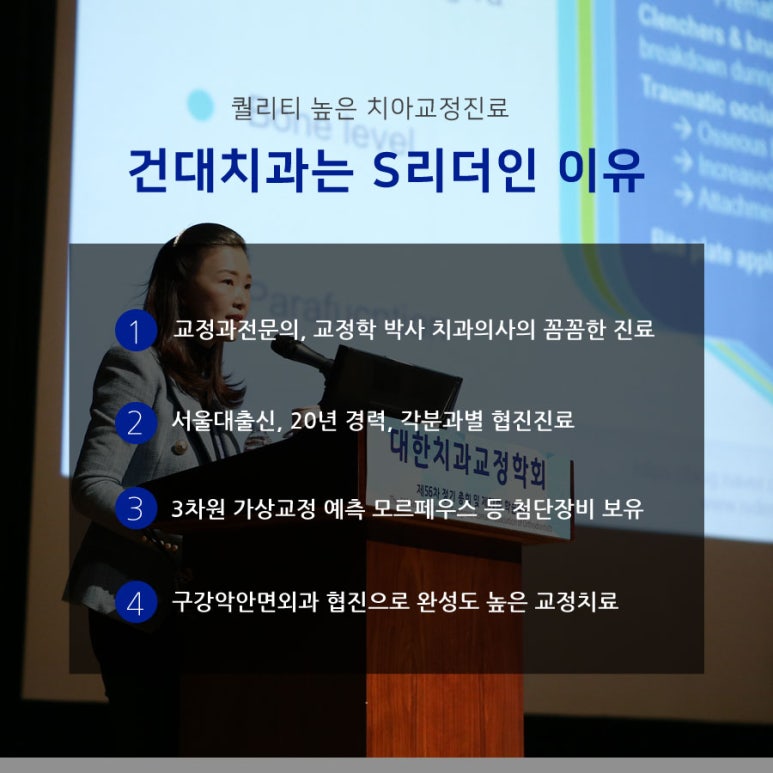
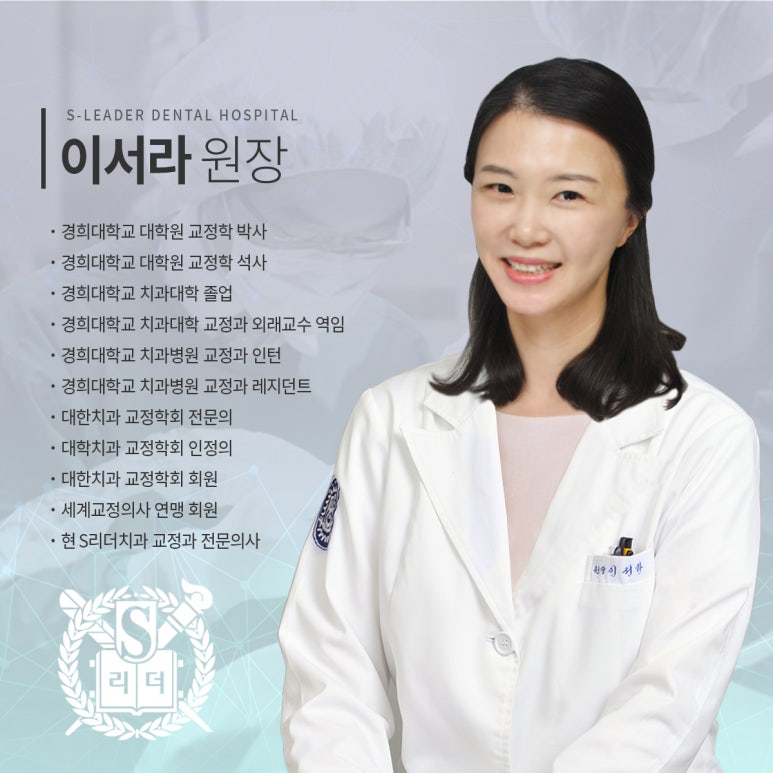
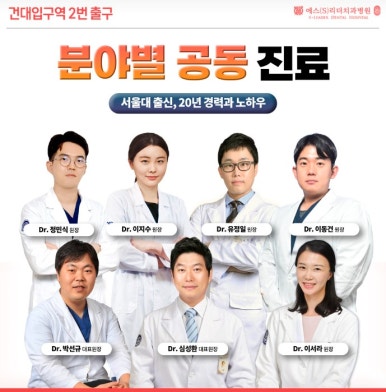
At S Leader Dental Hospital, a recommended Seoul orthodontic dental clinic located near Konkuk University Entrance Station in Gwangjin-gu, Seoul, doctors with doctoral-level expertise in orthodontics personally perform the diagnosis and precisely analyze the growth stage of the teeth, jaw, and skeleton using 3D CT and digital scanners.
In addition, we make extensive use of devices specialized for children’s and adolescents’ orthodontics, and after 충분한 consultation with parents, we determine the most suitable timing and method for the child.
If you are wondering, “When is the best time to do it?” please do not worry about it alone.
We hope you will find the time when your child’s smile can settle in the most beautiful way together with S Leader Dental Hospital.
Previous image
Next image



Smoking cessation treatment support project with S Leader Dental Hospital
Recommended Seoul orthodontic dental clinic :: S (S) Leader Dental Hospital