Hello, this is S Leader Dental Hospital, your Jungnang-gu orthodontic clinic.

One of the most common questions people ask when starting orthodontic treatment is:
"Doctor, why is mine taking so long?" "It seems like it’s taking longer than the period I was told at the beginning..." In fact, orthodontic treatment is not something that is done only at the clinic. It has to come together through adjustments at the dental clinic, cooperation at home, and lifestyle habits.
Even with the same appliance, some people stay on schedule, while others end up with a longer treatment period and feel anxious along the way.
Today, at S Leader Dental Hospital, your Jungnang-gu orthodontic clinic, we’ll organize the main reasons orthodontic treatment periods become longer in a way that’s easy for patients to understand.
If you’re busy and caught up in daily life, it’s easy to miss something at least once. But if you understand the structure behind why treatment gets delayed and manage just a few key points, the orthodontic period can be fully controlled.
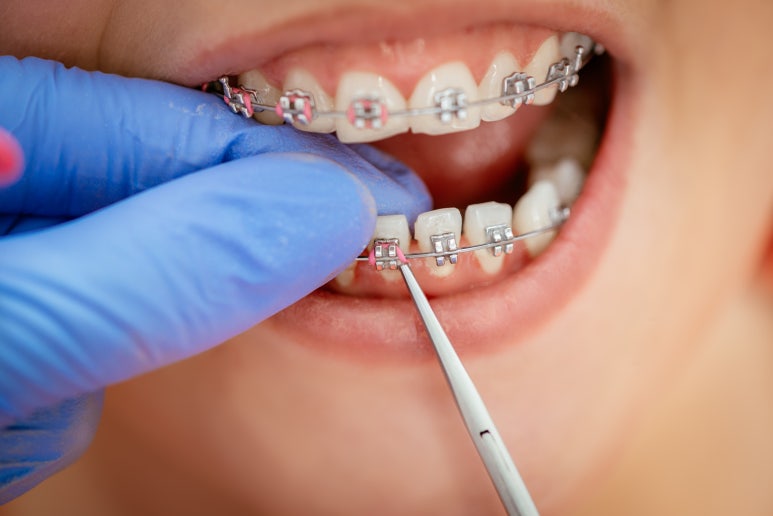
The reason orthodontic treatment gets longer is not that the teeth are lazy, but that the process gets interrupted.
Orthodontics is not a treatment where teeth are forced to move right away just by pulling them. For teeth to move, the bone and gum tissues around them have to respond together. In other words, when the appliance transmits force, the bone gradually remodels in response, the teeth move, and after moving, they need time to settle into a stable position again. That’s why orthodontics does not work by applying one big force all at once; it progresses by applying the right force consistently and steadily.
There is one important point here. If this process is interrupted in the middle, it’s not just that "those few days are lost." The timing for tooth movement is missed, and it can take time to start over, so the schedule may slip much more than expected. For example, if you skip wearing elastics for a few days or postpone an appointment by two weeks, the plan can be thrown off by more than just those two weeks. That is why.
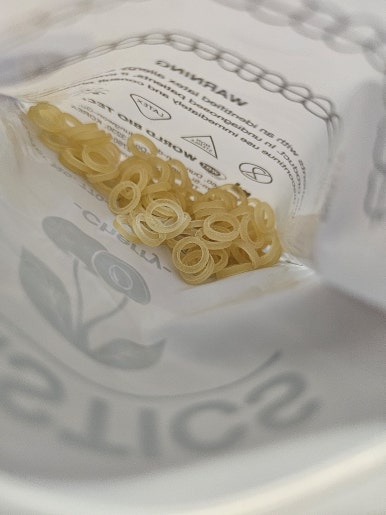
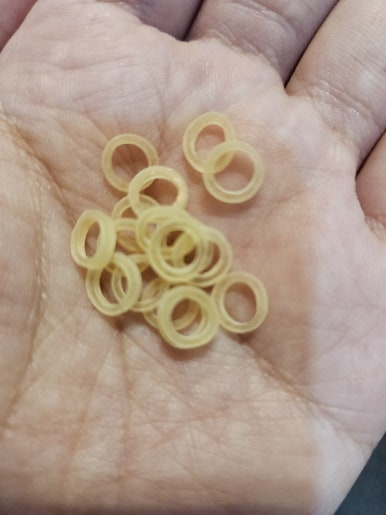
- What happens if you don’t wear elastics: it’s not just that the treatment gets longer, it can actually stop
When many people are prescribed elastics during orthodontic treatment, they think:
"Is this optional?" "It’s uncomfortable, so can’t I skip it sometimes?"
But elastics are not just an extra option; they’re a key engine for aligning the bite between the upper and lower teeth. Especially in the finishing stage, the teeth need more than just being straight—they need to be precisely aligned while also considering chewing function and jaw balance.
What happens if you don’t wear the elastics properly?
The teeth don’t move in the planned direction, so the treatment cannot move on to the next stage. Put simply, it’s similar to a construction project where the next step can’t proceed because materials haven’t arrived. On the surface, it may feel like treatment is still progressing because the appliance is attached and time is passing, but in reality that section may be stagnant or may gradually drift in an undesired direction. Then, eventually, time is needed to correct it again, which makes the treatment period longer.
This is how I explain it to patients so it’s easier to understand:
"Elastics are not optional; they are part of the treatment. A day without elastics is similar to a day off from orthodontics."
One or two days may not seem like much, but when it accumulates over a week, the difference becomes surprisingly large.
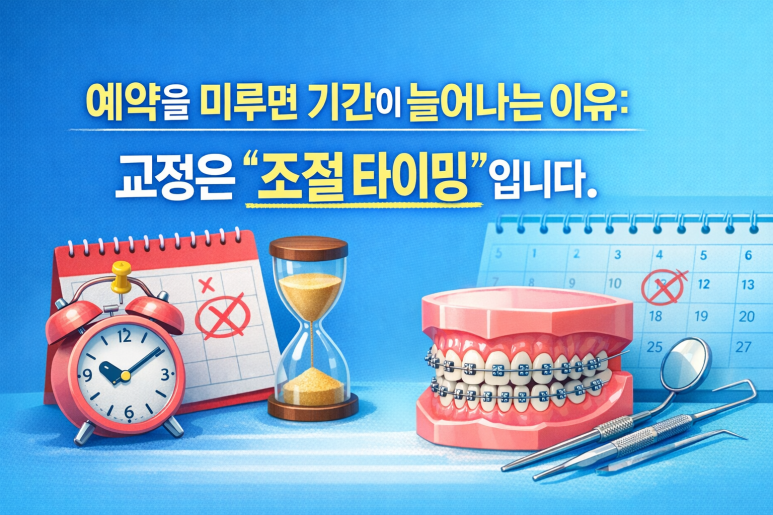
- Why postponing appointments makes treatment longer: orthodontics is about timing adjustments.
"I’ve been really busy lately, so I postponed my appointment. Is that really such a big deal?"
This is another very common question. But orthodontic treatment requires regular wire adjustments or updates to the force of the appliance to maintain the movement of the teeth. After a certain period, that force weakens, and the teeth often shift from "continuing to move" to "holding in place."
In other words, if an appointment is delayed, the teeth may not continue moving and instead remain in a holding pattern. Then, when you come back to the clinic, force has to be applied again, and time is needed before a response appears. So it’s not simply "postpone the appointment by two weeks = the treatment period increases by two weeks." In reality, it can feel much bigger. Especially in the finishing stage, timing adjustments are even more important, so repeated delays in appointments can speed up the extension of the overall treatment period.
Being busy is completely understandable. But when your schedule gets mixed up, the practical solution is not to push it to "next month"—it’s to adjust it to within about one week if possible and make sure to share the situation with the clinic.
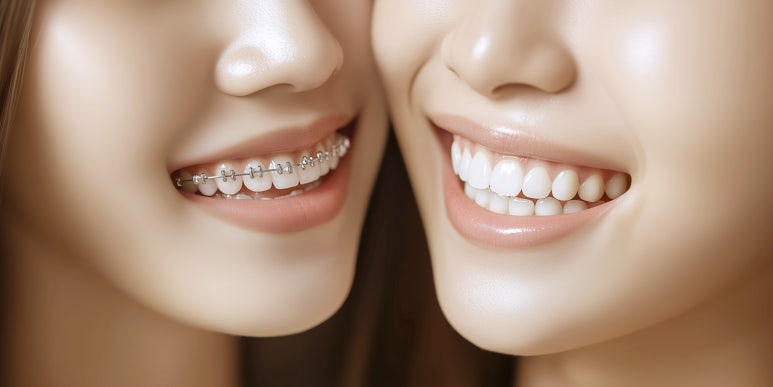
- Leaving broken or detached appliances unattended can delay the orthodontic schedule.
Sometimes a bracket falls off during treatment and, if there is no pain, people think, "I’ll just mention it at my next appointment." Or a wire comes loose slightly, and they let it go. But during the time when the appliance is not functioning properly, that tooth is effectively not receiving any force. In other words, that tooth is basically in a paused state.
The problem doesn’t end there. Orthodontics doesn’t move just one tooth; the entire alignment moves while balancing itself. So if one part stops, other parts may also fail to progress as planned, and the whole treatment may need to be readjusted. That’s why leaving appliance problems unattended doesn’t just mean "that one tooth is delayed"—the whole plan can be thrown off and the treatment period may become longer.
During orthodontic treatment, it helps to remember this:
"Appliance problems are not something to endure; reporting them right away actually shortens the treatment period."
Many clinics nowadays also have systems where you can send photos of the problem and get quick guidance, so rather than worrying too much, contacting the clinic immediately is the safest choice.
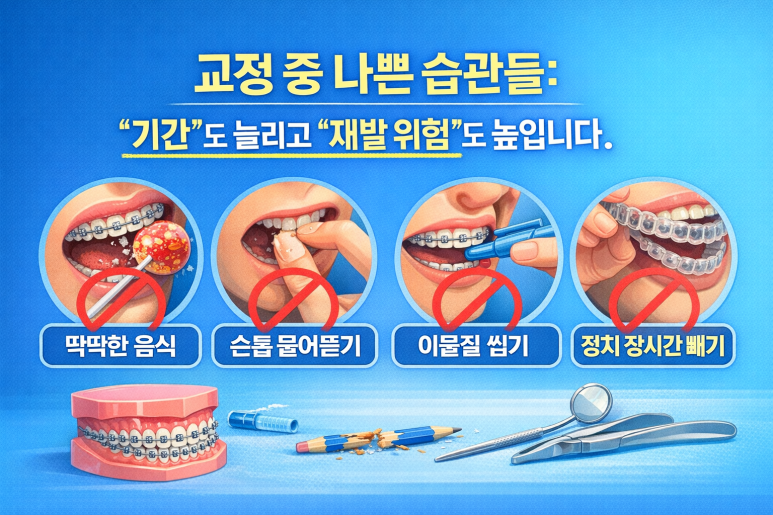
- Bad habits during orthodontic treatment: they increase both the "treatment period" and the risk of relapse.
An unexpected reason for a longer orthodontic treatment period is lifestyle habits. For example, habits like biting your nails or chewing on pens, chewing ice, or frequently eating tough foods (such as dried squid or jerky) not only increase the chance of damaging the appliance, but also repeatedly apply unwanted force to the teeth.
You should also be careful about chewing only on one side. If one side is used repeatedly, the balance of the jaw joint and muscles can become disrupted, and the process of adjusting the bite can become more complicated. For people who clench their teeth or grind them, the wire may bend or the appliance may be overloaded, increasing the risk of pain and breakage.
And an even more important point than many people realize is tongue habits. Habits such as pushing the front teeth with the tongue (tongue thrust) or pressing the teeth with the lips can push the teeth in the opposite direction from the intended orthodontic movement. Then the teeth are constantly being forced against the direction they need to move,
which not only lengthens the treatment period but also increases the risk of relapse after treatment.
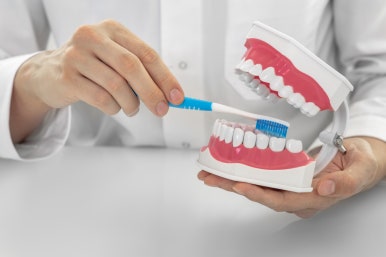
- If oral hygiene breaks down, orthodontic treatment may be temporarily paused.
During orthodontic treatment, appliances are attached to the teeth, which makes it easier for food to get stuck and brushing can feel more difficult. But if swollen gums and bleeding continue during this period, it becomes difficult to move the teeth quickly.
When the gums are sensitive and inflamed, it is hard to apply strong force, and sometimes gum treatment or scaling needs to be stabilized first.
Simply put, when the gums are unstable, the path for teeth movement becomes rough, and treatment cannot proceed safely. So if gum care breaks down, the orthodontic process may have to be slowed down unintentionally. On the other hand,
if you want to shorten the treatment period, maintaining healthy gum condition before appliance management can be the biggest shortcut.
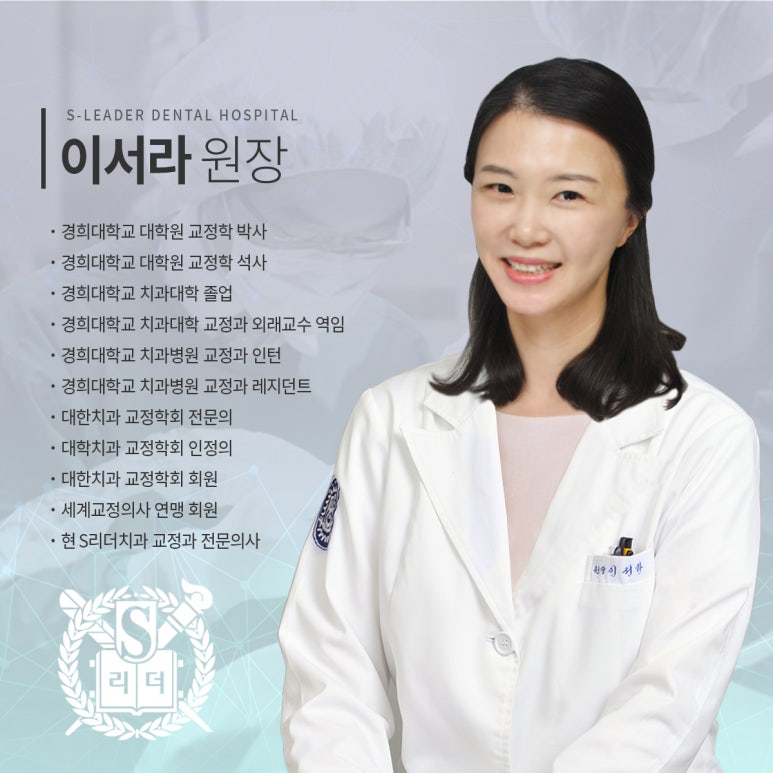
Practical ways to shorten orthodontic treatment: just following these 4 things can make a difference
Frequently asked questions Q&A
Q. If I forget to wear elastics for one day, does the treatment period immediately get longer?
A. One or two days may not make a big difference, but the problem is accumulation. Elastics are the force that keeps the direction on track, so if they are skipped repeatedly, the plan can go off course and time may eventually be needed to correct it again. Even if you missed a day, the most important thing is to start again from that day.
Q. Why do you say the period becomes a month longer if I postpone one appointment?
A. Orthodontics has timing for adjustments. If the force stays weak for too long, tooth movement stagnates, and time is needed to apply force again and wait for a response. So it can feel much longer than the period you simply postponed.
Q. My bracket fell off, but there’s no pain. Can I just leave it alone?
A. Even if there is no pain, that tooth is likely not receiving force. If you wait until the next appointment, that section may stop moving and the whole plan can be delayed. It’s better to let the clinic know as soon as possible and get it checked.
Q. If my gums bleed during orthodontic treatment, does that make treatment difficult?
A. If gum inflammation is severe, it may be difficult to apply strong orthodontic force, and stabilization treatment may be needed first. Early response is important, so if bleeding or swelling happens often, it’s best to review your care routine and consult the clinic.
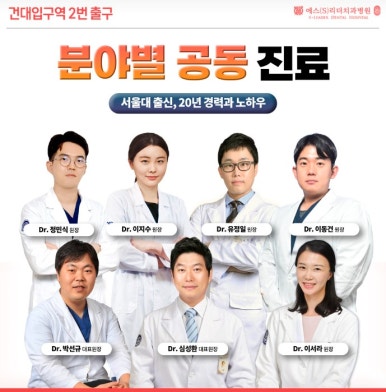
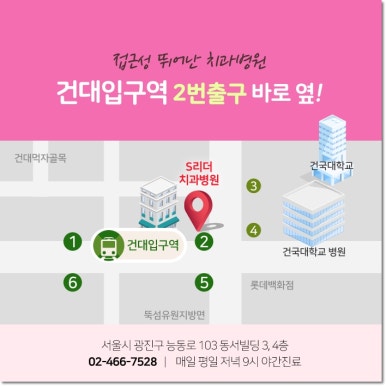
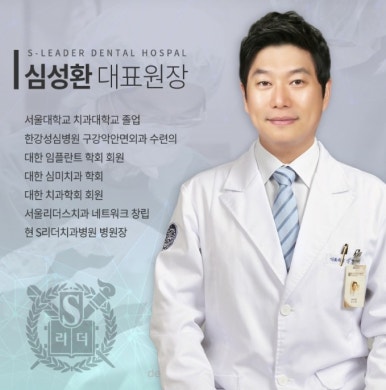

Why Jungnang-gu Orthodontic Clinic, S Leader Dental Hospital, manages the entire orthodontic process with you
Orthodontic treatment needs not only a good plan at the beginning, but also small habits during treatment and a consistent visit rhythm to lead to good results.
Most reasons orthodontic treatment takes longer are not because "the treatment is difficult," but because variables pile up as the treatment flow gets interrupted from time to time. So, conversely, if the patient understands the structure and manages just a few key points, the orthodontic period can be kept stable.
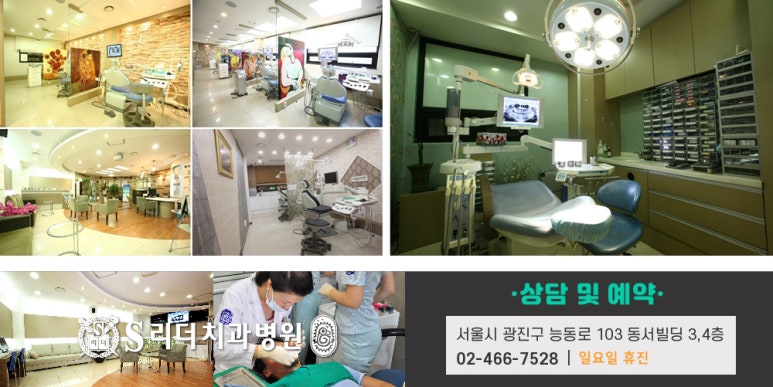
At S Leader Dental Hospital, your Jungnang-gu orthodontic clinic, we carefully explain the treatment process and management points so that patients can understand during treatment "why the period gets longer" and "what is important at this stage."
Orthodontics can feel long, but if you know the direction and move forward together, you can complete it much more comfortably and safely than you might think. If you are worried about the treatment period or feel uneasy about the current pace, please don’t worry alone—find the management method that fits your condition through a consultation.


Jungnang-gu Orthodontic Clinic :: S Leader Dental Hospital