Hello, this is S Leader Dental Hospital greeting you from Gwangjin-gu Implant.
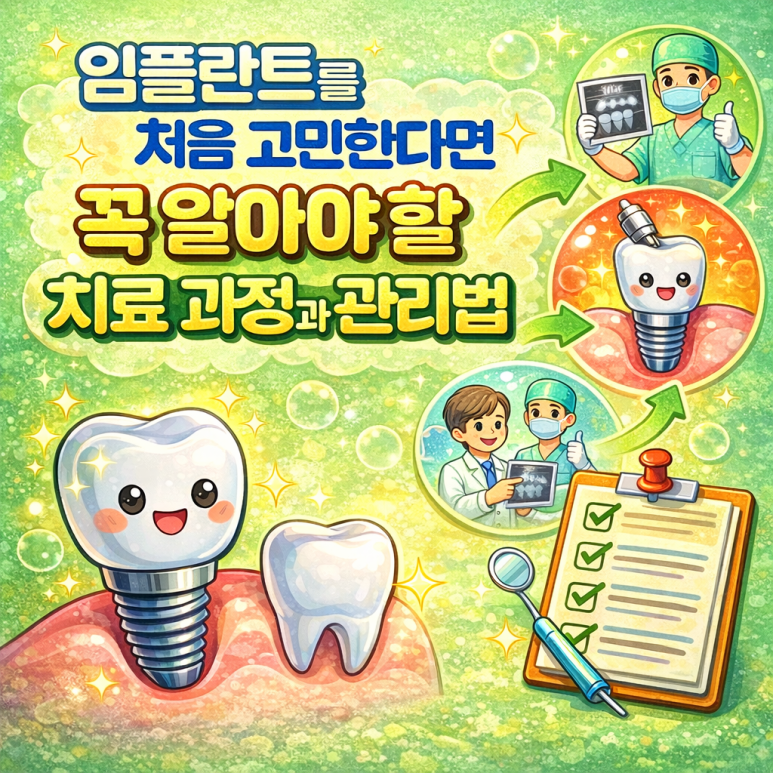
“People always say that implants are expensive, scary, and take a long time to complete.” Most people who are considering implants for the first time come to the clinic carrying all three of these concerns at once.
There are many stories they have heard from people around them, but in many cases, they have never received a clear explanation of whether this treatment is really necessary for them, what the process involves, or what they need to prepare. Especially when it is the first time a tooth has been lost, that vague anxiety can feel even greater.
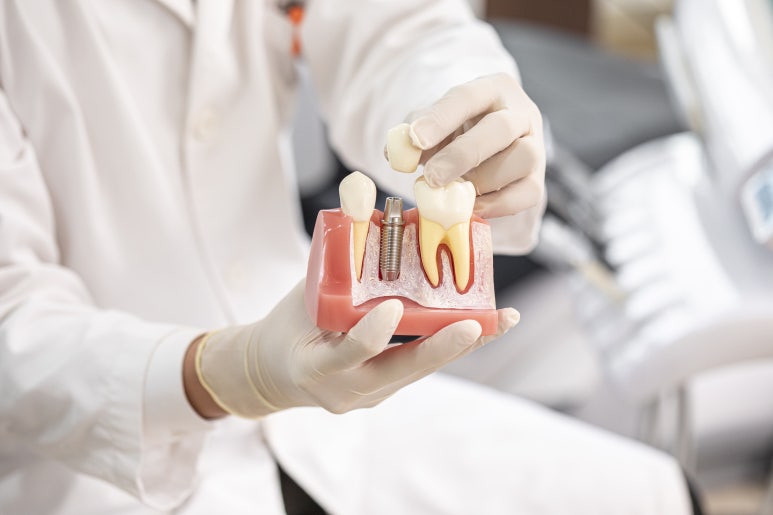
In actual consultations, questions such as “Is it a bigger surgery than I thought?”, “Do I need to come to the clinic several times?”, and “How long will it take until the treatment is finished?” are asked almost without exception. Many of these concerns arise because people do not know the overall flow of implant treatment. An implant is not a treatment that is performed blindly; it is carried out step by step based on sufficient examination and planning.
Today, at S Leader Dental Hospital in Gwangjin-gu, we will organize everything step by step, from the situations in which implants are needed to the treatment process, precautions, and how to care for them so they can be used for a long time.
 When is an implant needed?
Gwangjin-gu implant treatment is a method that can restore the function of a natural tooth as closely as possible when a tooth has been lost.
When is an implant needed?
Gwangjin-gu implant treatment is a method that can restore the function of a natural tooth as closely as possible when a tooth has been lost.
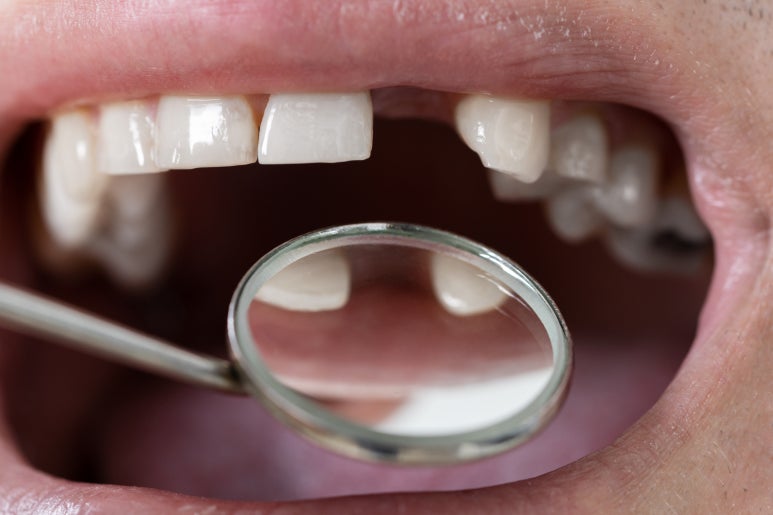
There are many reasons a tooth may be lost. In some cases, decay has progressed so severely that the tooth can no longer be saved. In others, the tooth has been damaged by an accident or trauma, or it may be difficult to maintain due to gum disease.
When a single tooth is lost, some people think, “Won’t one tooth be fine?” However, losing even one tooth can bring more change than expected. The surrounding teeth may tilt into the empty space, or the opposing tooth may move downward, causing the bite to collapse, and the balance of chewing force can also be disrupted.
Compared with bridges or dentures, implants have the advantage of being able to function independently without grinding down neighboring teeth, and they can also help reduce bone resorption by stimulating the alveolar bone. The purpose of an implant is not simply to fill a missing tooth, but to restore chewing function, aesthetics, and long-term oral health together.
 Essential examinations and planning before implant treatment
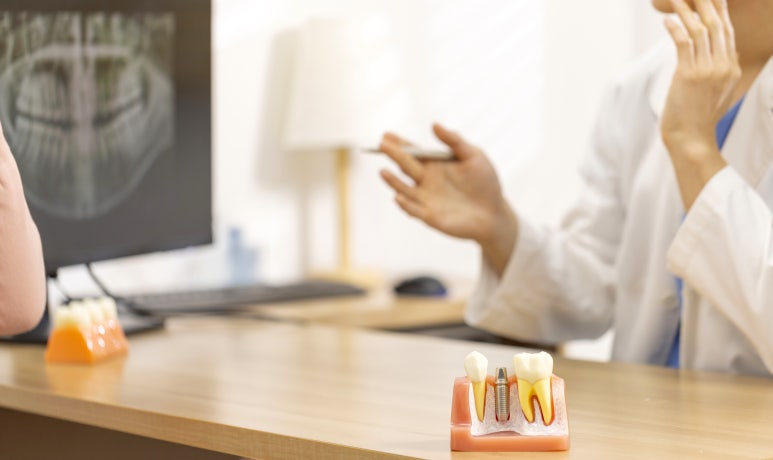
The most important step in implant treatment is the pre-treatment detailed examination and planning process. This is because safe treatment is only possible when the condition inside the gums, the thickness of the bone, and even the location of the nerves are accurately identified. For this, a 3D CT scan is used to check the height, width, and density of the jawbone, and panoramic imaging and an oral examination are performed together.
Essential examinations and planning before implant treatment
The most important step in implant treatment is the pre-treatment detailed examination and planning process. This is because safe treatment is only possible when the condition inside the gums, the thickness of the bone, and even the location of the nerves are accurately identified. For this, a 3D CT scan is used to check the height, width, and density of the jawbone, and panoramic imaging and an oral examination are performed together.
In this process, it is not enough to simply see whether there is space to place an implant. Gum inflammation, bite condition, the state of existing prosthetics, and the presence of systemic diseases are all considered as well. Depending on the case, the shape and position of the prosthetic that will be placed on top of the implant are also planned in advance. As is often said, more than half of implant treatment is determined during this diagnostic and planning stage. When this process is solid, variables during treatment are reduced and the results can remain stable.
Implant treatment process, step by step
Implant treatment is generally divided into several stages. First, after a detailed examination, a treatment plan tailored to the individual is created, and the implant fixture is placed into the bone after the gum is incised. This procedure is performed under local anesthesia, and although the surgical time varies depending on the number of teeth and the condition, it is often not as long as people expect.
After the implant is placed, a period of time is allowed for the bone and implant to integrate firmly. This period is usually about 3 to 6 months, and a temporary prosthesis may be used if necessary. Once sufficient stability is confirmed, the final prosthesis is attached and the bite is adjusted to check whether there are any issues with actual use. Even after the treatment is completed, regular checkups and maintenance continue, and including this process, the entire course is considered implant treatment.
 Main causes of implant failure and precautions
Implants have a high success rate, but problems can arise depending on several factors. Typical causes include smoking, systemic conditions such as diabetes, poor oral hygiene, and excessive chewing force. In particular, smoking interferes with gum recovery and increases the risk of inflammation, so it can significantly raise the implant failure rate.
Main causes of implant failure and precautions
Implants have a high success rate, but problems can arise depending on several factors. Typical causes include smoking, systemic conditions such as diabetes, poor oral hygiene, and excessive chewing force. In particular, smoking interferes with gum recovery and increases the risk of inflammation, so it can significantly raise the implant failure rate.
Problems can also occur if hard foods are used too forcefully immediately after the procedure or if regular checkups are neglected. It is important to remember that an implant is not a treatment that ends with the procedure alone; it can remain stable only when the patient's care and cooperation are also maintained.
 How to care for implants for long-term use
To use implants for a long time, daily care is very important. In addition to basic brushing, it is necessary to carefully clean around the prosthesis using dental floss or a water flosser. It is also advisable to check the gum condition and bite through regular checkups every 6 months and receive adjustments when needed.
How to care for implants for long-term use
To use implants for a long time, daily care is very important. In addition to basic brushing, it is necessary to carefully clean around the prosthesis using dental floss or a water flosser. It is also advisable to check the gum condition and bite through regular checkups every 6 months and receive adjustments when needed.
Lifestyle habits are also important factors. Smoking and excessive drinking can negatively affect gum health, and if you grind your teeth at night, you should consider wearing a mouthguard. This is why people often say, “The treatment is done once, but the care lasts a lifetime.”
Questions most often asked before getting implants
The time required for implant surgery varies depending on the number of teeth and the condition, but in most cases it is completed more quickly than people expect. Bone grafting may be necessary when there is insufficient jawbone, and although pain varies from person to person, it can be managed with appropriate anesthesia and prescriptions. Meals are usually limited to soft foods for a certain period after surgery, and even front teeth can be treated with implants through sufficient planning.
 Implant treatment with S Leader Dental Hospital
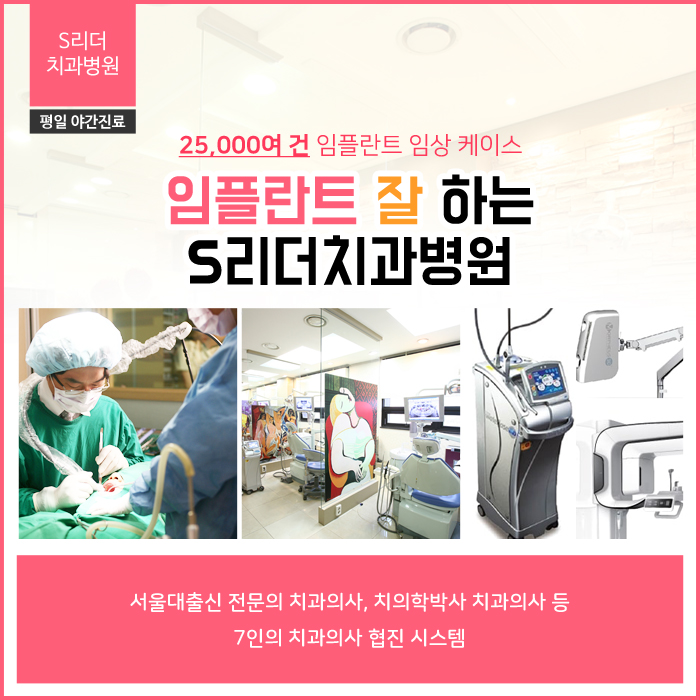
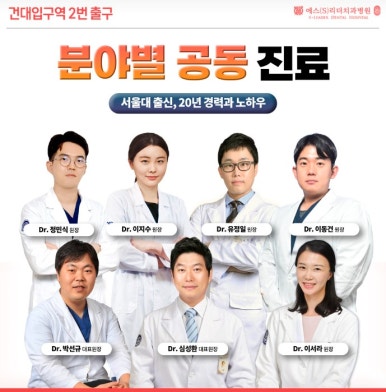
Implants are not simply a treatment that replaces a missing tooth; they are a precise treatment that requires comprehensive consideration of the condition of the gums and bone, as well as the bite. At S Leader Dental Hospital in Seoul's Gwangjin-gu, we provide more stable and long-term implant treatment through detailed diagnosis based on 3D CT and a collaborative system across departments.
Implant treatment with S Leader Dental Hospital
Implants are not simply a treatment that replaces a missing tooth; they are a precise treatment that requires comprehensive consideration of the condition of the gums and bone, as well as the bite. At S Leader Dental Hospital in Seoul's Gwangjin-gu, we provide more stable and long-term implant treatment through detailed diagnosis based on 3D CT and a collaborative system across departments.
In particular, we also provide smoking cessation counseling so that we can help manage smoking habits, which have a major impact on gum health after implant treatment. From the start of treatment through maintenance and lifestyle improvements, S Leader Dental Hospital will be with you so that you can maintain a healthy oral condition for a long time after treatment.

 Gwangjin-gu Implant :: S Leader Dental Hospital