�
Hello, this is Songjeong-dong Dental Clinic, S Leader Dental Hospital.
�
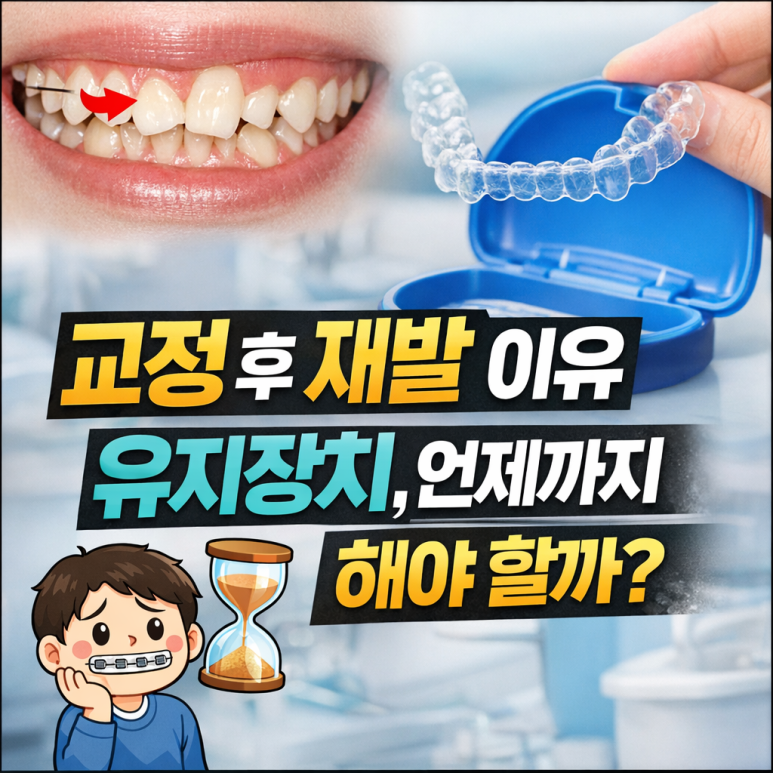
“It's over, but it shifted again…” Reasons this can happen and how to prevent it
There is a moment that people who have finished orthodontic treatment feel the most upset about. You look in the mirror, and although it is not as bad as before, your front teeth
start to overlap a little again, begin to spread apart, or you slowly start to feel something similar to how they were before treatment.
“It's definitely done with orthodontics... why is it shifting back again?”
“I missed the retainer for just a little while—how is it already this fast?”
“So how long am I supposed to wear the retainer?”
These questions are very common. Orthodontic treatment takes a lot of time, cost, and daily inconvenience, so hearing about relapse can feel deeply discouraging. But if you know one thing first, it can help you feel a little less shaken.
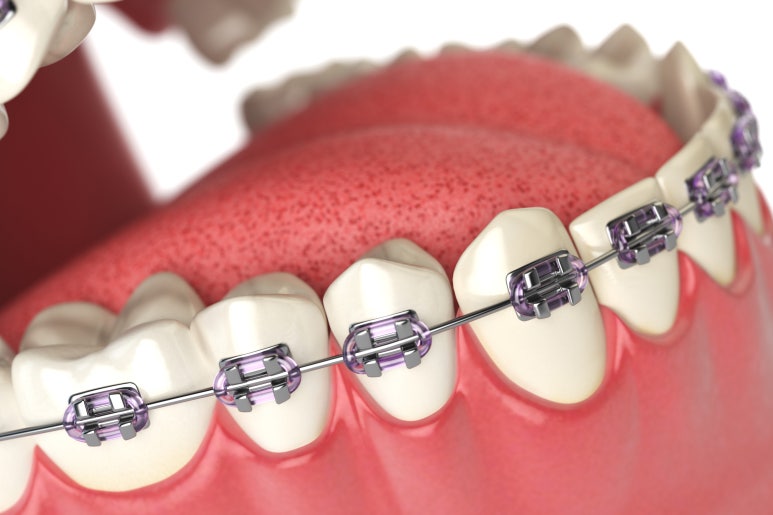
Orthodontic relapse is less like a special mishap caused by poor self-care and more like a natural change that can happen because teeth inherently have a force that makes them want to return to their original position.
That is why orthodontic treatment is considered complete not only at the stage of “moving the teeth,” but also when it includes the stage of stably maintaining that position (the retainer stage).
Today, at Songjeong-dong Dental Clinic, S Leader Dental Hospital, we will go over
-
the real reasons relapse happens after orthodontic treatment
-
cases in which relapse is more likely
-
types of retainers and their pros and cons
-
practical guidelines for how long to wear a retainer
-
daily routines that help reduce relapse
all at once.
 Why do teeth move again even after orthodontic treatment is finished?
Saying orthodontic treatment is finished means that the teeth have moved to the target position, not that they are now fixed there forever.
Teeth are supported in the gums and bone by blood vessels and tissues, and these tissues need time. Put more simply, even if orthodontic treatment moves the teeth to a new position, they can still be in a state where they are prone to shifting before the surrounding environment fully adapts to the “new position.”
Front teeth, in particular, are easy to notice when they move. Even a 1 mm change stands out, and very small changes can make you think, “Wait, are they shifting back?” That is why relapse after orthodontic treatment is often not a dramatic change, but rather something you feel as small changes accumulate.
 What are the five main reasons relapse happens after orthodontic treatment?
This is the key point. Relapse does not happen simply because “you did not wear your retainer.” It often happens when multiple factors overlap and movement starts again.
- Teeth move a little throughout life
Teeth do not stay still as we age. Over time, front teeth may gradually crowd together (especially the lower front teeth), and small shifts can occur depending on chewing force and daily habits.
So if you think, “Now that orthodontics is over, it’s finally done,” you may suddenly notice changes again at some point. This can happen even in people who have not had orthodontic treatment, and people who have had orthodontics often notice it more sensitively.
- The gums and bone need time to adapt to the new position
When teeth move through orthodontic treatment, the tissues that support the teeth also need to be rearranged. If the retainer is loosened before this process is complete, the teeth can more easily be pulled toward their “original direction.”
That is why the first few months after orthodontic treatment are especially important. How you spend this period can become the key to reducing relapse.
- Retainer wear is inconsistent or stopped
There is a very common trap with retainers.
“It's probably okay if I skip just today.”
If that really ends with just one day, it may be fine. The problem is that one day becomes a week, then a month, and small changes accumulate. In particular, with clear retainers, there comes a moment when it changes from “it fits when I put it on” to “it suddenly becomes hard to wear.” By then, the teeth have likely already shifted a little.
- Continuous forces from tongue habits or mouth breathing
Teeth move under very small forces. Habits such as pushing the front teeth with the tongue, breathing through the mouth so the lips do not close properly, biting nails, or chewing on pens can steadily add pressure to the teeth even after orthodontic treatment.
If these habits were part of the original cause before treatment, and the habits remain unchanged after treatment, the teeth are more likely to shift again.
- Bite overload from clenching, grinding, or uneven occlusion remains
People who clench their teeth or grind them strongly are exposed to repeated, significant force on their teeth. If the bite is not stable after orthodontic treatment or force is concentrated on one side, that force can move the teeth slightly. In such cases, along with the retainer, bite checks and habit management may also be needed.
 Want to know the six 'high-risk cases' where relapse is more likely?
Relapse can happen to anyone, but there are certain cases that require extra caution. If any of the following apply to you, it is a good idea to have a more thorough retainer plan.
- Cases where the front teeth were severely crowded
When the front teeth were significantly overlapped, the force trying to return them can be stronger. In particular, small relapse in the lower front teeth is easy to notice.
- Cases where there was spacing between the front teeth
In cases where the front teeth were spaced apart, relapse is also more likely to appear in the direction of “spacing again.” In such cases, you need to pay closer attention to the retainer.
- Cases with severe tooth rotation
When teeth were rotated, even if orthodontic treatment straightened them, the tendency to rotate again may remain, making relapse risk relatively higher.
- Cases with a large amount of tooth movement (regardless of extraction or non-extraction treatment)
Rather than whether teeth were extracted or not, cases where the teeth actually moved a lot may require more careful retention.
- Adult orthodontic treatment (retention becomes even more important depending on gum health)
Unlike growing children or adolescents, adults have different tissue responses, and gum condition can be an important variable, so it is better to be more careful with retention.
- Cases with tongue habits, mouth breathing, or teeth-grinding habits
Habits often remain even after treatment is finished. If the habit continues to apply force, the likelihood of relapse also increases.
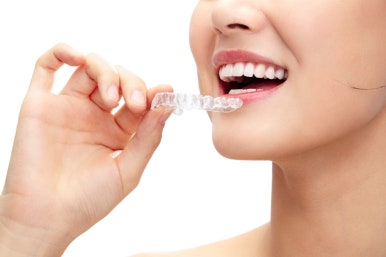
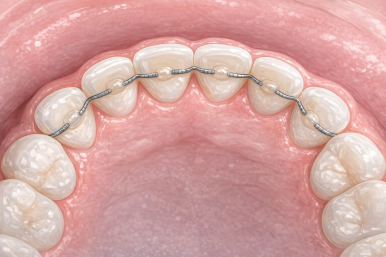
Types of retainers: What are they, and how are they different?
Retainers are broadly divided into a “fixed” type and a “removable” type, and in some cases both are used. Each appliance has clear pros and cons, so it is important to choose one that fits your lifestyle and case.
- Fixed retainer (wire behind the front teeth)
This method involves bonding a wire to the inside of the front teeth so it remains in place 24 hours a day.
Advantages: You do not have the burden of putting it in and taking it out every day, and there is less risk of “forgetting.”
Disadvantages: Interdental care (floss/interdental brushes) may become more important, and if the wire comes loose or is deformed, it needs to be checked.
A fixed retainer is especially helpful for people who are the type to struggle with wearing removable retainers consistently. However, if care is neglected, the gums can become uncomfortable, so a regular care routine is important.
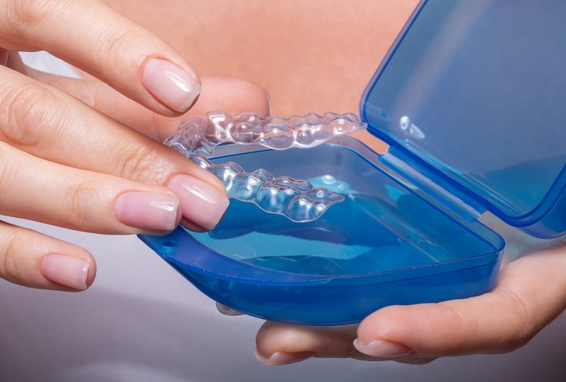
- Removable retainer (clear retainer/plastic retainer)
This is a type you put in and take out.
Advantages: It is relatively easy to keep clean, and you can wear it only when needed. (depending on the plan)
Disadvantages: If wear is inconsistent, the teeth can shift right away, and there is a risk of loss or deformation. You should also be careful not to clean it with hot water, as that can cause deformation.
A clear retainer may signal relapse when it goes from “fits well at first” to “suddenly does not fit.” At that point, rather than thinking, “If I just wear it less, it will get better,” it is often easier to solve if you get it checked sooner.
- Using both (a combined strategy)
In some cases, both a fixed and removable retainer are used. For example, the front teeth may be secured with a fixed retainer while the overall alignment is further stabilized with a clear retainer.
This combination has the advantage of distributing risk. However, it is important to understand why such a combination is being used (the risk level of your case).
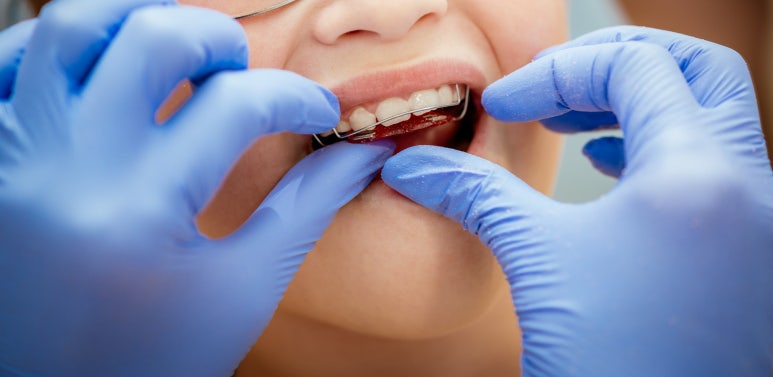
The reality of retainer duration: how much longer do you actually need to do it?
To give the answer first, there is no single period that applies to everyone. But there is a practical principle.
- The first few months after orthodontic treatment are the most important period
Right after orthodontic treatment, the teeth have not fully adapted to their new position. That is why wearing the retainer during this time is especially important. It is easier to understand if you think of this as the “initial stabilization” period.
If retention becomes loose during this time, relapse can begin more easily.
- After that, there is often a stage of switching to “night wear” (case by case)
At first, people often wear it almost every day (or for long hours), and once things stabilize, the plan is often adjusted so that it is worn only at night. However, the timing of this change depends on the case and is planned differently depending on relapse risk.
- “Completely stopping is difficult” is also a reality (especially for front teeth)
Front teeth are a area that can continue to change a little throughout life. That is why, in many cases, a retainer is less about “stopping it completely someday” and more about maintaining a minimal long-term routine.
In particular, if your case has a high risk of relapse, maintaining night wear over the long term may be a way to reduce the burden.
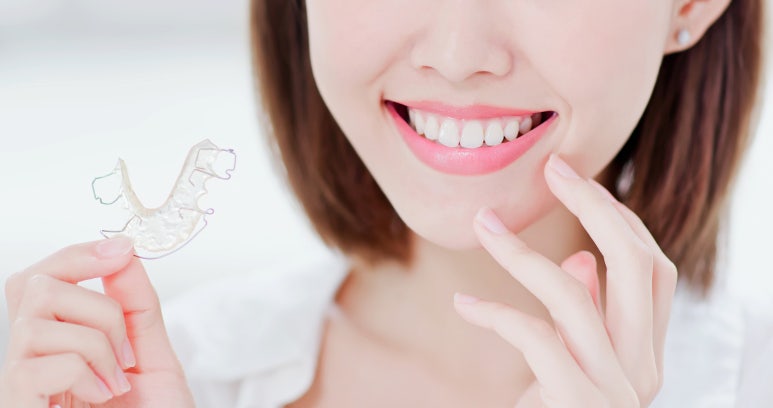
Tips for wearing and caring for retainers (a routine to prevent relapse)
Retainers depend more on routine than on willpower. Below are practical tips that help reduce relapse.
- The answer is to make wear time a habit
If you are in the night-wear stage, it is a good idea to make it part of your routine in this order: wash face - brush teeth - retainer.
Especially if you keep skipping weekends, the missed wear can add up.
- Good cleaning and storage can change the lifespan
Clear retainers should not be cleaned with hot water. If they deform, they may stop fitting immediately. Storing them in a case is also important. Wrapping them in tissue and then losing them is a very common accident.
- If you have a fixed retainer, interdental care is key
If there is a wire, flossing can be difficult. In that case, it is important to use floss aids or interdental brushes to clean the areas that are hard to reach. It is a good idea to establish a care routine so the gums do not become uncomfortable because of the retainer.
- What to check during regular follow-ups
Checking whether the retainer has come off or deformed, whether the bite has changed, and whether there are early signs that the front teeth are spreading apart again can help prevent major relapse.
 From Songjeong-dong Dental Clinic, S Leader Dental Hospital
Why management matters after orthodontic treatment
Relapse after orthodontic treatment is a more common concern than people may think. Teeth naturally have a tendency to return to their original position, and even as we age, slight movement can occur. That is why retainers are less of a “choice” and more like the final stage of orthodontic treatment.
If your case has a higher risk of relapse, the retention plan becomes even more important, and simply establishing a routine well can greatly reduce the chance of relapse.
If your retainer suddenly no longer fits or you start to feel that your front teeth are separating, getting checked quickly rather than “trying to endure it a little longer” may help keep the treatment smaller and simpler.
At Songjeong-dong Dental Clinic, S Leader Dental Hospital, we also provide detailed guidance through the retainer stage after orthodontic treatment is finished, and if a retainer is uncomfortable or relapse is suspected, we check the causes together—habits, bite, and appliance condition—so that you can maintain things comfortably again.
If you notice changes after orthodontic treatment, rather than blaming yourself too much, we recommend checking your current condition accurately and managing it in a way that reduces the burden.


 Songjeong-dong Dental Clinic :: S Leader Dental Hospital