To those wondering, “Is it okay to start now?”
The story I share most often in the consultation room
Hello from Sagajeong Station Dental Clinic, S-Leader Dental Hospital.
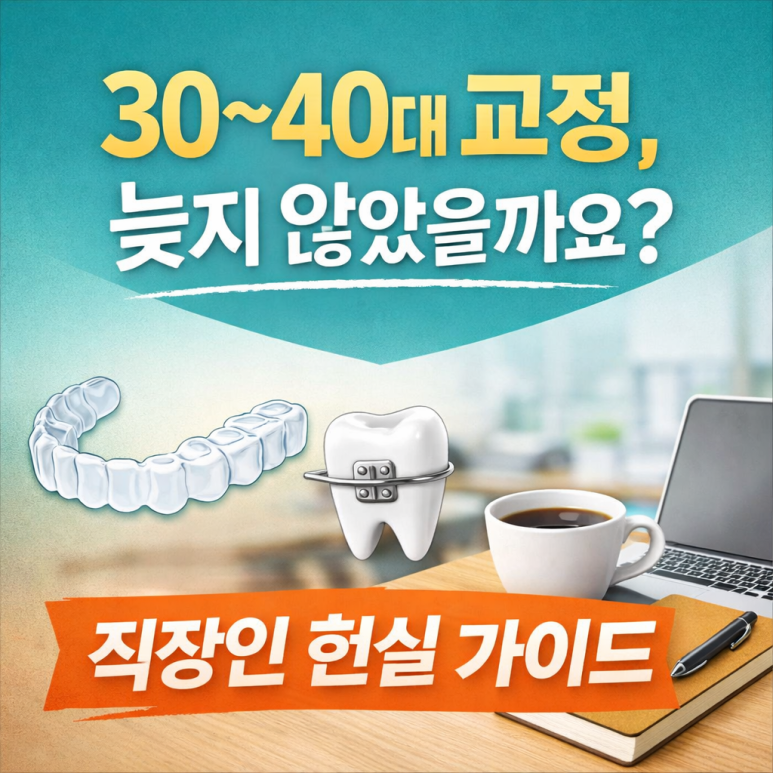
People in their 30s and 40s who are considering orthodontic treatment have one thing in common. They clearly want treatment, but at the same time, their concerns are even greater.
“Is it too late if I start now?”
“Can I do it while working at a company? What if it’s noticeable?”
“I have a lot of meetings and talk a lot—will my pronunciation be okay?”
“I go out for company dinners often—can clear aligners really work?”
To be honest, orthodontic treatment for teenagers and orthodontic treatment for people in their 30s and 40s are not the “same orthodontics.” The principle is the same, but daily life is different, and the condition of the teeth and gums is different too. That is why adult orthodontics is not a matter of “can or can’t,” but of a plan tailored to your condition and a realistic routine. This is especially true for office workers.
Today, based on the questions that people in their 30s and 40s actually ask at S-Leader Dental Hospital near Sagajeong Station, I’ll organize everything in one place: whether it’s really too late because of age, what changes you can expect, what must be checked before starting, how to choose an appliance realistically, and practical office-worker tips on pain, pronunciation, company dinners, and care.
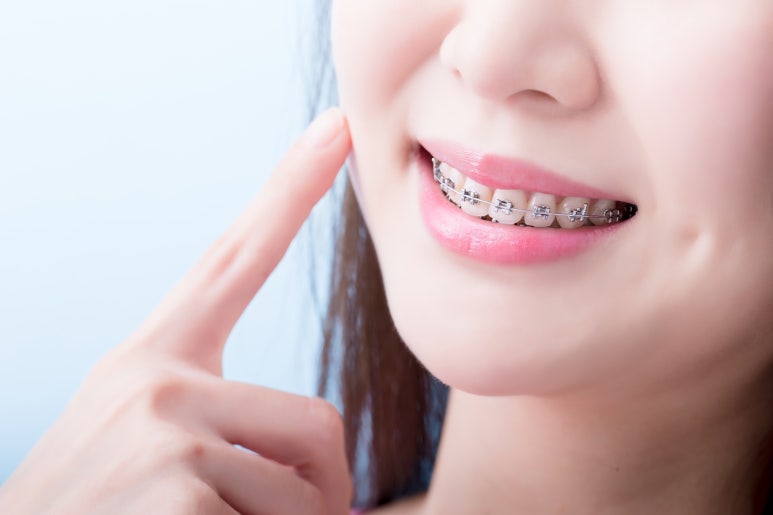 30-40s orthodontics: not that you “can’t” because of age, but that the “plan may change.”
To say it first: orthodontic treatment in your 30s or 40s is not too late.
However, the approach may differ from treatment for teenagers, which can make use of the flow of bone growth. More than anything, adults each have different histories inside their mouths. For example, some may already have crowns or implants, some may have sensitive gums, and others may have different care routines because of busy lifestyles.
So the key to adult orthodontics is not “can I start?” but rather: with what goal, in what way, at what pace, and with what kind of care will I proceed?
A good consultation does not begin with, “Which appliance do you want?” It begins with, “Let us organize the options possible in your current condition.”
 5 changes you can expect from orthodontic treatment in your 30s and 40s
What people considering adult orthodontics ultimately want is not simply straight teeth. In many cases, the real goal is “to feel more comfortable, smile more naturally, and worry less.”
- A more polished impression through alignment of the front teeth
If the front teeth are crooked or there are protruding teeth, you end up worrying every time you smile in photos. In your 30s and 40s, with a lot of face-to-face work, the 부담 of a “first impression” can feel even greater. When the front tooth line is aligned, many people say their expressions feel more relaxed and their confidence when smiling changes.
- Less food getting stuck and easier hygiene care
If the teeth are crowded, there will be places that even thorough brushing cannot reach. After orthodontic treatment, if food gets stuck less often and floss slides in more easily, the feeling of freshness in the mouth changes. In particular, people who had repeated bad breath or gum bleeding often notice a big improvement in hygiene.
- When the bite is aligned, chewing discomfort can decrease
Adult orthodontics often aims at “comfortable chewing” as much as aesthetics. People who feel like only one side touches, or whose jaw feels tired when chewing, may find that life becomes easier once the bite is organized.
- In some cases, jaw fatigue and the burden of clenching can decrease
This does not apply to everyone, but when the bite becomes more stable, there are cases where the burden around the jaw decreases. However, people who grind their teeth or clench strongly may need separate management.
- Psychological comfort from “before it gets any later”
Making the decision for orthodontic treatment is the hardest part. Once they start, many people say, “Why didn’t I do this earlier?” In particular, people in their 30s and 40s are often at a stage where they feel the need for change before their routines become too fixed, so the meaning of starting can feel even greater.
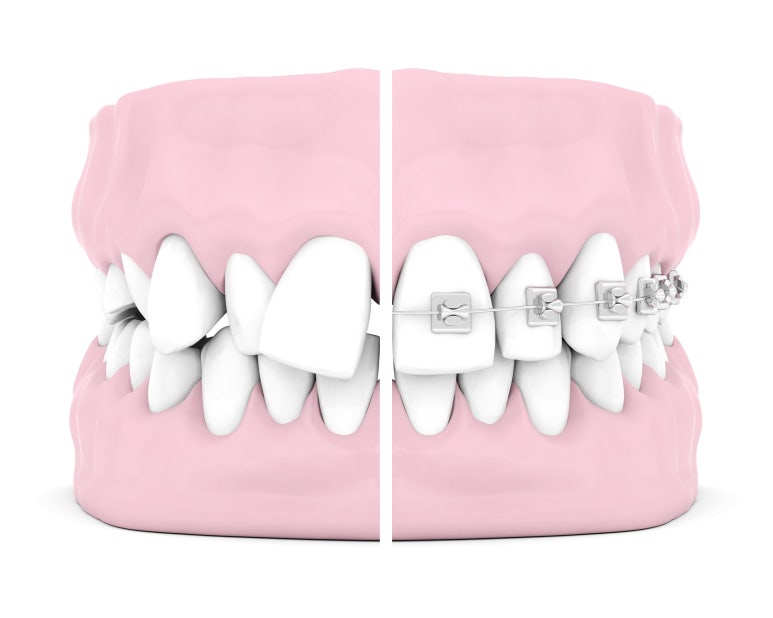 4 things that must be checked first in adult orthodontics
Before choosing an appliance for orthodontic treatment in your 30s or 40s, the following four things should be checked first.
- Gum health (periodontal condition)
For adults, gum condition is often a variable. If your gums are weak or bleed often, care during orthodontic treatment becomes more important, and the treatment plan may also change. This is why questions like “Will orthodontics make my gums recede?” come up.
- Whether you have restorations, implants, or crowns
If you already have crowns or implants, there are points to consider in the orthodontic plan. This does not mean treatment is impossible; it means the plan for how to move the teeth needs to be made more carefully.
- Teeth grinding and clenching habits
Clenching your teeth tightly is more common than you might think. In particular, office workers may clench more during stressful situations. During orthodontic treatment, force may concentrate on certain teeth at certain times, so it is important to check this habit as well.
- Temporomandibular joint symptoms
If you hear sounds when opening your mouth, feel stiffness in the jaw, or feel discomfort when chewing, it is best to check these before starting orthodontic treatment. This does not mean orthodontics will solve everything; it means these symptoms should be reflected in the treatment plan so you can proceed more comfortably.

Questions office workers ask most often: the real-life TOP questions (Q&A style)
Q1. Is it very noticeable?
It depends on the appliance. Clear aligners are less noticeable, and brackets are visible. However, there are now aesthetic options such as ceramic materials, so it is important to choose based on your work style and stress level.
Q2. Will it be uncomfortable when speaking? Will my pronunciation be unclear?
Everyone needs a little time to adapt at the beginning. In particular, lingual orthodontics (inside braces) may require pronunciation adjustment because of the tongue feeling the appliance. Clear aligners can also feel like a foreign object at first, but most people adapt. The important thing is to reflect whether you have a job that requires a lot of speaking during the consultation.
Q3. When is the pain the worst?
Usually, many people feel the most discomfort for about 2 to 4 days after the appliance is attached. After that, the discomfort often decreases in waves, and after regular adjustments there may be 1 to 3 days of soreness again. Rather than being a treatment that “hurts all the time,” it is more realistic to say it is “brief discomfort at certain times.”
Q4. I have a lot of company dinners and eating out—can I still do clear aligners?
Yes, for many people. However, clear aligners depend on wearing time. If you have frequent dinners, snacks, and coffee, your wearing time may realistically decrease. In that case, the issue is not that clear aligners are bad, but that you need to see whether they fit your lifestyle.
The key question is: “Can I really keep the wearing time?”
Q5. What happens if I’m too busy to come in for appointments?
Orthodontic treatment requires regular checkups. If your schedule is too irregular, the plan may become unstable, so if you are an office worker, it is best to first check whether you can realistically keep the follow-up interval. Overly ambitious plans often turn into stress in the end.
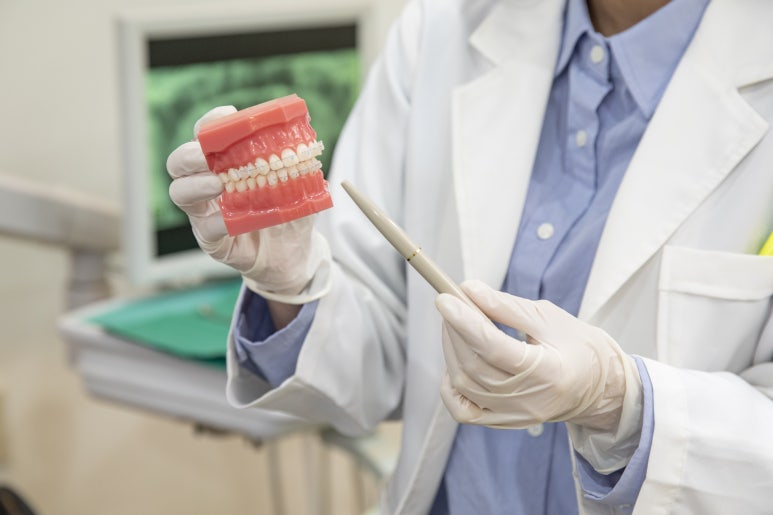
Guidance on choosing an appliance: how to choose based on your lifestyle pattern
There is no single correct answer when choosing an appliance. For office workers in their 30s and 40s especially, the appliance you can maintain determines the outcome.
- Clear aligners: good aesthetics, but “wearing time” is the skill
Advantages: less noticeable, and hygiene care is relatively easy.
Real-life point: if wearing time is irregular, the results may be slow or the plan may go off track.
→ If you have frequent company dinners, business trips, or café visits, the key is not just whether it is possible, but whether you can realistically keep it up.
- Bracket orthodontics (metal/ceramic): broad applicability and strong fine adjustments
Advantages: applicable to many cases and strong in detailed adjustments.
Real-life point: food can get stuck more easily, and brushing may be more difficult, so routine matters.
→ People who dislike taking appliances in and out, or who have a solid routine, may actually find it more convenient.
- Lingual orthodontics (inside braces): less visible, but may require adaptation
Advantages: 거의 invisible from the outside.
Real-life point: initial pronunciation issues, tongue irritation, and higher management difficulty may occur.
→ It is often chosen by occupations with a lot of face-to-face interaction and where being invisible is the top priority.
- Partial orthodontics: the range of possible cases is clear
Advantages: in some cases, when only part of the front teeth need alignment, treatment can finish relatively quickly.
Real-life point: cases that need bite correction or large tooth movement have limitations.
→ It is important to know that “just a little on the front teeth” is not always possible.
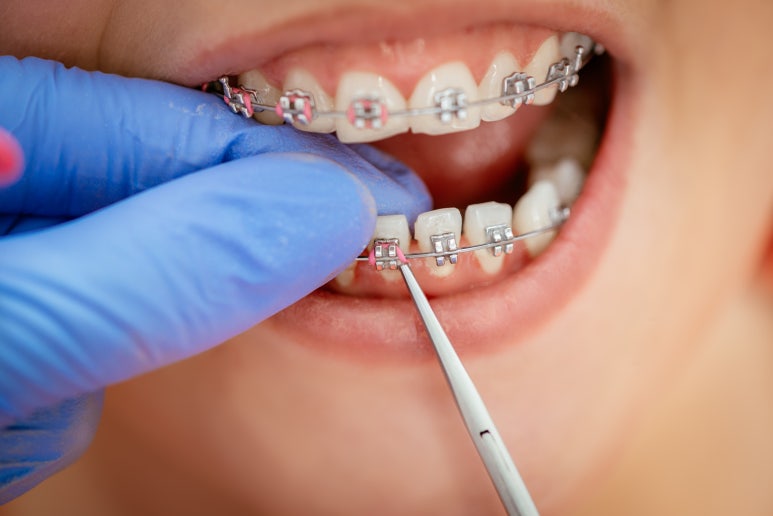 8 lifestyle tips to make office-worker orthodontics “less hard”
After starting orthodontic treatment, it is best to keep your schedule as flexible as possible. For about 2 to 4 days after the appliance is first attached, discomfort tends to be the greatest, so if an important presentation or a long meeting overlaps with that period, the burden can increase. If possible, starting during a relatively quiet week can help with adaptation.
Pain during orthodontic treatment usually does not continue all the time, but repeats in a certain pattern. It is common to feel discomfort when the appliance is first attached and again for about 1 to 3 days after an adjustment. Knowing in advance that the pain is not permanent but rather something that comes and goes can also reduce psychological stress.
During the initial adjustment period, food choices have a bigger effect than you might think. Hard or chewy foods can make the pain feel worse, so temporarily choosing foods with less chewing burden, such as porridge, steamed eggs, or soft rice, can make the period much more comfortable. Rather than trying to push through it, it is important to give your body time to adjust.
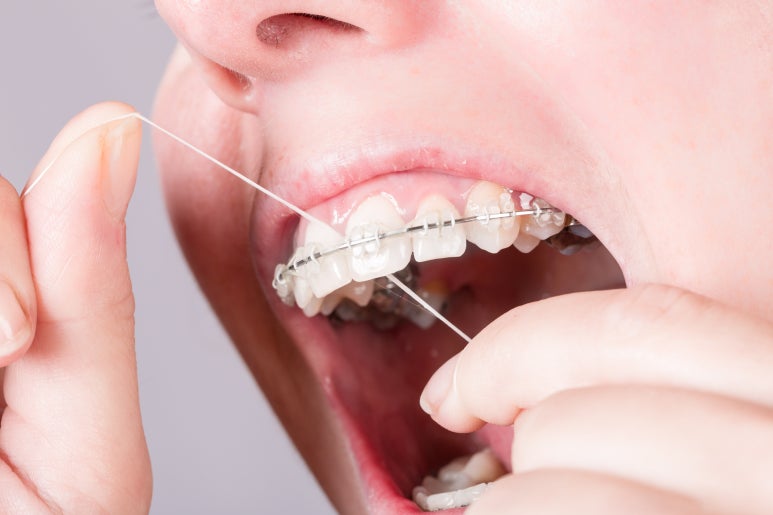
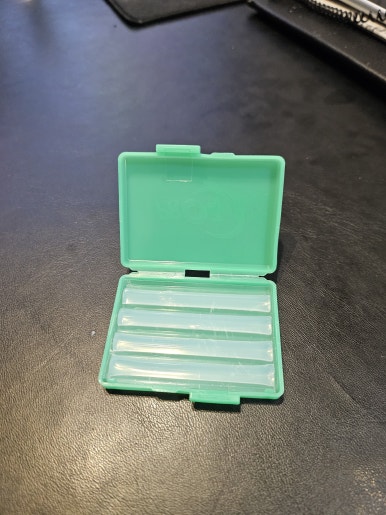
To prepare for sudden discomfort during work life, it also helps to keep a few orthodontic items on hand. Just having wax, a small mirror, an interdental brush, or a portable toothbrush can greatly reduce stress in urgent situations. If you are using clear aligners, it is also a good idea to carry a storage case.
If you are an office worker with frequent company dinners or eating out, it is much easier to have your own care routine in advance rather than responding case by case. For clear aligners, it is important to set a flow for cleaning and re-wearing after meals. For bracket orthodontics, it is good to decide in advance how you will manage food getting stuck. Without a routine, management itself can easily become bothersome over time.
Care for coffee or staining foods also differs by appliance type. Clear aligners may require a little more attention to stain control, while bracket orthodontics may require more attention to leftover food debris. Rather than trying to do everything perfectly, the realistic approach is to manage only the key points that match your appliance.
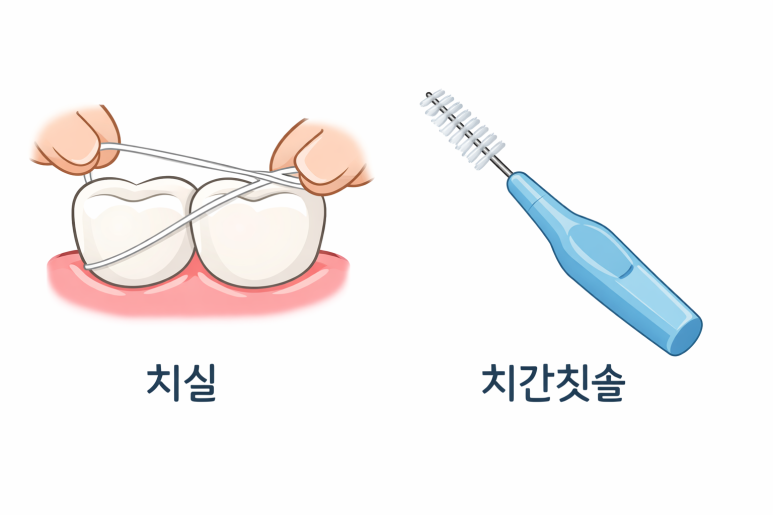
Interdental care is the same. Rather than planning to do it several times a day, doing it consistently even once a day is far more effective. In particular, getting into the habit of using floss or an interdental brush at night can help prevent gum inflammation and cavities.
Lastly, if the appliance pokes you or causes a wound-level discomfort, it is better not to just endure it. If the discomfort continues enough to reduce your ability to focus at work, using wax as a temporary measure and getting adjusted quickly when needed may actually be the choice that improves your quality of life.
Orthodontic treatment for office workers is not a process of “just enduring it,” but of adjusting to fit your life. If you manage it with realistic standards and without overdoing it, it can proceed much more smoothly than you might expect.
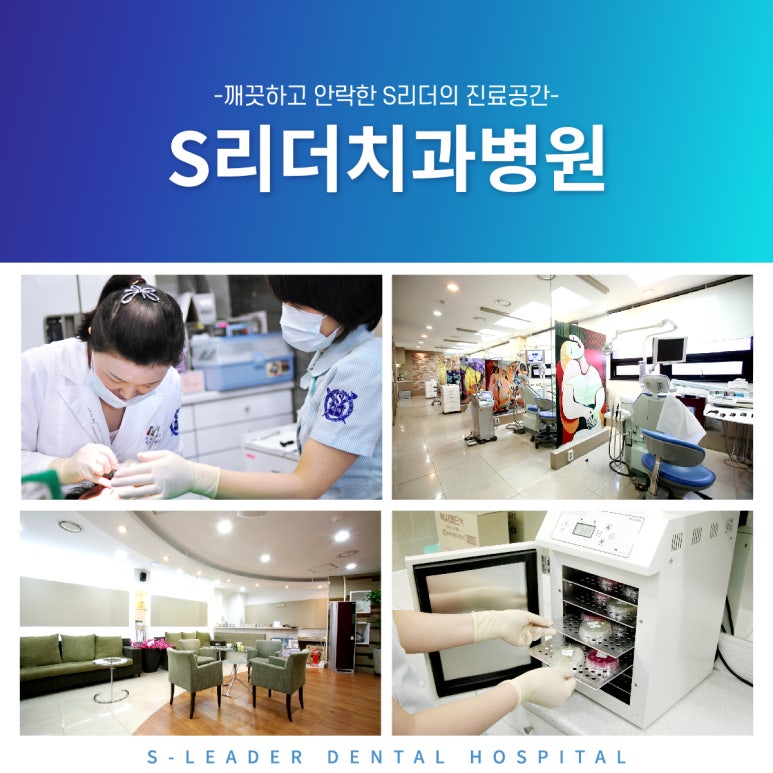
Sagajeong Station S-Leader Dental Hospital
This is how adult orthodontic consultations are conducted
Orthodontic treatment in your 30s and 40s is absolutely possible. However, unlike in the teenage years, it is better to make a plan that fits your condition (gums, restorations, habits) and lifestyle patterns (work routine) so that stress is reduced and results improve. Whatever the appliance, what ultimately creates success is a realistic routine and consistent care. Rather than thinking, “It is too late because of my age,” the answer is closer to, “Let’s start in a way that fits my situation.”
At S-Leader Dental Hospital near Sagajeong Station, when consulting with office workers in their 30s and 40s about orthodontics, we first check gum condition, the bite, and lifestyle patterns before choosing an appliance, and then guide treatment with a plan that does not overburden the patient. If you are thinking about orthodontics, rather than searching alone for a long time, it is better to first check what options are possible in your current condition.
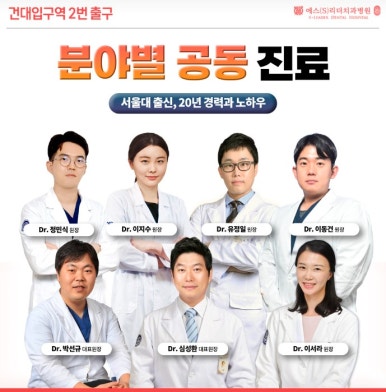
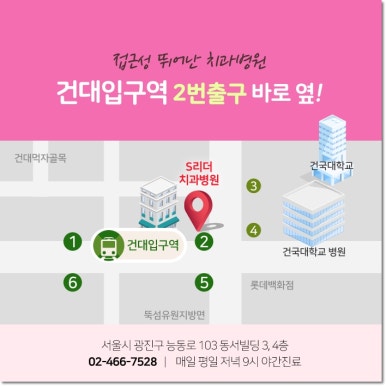

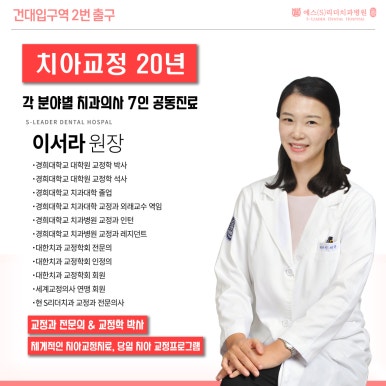
 Sagajeong Station Dental Clinic :: S (S)-Leader Dental Hospital