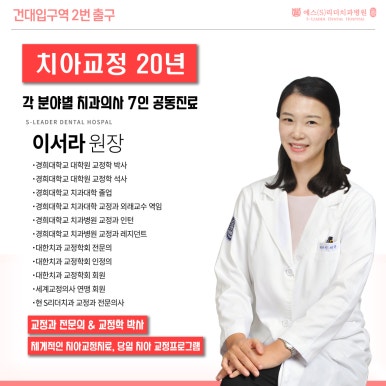
Hello, I’m Director Lee Seora of the Orthodontic Department at S Leader Dental Hospital, Seoul Orthodontic Clinic, which is celebrating its 22nd year since establishment this year.
“Doctor… it’s been 1–2 years since I finished orthodontic treatment.
Lately, every time I look in the mirror, I feel like my front teeth are shifting again.”
I hear this very often in the consultation room.
And I usually ask this first:
“Have you been wearing your retainer well these days…?”
Then most people answer with a slight laugh:
“I wore it diligently at first, but lately only sometimes… I’ve been busy, and I thought it was fine.”
In fact, there is one important point here.
Finishing orthodontic treatment means that the teeth have been neatly arranged; it does not mean that the teeth are completely fixed in place. Teeth have a surprisingly strong tendency to “return to their original position,” and once the retainer becomes loose, that force begins to move them little by little. So it is not that “I ruined it because I was lazy,” but rather a realistic process that can happen to anyone.
Wouldn’t that be the right way to see it?
Today, at Seoul Orthodontic Clinic, S Leader Dental Hospital,
✅ The “real reason” teeth shift again after orthodontic treatment
✅ The reality that relapse can happen even when you have a retainer
✅ How far minor relapse can be corrected with “adjustment,” and when “re-treatment” is needed
I’ll organize these step by step.
What is orthodontic relapse? The nature of the “force that wants to return to the original position”
When people first start orthodontic treatment, the fact that “teeth move” feels fascinating. In fact, teeth may look like fixed structures embedded in hard bone, but in reality they are a “movable structure” because the periodontal ligament (the tissue between the tooth and bone) and the jawbone respond together. When teeth are moved through orthodontics, the surrounding bone is also slowly remodeled, and the ligaments adapt to the new position. However, this process does not end the moment the braces are removed; it continues for a certain period.
That is why retention after orthodontic treatment is important not simply to “keep the result looking nice,” but more importantly to give the moved teeth time to fully settle into their new position. If retainer wear becomes irregular before this stabilization is sufficient, the teeth may begin to move slightly by using their “tendency to return.” In particular, changes in the front teeth tend to show up relatively quickly, so anxiety often starts there first: “Huh? It looks like it’s shifting again?”
There is also another misconception: “If orthodontic treatment is over, isn’t that the end?”
Orthodontics is the treatment that moves teeth; retention is the process that allows the moved teeth to settle in place. To use an analogy, even if you build muscle through exercise to improve your body, if you stop exercising completely and your lifestyle changes, there is a tendency to return to the previous state. Teeth also need consistent care while they are adapting to a “new position.”
Seven common reasons teeth shift again after orthodontic treatment
“Then why do they shift again?” This is a question I hear all the time in the clinic.
In fact, relapse is rarely caused by just one reason. That’s because everyone has different tooth alignment, jawbone condition, and lifestyle habits.
Still, as we see patients, there are recurring causes that are similar.
I’ll organize the seven key points I often explain during consultations to help you understand relapse.
(1) Not wearing the retainer enough: the first 6–12 months are the most important
Many people are diligent about wearing their retainer at first, then become casual about it over time. The problem is that “over time” comes much sooner than expected. The first 6–12 months after orthodontic treatment are an important period for the teeth to settle into their new position. If wearing becomes irregular during this time, the teeth may gradually shift using their “movable” state. This effect is especially greater with removable retainers.
(2) Retainer breakage, deformation, or looseness: many people don’t realize it
If you wear a retainer every day, it may become subtly deformed, and clear retainers can change shape depending on heat, habits, and storage conditions. Even fixed retainers can have issues where part of the wire comes loose or the resin wears down, making only one side loose. But patients may think, “It’s not completely detached, so it must be fine,” and move on. In reality, movement often begins once it becomes loose.
(3) Cases with severe crowding or major space shortage originally: the risk of relapse may be relatively higher
For people who had severe crowding or significant lack of space at the beginning, the teeth often had to be moved a long distance to align them. The greater the range of movement, the more time the surrounding tissues need to adapt to the new position, and when retention becomes unstable, the force to return may feel stronger. For these cases, it is really important to think not “orthodontics is done, so that’s it,” but “retention is half of the treatment.”
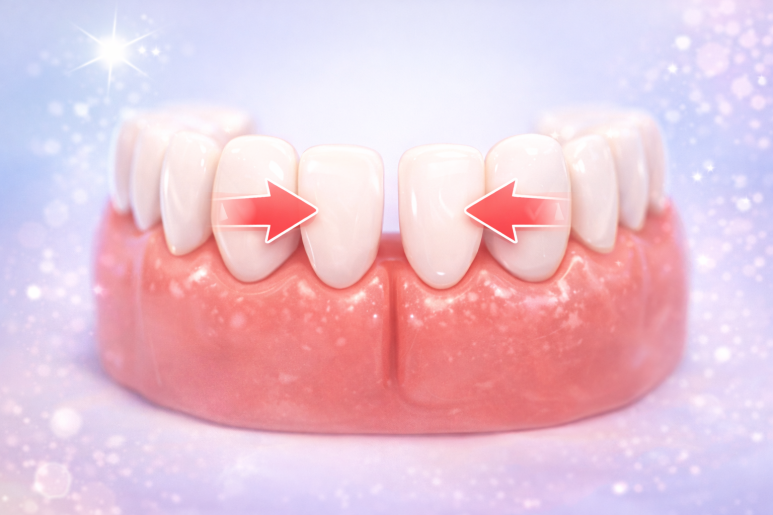
(4) Front teeth gaps / changes in spacing between teeth: if the interproximal condition changes, relapse shows more quickly.
After orthodontic treatment, some people notice that gaps reopen between the front teeth or that food starts getting stuck more easily. The change they feel is not just “the teeth have opened up,” but often comes first as daily signs such as floss feeling loose, suddenly sliding in too easily, or certain areas repeatedly trapping food. Because even small changes are very visible in the front teeth, relapse feels much more noticeable once it starts.
(5) Clenching and grinding: if the “force” continues, the way teeth endure changes.
Even if you are wearing your retainer well after orthodontic treatment, if you clench or grind your teeth heavily, continuous force is transmitted to the teeth. When this force is repeated, the teeth can develop a direction to move, even if only very slightly, and the retainer may not be able to fully resist that force every time. In particular, people with a lot of stress, those who grind their teeth while sleeping, or those who unconsciously clench during the day may have a higher risk of relapse. In such cases, it is a good idea to check whether habit correction or additional devices are needed along with retainer management.
(6) Tongue-thrusting habits / mouth breathing: when a “small force” repeats every day, the result changes.
Surprisingly, many people have a habit of pushing their front teeth with the tongue. They may not realize it themselves. But if the tongue pushes the front teeth all day, or unconsciously while sleeping, that means constant force on the teeth. Mouth breathing can also affect the alignment by changing the balance of the lips and tongue. Orthodontics moves the teeth; habits can also cause those teeth to move again.
(7) Gum (periodontal) problems: when support weakens, teeth move more easily.
When the gums become weak, the support for the teeth decreases, and the teeth can move more easily even under small forces. If, over time after orthodontic treatment, scaling is delayed or interdental care is insufficient and the gums swell and bleed, that is not simply “there is bleeding,” but may be a sign that the environment supporting the teeth is becoming unstable. That is why interdental care and regular checkups are even more important in post-orthodontic retention.
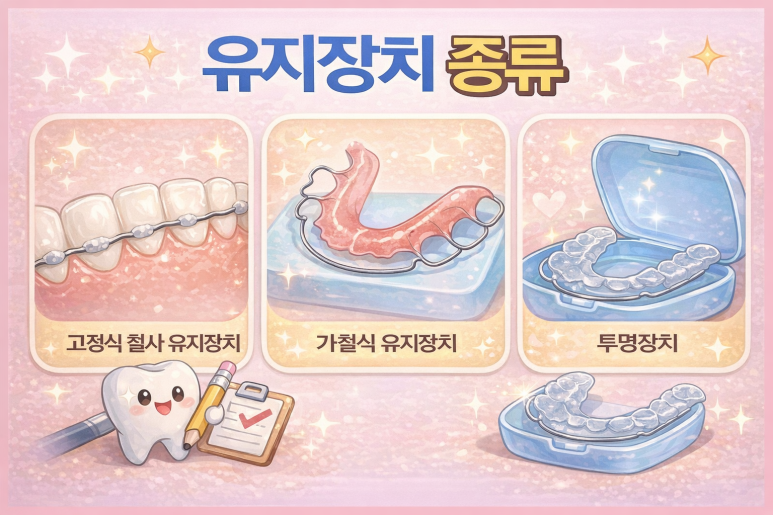
Reality by retainer type: “Which one is best?”
Retainers are broadly divided into fixed and removable types. And many people think, “Fixed is perfect, and removable is inconvenient,” but in reality each has clear pros and cons. That is why the “reality” that suits you matters.
Fixed retainer (wire behind the front teeth): convenient, but management is key
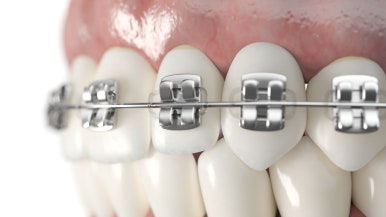
This method attaches a thin wire to the back of the front teeth, so from the patient’s perspective it is convenient because there is no hassle of taking it in and out. However, there are downsides too. If you are not skilled at using dental floss or interdental brushes, tartar can accumulate easily, and if care is neglected, gum inflammation can develop. Also, there are cases where part of the wire comes loose, but the person leaves it alone thinking, “It’s still attached, so it should be fine.” In reality, teeth can start moving in that state, so fixed retainers are convenient, but regular checkups are even more important.
Removable retainers (clear/Hawley, etc.): effective, but the real issue is “whether you actually wear them”
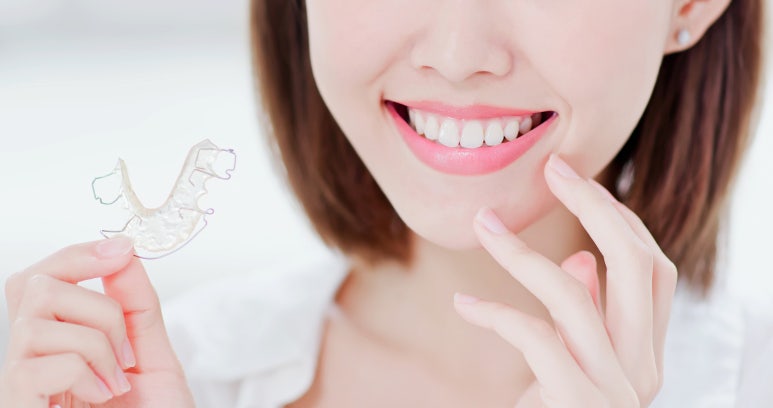
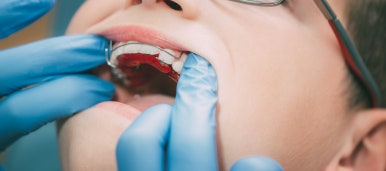
Clear retainers are preferred because they are aesthetically pleasing, and if they are comfortable to wear, they can also be very effective for retention. However, once the “diligent wearing” period passes, it becomes easy for wearing time to decrease amid a busy daily life. In particular, if you skip wearing them because it’s bothersome after meals, or repeatedly take them out when going out and then forget to put them back in, those gaps accumulate. Such devices have the advantage of being durable and adjustable, but some people may feel burdened by aesthetics or by adapting to speech.
How long should you wear a retainer? A realistic guide
“How long on earth do I have to keep wearing it?”
This question always comes up during orthodontic consultations. Realistically, the retention period varies a lot from person to person. Still, it may help to understand it in this general flow.
Early stage (especially right after orthodontic treatment): the period when wear must be most focused
Middle stage: once stability improves, gradually adjust wear time
Long term: maintain the habit with nighttime wear if needed
There is one moment to be especially careful about.
“I’ve kept it stable well for a few months, so I probably don’t need to wear it anymore.”
Teeth can change very slowly but steadily, and daily habits keep applying force. If you stop suddenly, the stabilization process you have built up can be disrupted. That is why even when reducing retainer wear, it should be done gradually, and if the retainer starts to feel loose, what may be needed is not “enduring it longer,” but “adjustment/re-making.”
Six things you can check at home when orthodontic relapse is suspected
Relapse often does not happen all at once with a sudden “shift,” but starts as small signs that build up.
Here are some checks you can try at home for reference.
-
Photo comparison: take front-tooth photos every 2–4 weeks from the same angle
-
Floss feel: does floss suddenly feel looser, or does it stop going in easily in certain areas?
-
Food trapping: does food start getting stuck repeatedly on only one side?
-
Retainer fit: when wearing it, does it feel like a “snug fit,” or does it feel lifted?
-
Bite changes: when chewing, do certain teeth start touching first?
-
Gum signals: has bleeding/swelling/odor increased? (changes in periodontal condition)
- And there is one question I often get.
“Can teeth shift even without pain?”
Yes. Absolutely possible. Tooth movement can occur without pain, and in particular, small changes in the front teeth are often noticed first.
When re-treatment is needed VS when retainer adjustment is enough
When relapse is felt, the first thought is often, “Do I need re-treatment?” But not every case goes straight to re-treatment.
It can be broadly divided like this.
(1) Minor relapse: cases that stabilize with retainer adjustment/re-making
If the front teeth have opened only slightly or one or two teeth have rotated only a little, stability can sometimes be restored with retainer re-making or partial adjustment. The key here is “is this the early stage?” The earlier it is, the simpler the intervention often is.
(2) Moderate or greater relapse: cases where re-treatment should be considered
If the alignment is noticeably off or the bite has changed and is functionally uncomfortable, re-treatment may need to be considered. However, when deciding on re-treatment, what matters is not just “let’s make it fit again,” but also finding out why it shifted and solving that cause together. If clenching, tongue habits, retainer management problems, or gum problems are left unresolved and re-treatment is done,
the same issues may repeat after orthodontic treatment is finished.
Seven realistic daily routines to reduce relapse
Retention is not about anything dramatic. “A routine you can keep consistently” determines the result.
-
Floss/interdental brush once a day (even just at night)
-
Attach retainer wear to a routine (a fixed order like washing face–brushing teeth–retainer)
-
Check clenching: if you notice that you clench your teeth during the day, relax the force
-
If grinding is suspected, get a consultation: check if your jaw feels stiff when you wake up
-
Check tongue habits: observe whether you unconsciously push the front teeth
-
Manage dry mouth: if your mouth gets dry, gum condition can also become unstable
-
Set a regular checkup schedule: combine scaling with retainer status checks
This routine is more important than the moment you decide, “I should do better.” It is better to naturally attach it to your life.
What Seoul Orthodontic Clinic and S Leader Dental Hospital check first before re-treatment
When people experience their teeth shifting again after orthodontic treatment, many begin by blaming themselves. “Did I not take care of them well enough?” “Then was the orthodontic treatment a failure?” But the reality we have seen in the consultation room is a little different. Relapse is often not explained by one person’s laziness alone, and it can happen when real-world variables overlap, such as the force of teeth wanting to return to their original position, lifestyle habits, retainer deformation, and gum condition.
So the important thing is not to stop at “it has already shifted,” but to check whether this stage is minor relapse, identify the cause, and make realistic adjustments only as much as needed. If even a very small change is caught early, it is often much easier to resolve; on the other hand, if it is left alone for too long, the range that needs to be addressed may become larger.
At Seoul Orthodontic Clinic, S Leader Dental Hospital, patients sometimes visit with concerns that their teeth have “slightly shifted again” after orthodontic treatment. In such cases, rather than simply recommending re-treatment, we first carefully check whether the retainer has become loose, whether there have been changes in bite or habits, and what the gum condition is like, and then guide patients on the adjustments and care needed at that stage. Just remembering that orthodontics is not an ending, but a process in which the retention strategy is completed, will reduce anxiety much more and make choices easier.


Seoul Orthodontic Clinic :: S Leader Dental Hospital