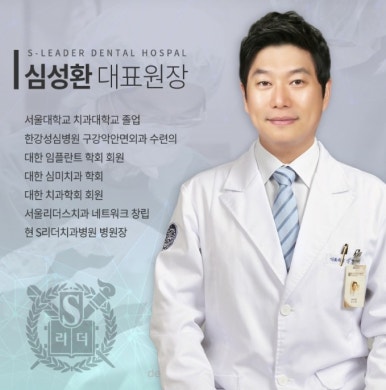
Hello, I’m Director Shim Seong-hwan of S Leader Dental Hospital at Gunjayeok Dental Clinic, which is celebrating its 22nd anniversary this year.
After getting an implant, many people feel much more at ease. Chewing strength returns, discomfort when eating is reduced, and above all, the stress of a “missing tooth” is greatly lessened. That’s why many people think this way.
“Now I can just use it like my natural tooth.”
But in implants, the truly important period often comes not immediately after surgery, but months or years later. At first everything may seem fine, but one day you may notice bleeding when brushing, bad breath that starts bothering you, a swollen gum feeling, or perhaps that the prosthesis feels slightly loose.
Implants do not develop cavities, but that does not mean they do not need care. In many cases, the lifespan of an implant is ultimately determined by aftercare (maintenance).
Today, at Gunjayeok Dental Clinic and S Leader Dental Hospital, we’ll organize everything in one place: why implant aftercare is important, what problems can arise if care is insufficient, how to care for it at home, and what we check at the dental clinic.
The lifespan of an implant is determined by care
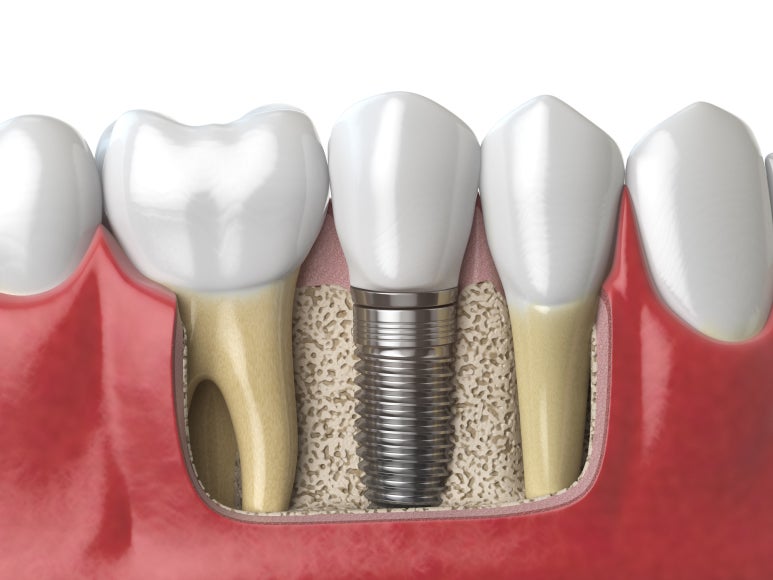
Implants are artificial tooth roots, so they do not get cavities. This fact can also create a misunderstanding. You may think, “If cavities don’t happen, maybe I don’t need to care for it as much?”
However, the most common problems with implants are not cavities, but inflammation of the gums and bone. In other words, the enemy of an implant is not “cavities,” but weakening of the gum tissue around the implant (inflammation).
There is another important fact. An implant is not a treatment that ends the moment it is placed; it includes the process of bonding firmly with the bone after placement, the process of adapting to chewing forces after the prosthesis is attached, and the process of maintaining that state over a long time. So aftercare is not just an extra service; it is not an exaggeration to say it is the final stage of treatment.
5 representative problems that implant aftercare can prevent
The core of aftercare is simple: “catch problems before they happen.” With implants, small signs often appear before a problem grows larger, and managing them at that stage can reduce the burden.
Here are representative problems that aftercare can help prevent or catch early.
- Peri-implantitis (bad breath, bleeding, swelling)
Peri-implantitis is inflammation of the gum tissue around an implant. Typical signs include bleeding when brushing, swollen or red gums, and a strong bad-breath sensation.
In the early stage, pain is often not severe, so it is easy to dismiss it as “nothing serious.” But if left alone for too long, the inflammation can deepen, which is why early checkups are important.
- Tartar/plaque buildup (especially below the gumline)
It would be ideal if tartar never formed just by brushing diligently, but in reality, it is easy for blind spots in care to appear. Because of the structure around implants, food can get trapped more easily, and the area below the gumline is hard to see, so many people do not realize tartar has accumulated.
Since tartar buildup can lead to gum inflammation, regular tartar management is helpful.
- Excess chewing force load (bite problems)
Implants are designed to withstand chewing forces well, but problems can arise if the force is concentrated too much on one side. People who grind their teeth or clench, or those who chew only on one side, may place excessive load on the implant.
Even if you do not feel anything at first, discomfort in the gums or a loose feeling in the prosthesis can develop over time, so bite checks are important.
- Screw loosening / prosthesis fracture
Implant prostheses are often connected with screws due to their structure. If strong force is repeatedly applied, if you frequently eat hard foods, or if you have a habit of grinding your teeth, the screws may loosen or the prosthesis may become damaged.
- Problems with nearby teeth (cavities or gum disease in adjacent teeth can also affect the implant)
Managing only the implant is not enough. If a cavity develops in a tooth next to the implant or the gums become weakened, your chewing pattern may change or care may become more difficult, which can also affect the area around the implant.
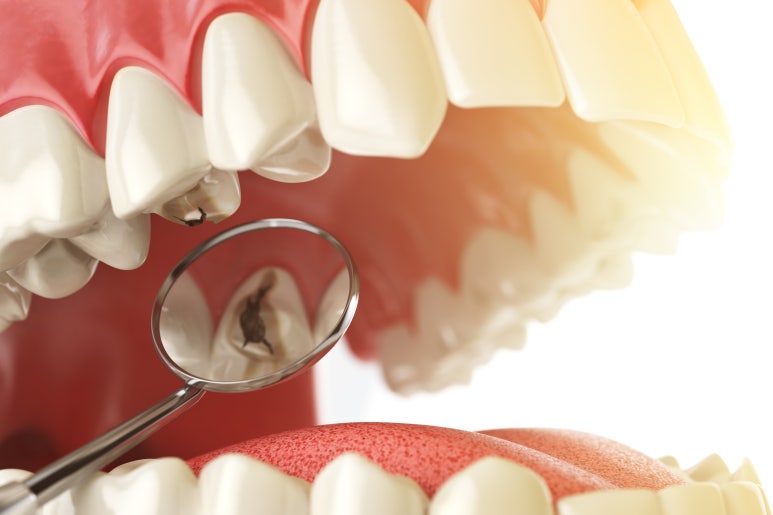
"Implants don’t get cavities, so why do they need care?"
This is a question we hear very often.
"Implants don’t get cavities, so why is care so important?"
The answer is simpler than you might think.
Because with implants, the gums and bone are more important than cavities.
Natural teeth have nerves, so when a problem occurs, pain is often felt first. But because implants are artificial teeth, even if there is early inflammation, there may be little to no pain. That is why aftercare is even more important.
Also, food can get trapped around implants more easily, and depending on the shape of the prosthesis, there may be areas that are hard for a toothbrush to reach.
In the end, implant care is not about brushing harder; the key is accurately caring for areas that are hard to reach.
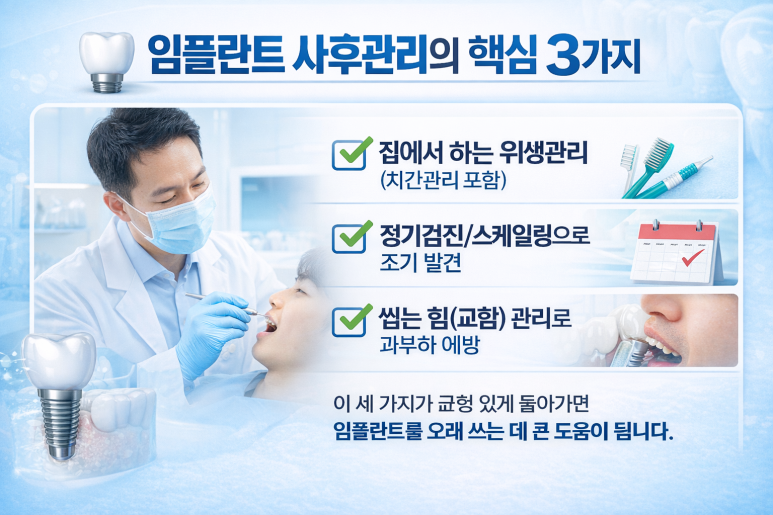
What are the 3 key points of implant aftercare?
It is easier to understand implant aftercare if you divide it into three main pillars.
-
Home hygiene care (including interdental care)
-
Early detection through regular checkups/scaling
-
Preventing overload by managing chewing force (bite)
If these three are balanced, they will greatly help you use your implant for a long time.
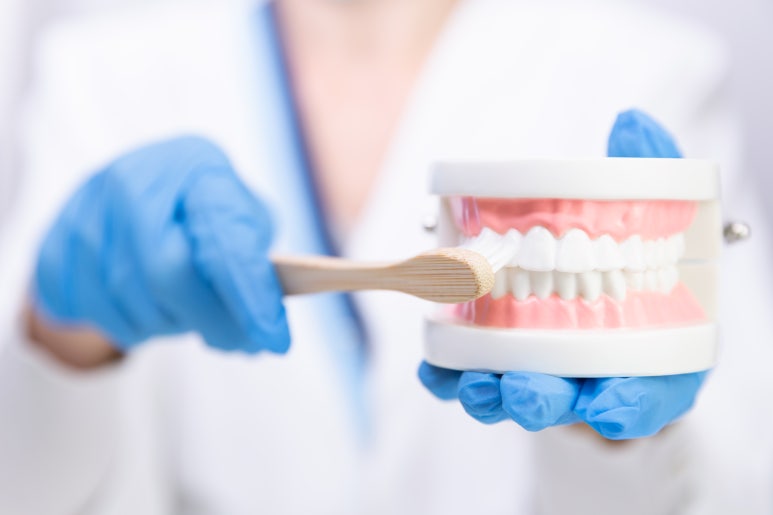
Curious about your home care routine?
★ Why “just brushing hard” may not be enough ★
Around implants, there can be areas that are difficult to clean with a toothbrush. In particular, the boundary between the implant and the gum, the spaces between implants, and the underside of the prosthesis are often hard to keep clean with brushing alone.
That is why the most important part of implant care is “interdental care.”
★ Let’s organize the role of each tool in an easy way ★
Toothbrush: The basic tool. But it may have limitations on its own.
Dental floss / interdental brush: Core tools for cleaning the spaces next to and below the implant. They are especially effective for people who frequently get food stuck.
Water flosser (oral irrigator): It may help remove food debris, but it is best to think of it as an auxiliary tool. It cannot completely replace the role of interdental brushes or dental floss.
Mouthwash: It gives a fresh feeling, but it is not a tool that solves the underlying cause. It may temporarily mask odor, but it does not remove tartar or inflammation.
5-3) A realistic routine you can actually keep
The biggest reason aftercare fails is that people give up after trying to be too perfect. That is why a realistic routine is important.
-
Basic brushing in the morning and at lunch
-
At night, brushing + interdental care (interdental brush or dental floss)
-
If you do not have much time, setting a goal of “interdental care at least once a day” is enough.
And if your gums bleed when brushing or the odor becomes stronger, it is better to think of that as a time for a checkup rather than “I should just take care of it more carefully from now on.”

Dental regular maintenance: when, what, and how often should you do it?
Even if you care for it at home, there may still be parts you miss. That is why regular checkups are needed. The interval differs from person to person. It can vary depending on the number of implants, gum condition, how easily tartar builds up, whether you smoke, whether you have diabetes, and whether you grind your teeth.
★ Regular maintenance interval ★
If the condition is stable and management is going well: every 6 months to 1 year
If the gums are sensitive, tartar builds up easily, there are multiple implants, you smoke, you have diabetes, or you grind your teeth: every 3 to 6 months
There is no single correct answer; the important thing is an interval tailored to your condition.
★ What do they check at the dental clinic? ★
During a regular checkup, we do not only look at visible tartar.
-
Signs of inflammation such as gum bleeding/swelling
-
Removal of tartar around the implant (including below the gumline)
-
Prosthesis looseness (screw loosening) or risk of fracture
-
Changes in bite height and points where force is concentrated
-
If needed, imaging to check bone condition
This process is what allows problems to be caught before they grow.
"If you notice this sign, get it checked right away" checklist
Implant warning signs can be subtle at first. If any one of the following keeps happening, we recommend even a light checkup.
Bleeding when brushing.
The gum around the implant is swollen and red.
There is an odor or a fishy taste.
Food gets stuck unusually easily and feels bothersome.
Pain when chewing, or the feeling that one side is hitting too high.
A loose feeling in the prosthesis, or a clicking sound (possible screw loosening)
In particular, if “bleeding + odor + swelling” occur together, it may be an early sign of peri-implantitis, so a prompt checkup can be helpful.
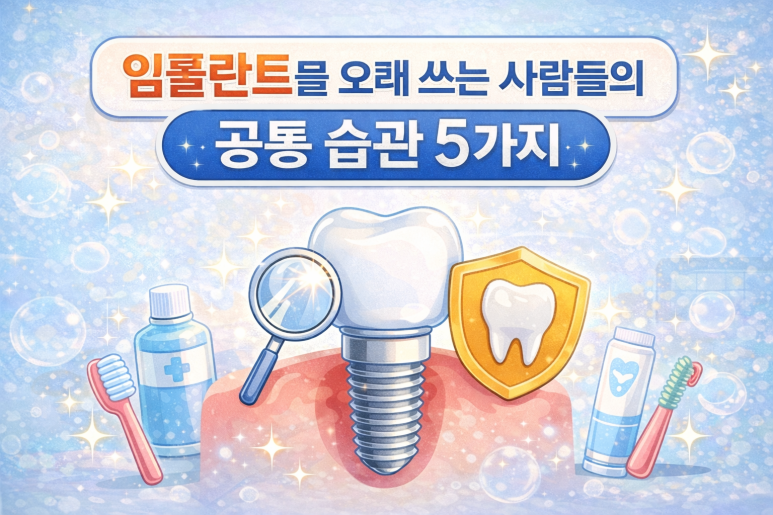
5 common habits among people who use implants for a long time
In the end, implants are determined by “habits.” People who use them well for a long time have something in common.
-
They have a regular checkup routine.
-
They consistently perform interdental care.
-
They control habits such as eating hard foods or biting off food with the front teeth.
-
If they need management for grinding/clenching, they use tools such as a mouthguard.
-
They get checked as soon as a problem is small.
It is not a special secret; small habits create longevity.
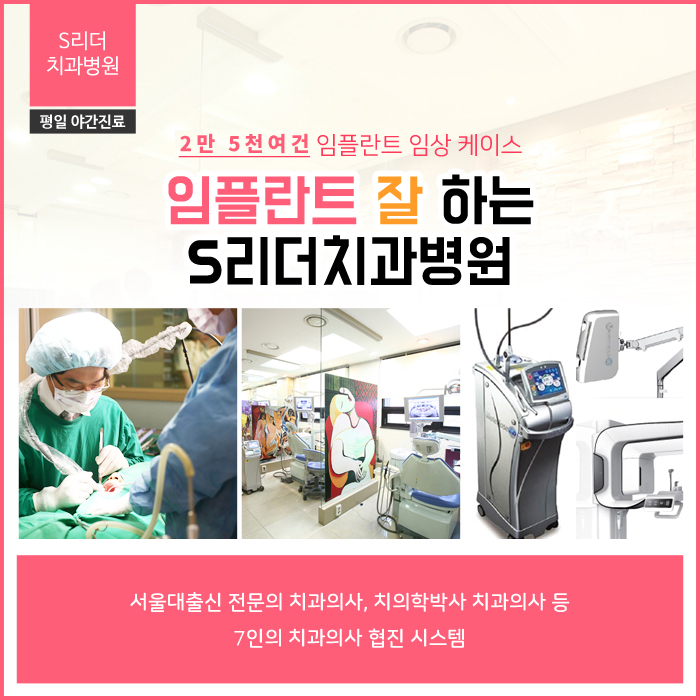
The core standard for implant aftercare emphasized by S Leader Dental Hospital at Gunjayeok Dental Clinic
If done properly, implants can be a good choice that greatly improves quality of life. But for that reason, aftercare is important if you want to use them for a long time. Implants do not get cavities, but problems such as gum inflammation (peri-implantitis), tartar accumulation, and bite overload can occur, and most of these problems can be prevented or caught early through care.
The first step you can take today is not difficult. Simply making interdental care a daily routine and setting a checkup interval that fits your condition will already help you use your implant much more comfortably and for a longer time.
At Gunjayeok Dental Clinic and S Leader Dental Hospital, we believe that after implant treatment, “care” is what ultimately creates the outcome, so we guide aftercare plans while checking gum condition, tartar, and bite (chewing force) together. If you want to use your implant comfortably for a long time, we recommend checking once more before problems arise and setting up a care routine.


 Gunjayeok Dental Clinic :: S Leader Dental Hospital