Hello, we are S Leader Dental Hospital, a Dongdaemun-gu dental clinic established 22 years ago.
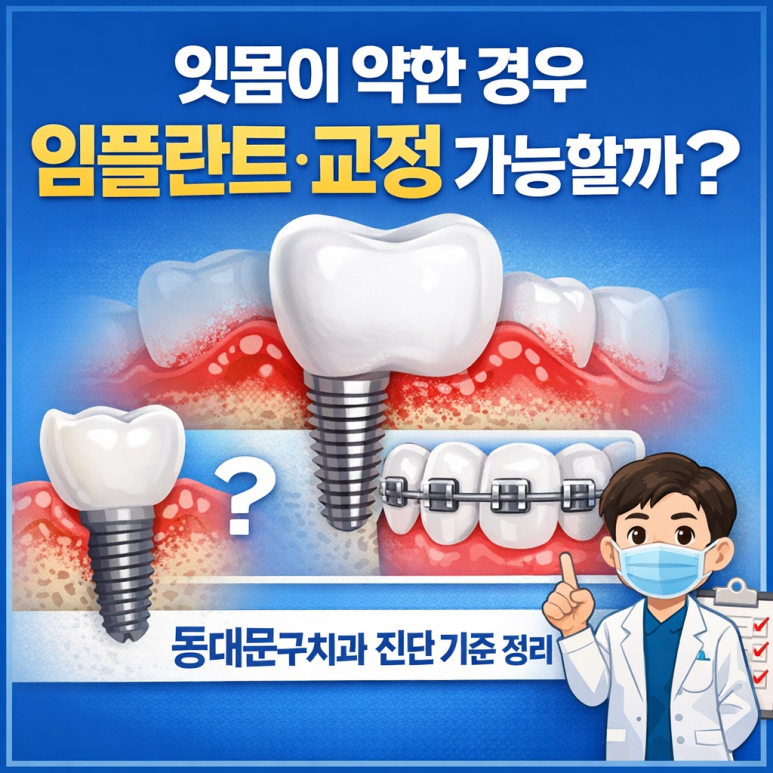
“Doctor... my gums are weak.
But I think I need an implant.”
“I’d also like to get orthodontic treatment,
but I’m afraid because it feels like my gums have receded.”
These are questions we hear very often in the clinic.
If your gums bleed, swell, or have a bothersome odor, it’s only natural to feel even more worried. Implants and orthodontic treatment both take time and money once you start, so wondering, “Will my gums hold up?” is a very natural thought.
To be clear from the start, weak gums do not automatically mean that implants or orthodontic treatment are impossible. However, what matters is that the standard for deciding “possible/impossible” is not simply a single statement like “your gums are weak.” Even when people say “weak gums,” the condition can vary greatly, and what matters most is how stable the gums are right now and in what order the treatment should be carried out.
Today, at S Leader Dental Hospital in Dongdaemun-gu,
-
what it actually means when someone says their gums are weak
-
why gums are important in implants/orthodontics
-
which conditions are more likely to allow immediate treatment, and which require gum treatment first
-
implant criteria, orthodontic criteria
-
why the “order” of treatment matters
-
a routine you can do at home to help stabilize your gums
I’ll explain everything step by step.
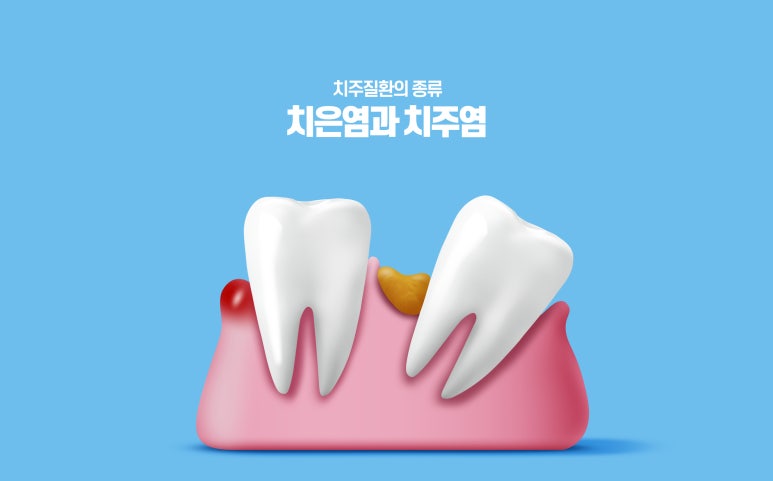
What “weak gums” means can differ from person to person.
When people hear “weak gums,” they usually just think, “My gums must not be in good shape.” But in reality, this phrase is often used to refer to several different conditions all at once. That’s why, during consultations, I first check what exactly the patient was told when they heard the word “weak.”
① Stage with swelling and bleeding gums (gingivitis)
This is the stage where your gums bleed when brushing, swell, and your mouth feels sticky or unpleasant. It’s common, and in many cases it can improve with care and scaling. Many people are told “your gums are weak” at this stage.
② Stage where the jawbone around the gums is affected (periodontitis)
If gum inflammation accumulates over a long period, it can affect the bone beneath the gums, which supports the teeth. At this point, people may hear things like “your periodontal pocket is deep” or “there is a lot of tartar beneath the gums,” and food may get stuck easily or the gums may swell repeatedly. In such cases, simple scaling may not be enough, and gum treatment may be necessary.
③ Naturally thin and sensitive gums (a type prone to gum recession/sensitivity)
Some people do not have severe inflammation, but their gums are thin, so they easily experience sensitivity or feel as if their gums are receding. This is often more of a constitutional/structural characteristic than an illness. However, when planning implants or orthodontic treatment, more careful diagnosis and planning may be needed.
The reason this matters is simple.
Even if the phrase is the same—“weak gums”—the treatment order and method are completely different depending on whether it is gingivitis, periodontitis, or thin-gum type.
Why gums matter in implants and orthodontics (in simple terms)
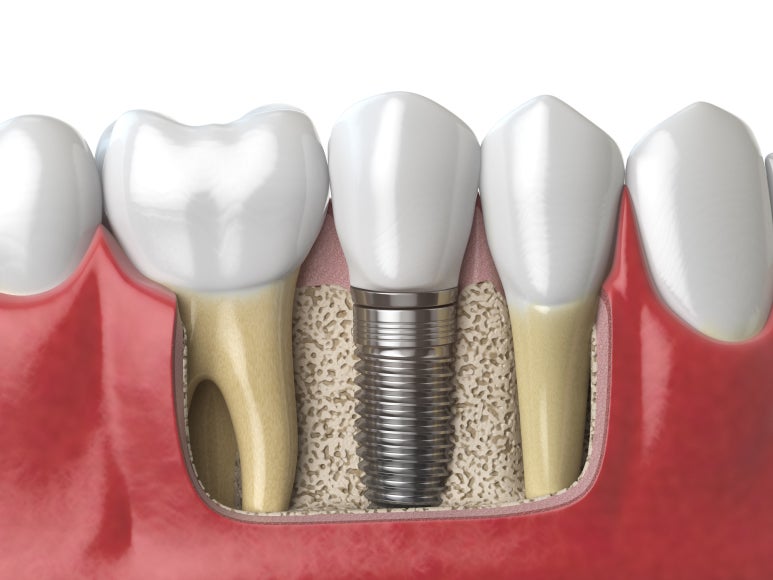
Implants depend on the gums and bone as their “foundation.”
An implant treatment involves placing an artificial root into the bone and then attaching a tooth-shaped prosthesis on top. In other words, no matter how good the implant itself is, it can only be used comfortably for a long time if the supporting bone and gums are stable.
In an environment where gum inflammation keeps recurring, inflammation can also develop around the implant (peri-implantitis), making management much more difficult.
Orthodontic treatment moves teeth, so gum conditions can be even more sensitive.
Orthodontic treatment is the process of moving teeth. When teeth are moved, the gums and bone supporting them must be stable for the movement to proceed properly. If treatment is forced while the gums are swollen, bleeding, and severely inflamed, the treatment can become more uncomfortable. That is why, especially for adult orthodontics, people say gum checks are important.
To summarize:
It is not that weak gums mean you cannot have treatment; the more accurate expression is that treatment can proceed after stabilizing the gums first.
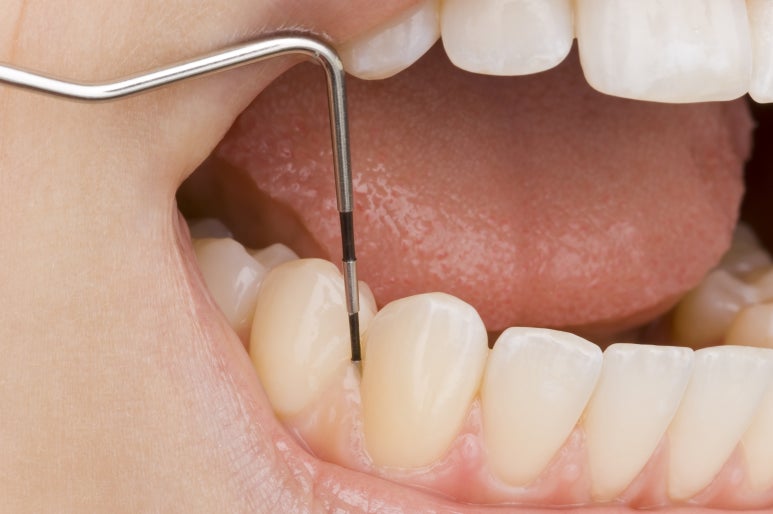
What is my gum condition closest to? (Possible / First / Caution check)
Here are some criteria you can use to check for yourself.
*Signs that often fall on the “treatment can proceed” side after diagnosis*
-
Bleeding when brushing, but it tends to improve with care
-
Gum swelling/odor is not severe and occurs only occasionally
-
You think you can build a floss/interdental brush routine
-
You have experienced your gums feeling much better after scaling
In these cases, implants or orthodontic treatment are often planned while avoiding excessive strain on the gums.
*Signs that “gum treatment should come first”*
-
Bleeding, swelling, and odor keep recurring and last a long time
-
You have been told that your periodontal pockets are deep
-
You were told there is a lot of tartar beneath the gums
-
A specific area of the gums swells often, and you feel a dull discomfort when chewing
-
Your teeth feel loose
If treatment is started forcefully in your current condition, it may not mean treatment is impossible, but maintaining and managing it afterward can become difficult. That is why stabilizing the gums first is much more advantageous.
*Signs that require plan adjustments (set direction after detailed diagnosis)*
-
You smoke a lot and gum inflammation keeps recurring
-
Diabetes control is unstable
-
You clench or grind your teeth strongly
-
You have been told that the support from the jawbone around the gums is significantly insufficient
This is not something to decide too quickly; it is better to stabilize first and then determine the “possible range” through detailed diagnosis.
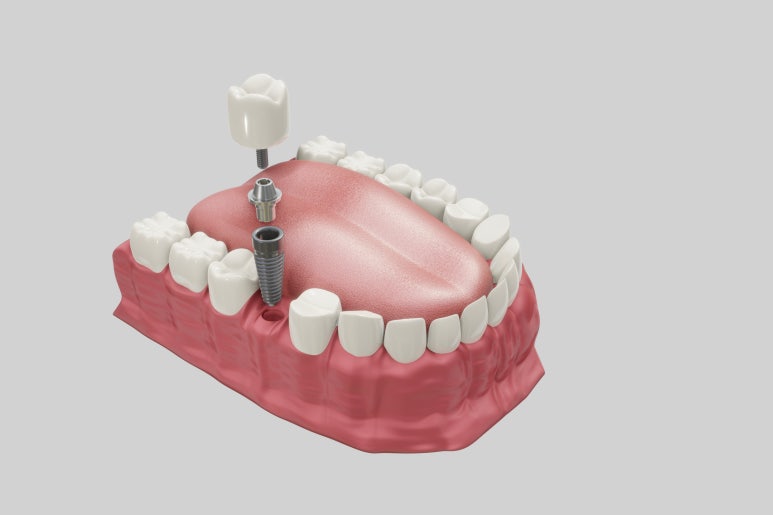
My gums are weak—can I get an implant? Criteria explained
For implants, whether they can be placed is important, but what matters even more is whether they can be used comfortably for a long time after placement.
So we look at the criteria like this.
- We check bone condition and inflammation with CT
Just because your gums bleed on the surface does not automatically mean the bone is weak. Conversely, there are cases where the surface looks fine but inflammation exists under the gums. That is why we make a plan after checking bone height and width, whether inflammation is present, and the surrounding structures.
- If periodontitis is present, controlling it first is better for the prognosis
One of the most common problems after implants is peri-implantitis (bleeding, odor, swelling). For people with weak gums, it is advantageous to organize the gum inflammation before starting. The more important question is not “Can I get an implant?” but “What should be done first to make it last?”
- If necessary, we plan bone grafting or a staged approach
For people with weak gums, the bone condition may also be insufficient, so some cases require bone grafting. Also, if immediate implant placement after extraction is not absolutely necessary, a staged approach may be safer when inflammation is severe. Stability and long-term use come before finishing quickly.
- Aftercare determines how long it lasts
Implants do not get cavities, but gum inflammation can still occur. Regular checkups, scaling, and, when needed, bite checks (chewing force) have a major impact on long-term use.
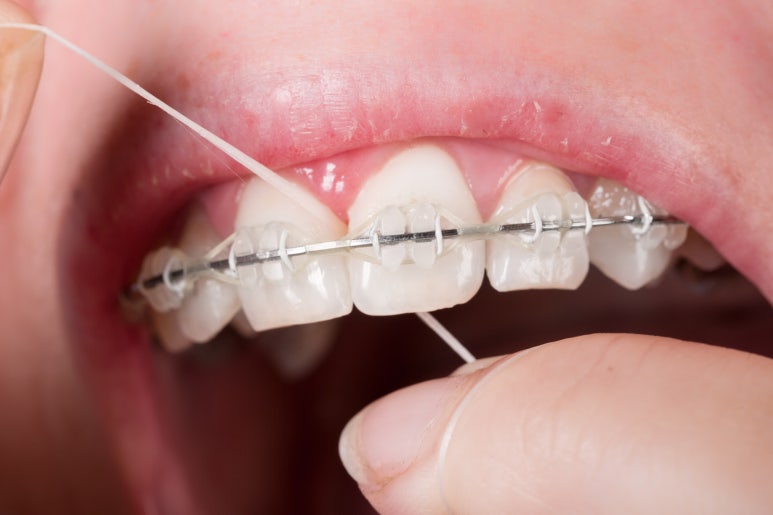
My gums are weak—can I get orthodontic treatment? Criteria explained
Because orthodontics moves teeth, people with weak gums worry more. But if you understand the criteria and approach it properly, the anxiety becomes much smaller.
- Gum evaluation comes first before orthodontic treatment.
During orthodontic treatment, there can be more blind spots in care, so stabilizing the gums before starting often makes the process much more comfortable. In particular, for people with repeated bleeding/swelling, it is advantageous to first control the gums before orthodontics.
- For thin gums (gum recession), planning is even more important.
Thin gums do not mean orthodontics is impossible. However, it is important to set the movement direction and range without overloading the gums and to control habits that irritate the gums, such as brushing too hard.
- The most common reason gums become unstable during orthodontics is a “blind spot in care”
It is not that braces destroy the gums; in many cases, inflammation develops because food and tartar accumulate around the appliances and interdental care is insufficient. Even making floss/interdental brushes part of your routine once a day can make a big difference.
- Learn in advance about concerns such as black triangles, sensitivity, and gum recession
In cases of thin gums or adult orthodontics, black triangles may become more noticeable. This is often not a “failed orthodontic treatment” but rather the original condition becoming visible, so it is a good idea to hear in advance about the level of risk and the finishing plan during the consultation.
The treatment order is key (the most important part)
For people with weak gums to safely undergo implants or orthodontics, the order is ultimately very important.
Examination: Check the current condition through gum bleeding, tartar location, periodontal pockets, imaging, etc.
Gum treatment / inflammation stabilization: Scaling, and if necessary, treatment below the gums
Implant / orthodontic plan: Set the possible method and goals based on your condition
Maintenance during treatment: Regular checkups, scaling intervals, and bite (force) checks
If you ignore this order and jump straight into “immediate implant” or “immediate orthodontics,” it does not mean treatment is impossible; rather, management after treatment may become harder and the prognosis may be worse. On the other hand, if you follow the order, many people end up saying, “It’s more possible than I thought.”
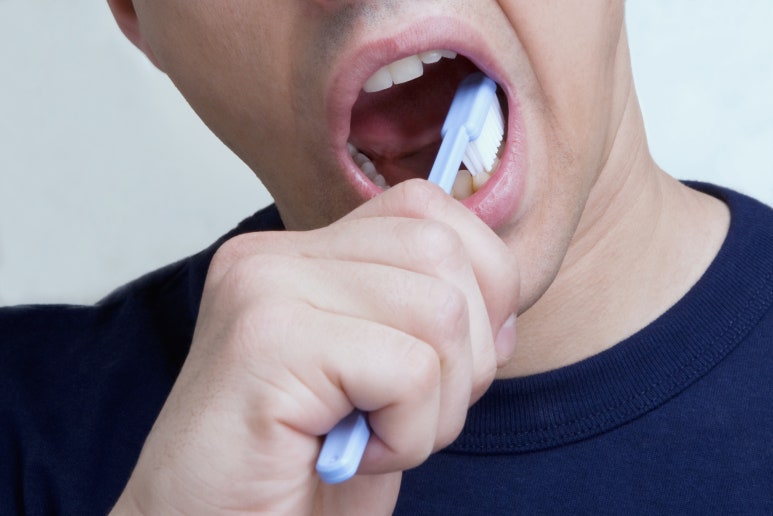
Do you want to know a home routine to help stabilize your gums?
Lastly, here are some things you can do at home.
- Brush not “hard,” but “accurately”
People with weak gums can become even more sensitive if they brush too hard. It is better to use a soft toothbrush and gently clean along the gumline, taking enough time.
- Use floss/interdental brushes at least once a day
Gum problems often start between the teeth. Even making interdental care a routine just once at night can make a real difference.
- Do not ignore bleeding and odor signals
If bleeding continues or swelling keeps recurring even after several days of care, it may not mean “I just didn’t brush properly” but rather that treatment is needed. In that case, it is better not to wait and to get checked sooner.
- Smoking, dry mouth, and blood sugar control affect gum condition
Adjusting these habits within a reasonable range can help stabilize the gums.
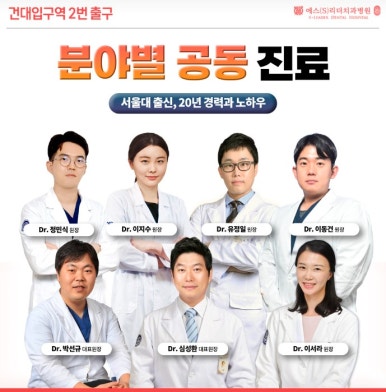


Dongdaemun-gu dental clinic, S Leader Dental Hospital
Start with a gum evaluation before implants or orthodontics
You do not need to give up on implants or orthodontics just because someone told you that your gums are weak. What matters, however, is not deciding in advance whether it can be done, but checking how stable your gums are right now and, if needed, stabilizing them first before proceeding with treatment. Because implants are based on the gums and bone, and orthodontics is a treatment that moves teeth, rushing ahead while ignoring the gums can make the treatment process harder. On the other hand, if you manage the gum condition and plan step by step in the right order, treatment is often much more comfortable and stable.
At S Leader Dental Hospital in Dongdaemun-gu, when patients visit with the question, “Can I get an implant/orthodontic treatment if my gums are weak?”, we first check the current stability through gum condition (bleeding, tartar, pockets) and imaging diagnosis, and then guide them on an implant/orthodontic plan within a range that does not overburden them. Rather than worrying alone while searching online for a long time, we recommend checking your current condition accurately and starting step by step in the order that suits you best.

Dongdaemun-gu dental clinic :: S (S) Leader Dental Hospital