Hello, we are S Leader Dental Hospital, a Konkuk University Entrance Station dentist that is celebrating its 22nd anniversary this year.
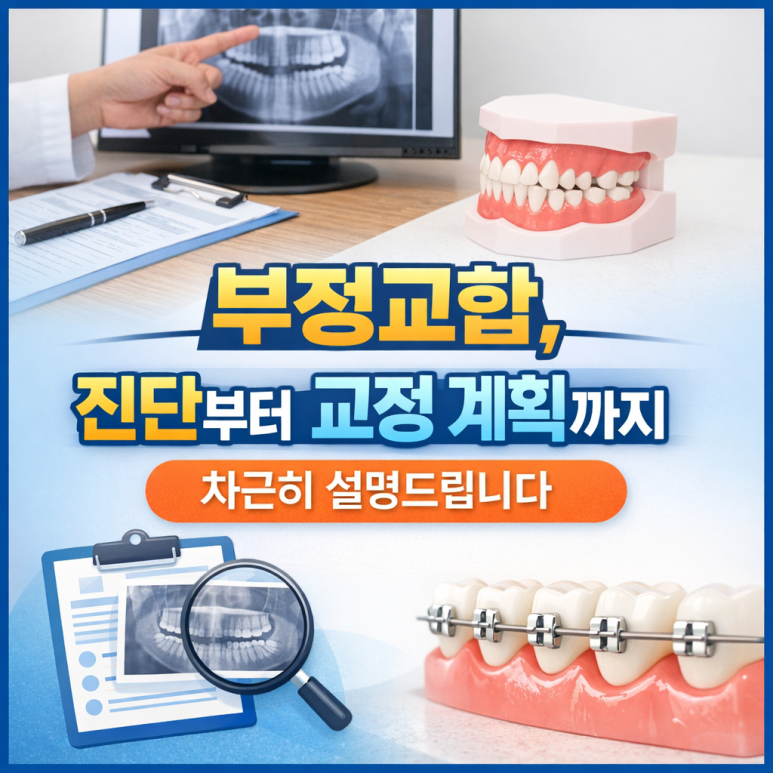
There is something people commonly say when they come in for a consultation about malocclusion.
“My teeth are a little crooked... but what’s really uncomfortable is chewing.”
“I feel like I can only chew on one side.”
“My front teeth keep hitting each other.”
“My jaw feels tired, and sometimes it even seems like I get headaches.”
For these patients, the problem is often not simply that their teeth are a little crooked. More often, the upper and lower teeth do not fit together properly, which causes discomfort. That is why treatment should not end with making the front teeth look nice. It is necessary to first identify why the bite is misaligned and then plan the orthodontic method that fits the cause.
Today, at S Leader Dental Hospital, a Konkuk University Entrance Station dentist, we will start by explaining what malocclusion is, then go step by step through how a dental clinic diagnoses it and how an orthodontic plan is created based on those findings.
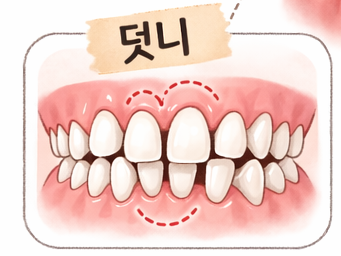
What is malocclusion? It is a little different from simply having crooked teeth.
Many people think of braces and immediately picture crowding or crooked teeth. Of course, uneven alignment is an important orthodontic concern. But malocclusion means more than just crooked teeth; it refers to a condition in which the upper and lower teeth do not fit together properly, creating functional problems.
In simple terms, malocclusion means a state in which the upper and lower teeth do not properly interlock.
That is why people with malocclusion often experience the following discomforts together.
-
Feeling like they can only chew on one side
-
Specific teeth touching first and feeling uncomfortable
-
The front teeth keep bumping into each other, or the mouth does not close comfortably
-
The jaw gets tired or feels tense easily
-
A feeling that the teeth wear down quickly (wear)
-
One side of the gums feeling more sensitive
In other words, malocclusion is not only a matter of appearance; it is also a matter of chewing and speaking comfortably. That is why correcting malocclusion is not something that can always be solved just by “straightening the teeth.” It may require a plan that also organizes the bite.
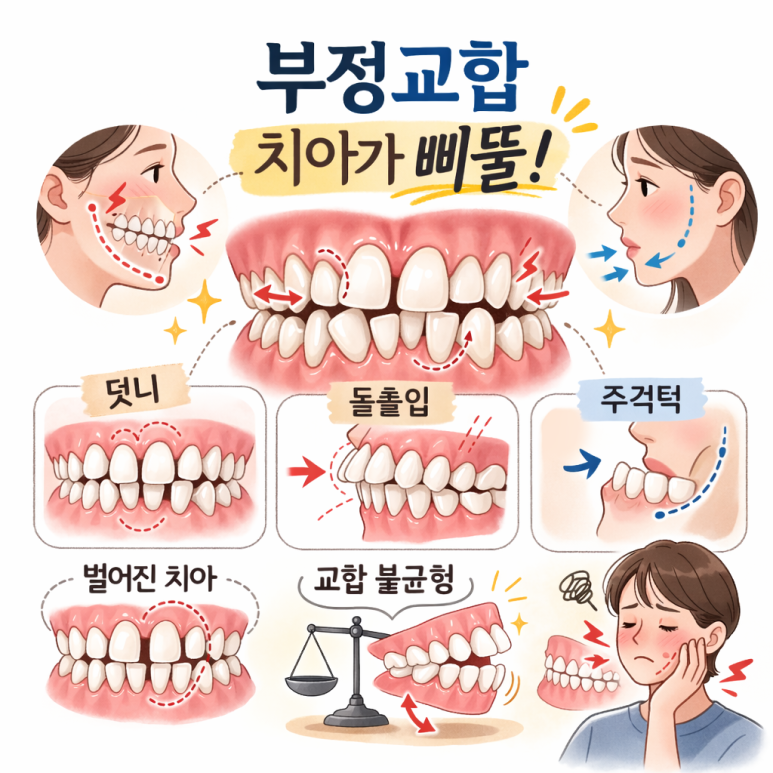
A quick overview of malocclusion types (5 major types)
Malocclusion cases are truly diverse.
- A deep-bite feeling (deep bite)
Some people do not notice much when smiling, but when chewing, the front teeth touch excessively and the lower front teeth are not very visible. In some cases, the front teeth keep bumping into each other, or the front teeth may wear down quickly.
- A feeling that the front teeth do not meet properly (open bite)
Some people find it difficult to bite through food with their front teeth and feel that their pronunciation is awkward. They may describe it as feeling like the front teeth are “floating.”
- A reversed bite of the front teeth (underbite)
This is a bite pattern in which the upper and lower teeth relationship is reversed. In growing children, this is a case where early evaluation is often emphasized, and in adults, the plan is made based on diagnosis.
- A bite that is misaligned on only one side (crossbite)
Some people feel unusual discomfort on only the left or right side and feel as though the jaw is twisted to one side. A one-sided chewing habit may develop as well.
- Cases where the mouth does not close well or there is a protrusive appearance
At times this may seem like only a tooth problem, but in some cases it is also related to the balance of the upper and lower jaws and lack of space.
The important point here is that even if the teeth are equally “crooked,” the treatment plan may differ depending on the type of malocclusion. So instead of asking, “Which appliance is best?”, the first question should be, “What type of malocclusion do I have?”
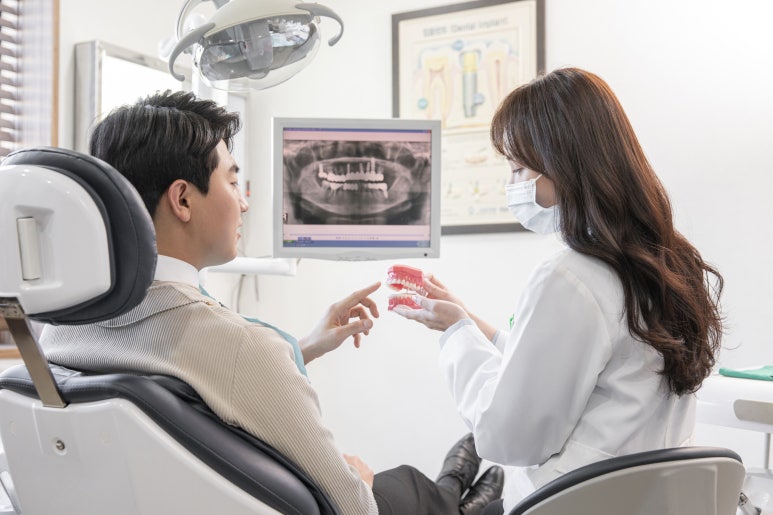
Why is diagnosis important? In orthodontics, diagnosis comes before choosing the appliance.
These days, many people ask first, “Can I get clear aligners?” That is understandable. It is natural to want a treatment that is less noticeable.
However, in cases where malocclusion is suspected, it is difficult to decide “possible” or “not possible” based on photos alone. That is because malocclusion is determined not only by the visible alignment but also by factors such as:
-
How the upper and lower teeth actually meet (occlusion)
-
Whether there is enough space for tooth movement
-
Whether the gums are in a stable condition
-
Whether habits such as teeth grinding or clenching are present
-
Whether there is strain on the temporomandibular joint
What happens if diagnosis is skipped?
The teeth may become straighter, but chewing may feel even more uncomfortable, treatment may take longer, or the plan may need to change midway, creating more stress. That is why, in malocclusion orthodontics, saying that “the diagnosis is the plan” is not an exaggeration.
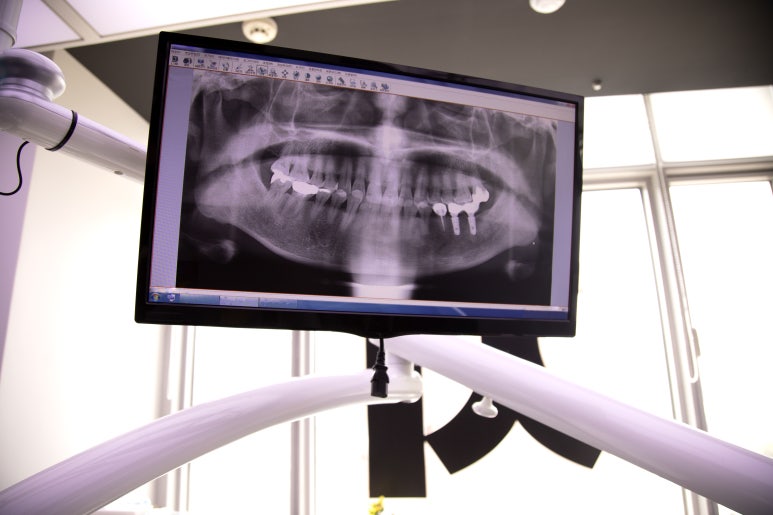
The malocclusion diagnosis process at a Konkuk University Entrance Station dentist
When you receive a consultation for malocclusion, it is usually checked in the following order.
- Medical interview: when and in what situations discomfort occurs
“Chewing is easier on the right side.”
“My front teeth keep hitting each other.”
“My jaw feels sore.”
These kinds of everyday discomforts are important clues in diagnosis.
- Oral examination: not only alignment but also wear and gums
The clinician also checks whether the teeth are worn down, whether wear is severe on specific teeth, whether the gums are stable, and whether there are areas with heavy tartar buildup. Orthodontics is not only about moving teeth; the gums also need to be managed.
- Occlusal examination: which teeth touch first, and whether the bite is biased to one side
In malocclusion, a key issue is often “which area touches first.” The clinician checks whether the front teeth touch first, whether the molars touch only on one side, and whether the center line is shifted.
- Imaging (if needed): checking hidden areas
Imaging such as panoramic X-rays and cephalometric X-rays is not just about taking pictures. It helps assess root direction, jawbone relationships, impacted teeth, and wisdom teeth. Because malocclusion cannot often be judged from visible alignment alone, imaging is very meaningful.
- Scan/model: making the movement plan more specific
Digital scans or models are used to check tooth alignment and available space, and to plan how far and in what direction the teeth should move.
- Explanation of results: distinguishing what is needed now from what should be monitored
Good counseling is not about saying that everything must be done no matter what. It is about organizing the priorities of the treatment that is needed right now. With malocclusion as well, the goals can differ depending on the condition.
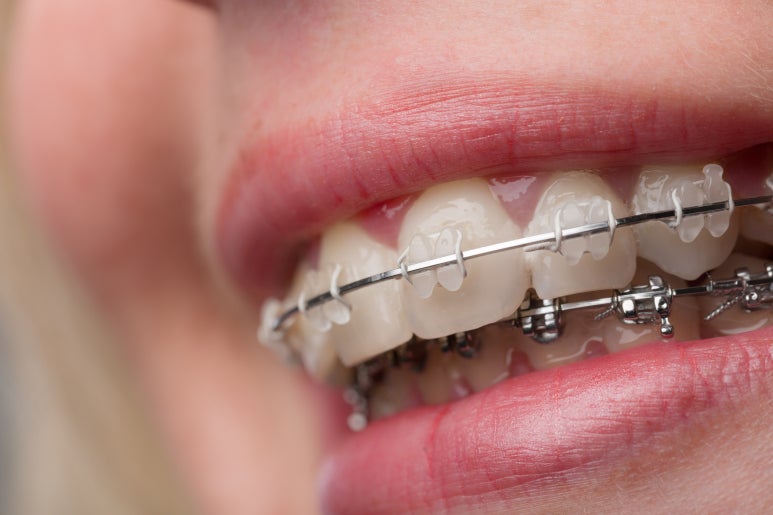
This is how the orthodontic plan is made based on the diagnosis.
Once the diagnosis is complete, a plan is made based on the findings. The most important part here is setting the goal.
5-1) Setting goals: aesthetics only? Or function (occlusion) as well?
For people with malocclusion, the goal is often not simply “straightening the front teeth.” If there is discomfort while chewing, adjusting the bite as well usually leads to greater satisfaction. That is why the plan usually starts by defining how far the treatment goal should go.
5-2) Criteria for deciding extraction or non-extraction (including misunderstandings about face shape)
People also often ask questions like, “If I have teeth extracted, will my face sink in?” Extraction is not decided in order to change the face shape. It is decided based on whether space is needed, how much tooth movement is required, and whether protrusion needs to be adjusted.
In other words, extraction itself is not the purpose; the purpose is to secure space. Some malocclusion cases require extraction, while others can be treated without extraction.
5-3) Appliance selection: clear aligners vs. brackets vs. lingual braces, according to the patient’s condition
Clear aligners: less noticeable, but wear time is important, and the scope may vary depending on the case.
Bracket orthodontics: broad applicability and strong bite adjustment, but it requires a management routine.
Lingual orthodontics: not easily visible from the outside, but adjustment and maintenance may require more effort.
In malocclusion cases, appliance choice is often determined more by the likelihood of achieving the treatment goal than by preference.
5-4) Why the treatment period differs (a realistic overview)
Malocclusion orthodontics may take longer than simple alignment correction. The amount of movement, the degree of bite adjustment, cooperation (such as wearing elastics), gum condition, and habits like teeth grinding all affect the treatment period. That is why it is important to hear why a certain amount of time is needed, rather than focusing only on the number of months.
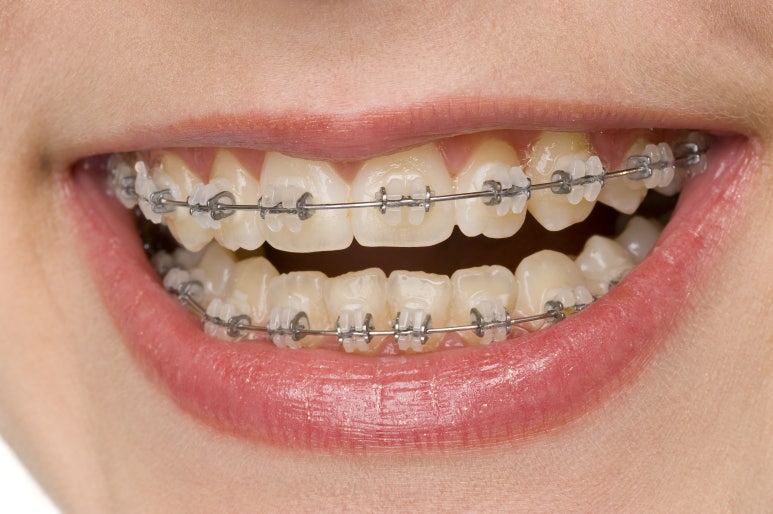
Things that should be managed together during treatment
Malocclusion orthodontics is just as much about management during treatment as it is about the plan.
- Why elastics are needed
Elastics play an important role not so much in aligning the teeth, but in completing the upper-lower bite relationship. If you understand why they are needed and wear them consistently, they can help with both treatment time and results.
- Scaling and interdental care: routines that protect the gums during orthodontics
During orthodontic treatment, tartar can build up more easily and the gums can become more sensitive. Regular checkups and interdental care are especially important for maintaining the results long term.
- Checking for teeth grinding, clenching, and temporomandibular joint issues
Among people with malocclusion, some have strong clenching habits. These habits can place stress on the teeth and jaw during orthodontic treatment, so if needed, they should be managed together.
- Discomfort such as pain or rubbing can be reduced with tools.
Using wax, soft-food strategies, and care kits well can make orthodontic life much more comfortable.
This is best addressed before starting orthodontics.
If any of the following problems are present before starting malocclusion orthodontics, it is usually more comfortable to address them first.
-
Severe gum inflammation/tartar buildup (recurrent bleeding or swelling)
-
Cavities or suspected tooth cracks
-
Wisdom teeth that may affect the bite or available space (depending on the case)
-
Habits that continuously apply force, such as mouth breathing or tongue habits
Addressing these first can reduce the feeling that treatment suddenly becomes longer in the middle of orthodontics.
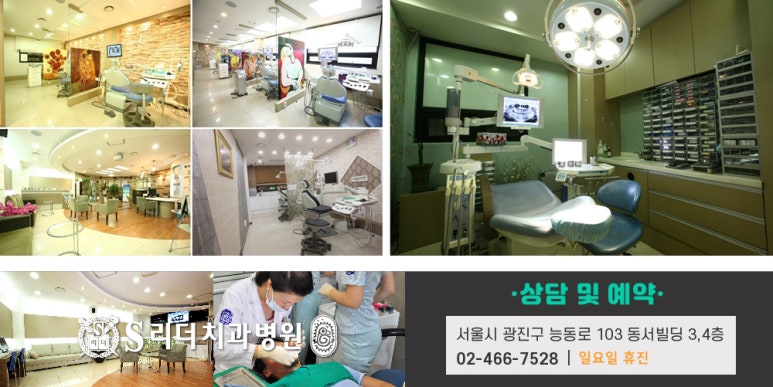
Konkuk University Entrance Station dentist, S Leader Dental Hospital
Start with a bite diagnosis before orthodontics
If you are looking for a Konkuk University Entrance Station dentist and you keep experiencing symptoms such as discomfort while chewing, jaw fatigue, or front teeth bumping into each other, the issue may not be only that the teeth are crooked; it may also be a bite problem.
At S Leader Dental Hospital, when counseling for malocclusion, we do not simply look at tooth alignment. We also perform bite examinations, imaging, and gum condition checks, and then organize why you are uncomfortable first before explaining an orthodontic plan that fits your condition.
Orthodontics is more about the plan than the start. Rather than letting vague worries continue for too long, we recommend getting an accurate diagnosis of your current condition once and then taking steps toward the direction that suits you.

 Konkuk University Entrance Station Dentist :: S (S) Leader Dental Hospital