Hello, we are S-Leader Dental Hospital, a Yongmasan Station dental clinic now celebrating our 22nd year since establishment.
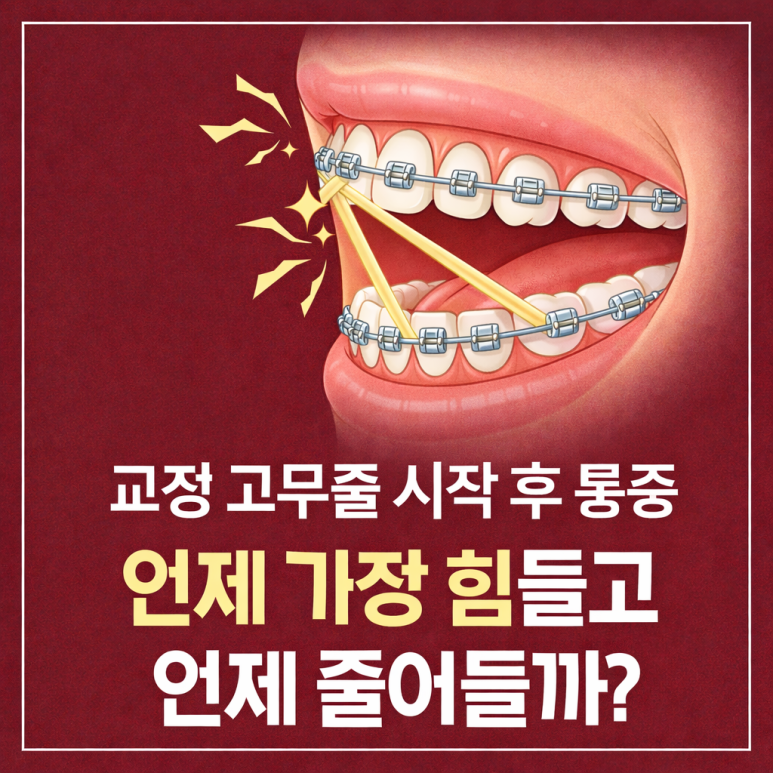
As orthodontic treatment progresses to a certain point, there are many cases where the clinic one day hands you elastics and says:
“From now on, you must wear the elastics.”
When you first try them on at home that day, most people react in a similar way.
“Uh... I can really feel the pulling.”
“My jaw feels sore.”
“It feels a little strange when I chew.”
“Is this normal? Did I put them on wrong?”
Elastics are small, but once you actually start wearing them, the sensation is stronger than expected. You may feel your teeth being gradually pulled, and your jaw muscles may become more tired than usual. Some people even describe it as a heavy headache.
So today, at S-Leader Dental Hospital, a Yongmasan Station dental clinic, we will organize everything at once: where and how discomfort can appear when you start wearing elastics, how the pain usually progresses, what range is normal so you do not need to worry, which signs require a checkup, and finally, how to get through it with a little less difficulty.
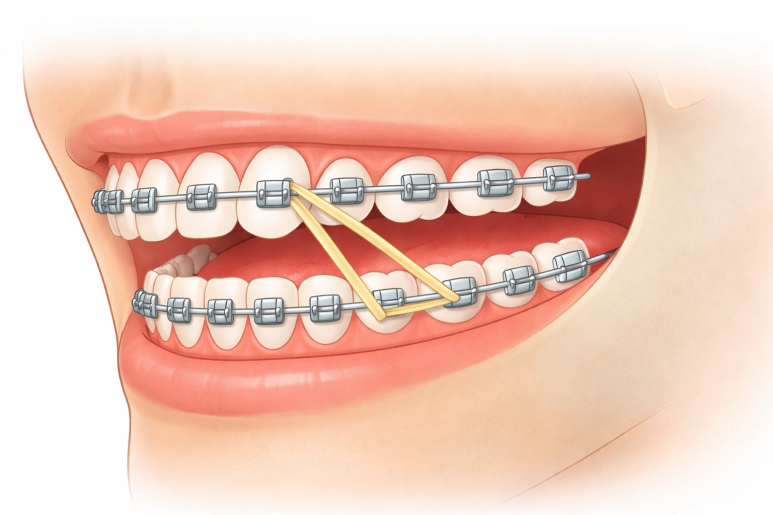 Orthodontic elastic pain is different from "tooth pain" and "jaw/muscle fatigue."
When you start wearing elastics, the pain does not come in just one form. It helps a lot to understand it by dividing it into two broad types.
① Tooth pain (soreness, sensitivity when chewing)
Teeth move when force is applied. Since elastics apply force between the upper and lower teeth, you may feel as if your teeth are being pulled in that direction.
At this time, many people say it feels like “soreness,” “someone is pressing on my teeth,” or “my teeth feel sensitive when I chew.”
② Jaw/muscle fatigue (pulling, soreness, tiredness)
Elastics affect not only the teeth but also how the upper and lower teeth come together. Because of that, the way you chew may change a little, or your jaw muscles may tense in a different direction than usual. In that case, rather than tooth pain, you may feel things like “my jaw feels sore,” “my temples feel tired,” or “my jaw feels pulled.”
When these two happen together, it is easy to worry, “Did I put the elastics on wrong?” In many cases, however, this is closer to a natural reaction that can occur during the adjustment period. That said, we will explain below what counts as a normal range.
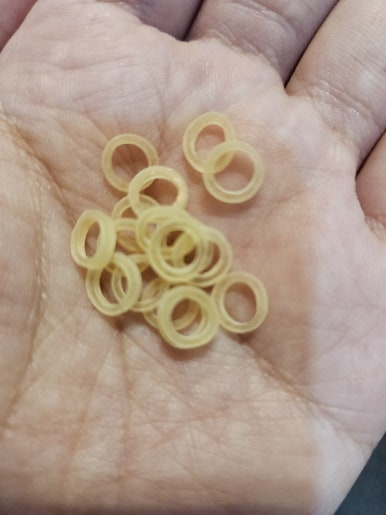
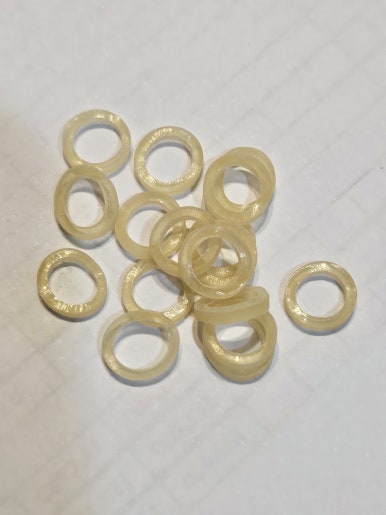 Where can it hurt after starting elastics? (By area)
Elastic pain can feel different from person to person, but the areas where it commonly appears are relatively similar.
① A pulling sensation in the front teeth/molars
Elastics are usually hooked from the front teeth, the molars, or in a way that connects the two, so the pulling sensation may feel stronger in certain teeth. Some people ask, “Why does only one tooth hurt more?” Depending on the direction of the elastic force and the current tooth position, certain teeth may feel more sensitive.
② Fatigue in the jaw muscles (cheeks/temples)
The muscles used for chewing (around the cheeks and the temples) may feel tired. In particular, if you usually chew on only one side, the change in bite caused by the elastics can change how those muscles are used, making the sensation more noticeable.
③ Soreness around the jaw joint (when opening the mouth)
When opening your mouth, the area around the jaw joint may feel sore, or the jaw may feel slightly pulled. In most cases this eases during the adjustment period, but if the pain is severe or if it becomes hard to open your mouth, it may need to be checked.
④ A sore feeling around the head/neck (when clenching is also present)
If the elastics feel uncomfortable, some people unconsciously clench their teeth. Then tension can build not only in the jaw muscles but also in the neck and shoulders, which may feel like a headache. This is not so much caused by the elastics themselves as it can happen when the discomfort from the elastics triggers a clenching habit.
⑤ When only one side hurts especially badly
It is natural to feel worried if the pain is concentrated on one side, such as “Only the right side hurts” or “Only the left jaw feels tired.” In reality, it may be a pattern where more force is being applied on one side, or the elastic may be worn mainly on one side. In most cases this decreases over time, but if the one-sided pain remains severe, it may need to be checked.
When is the pain the worst, and when does it ease?
Elastic pain is often not constant pain, but rather something that rises and falls like waves. In particular, if you know how things usually progress after the first start, you will feel much less anxious.
From the day of starting to 24 hours: the stage when the pulling begins
On the first day you wear them, it may feel unfamiliar because of the sudden pulling sensation. At this point, the pain may not feel very strong at first, but soreness often increases as time passes.
Day 2 to 3: the stage that often feels the sorest
This is the period many people describe as “the hardest time.” Chewing can feel sensitive, and the jaw muscles can easily become tired. Hard foods may feel especially difficult.
Day 4 to 7: decreasing as you adjust
For most people, this is when they begin to feel that things are clearly getting better. It may not completely disappear, but in many cases it becomes manageable in daily life.
1 to 2 weeks: changing to “bearable”
After 1 to 2 weeks, wearing the elastics themselves often becomes familiar, and the pain is felt much less than at the beginning.
After adjustments / after changing elastic strength: a short wave again for 1 to 3 days
If there is an adjustment during a visit or the elastic position changes, soreness may return for a few days. However, it is generally shorter and milder than at the very beginning.
Why is this progression important?
The first few days are the hardest, so worries like “Am I doing something wrong?” tend to grow. In many cases, however, this is simply part of the adjustment process.
 What is within the normal range vs. what signs require a checkup?
Having pain after starting elastics does not mean everything is normal, and it does not mean everything is a problem either. Knowing the criteria below can make you feel much more at ease.
Cases that can be considered within the normal range (generally observation over time)
-
There is pulling/soreness, but it gradually decreases over time
-
Chewing feels uncomfortable, but daily life is possible with soft foods
-
The jaw muscles feel tired, but it improves within a few days
-
Wearing elastics causes a slight headache/tired feeling, but you gradually adjust
This is the kind of range that is commonly experienced at the beginning of elastic wear.
Signs that require a checkup (it is better not to delay)
-
The pain gets worse over time rather than easing
-
The jaw joint pain is so strong that opening the mouth is difficult, or there is a “locking” feeling
-
Only one side hurts especially badly and continues
-
A specific tooth feels sharply stabbing and continues to hurt even at night
-
Wearing the elastics causes a strong feeling that the bite is becoming strangely misaligned
-
You keep getting confused about the elastic position and feel like you are putting it on wrong repeatedly (it helps to check this quickly)
In these cases, checking the problem may help you feel better sooner rather than trying to endure it and hoping you will adapt.
 8 practical ways to reduce the pain
8 practical ways to reduce the pain
Elastic pain is influenced not by “how much you can endure,” but by “how well you handle it.” Here are some tips that are actually helpful.
- The first 3 days are half about your meal strategy
Hard foods can increase pain. Simply switching for a short time to foods that are easier to chew, such as porridge, steamed eggs, tofu, noodles, soft rice, and shredded meat, can make a big difference in how it feels.
- Relax your jaw (reduce clenching)
The more uncomfortable the elastics feel, the more some people unconsciously clench their teeth. This habit can increase jaw muscle fatigue and headaches. Consciously relaxing tension, such as lightly placing your tongue on the roof of your mouth while keeping your jaw relaxed, can help.
- If needed, use pain relievers / cold compresses without overdoing it
If the pain is too uncomfortable, pain relievers can also help. However, individual health conditions and medications may differ, so it is important not to overdo anything and to follow what suits your own situation. A short cold compress on the outside of the cheek may also help reduce fatigue.
- Why being consistent can actually hurt less (avoid irregular use)
If you do not wear the elastics all day and then wear them only at night in one go, the teeth repeatedly go through the process of “trying to move and then stopping,” which may actually feel more uncomfortable. Wearing them as consistently as possible can make the pain waves more stable.
- Be accurate about the wearing position/method (ask right away if confused)
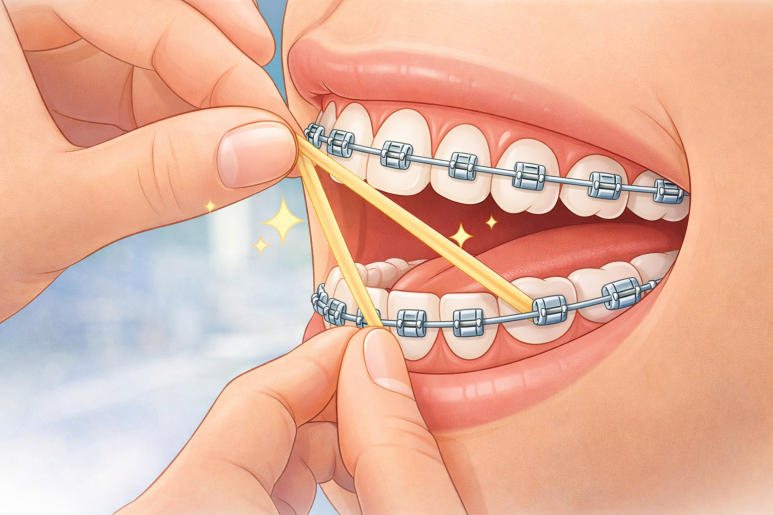
If the elastics are worn backward or incorrectly on one side, the pain may increase and the planned force may not be applied correctly. If you are confused, taking a photo or asking the clinic is the fastest way to confirm.
- Discomfort when speaking usually improves with adjustment
At first, your speech may feel awkward because of the pulling sensation inside your mouth. Usually, you will adjust. If you become too aware of it, the jaw may tense even more, so it helps to think, “If I just hold out for a few days, it will get better.”
- If your cheeks are rubbing, use wax together with the elastics
When you start wearing elastics, your lips or cheeks may feel more irritated from rubbing. Using wax to reduce friction can make daily life much more comfortable.
- Sleep and stress management (relieving jaw tension)
On days when you are tired or under a lot of stress, clenching can increase. In the early stage of elastic wear, many people feel noticeably better just by getting enough sleep.
Top 5 mistakes when wearing elastics (patterns that increase pain)
The reason elastics feel difficult is not only because they hurt. If wearing mistakes are repeated, the pain can last longer and the results may also be delayed.
-
Not wearing them all day and then wearing them only at night in one go
-
Wearing them only on one side / backwards (the direction of force changes)
-
Removing them too often and repeatedly restarting the "adjustment" process
-
Leaving them broken for too long (creating a long gap)
-
Stopping completely for several days because it is hard (it may be harder when restarting)
Anyone can make a mistake. But if it happens repeatedly, it can throw off the plan, so building a routine is important.
 Yongmasan Station Dental Clinic :: S-Leader Dental Hospital
Pain after starting elastics: normal range and signs that need checking
When you start wearing elastics, you may feel your teeth being pulled and your jaw muscles becoming tired. Many people feel the most discomfort on days 2 to 3, and in many cases things become much more comfortable as they adjust over 1 to 2 weeks. So even if the first few days are hard, you do not need to be too scared that “something must be wrong.”
However, if the pain keeps getting worse, if there is a locking feeling in the jaw joint, or if only one side hurts especially badly, it is safest to have it checked quickly.
At S-Leader Dental Hospital, a Yongmasan Station dental clinic, we not only explain to patients starting elastics why they are needed, but also where early discomfort can appear and how to get through everyday life more comfortably (meals / wax / routine).
In particular, when the discomfort becomes strong, checking quickly whether the wearing position is correct, whether there is any bite interference, or whether the appliance is irritating the tissue can often make things much more comfortable than just enduring it. If you are worried about pain after starting elastics, rather than struggling alone, we recommend getting it checked comfortably and continuing your orthodontic treatment with more stability.



 Yongmasan Station Dental Clinic :: S-Leader Dental Hospital