Hello, we are S Leader Dental Hospital, a Gwangjin-gu dental clinic celebrating its 22nd anniversary this year.
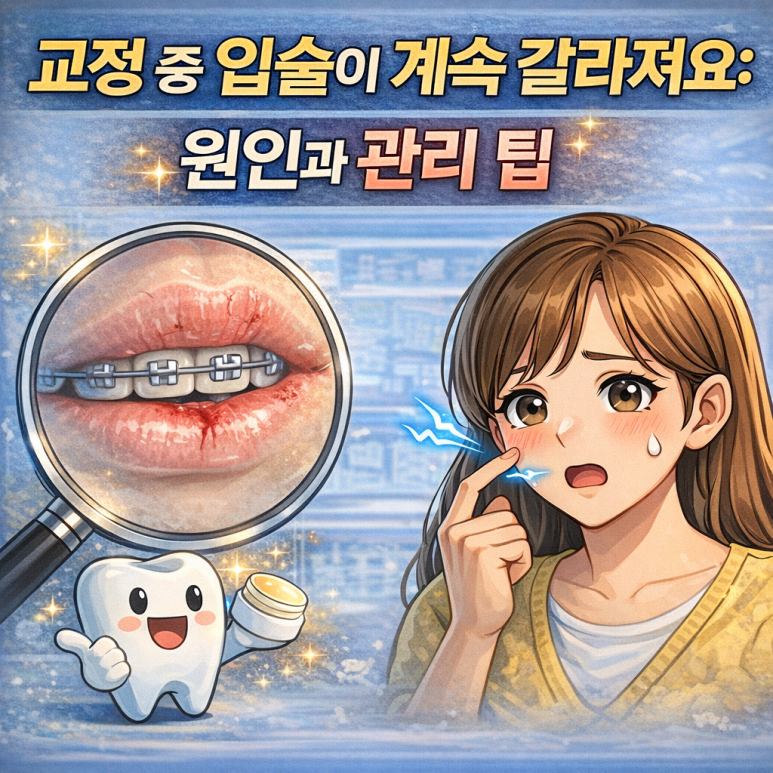
“After getting braces, my lips crack so easily.”
This is something we hear very often during consultations. In particular, a few days to a few weeks after starting orthodontic treatment, the lips can become especially dry, develop flakes, and in severe cases even bleed. Applying lip balm may seem to help for a moment, but it quickly becomes chapped again, which is even more frustrating.
“Is this what always happens with orthodontic treatment?”
“Is it because I’m not taking care of it properly?”
“My lips hurt, so I don’t even want to talk… What if this keeps happening?”
First, let us say this. Persistent lip cracking during orthodontic treatment is fairly common, and in most cases, it can improve significantly if you understand the cause and make a few changes.
The important thing is understanding why it keeps happening even when you apply lip balm.
When you start orthodontic treatment, the appliances change the oral environment and your usual habits naturally change as well. Because of these changes, the lips often become dry and crack easily. Once dryness starts, it can repeat in a vicious cycle.
Today, at S Leader Dental Hospital, a Gwangjin-gu dental clinic, we’ll walk through:
-
Why the lips crack more easily during orthodontic treatment (causes)
-
Whether it is within a normal range or something that needs to be checked
-
A care routine you can start at home right away
-
What help the dental clinic can provide
-
A prevention routine
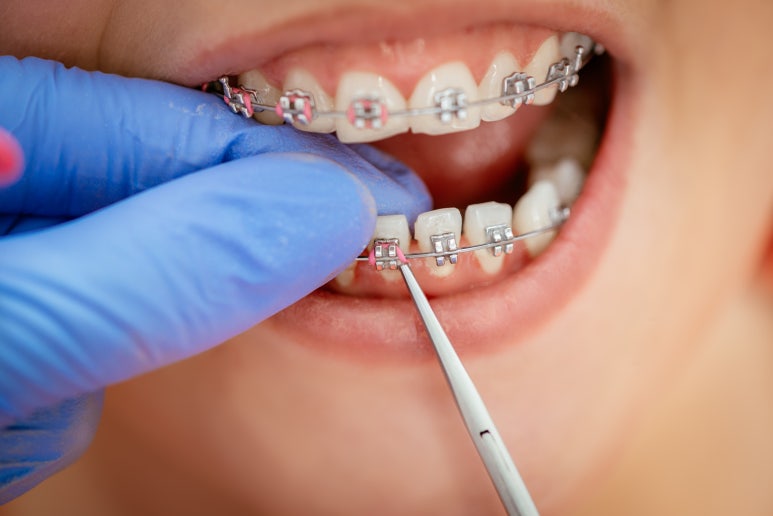
It is not just the appliance; your daily habits also play a role.
Many people think, “Braces make my lips dry.” That is partly true, but in fact, it is uncommon for the appliance alone to cause constant chapping. Usually, several factors overlap and create a vicious cycle, as shown below.
-
The appliance pulls on the lips and increases friction.
-
The mouth stays slightly open longer, making dryness worse.
-
Because it feels dry, you unconsciously lick your lips.
-
The more you lick, the drier and more cracked they become.
-
You pick at the cracked areas, and the wounds keep repeating.
So for people whose lips keep cracking even when they apply lip balm, it is often not just a lip balm issue. Friction + dryness + habits are usually all working together. If you break these three factors, things can improve faster than you might expect.
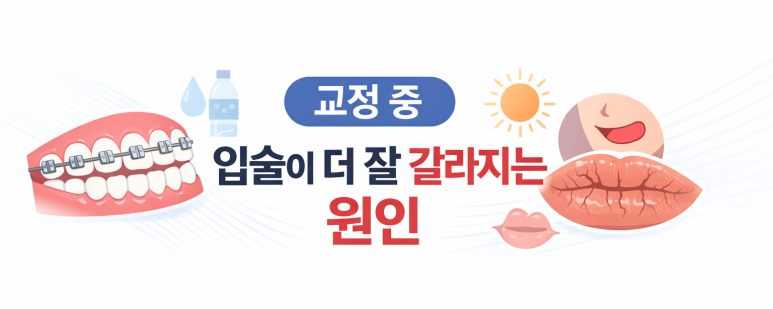
What are the 7 causes of more frequent lip cracking during orthodontic treatment?
- The appliance pulls on the lips and increases friction.
You may feel the brackets and wires touching the inside of the lips. At first, it may just feel like a foreign body sensation, but repeated friction while talking, smiling, or eating can make the lips and oral mucosa more sensitive. Especially when the area is dry, even small amounts of friction can feel much worse.
- You spend more time with your mouth slightly open.
In the early stages of orthodontic treatment, many people unconsciously keep their mouths slightly open because the inside of the mouth feels unfamiliar. That makes the lips dry out more quickly. People who sleep with their mouths open also tend to become drier.
For those whose lips are especially chapped in the morning, this is often a likely cause.
- Saliva dries up and the inside of the mouth becomes dry. (lack of water / caffeine)
Orthodontic treatment does not suddenly reduce saliva, but stress, lack of sleep, and increased caffeine intake (coffee) can worsen dryness in the mouth. When the mouth is dry, the lips also dry out, and cracking happens more easily.
- You develop the habit of licking your lips frequently. (the most common vicious cycle)
When lips feel dry, people unconsciously lick them. But as the saliva dries, the lips become even drier, and the surface weakens, causing repeated cracking. For many people whose lips “keep chapping,” this habit is part of the problem.
- More frequent brushing and gargling increase irritation.
During orthodontic treatment, food particles tend to get stuck more easily, so people brush or gargle more often. That is a good habit, but using a strong mouthwash too often (for example, products with a high alcohol content) can make the lips and mucosa even drier.
- Seasonal and environmental factors overlap. (winter, air conditioning, heating)
Indoor heating in winter and air conditioning in summer lower indoor humidity. During orthodontic treatment, dryness is already more likely, and when the environment adds to it, it can become worse.
- A vicious cycle of wound → flakes → picking → wound
Once the lips crack, flakes form, you pick at them, and the wound returns, making the lips easier to chap again.
For people who say, “It has been repeating since one day,” this vicious cycle has often already taken hold.
Normal range vs. when you need to get checked
Just because lip chapping is common does not mean we can simply say, “Just endure it.” Some cases improve with a little care, while others may require appliance adjustment or another check.
Cases that may be within the normal range
-
In the first 1–2 weeks after starting orthodontic treatment, the mouth feels unfamiliar and dryness increases.
-
There is a clear trend of improvement with lip balm/moisturizing.
-
Even if there is bleeding, it is not severe and seems to improve within a few days.
-
There are no severe oral wounds, and the main issue is dryness.
In these cases, a care routine usually makes things more comfortable.
Signs that need checking
-
The lips keep splitting, bleeding repeats, and there is almost no improvement for more than 2–3 weeks.
-
The inside of the lips or cheeks has larger wounds, and the appliance keeps scraping against them.
-
The corners of the mouth keep splitting, sting, and do not heal well.
-
Significant swelling/itching occurs, or it feels like the symptoms are spreading as if from an allergy.
-
Only a “specific spot” keeps feeling cut and sore, making daily life difficult.
In particular, if you clearly feel that the appliance is “sticking out and poking” or “scraping,” lip balm alone will not solve it well. In that case, trimming the wire end or adjusting the appliance may be necessary.
10 care tips you can start right now
So what are some care methods you can put into practice immediately in daily life?
Here are methods you can start using today.
- With lip balm, focus on “thickness and timing” rather than “frequency”
Rather than applying a thin layer many times throughout the day, it is more effective to choose three key times: before going out, after brushing your teeth, and before bed (apply thickly). In particular, if you apply a generous amount before sleeping, your lips will feel different in the morning.
- Do not pick at flakes; soften them first
Picking at lip flakes may make them look neat for a moment, but it enlarges the wound and makes it easier for the problem to recur. It is much better to soften them first with a warm wet towel, then gently remove them.
- Create a water-bottle routine (the basics of solving dryness)
If dryness is severe, no moisturizer will last long. Keeping a small water bottle at your desk and drinking a little frequently is the most helpful habit.
- Manage indoor humidity (humidifier / wet towel)
In environments with strong heating or air conditioning, humidity is key. A humidifier is helpful, and even hanging a wet towel can make a noticeable difference for many people.
- Caffeine and alcohol can worsen dryness.
This does not mean you must suddenly stop drinking coffee, but during periods when your lips are severely chapped, reducing coffee and increasing water intake can definitely help.
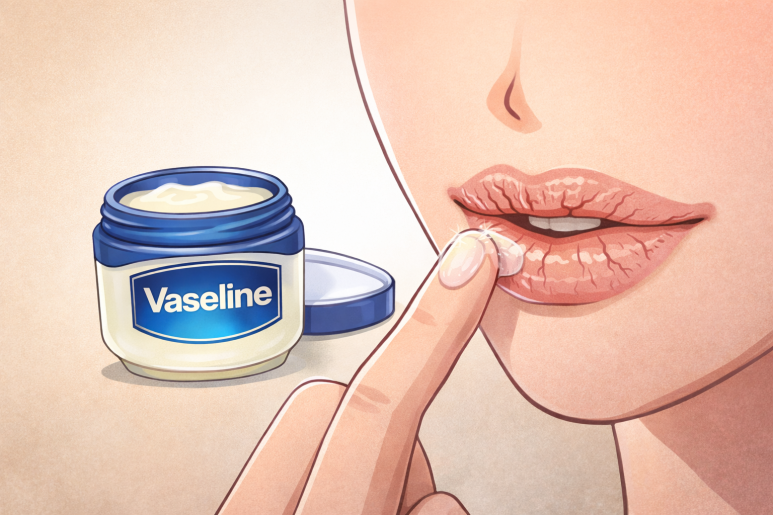
- Use petroleum jelly (fragrance-free moisturizer) at the right time
Lip products with strong fragrance or menthol may actually irritate the lips. When the lips are very sensitive, many people do well with applying a thick layer of a fragrance-free moisturizer before bed.
- Reduce friction from the inside of the mask
A mask may seem to reduce dryness, but in some cases it can increase friction and make sores worse. In that case, do not wear the same mask for too long, and changing the material or replacing it more often may also help.
- If you feel appliance friction, use wax actively
If the inside of your lips keeps rubbing against the appliance, place wax on that part of the appliance to reduce friction. If you apply it before the area becomes raw, it will be much less difficult.
- Do not overdo gargling, especially with irritating products
Mouthwash can help when your mouth feels unpleasant after eating, but using it too often or using a strongly irritating product may increase dryness. If needed, lightly rinsing with water is also an option.
- Make an “orthodontic kit” for going out
Just lip balm + wax + a small mirror (or your phone camera) can greatly reduce discomfort when you are out. You can respond right away when you suddenly feel rubbing and think, “This is driving me crazy.”
What help can a Gwangjin-gu dental clinic provide?
If lip chapping is simply due to dryness, it may improve with care. But during orthodontic treatment, the cause is often the appliance.
In those cases, the clinic can help in the following ways.
-
Trim the end if the wire is sticking out
-
Adjust a bracket if one is causing especially strong friction
-
Give personalized guidance on where and how to apply wax
-
Provide care instructions if there are severe mouth sores or wounds
-
Check daily patterns and habits together if dryness is severe
In particular, if you feel that only a “specific area” keeps getting raw, adjustment can often make things much more comfortable.
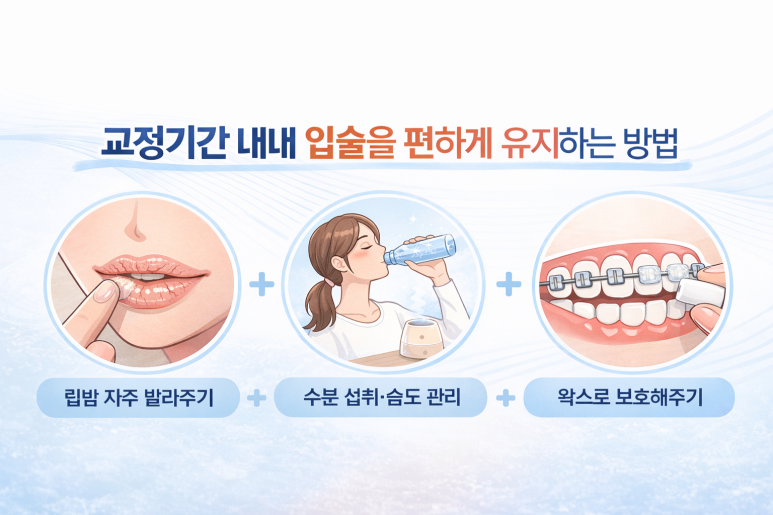
Prevention routine: How to keep your lips comfortable throughout orthodontic treatment
Lip cracking is not something you fix once and forget; it can recur throughout the orthodontic treatment period.
That is why it helps to build a routine.
-
Establish a moisturizing routine during the first month of treatment (apply thickly before bed)
-
Consciously stop the habit of licking your lips
-
Protect the lips for 2–3 days after appliance adjustments with wax and soft foods
-
If a poking area appears, tell the clinic right away instead of waiting until the next visit
-
Strengthen humidity and hydration routines according to the season (winter/summer)
Repeated lip cracking during orthodontic treatment,
This is how S Leader Dental Hospital, a Gwangjin-gu dental clinic, checks it.
Persistent lip cracking during orthodontic treatment is a surprisingly common symptom. But in most cases, it happens because friction (appliance) + dryness (dehydration) + habits (licking/picking) overlap. If you understand the cause and break the vicious cycle, things can become much more comfortable.
For people whose lips keep chapping even when they apply lip balm, it helps to change the timing of moisturizing, improve water intake and indoor humidity, and protect the areas being rubbed by the appliance with wax.
At Gwangjin-gu dental clinic S Leader Dental Hospital, if you tell us that your lips frequently crack or your mouth becomes sore and uncomfortable during orthodontic treatment, we do not simply say, “Just apply lip balm.” We first check exactly where the rubbing is happening (wire ends / brackets / hooks), adjust the parts that need it, and provide guidance tailored to the patient’s daily life, including how to use wax and daily routines (managing dryness and correcting habits).
Since orthodontic treatment is a long process, even small discomforts can build up and become tiring over time. If lip cracking keeps recurring, it may be better not to just endure it alone, but to get it checked once. Identifying the cause and learning how to manage it can help you continue orthodontic treatment much more comfortably.



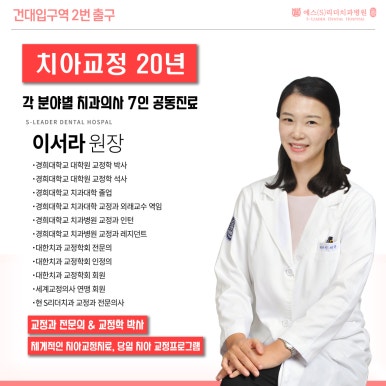

Gwangjin-gu dental clinic: S Leader Dental Hospital