Hello, we are S Leader Dental Hospital, Gunjja Dental Clinic, marking our 22nd anniversary this year.

“Doctor, I feel like my breath smells worse after getting scaling...”
We hear this very often in the clinic. Since scaling is known as a treatment that “cleans the mouth,”
people expect to feel fresher afterward.
So when a fishy taste appears a few days later, their breath feels bothersome, or they notice an odor from dental floss, it can make them very uneasy.
First, you can rest assured. The feeling that “the odor is stronger” after scaling can be temporary in many cases. What matters here, however, is whether it truly passes as just a feeling or whether there is an underlying problem inside the gums that
keeps recurring.
Today, at Gunjja Dental Clinic and S Leader Dental Hospital,
-
why this feeling can happen after scaling
-
what cases can be observed as within the normal range
-
what signs need to be checked
-
how to care for it at home so it improves
we will summarize everything in one place.
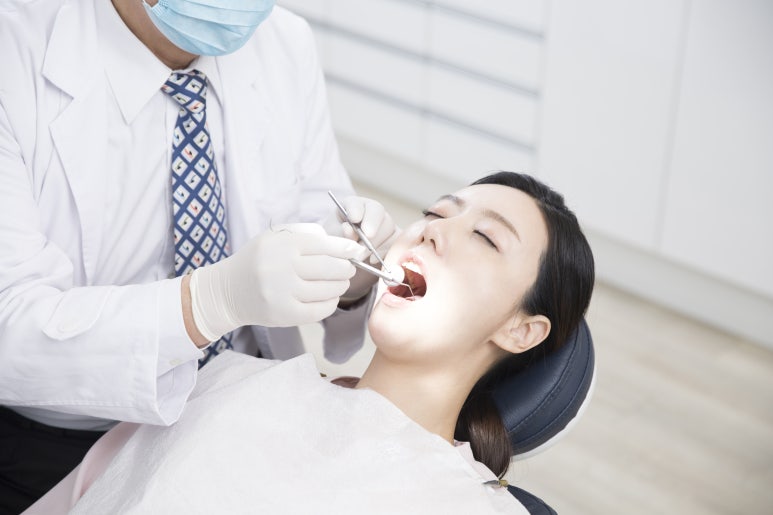
First, rest assured: the feeling that odor is stronger can be temporary.
Scaling is a treatment that removes tartar. But tartar is not simply “dirt”; in many cases, it has been attached for a long time and
has been covering what was underneath.
So when tartar is removed,
-
the tooth surface that had been hidden is exposed
-
the gum line becomes clearer
-
if the gums are sensitive, bleeding or a fishy taste may be felt briefly.
During this process, you may also feel that “something smells worse.” In particular, for people whose gums were very swollen or bleeding before scaling, the gums can become sensitive after scaling, and a fishy taste may be felt for about 1–2 days.
Another common reason is that you have become more sensitive yourself. After scaling, your mouth feels different, so you start checking the air from your breath or the taste more carefully than before, when you simply
let it pass. In such cases, the feeling usually decreases naturally after a few days.
However, there is one thing you should keep in mind.
If the odor continues even after scaling, there may be a cause that is not resolved by tartar removal alone.
I’ll explain this in more detail below.
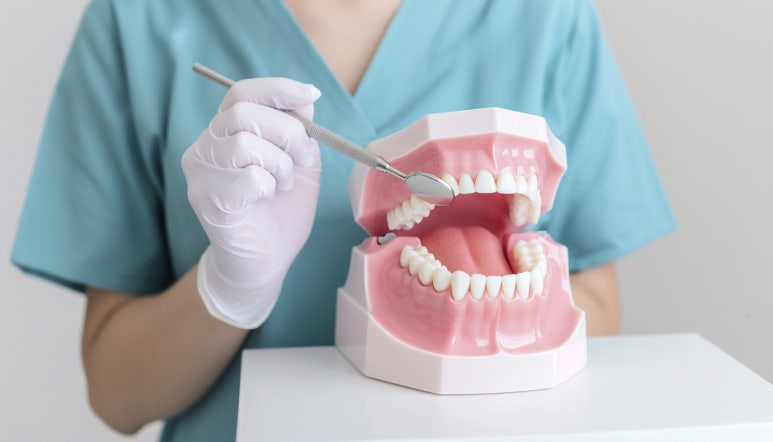
5 major reasons why odor may feel stronger after scaling
- When tartar disappears, hidden inflammation/bleeding is revealed (fishy taste)
When tartar has been irritating the gums, the gums often already had inflammation. Scaling removes the tartar, but the gums do not immediately return completely to normal.
At this time, you may notice bleeding while brushing or a fishy taste, and feel that “the odor is worse.” In many cases, it is not that the odor has actually increased, but that the inflammation has been revealed and the area has become sensitive.
- As gum swelling subsides, the space beneath the gums becomes more noticeable
When the gums are swollen, they may appear as though they are covering more of the teeth. After scaling, as the swelling goes down,
the gum line becomes neater, and the spaces between teeth may look clearer. You may also feel that the gaps are “more open than usual.”
At this time, food can seem to get stuck more easily, and that can lead to odor. In other words, it may not be that scaling caused a new problem; instead, the original structure and condition may simply have become more visible.
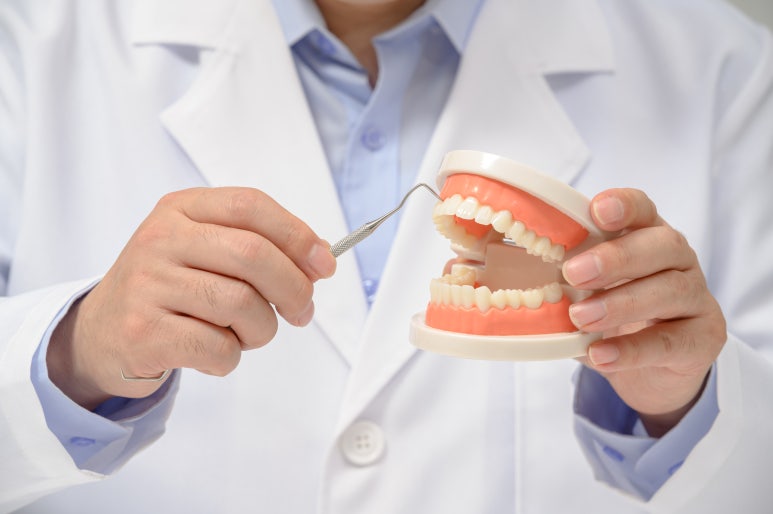
- When food trapping between teeth becomes more noticeable
After scaling, some people become more aware of the feeling of food getting stuck between their teeth because their mouth has become more sensitive. In particular,
people who have long had food trapping between their teeth may feel that “it gets stuck more” after scaling.
In reality, it may have been getting stuck before as well, but the discomfort had been hidden by tartar and swelling, so it feels more noticeable.
- When tongue coating / dry mouth remains unchanged
The cause of bad breath is not limited to tartar and gums. If you have a lot of tongue coating or severe dry mouth, scaling alone may not make the odor drop dramatically.
In particular, if you drink a lot of coffee, do not drink much water, or sleep with your mouth open (mouth breathing), dry mouth can make the odor stronger.
- When post-scaling care (floss / interdental brushes) is still insufficient
This is the most realistic reason. Scaling is a treatment that removes tartar, but afterward, care between the teeth must continue for the gums to stabilize.
If you almost never use floss after scaling, or if food particles keep remaining between the teeth, you may feel that “the odor is coming back.” That is why after scaling, it is often not just about brushing; care between the teeth becomes key.
Normal range vs. signs that need checking
When odor bothers you after scaling, the most important things are “how long it lasts” and “what symptoms occur along with it.”
Cases that may be within the normal range (generally observation is reasonable)
-
The feeling gradually decreases within 1–3 days after scaling
-
The odor drops noticeably when you brush or use floss
-
Gum bleeding decreases over time
-
There is no severe pain, and daily life is not significantly affected
In these cases, most people improve with just a small adjustment to their care routine.
Cases that need checking (it is better not to delay)
-
The odor continues for more than 1–2 weeks with little change
-
The gums are swollen, painful when pressed, or there is a feeling of pus
-
The odor is especially strong only when flossing a specific area (repeated on one side only)
-
Bleeding continues when brushing (the bleeding does not lessen)
-
There is especially strong discomfort and odor around implants / crowns / bridges
In these cases, “use a stronger mouthwash” is not the answer; identifying the cause (beneath the gums, at the prosthetic margin, hidden cavities, etc.) is the faster solution.
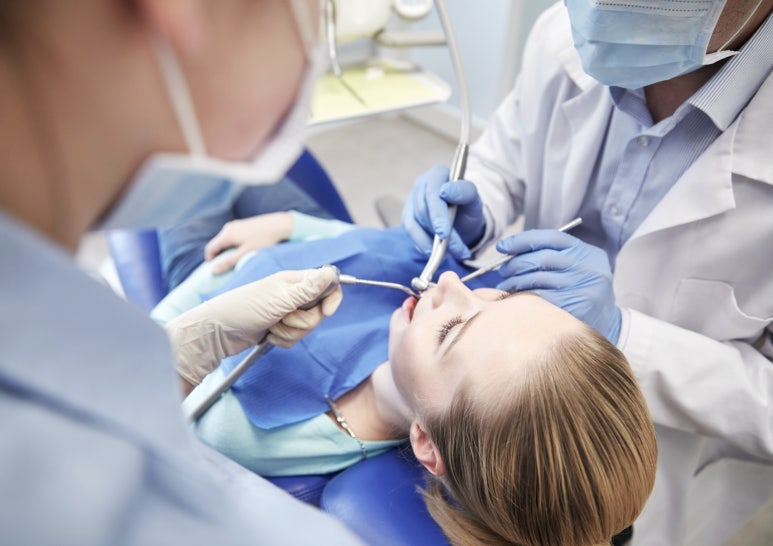
There are cases where it does not end with scaling alone. (Understanding gum stages)
If odor remains after scaling, one of the most common reasons is that care may also have been needed below the gum line.
It is easier to understand gum conditions in two broad stages.
Stage where the gum surface is sensitive: removing tartar and managing it often leads to stabilization.
Stage where even the area beneath the gums is sensitive: if a lot of tartar has built up under the gums or the inflammation is deep, scaling alone may not be enough.
In this case, it is not that “scaling was done poorly”; rather, scaling was only the beginning, and additional care was needed from the start.
So if odor, bleeding, and swelling keep recurring even after scaling, it is right to have the gum condition checked once more.

7 home care tips
When odor after scaling is bothering you, this is the most realistic care you can do at home. Rather than being “perfect,” the key is being able to do it consistently.
- Use floss / interdental brushes once a day, at night
Bad breath often starts between the teeth. It is okay if you cannot do it throughout the day. Try doing it consistently at least once at night. Many people notice the odor drops significantly after flossing.
- Use a tongue cleaner gently as a support measure
Scraping the tongue too hard can actually irritate it. A light, gentle cleaning once a day is enough as a support measure.
- Do not overuse mouthwash (especially strong, irritating products)
Mouthwash is only a support measure. It may mask odor, but it does not remove the cause. In particular, using a strong product too often can make the mouth drier and make the odor worse.
- Drink water often to reduce dry mouth
If your mouth is dry, the odor can become stronger. Many people improve just by drinking water more often. For those who drink a lot of coffee, replenishing water is especially important.
- On days with a lot of food trapping, at least rinse after meals
If it is hard to use floss outside, even the habit of rinsing with water after meals can help. Remaining food particles often become the starting point of odor.
- If you smoke, eat late-night snacks, or consume a lot of sugar, try reducing them for a while
In particular, the habit of eating sweets at night and going straight to sleep may not be good for the gums or bad breath. Some people notice a difference even after adjusting for just a few days.
- If it repeats even after a few days of care, switch to checking the cause
Many cases improve with care, but if it repeats for more than 1–2 weeks, identifying the cause is faster. At that point, what you need is not “more effort,” but “more accuracy.”
If the odor continues after scaling
Gunjja Dental Clinic and S Leader Dental Hospital check the cause
The feeling that “the odor is stronger” after scaling is something many people experience. It can happen because the gums become sensitive after tartar is removed, or because swelling goes down and the feeling between the teeth changes. In most cases, it decreases within 1–3 days, and many people improve a lot once they establish a flossing routine.
However, if the odor continues for more than 1–2 weeks, or if bleeding, swelling, or a feeling of pus occurs, or if the odor is especially strong in only one area, there may be an underlying cause that does not end with scaling alone, so checking is necessary.
At Gunjja Dental Clinic and S Leader Dental Hospital, for patients worried about odor after scaling, we do not simply say, “Try changing your mouthwash.” Instead, we check the gum condition (bleeding / tartar location), the possibility of cavities between the teeth, and blind spots in care around prosthetics and implants, then provide a care plan tailored to the cause. Rather than putting it off out of embarrassment, we hope you can identify the cause accurately and resolve it comfortably.





Gunjja Dental Clinic :: S Leader Dental Hospital