Hello, we are S Leader Dental Hospital, a Seongdong-gu dental clinic that is celebrating its 22nd anniversary this year.
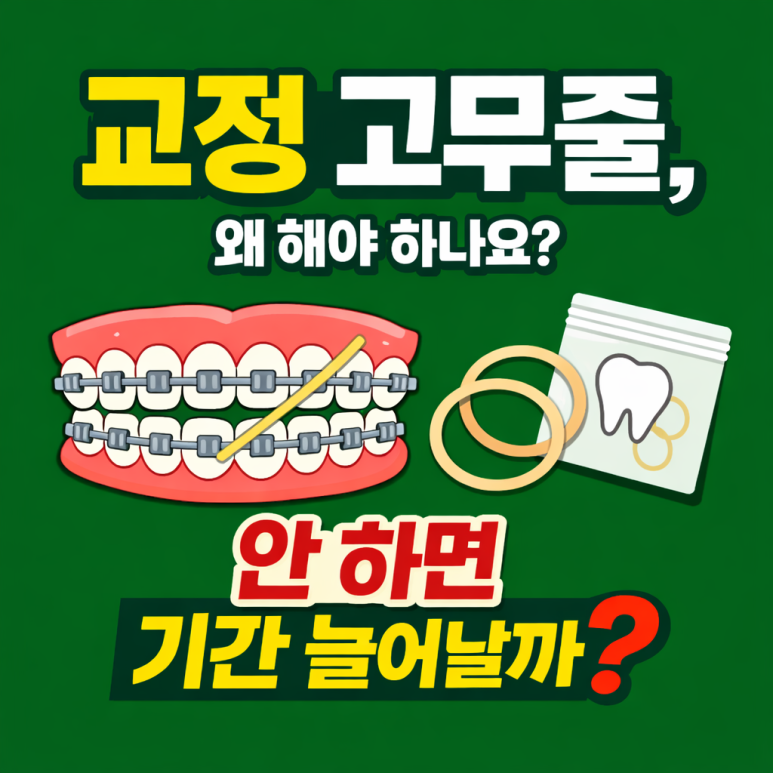
“Doctor… do I really have to wear these rubber bands?”
This is a question we hear very often during orthodontic treatment. Especially on the day patients first receive their rubber bands, most people look
slightly tense. The reaction, “You mean I have to keep wearing these…?” is completely natural. You already have appliances in your mouth, which can be uncomfortable, so adding rubber bands on top of that can seem even more troublesome and make daily life feel less convenient.
In fact, when we listen to patients, many mention practical inconveniences such as, “It’s annoying because I have to take them out every time I eat,” “It feels a little awkward when I talk,” and “I keep worrying about wearing them outside.” Some people ask, “Can’t I just wear them at home?” while others think, “Is it okay if I skip them for a day?”
That is understandable. But there is one thing you should definitely know. Rubber bands are not just something that is “good to do”; they are a necessary part of properly finishing orthodontic treatment.
So today, at S Leader Dental Hospital in Seongdong-gu, we’ll explain in simple terms why rubber bands are necessary, what happens if you don’t wear them, and how to make the process a little easier.
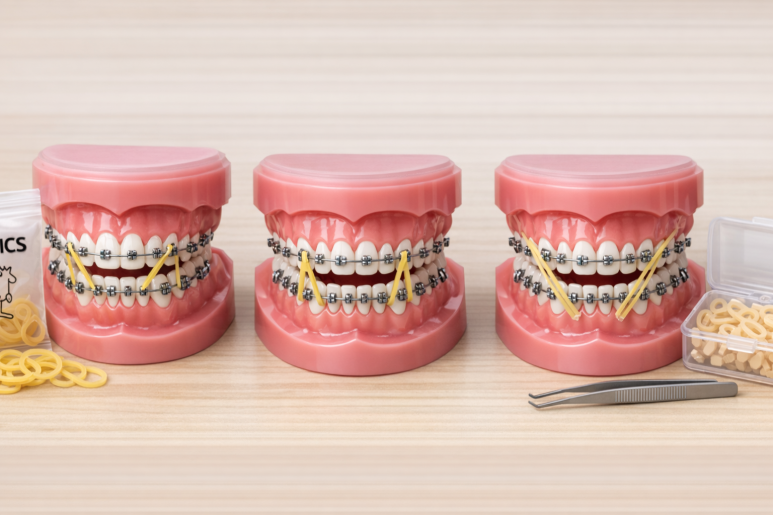
Rubber bands are a “finishing adjustment” device.
When people think of orthodontic appliances, they usually first think of the brackets attached to the teeth. These devices are used to align the teeth. They play an important role in straightening crooked teeth, closing spaces, and making the overall appearance more even.
But orthodontic treatment does not end with simply making the teeth look nice. What is more important is creating a natural and proper bite between the upper and lower teeth. In other words, when you close your mouth, the teeth should fit together naturally so that chewing is comfortable and the teeth are not under unnecessary strain.
That is where rubber bands come in. Rubber bands connect the upper and lower teeth and apply a pulling force. Using this force, they help adjust not only tooth position but also the overall bite.
To put it another way, if orthodontic appliances are the step that aligns the teeth, rubber bands are the finishing process that makes everything fit exactly right. That is why the quality of the final result can vary depending on how consistently you wear them.
What happens if you don’t wear the rubber bands?
This is one of the questions we hear most often.
“If I don’t wear them, will it make a big difference?”
To answer first: the difference is bigger than you might think.
First, the treatment period may become longer. Orthodontics works by gradually moving the teeth with gentle force, but if you do not wear the rubber bands, that force is not properly transmitted. As a result, the teeth move more slowly, and treatment may take longer than planned.
Another important point is the bite. Even if the teeth look straight from the outside, the upper and lower teeth may not actually fit together properly. In that case, chewing can feel uncomfortable, and you may notice that one side touches first.
And there is one more issue that many people unexpectedly overlook: the tendency to move back. Teeth undergoing orthodontic treatment have a tendency to return to their original position until they are fully settled. If the rubber bands are not worn properly, the teeth that have already moved may start shifting back.
In the end, “It should be fine if I skip just today” can build up and lead to a longer treatment period or less satisfying results.
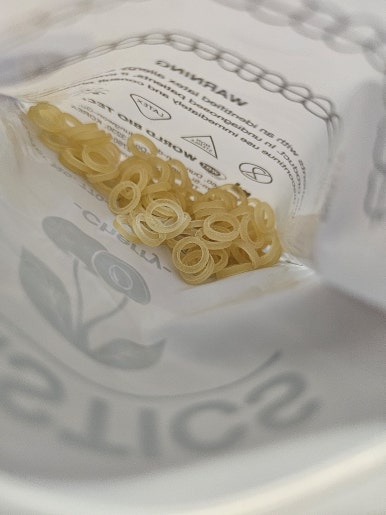
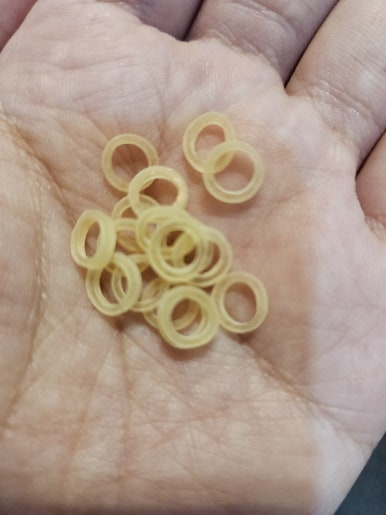
How long do you need to wear rubber bands during orthodontic treatment for them to work?
Rubber bands are not something you wear only when you remember; it is important to keep wearing them consistently.
Generally, wearing them for more than 20 hours a day is recommended. Put simply, you can think of it as wearing them almost all the time except when eating and brushing your teeth.
What matters here is not just the number of hours, but consistency. Wearing them diligently for one day and then not wearing them the next is far less effective than wearing them steadily every day. This is because the pulling force of the rubber bands needs to be maintained for the teeth to move in the desired direction.
One more tip: it is a good idea to replace the rubber bands with a new pair at least once a day. If they are used for too long, their elasticity weakens and their effectiveness may decrease.
There are ways to make it less difficult
At first, everyone feels uncomfortable.
But if you follow just a few methods well, it can become much easier.
First, it is a good idea to bring extra bands with you when you go out. If you are prepared to put them back in right after eating, it becomes much more convenient. Also, getting into the habit of wearing them again immediately after meals helps you avoid forgetting.
Using phone reminders can also help. Especially in the beginning, it is easy to forget, so setting alerts can be useful.
Most importantly, remember that “once you get through the first little while, you will get used to it.” The first one to two weeks are usually the most uncomfortable, and after that, people gradually adapt. In fact, many patients who wear them consistently well later say, “It was more manageable than I expected.”
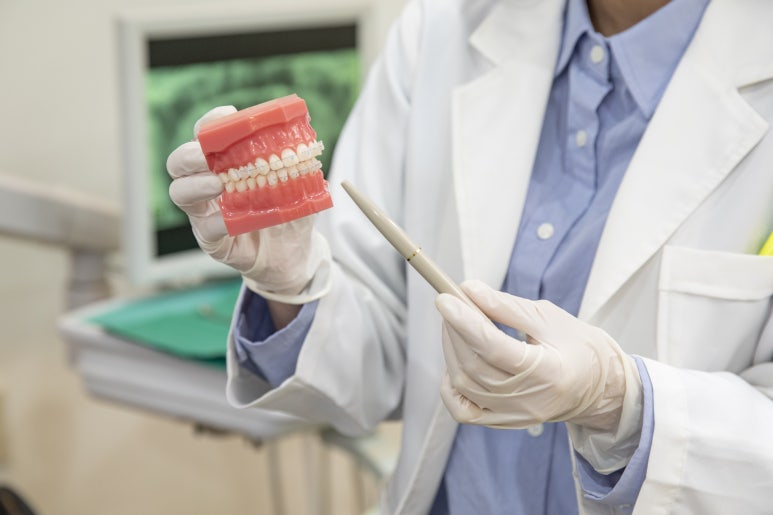
Rubber bands are important, but there is an even more important stage.
That is the later stage of treatment.
At this stage, the focus is no longer on simply aligning the teeth, but on fine-tuning the overall bite. That is why wearing rubber bands properly at this time can make a difference in whether the result is neatly finished.
Also, if your treatment is taking longer than expected, it may be worth checking how well you are wearing your rubber bands. In many cases, simply following this one part properly can change the pace of treatment.

What is the key point of orthodontic treatment shared by S Leader Dental Hospital in Seongdong-gu?
Orthodontic treatment is not completed by appliances alone; good results are achieved when the patient also takes part. Among these, wearing rubber bands is the part where the patient’s role is especially important.
At S Leader Dental Hospital in Seongdong-gu, we do not stop at simply attaching appliances. We also guide patients on how to manage them in daily life. The reason we explain in detail how to wear the rubber bands, how often to replace them, and what to do when they feel uncomfortable is exactly because of this.
It may feel a little bothersome and inconvenient right now, but that process adds up and leads to better results. Please remember that this is a necessary part of improving the quality of orthodontic treatment, and if you wear them consistently, you can achieve a much more satisfying result 😊





Seongdong-gu dental clinic :: S Leader Dental Hospital