Hello, this is S Leader Dental Hospital, a Gunjayeok Dental Clinic that is celebrating its 22nd anniversary this year.
Even after completing orthodontic treatment, we often see patients who visit with concerns such as, “It feels like my teeth are gradually shifting again,” or “My bite feels more uncomfortable than before.”
Orthodontic treatment takes a significant amount of time and cost, so it is natural to hope that it ends after one course. However, in reality, due to various reasons, changes in tooth alignment or bite over time are more common than many people expect.
At times like this, many people wonder, “Do I need orthodontic treatment again?” or “Is it okay to leave it as it is?”
What matters is not deciding based only on visible changes, but accurately diagnosing the current condition and checking whether it meets the criteria for retreatment.
Retreatment is not a treatment that must always be done. It is a process that should be carefully decided by comprehensively considering both functional and aesthetic criteria.
Today, for those considering retreatment at S Leader Dental Hospital, Gunjayeok Dental Clinic, we will explain in detail the criteria that must be checked when restarting orthodontic treatment.
When is retreatment needed?
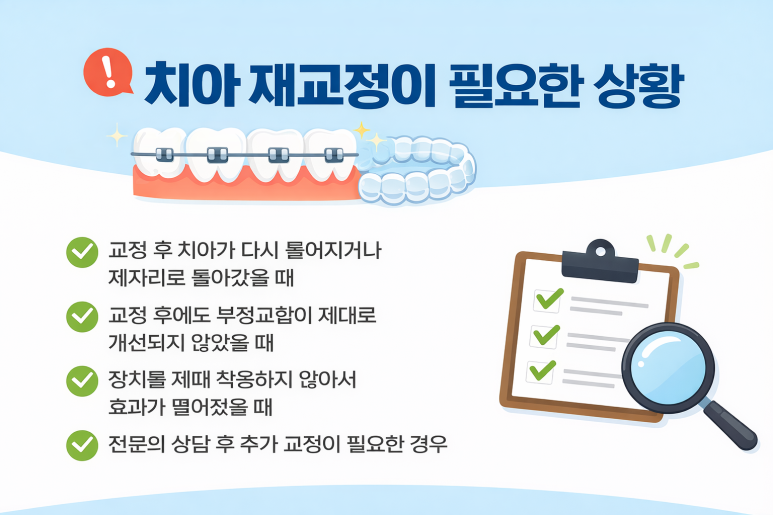
When considering retreatment, the first thing to distinguish is whether it is simply something that is bothering you or whether it is truly a condition that requires treatment. After orthodontic treatment, even small changes can feel significant, so it is important to be cautious about deciding on retreatment based only on minor visible shifts or how it feels.
In reality, if there is no problem with chewing and there is no major visible change, it is not necessarily necessary to undergo orthodontic treatment again.
However, if the teeth have noticeably shifted, if there is discomfort when chewing, or if you feel continuous pressure on a specific tooth, this is not just a minor inconvenience; it may affect future dental health, so it is advisable to consider retreatment.
In the end, rather than deciding simply because “it looks bad,” it is important to determine whether there is actually a functional problem and whether the condition can remain stable in the future.
If this applies, you should consider retreatment.
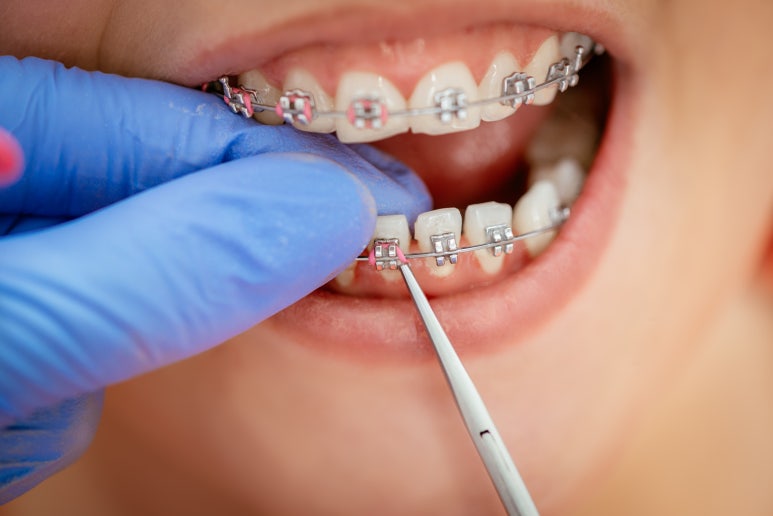
One representative situation that requires retreatment is relapse, where the teeth shift again. After orthodontic treatment, if a retainer is not worn adequately, or depending on a person’s habits and the condition of the teeth and gums, the teeth may gradually try to move back toward their original position over time.
In particular, changes in the front teeth are relatively easy to notice, so many patients feel uncomfortable because of them.
Retreatment should also be considered when there is a problem with the bite, meaning how the teeth fit together. If the force is concentrated on only certain teeth when chewing, or if the left and right sides are not balanced, caution is needed because this can lead to tooth wear, temporomandibular joint problems, and more, beyond simple discomfort.
In addition, cases where speech becomes awkward or chewing function feels uncomfortable can also be seen as functional problems, and situations where satisfaction drops significantly in terms of aesthetics can also be a reason to consider retreatment. However, since aesthetic concerns vary greatly from person to person, it is important to confirm both expectations and realistic possibilities for improvement through 충분한 consultation.
Do you have to start from the beginning again?
Many people considering retreatment feel burdened by the thought, “Do I have to start all over from the beginning?” However, not every retreatment requires restarting full orthodontic treatment from scratch.
Depending on the current condition of the teeth, partial orthodontic treatment may be enough to achieve improvement, and in some cases, the desired results can be obtained in a relatively short period with simpler appliances.
For example, if only a portion of the front teeth is misaligned, treatment can be carried out by adjusting only that area without affecting the overall bite. In some cases, clear aligners can also be used to minimize inconvenience in daily life while treatment is in progress.
Therefore, to reduce the burden of retreatment, rather than thinking, “I have to start over from the beginning,” it is important to determine through professional diagnosis what the most efficient method is based on the current condition.
What criteria must be checked before retreatment?
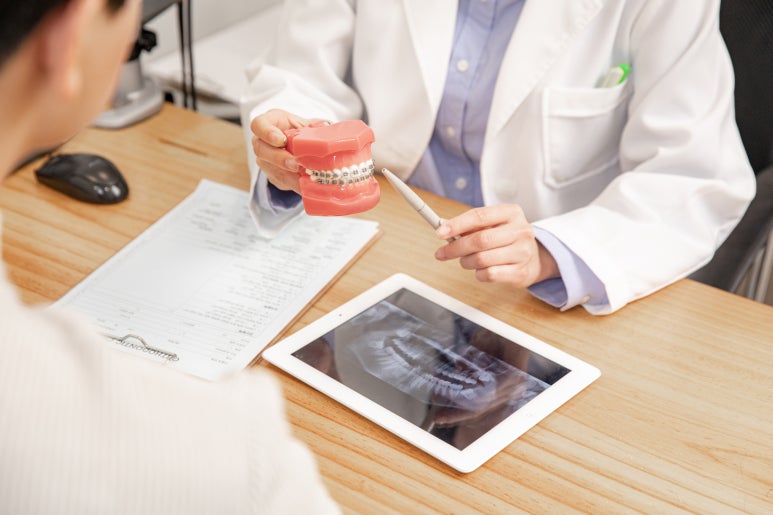
Before deciding on retreatment, several important criteria must be checked.
The most basic is an accurate diagnosis of the current condition of the teeth. This is because the treatment direction can change completely depending on whether the problem is simply tooth alignment or whether it is accompanied by bite or structural issues.
The condition of the gums and alveolar bone is also a very important factor. Since retreatment involves moving teeth that have already been moved once, whether the supporting bone and gums are healthy has a major effect on the feasibility and stability of treatment. If the gums are in poor condition, gum treatment may be needed before orthodontic treatment.
In addition, it is important to analyze what caused the current condition in the previous orthodontic treatment. Rather than simply looking at the result and proceeding with retreatment, accurately identifying the cause of relapse helps prevent the same problem from recurring.
Whether a retainer was worn and lifestyle habits are also important checkpoints, and if these are not improved, the same problem may occur again even after retreatment.
Retreatment period and methods: how do they differ?
The treatment period and methods for retreatment can vary greatly depending on the individual’s condition.
If the case is simpler than the initial orthodontic treatment, treatment may be possible in a relatively short period, but if bite problems also need to be corrected, the treatment may take about as long as the initial orthodontic treatment.
There are also various treatment options. Recently, aesthetic appliances such as clear aligners have become more common, and they can be a suitable choice for office workers or for those who want to minimize inconvenience in daily life.
What matters is not the treatment method itself, but establishing an appropriate plan that fits the current condition, and for that, sufficient consultation and a precise diagnosis must come first.
If you want to prevent the teeth from shifting again after retreatment, do this
The most important part after retreatment is how stably the treatment results are maintained. No matter how well orthodontic treatment is completed, if follow-up care is not done properly, the teeth still have a tendency to move back to their original position, and relapse can occur.
To prevent this, the most basic measure is wearing a retainer, and it is more important than anything else to wear it consistently and correctly for a certain period of time. In particular, the front teeth are an area where relapse can appear relatively easily, so it is necessary to strictly follow the instructed wearing time and method at the beginning.
In many cases, relapse is caused by insufficient retainer use or reduced wearing time, so it is not advisable to stop wearing it on your own with the thought, “It should be fine now.” A retainer should be seen not as a simple auxiliary device, but as an extension of orthodontic treatment. It is a very important step in completing and stabilizing the treatment results.
Also, everyday habits can be an important factor that affects tooth alignment. Habits such as clenching your teeth, grinding your teeth, chewing only on one side, or resting your chin on your hand place continuous pressure on specific areas and can lead to tooth movement. If these habits continue, the same problem may repeat even after retreatment, so better results can be expected only when habit improvement is carried out together with treatment.
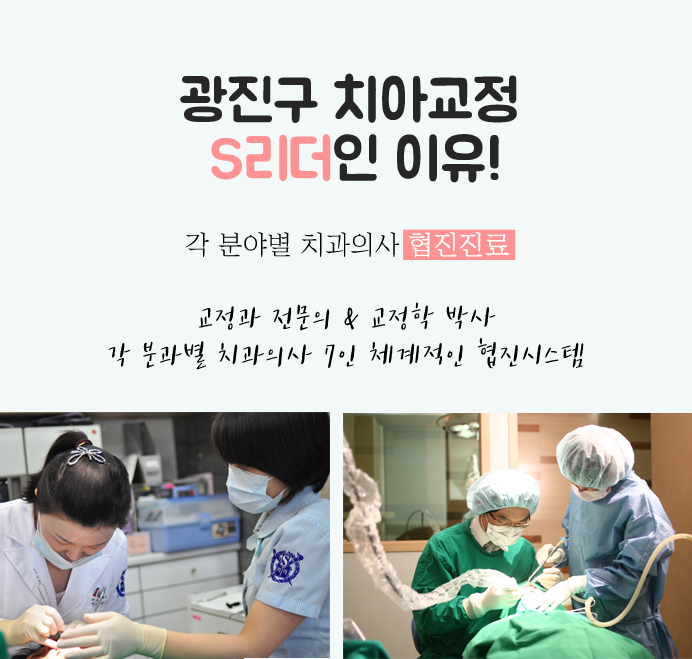
The right criteria for retreatment with S Leader Dental Hospital, Gunjayeok Dental Clinic
Orthodontic treatment is not a treatment that ends all at once; rather, over time, it can change a little depending on the position of the teeth and daily habits. That is why, in some cases, an additional adjustment process may be needed.
The most important thing is to accurately check what the current condition of your teeth is and decide through 충분한 consultation whether treatment is truly needed again.
At S Leader Dental Hospital, Gunjayeok Dental Clinic, for patients considering retreatment, we do not simply recommend treatment. Instead, we provide treatment guidance only when it is truly necessary, based on an accurate diagnosis of the current condition.
We also comprehensively analyze the previous treatment process and the current condition, establish a customized plan that considers the cause of relapse, and carefully manage the patient so that stable results can be maintained even after treatment.
If you are considering retreatment in Konkuk University area, rather than worrying about it alone, feel free to visit us, check your current condition accurately, and maintain healthy, stable teeth in the most appropriate way.
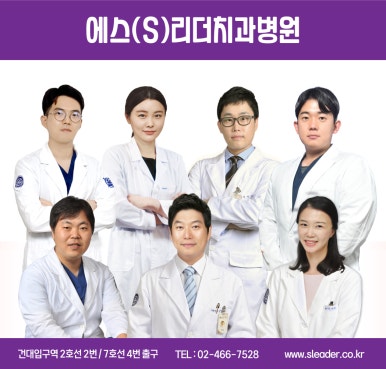
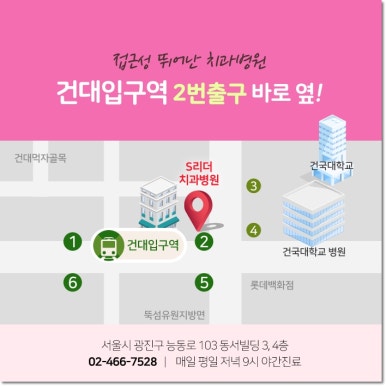

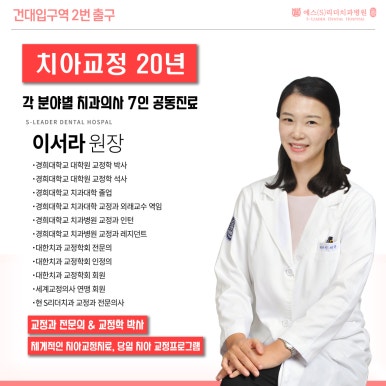

Gunjayeok Dental Clinic :: S (Leader) Dental Hospital