Hello, we are S Leader Dental Hospital, a Guwi-dong dental clinic marking its 22nd anniversary since establishment this year.
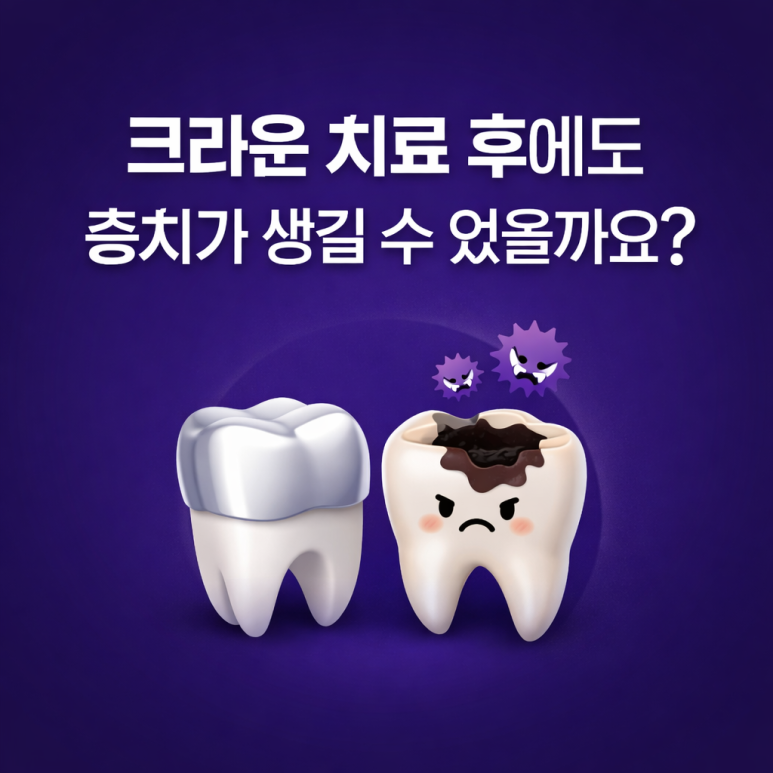
Many people who have received crown treatment at a dental clinic share one common thought: “Now that it’s been crowned, this tooth won’t have any more problems, right?” In fact, crown treatment is a very effective way to protect damaged teeth and restore function, so it is only natural to feel relieved right after treatment.
However, as time passes, many people come back to the clinic after feeling discomfort again. There may be discomfort when chewing, sensitivity, or even pain. The most common question at this point is:
“Since I already have a crown, can a cavity still develop inside it?”
To answer first: yes, a crowned tooth can still develop a cavity. Many people misunderstand this, so it is important to understand it correctly.
Today, at S Leader Dental Hospital, a Guwi-dong dental clinic, we will take a closer look at why cavities can still occur after crown treatment and what to watch out for.
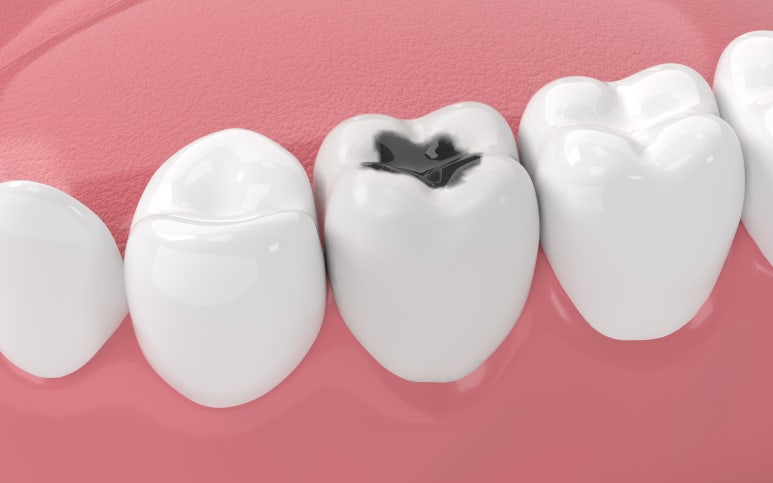
Can a crowned tooth develop cavities?
Simply put, a crown acts like a “cap” that covers and protects the tooth. Because it firmly surrounds the visible part, it clearly has the advantage of protecting the tooth from external irritation.
But just because a tooth has a crown does not mean the tooth underneath is completely safe. Inside the crown, the natural tooth is still there.
Over time, a very small gap can form where the crown and tooth meet. Although it is made to fit precisely at first, slight changes can occur with use.
If bacteria enter through that gap, a cavity can develop inside even though the outside looks fine.
Why cavities can develop under a crown
There are several reasons a crowned tooth can develop cavities. Once you understand these, it becomes easier to see why care is
important.
First, the most common cause is the boundary between the crown and the tooth. Over time, if the bonding weakens or a micro-gap forms, bacteria can enter through it. This gap is often difficult to see with the naked eye, so from the patient’s perspective, the cavity may progress without any noticeable problems.
Another cause may be that the cavity was not completely removed during the initial treatment. A very small amount of decay may remain and slowly progress over time until it eventually causes symptoms.
Changes in gum condition are also an important factor. As people age or develop gum disease, the gums may recede, exposing the crown margin that was originally covered. This creates an environment where bacteria can more easily reach the area.
In addition, if food frequently gets trapped in the structure or the location is difficult to clean, the risk of cavities increases even more. In particular, if the spaces between teeth are not properly cared for, problems can progress internally even when the outside looks clean.
As such, cavities in crowned teeth are often not caused by just one reason, but by a combination of several factors.

Watch for these symptoms.
Cavities that develop beneath a crown are not visible right away, so it is important to suspect them through small symptoms.
For example, if one specific area feels sharp or uncomfortable when chewing, it may not simply be a temporary issue but a sign that something is wrong inside the tooth. Also, if you have become more sensitive than before to cold or hot foods, there may be changes starting inside.
Swelling of the gum around the crown or bleeding when brushing also requires attention. It may simply be a gum problem,
but it could also be inflammation caused by decay inside.
Also, if food keeps getting stuck in the same area or you continue to notice bad breath, it is better to have it checked rather than dismiss it lightly.
These symptoms may not seem significant on their own, but if several appear together, there is a high possibility that a problem is progressing inside the tooth.
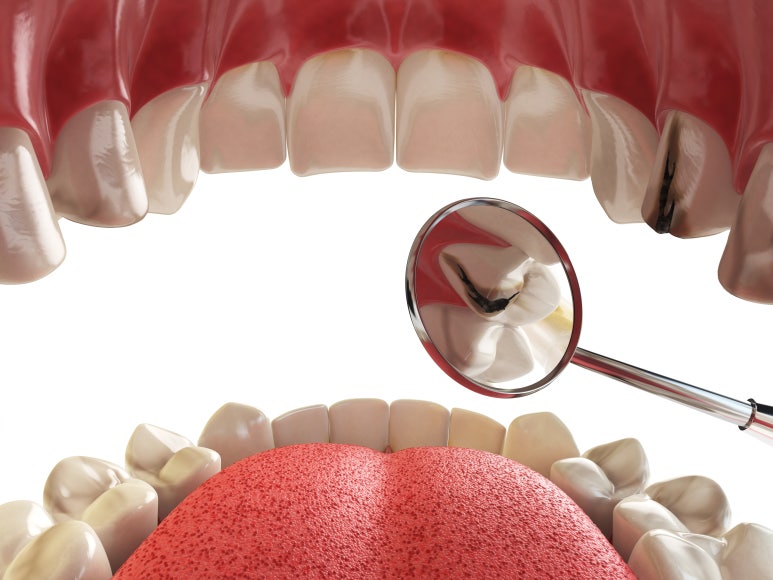
What happens if a crowned tooth is left untreated?
In the early stages, there is often little discomfort, so many people think, “It’ll get better after a while,” and leave it alone. But decay progressing under a crown does not stop just because it cannot be seen; it continues just like ordinary cavities.
If the decay becomes deeper, it can eventually affect the nerve. At that stage, simple retreatment may no longer be enough, and root canal treatment may be needed. Treatment also takes longer, and the burden of cost and time increases.
In more severe cases, it may become difficult to preserve the tooth itself, leading to extraction. What began as a small problem can expand into a much larger treatment scope if it is not addressed at the right time.
Therefore, if you notice warning signs in a crowned tooth, it is most important to check it before the symptoms get worse.
How does treatment change?
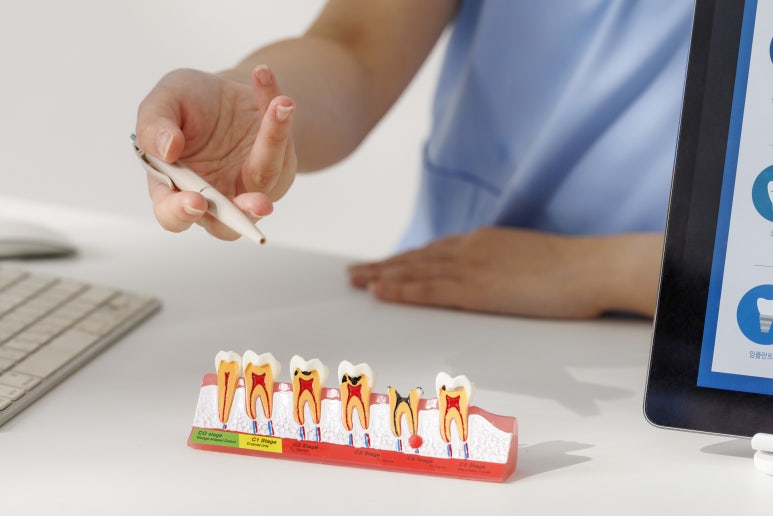
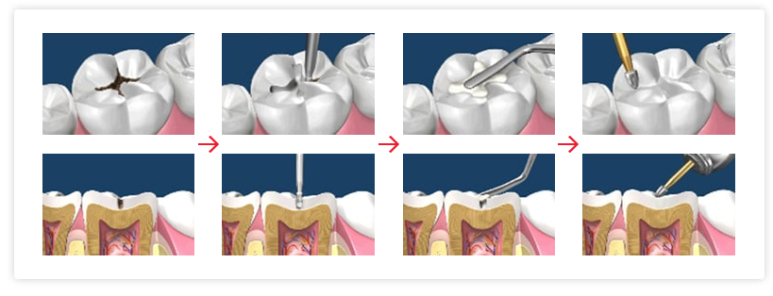
If a problem occurs in a crowned tooth, the first step is to accurately determine the current condition. Since it is difficult to judge from the outside, the crown may need to be removed to examine the internal condition, depending on the situation.
If the cavity is not extensive, treatment may proceed by making and placing a new crown. However, if the decay is deep enough to affect the nerve, root canal treatment is performed first, followed by prosthetic retreatment.
If the tooth damage is too severe to recover, extraction may need to be considered, and afterward, alternative treatment such as an implant may be required.
As you can see, even though it may be called the same “crown problem,” the treatment direction can be completely different depending on the condition, which is why an accurate diagnosis is most important.
How to prevent recurrence
After crown treatment, maintenance becomes even more important. Rather than feeling reassured just because a crown is in place, it should actually be managed more carefully to be used for a long time.
The most basic step is proper brushing. In particular, because the area between the crown and the tooth, as well as the spaces between teeth, can be difficult to clean with a regular toothbrush alone, it is recommended to use dental floss or interdental brushes as well.
It is also important to detect hidden problems early through regular checkups and scaling. If a problem is found at an early stage, it can often be resolved easily.
If food frequently gets trapped in a certain area, it is better not to leave it alone and to have it checked. If you grind your teeth or have strong chewing habits, management for that is also needed.
Guwi-dong Dental Clinic, S Leader Dental Hospital
Even the hidden parts need to be checked carefully.
Crown treatment is an important treatment that helps protect damaged teeth and allows them to be used for a long time, but it is important to remember that this is not the end—it is the beginning of maintenance. Even if the outside looks fine, problems can progress inside, so not missing even small changes makes a big difference in keeping your teeth for a long time.
In particular, because there are many parts of a crowned tooth that patients cannot easily check on their own, regular examinations are necessary to carefully look even at the unseen areas.
At S Leader Dental Hospital, a Guwi-dong dental clinic, we do not simply treat visible problems. We provide treatment based on an accurate diagnosis of the current condition while also considering your future oral health. We also provide detailed guidance on how to maintain stability after treatment, so if you feel even a small discomfort, please feel free to visit and get it checked.
Since teeth are difficult to restore once damaged, checking a little earlier and responding appropriately can be the best treatment.





Guwi-dong Dental Clinic :: S (Leader) Dental Hospital