Hello, we are S Leader Dental Hospital, a Gwangjin-gu dental clinic marking its 22nd anniversary this year.

“I’ve decided to get braces, but there are so many types that I don’t know which one to choose.”
This is one of the most common concerns among patients who visit our clinic.
If you search online even a little, you’ll find a variety of options such as metal braces, ceramic braces, Clippy C, clear aligners, and lingual braces, with each one described as having different advantages. That often makes the choice even harder. Since factors like cost, treatment duration, and aesthetics all have to be considered at the same time, it is not easy to make a decision through simple comparisons alone.
People often hear that “this orthodontic method is the best,” but information like that can actually cause more confusion. Orthodontic treatment is not about which method is better in general, but rather about which one fits the individual’s dental condition and lifestyle best.
Today, for those considering orthodontic treatment at S Leader Dental Hospital, Gwangjin-gu dental clinic, we will go through—step by step and in the same order we often explain during consultations—what criteria to use when choosing braces, how each orthodontic method differs, and how to determine which option is right for you.
 Why Orthodontics Is About the 'Right Method' Rather Than the 'Best Method'
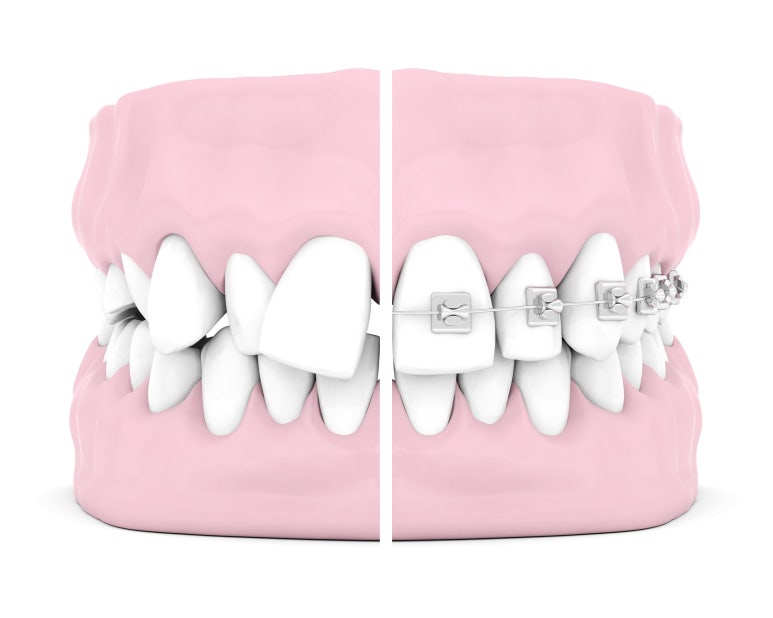
Orthodontic treatment is often thought of simply as a way to straighten teeth, but in reality, it is a treatment that must consider not only tooth alignment, but also how the upper and lower teeth fit together, the position of the jaw, and even the overall balance of the face.
Even if the teeth look similar on the outside, the direction of movement, the distance to be moved, and the force required can all be different when you look at the internal structure. For example, in cases with severe crowding, space may need to be created. If protrusion is also present,
plans to move the teeth backward may need to be considered as well. On the other hand, if the issue is simply alignment, there are cases where it can be improved with relatively straightforward orthodontic treatment.
Because the treatment approach changes depending on the condition, there is no single “correct” orthodontic method that applies to everyone. What matters is not choosing a trendy treatment, but selecting the method that can move the teeth most efficiently and safely in the current condition.
 Let’s Look at the Types of Orthodontic Treatment
There are many orthodontic methods, but broadly speaking, they can be divided into two categories: braces attached to the outside of the teeth and braces that are less visible.
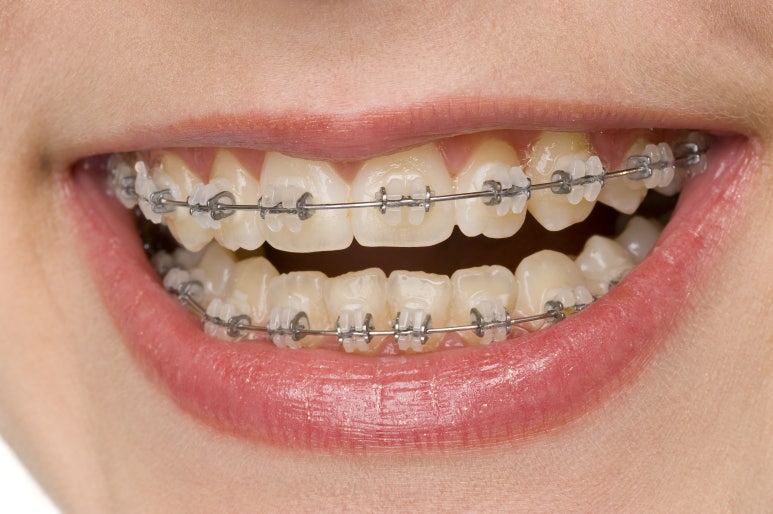
The most basic type, metal braces, involves attaching metal brackets to the outer surface of the teeth. Because they have been used for a long time, they can be applied to a wide range of cases and allow precise control of tooth movement. In particular, they are a method that can be expected to produce stable results when a large amount of movement or complex orthodontic correction is needed. However, the fact that the appliances are clearly visible can feel like an aesthetic burden.
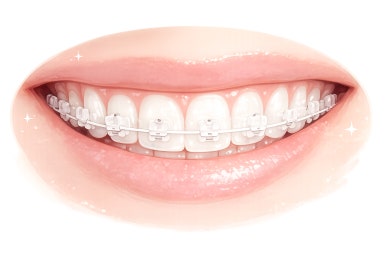
Ceramic braces were developed to address this drawback by making the brackets from a material similar in color to the teeth. Since they are less noticeable than metal when viewed from the outside, they can be a suitable option for those who care about appearance. However, the material
characteristics may result in a slightly thicker feel or a difference in cost, which should also be considered.

Clippy C braces use a self-ligating system that secures the wire with clips rather than the rubber ties used in conventional braces. This reduces friction, may make discomfort feel relatively less, and tends to allow slightly longer intervals between visits. Recently, more people have been choosing this option while considering both convenience and efficiency.
Clear aligners differ from traditional braces in that the appliances can be removed. Teeth are moved by replacing transparent aligners at regular intervals, and their biggest advantage is that they are almost invisible. Since they can be removed when eating or brushing, daily convenience is high. However, if the wearing time is not maintained, the planned movement may not occur, and because they are not suitable for every case, an accurate diagnosis is needed in advance.
Lingual braces are attached to the inside of the teeth, making them completely invisible from the outside. They are chosen when aesthetics are very important, but in the beginning, it may take time to adapt to speech changes or the feeling of a foreign object, and the cost burden is relatively high.
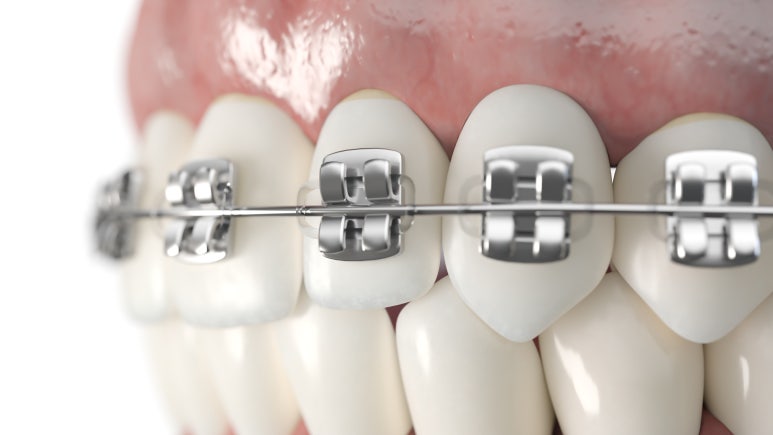
When Choosing Braces, Set the Criteria First Rather Than Simply Comparing Options
When choosing an orthodontic method, many people first consider aesthetics. Of course, this is an important factor, but there are many other aspects to consider during treatment, so it cannot be the only basis for a decision.
First, it is important to check how much movement is needed based on the current dental condition. If a lot of movement is required, the available appliance options may be limited. On the other hand, if the case is relatively simple, it may be easier to choose a more aesthetic appliance that is less noticeable.
Lifestyle and daily routine should also be considered. If you meet many people or work in a job where appearance is important, a less noticeable orthodontic method may feel less burdensome. Conversely, if you have a busy daily schedule and find it difficult to spend much time on maintenance, a fixed orthodontic method may be a more stable choice than one that is removed and reinserted.
In particular, with clear aligners, some people choose them because they seem “convenient,” but in reality, they only produce the desired results if you wear them for enough hours each day. That is why it is necessary to consider your lifestyle and whether you can manage them properly.
What ultimately determines the result is 'diagnosis and treatment planning.'
Orthodontic treatment may seem like simply choosing an appliance, but in reality, the process of accurately diagnosing your dental condition and creating a movement plan that fits it is far more important.
Even when the same orthodontic appliance is used, the result can vary significantly depending on the direction and extent of tooth movement.
Even if the teeth look similar on the outside, the treatment method changes depending on the bite condition inside and the cause of the problem. Rather than choosing based only on the type of braces, it is necessary to first carefully analyze the current condition.
If treatment begins without going through this process properly, the treatment period may become longer than expected, or the results may differ from what was intended,
so diagnosis and planning at the initial stage are more important than anything else.
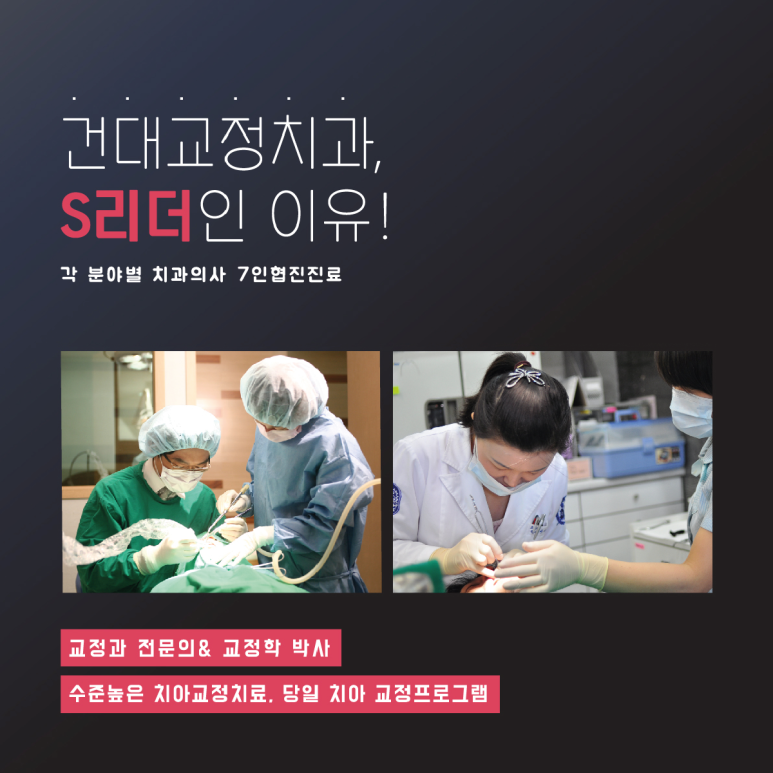 Gwangjin-gu Dental Clinic, S Leader Dental Hospital
We help you find the orthodontic treatment that is right for you from the very beginning.
Orthodontic treatment is not simply about choosing an appliance; it is a process of setting the direction that matches your dental condition and lifestyle. That is why, at first, having more information can actually feel more confusing, but as you sort through the criteria one by one, the direction often becomes much clearer than expected.
In particular, orthodontics is not a treatment that ends quickly; it is a process that continues steadily over a certain period of time. Because of that, the choice made at the beginning can have a major impact on satisfaction later on. Rather than deciding solely based on what is visible or on cost, it is important to consider together what treatment is most efficient for the current condition and whether you can maintain and manage the process properly.
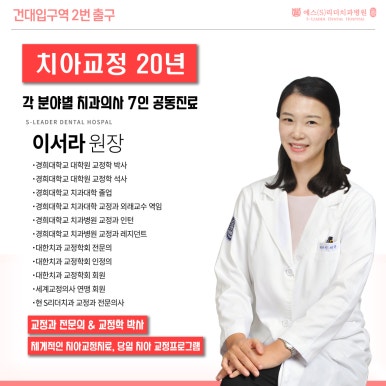
At S Leader Dental Hospital, Gwangjin-gu dental clinic, rather than simply recommending a specific orthodontic method, we accurately diagnose the patient’s dental condition and consider their lifestyle as well, then guide them toward an orthodontic plan that can proceed steadily without overburdening them. We focus not only on explaining the types of braces, but also on helping patients fully understand the changes and management methods expected during treatment.
If you are considering orthodontic treatment, rather than comparing various pieces of information on your own and making a decision, it may be a good start to accurately check your current condition and
work out the direction that suits you together with a specialist.
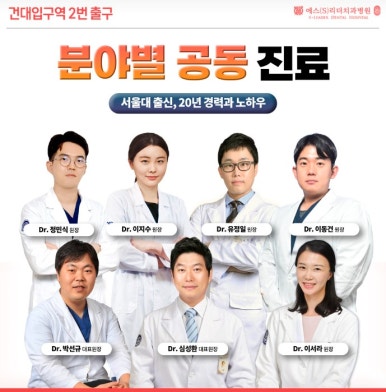

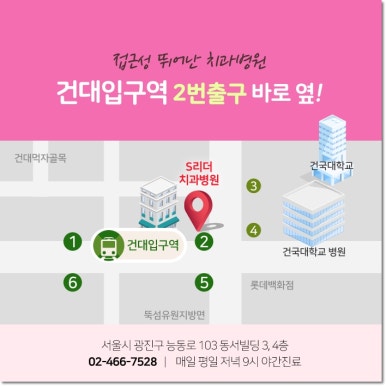
 Gwangjin-gu Dental Clinic :: S(S) Leader Dental Hospital