Hello, this is S Leader Dental Hospital, a Konkuk University dental clinic that is celebrating its 22nd anniversary this year.
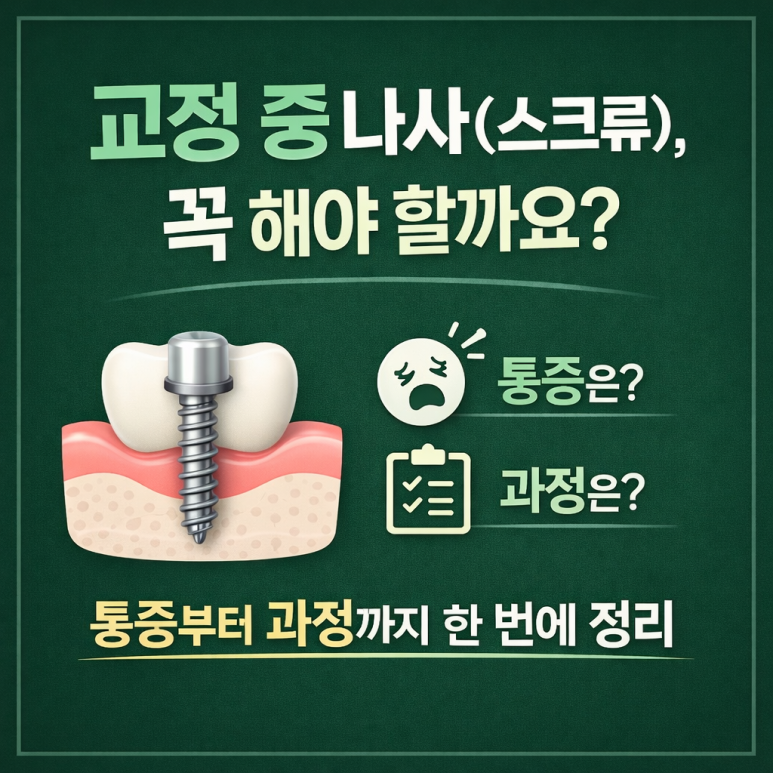
When you receive orthodontic consultation, many people are surprised when they hear, “It looks like we need to place a mini screw.”
You may have thought that you only needed to wear orthodontic appliances, but when the idea of inserting a “screw” suddenly comes up, anyone would understandably feel uneasy.
In particular, the image created by the expression “a screw in the gums” can make it feel even more frightening than it really is.
It naturally leads to thoughts like: Isn’t this something that is done like surgery? Will it hurt a lot? What if something goes wrong?
But in reality, it is not as burdensome a procedure as patients often imagine, and it is an auxiliary treatment performed selectively only when needed during orthodontic treatment.
In fact, there are many cases where it plays an essential role in moving teeth to the correct position, so it is much more important to understand accurate information than to rely on vague fear.
Today, at S Leader Dental Hospital, a Konkuk University dental clinic, we will explain in detail one by one the points patients are most curious about regarding the mini screws used during orthodontic treatment.
 What exactly is an orthodontic mini screw?
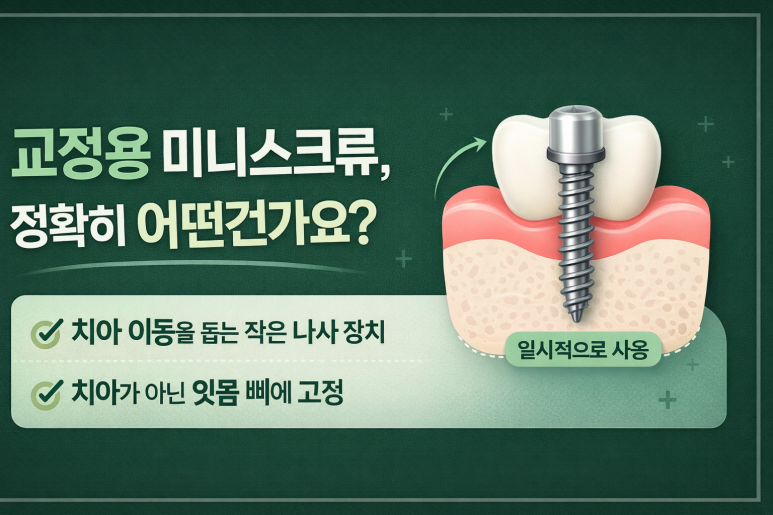
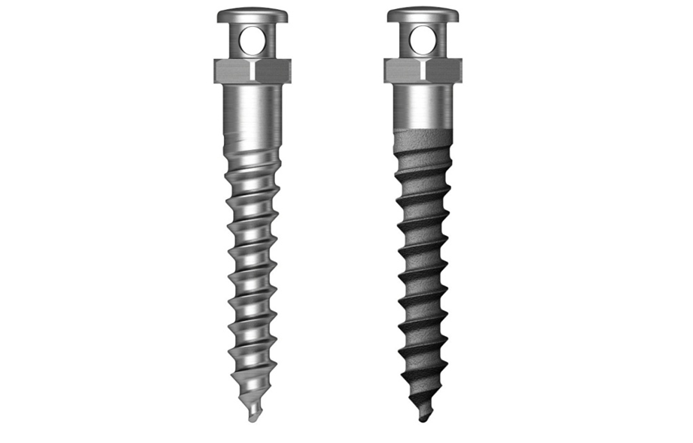
A mini screw is a very small screw-shaped device used as an orthodontic auxiliary appliance by fixing it into the jawbone rather than the tooth.
It is small even to the eye, and because it is thin, its structure is less burdensome than many people expect.
Many people mistakenly think it is similar to an implant, but their purposes are different. An implant is a permanent treatment that stays in place for a long time to replace a missing tooth, whereas a mini screw is a temporary device used only for a certain period to help move teeth.
In other words, once orthodontic treatment is finished, it is no longer needed and can be removed easily, and in most cases there is no major scarring after removal.
In this way, a mini screw is not a device that adds to the burden of treatment; rather, it helps make the direction and outcome of treatment more accurate.
 Why do we need to place a screw at all?
From the patient’s perspective, it is natural to think, “If there’s a way to avoid it, I’d rather not do it.”
That’s why many people ask, “Can’t I just do orthodontic treatment without a screw?” In fact, it is not absolutely necessary in every case.
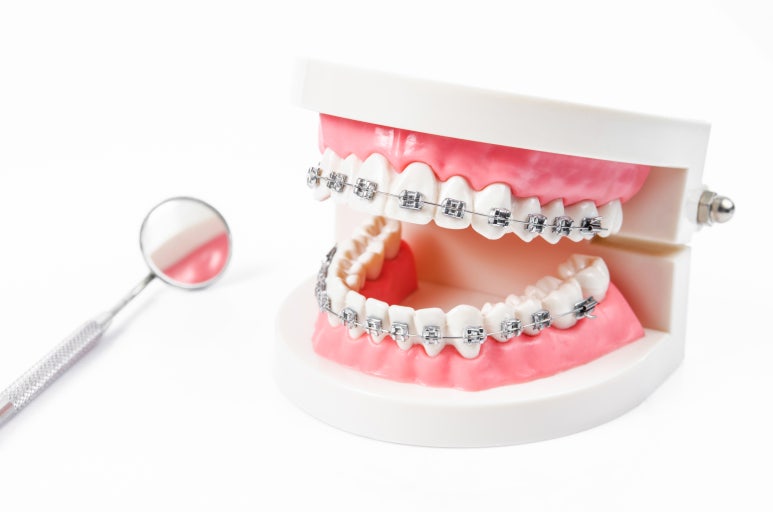
However, when teeth need to be moved far backward, when protruding mouth needs to be improved, or when the alignment of the teeth is asymmetrical, there can be limitations with conventional orthodontic appliances alone.
In such cases, using a mini screw allows the teeth to be pulled from a fixed point of reference, minimizing unnecessary movement of other teeth and enabling precise movement in the desired direction.
As a result, the precision of treatment increases, and it becomes possible to achieve results closer to the planned orthodontic goals.
Depending on the case, it can also positively affect treatment time, so it is important to understand it not simply as an “additional procedure” but as a “choice for better results.”
 Is the screw placement procedure complicated?
Unlike what many people imagine, the actual screw placement process is relatively simple.
First, the area is given a light local anesthetic, and then a small mini screw is fixed into the jawbone.
The total procedure usually takes about 5 to 10 minutes, so it is fairly short, and since it is not a surgery that requires a large incision or stitches, the burden is minimal.
That is why, even after the procedure is finished, most people can return to daily life right away without needing a long rest.
At first, the phrase “placing a screw” may sound heavy, but in reality, it is much easier to understand if you think of it as a simple dental procedure.
Also, because the entire process is explained thoroughly before the procedure, the anxiety you initially felt often decreases significantly.
Isn’t it really not painful? How much does it hurt?
The part that people worry about most is pain.
To give the conclusion first, the pain is much less than most people expect.
You may feel a slight sting when the anesthesia is administered, but this is similar to ordinary dental treatment. Once the anesthesia has taken effect sufficiently, most people hardly feel any pain during screw placement.
After the procedure, as the anesthesia wears off, you may feel some soreness or a foreign-body sensation, but this usually decreases gradually within 1 to 2 days and does not significantly affect daily life.
Some individuals may feel it more sensitively, but most people say, “It was better than I thought.”
So rather than postponing treatment out of vague fear of pain, we recommend hearing an accurate explanation of how much discomfort to expect and then making a decision.
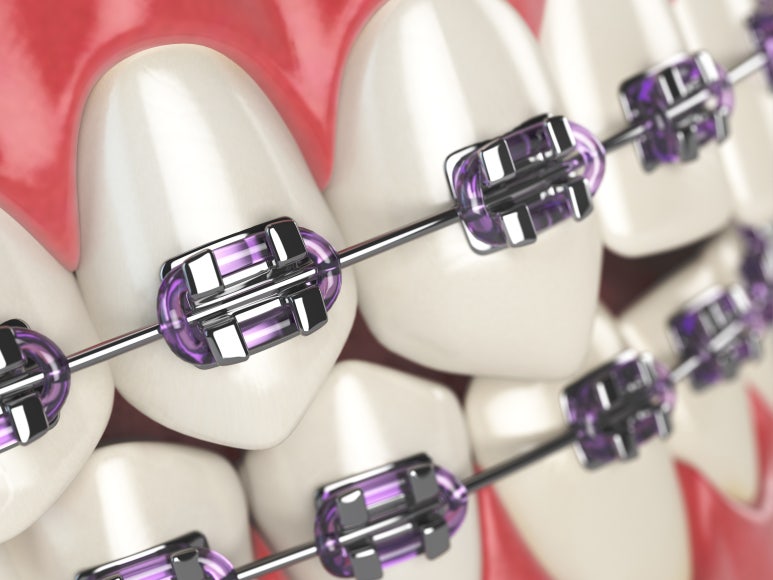 How long does the screw stay in place? Is care important too?
A mini screw remains in place during the period when tooth movement is needed, and it is usually used for several months, and in some cases for more than a year.
This varies depending on the patient’s dental condition and orthodontic plan, so there are individual differences.
Maintenance itself is not very difficult, but basic oral hygiene, such as thorough brushing, is more important than anything else.
Screw surroundings are structures where food can easily get trapped, so you need to brush carefully, and using auxiliary tools if necessary can also help.
In addition, it is better to avoid foods that are too hard or irritating at first, and if you follow the medical staff’s instructions and precautions, the screw often remains stable.
Small differences in care can affect the duration of retention and stability, so it is important not to take this lightly.
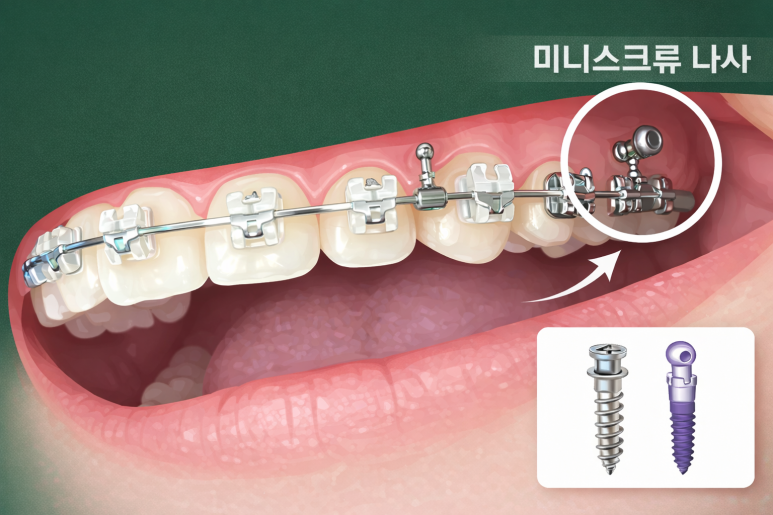 What happens if the screw falls out? Do I have to do it again?
Many people worry, “What if it falls out—won’t that be a big problem?” but in reality, screw loosening or detachment is not an uncommon situation.
If the screw becomes loose or falls out, the condition of that area is checked, and if necessary, it is reinserted in the same or a different location.
This process is also simple, just like the first placement, so you do not need to feel too burdened.
In most cases, it does not greatly affect the overall orthodontic process, and if handled properly, there is often no problem maintaining the treatment plan.
What matters is that if you feel something is wrong, you should visit promptly and get it checked rather than leaving it alone.
Are there any side effects or risks?
Just as every medical procedure has a certain level of possibility, mini screws can also involve situations such as inflammation or detachment.
However, these problems can usually be prevented to a sufficient extent through proper care and procedural accuracy.
In particular, accurate judgment of the screw placement position, angle, and gum condition is important, and the experience of skilled medical staff has a major impact on safety.
Also, if the patient maintains good oral hygiene, the likelihood of inflammation can be significantly reduced.
Ultimately, what matters is how to maintain it stably for a long time.
How do you decide between cases where screw placement is definitely needed and cases where it is not?
A mini screw is not a treatment that is applied in the same way to every orthodontic patient, so whether it is needed must be decided through an individual diagnosis.
In some cases, good results can be achieved without a screw, but in others, tooth movement in the desired direction is only possible if a screw is used.
In other words, the issue is not “whether it must be done or not,” but rather “whether it is necessary for my condition.”
To judge this accurately, treatment planning based on precise examinations and analysis is necessary, rather than simple visual inspection.
Therefore, it is best to make the decision after sufficient consultation and explanation.
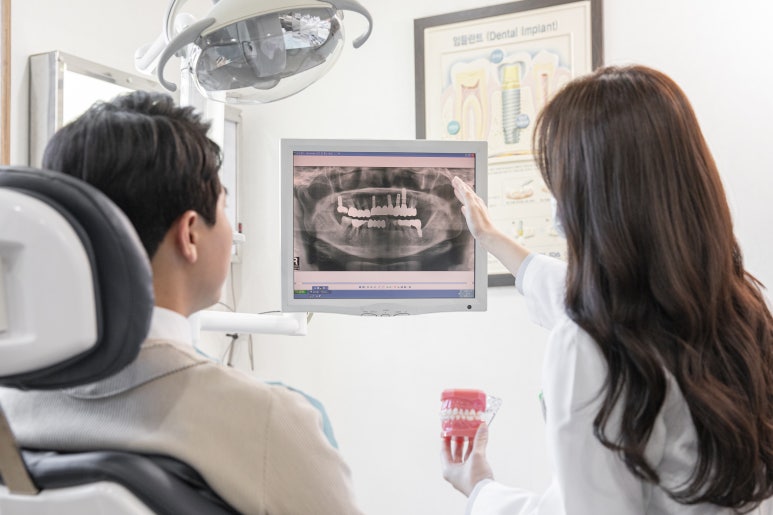 How is it handled at S Leader Dental Hospital?
At S Leader Dental, when deciding whether to place a mini screw, we take a cautious approach by comprehensively considering the patient’s current condition and orthodontic goals.
We minimize unnecessary procedures as much as possible, and when needed, we proceed stably based on accurate positioning and planning.
We also provide careful treatment and thorough explanations to reduce pain and burden during the procedure.
Orthodontic treatment is not just about aligning the teeth neatly; it is a process that must consider both function and aesthetics, which is why these details make a big difference in the outcome.
Careful treatment of even the smallest details ultimately leads to greater overall satisfaction.
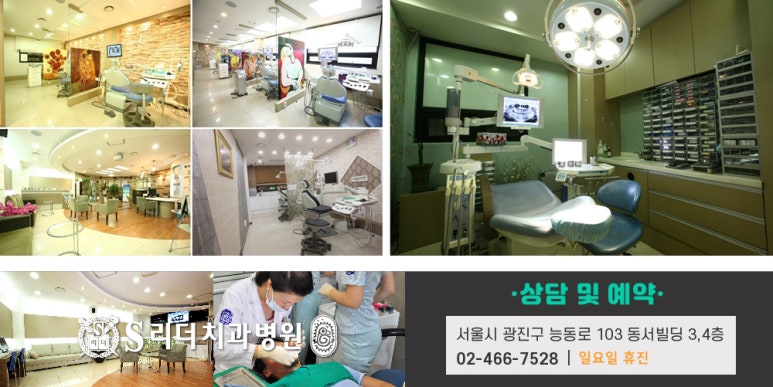
If you are with Konkuk University dental clinic, S Leader Dental Hospital,
your orthodontic treatment becomes much more comfortable.
Orthodontic treatment is not simply about making the teeth straight; it is a process that must also consider overall balance, function, and results that will be maintained over time.
Because each small element affects the outcome, auxiliary devices such as mini screws are also most important when used accurately only when necessary.
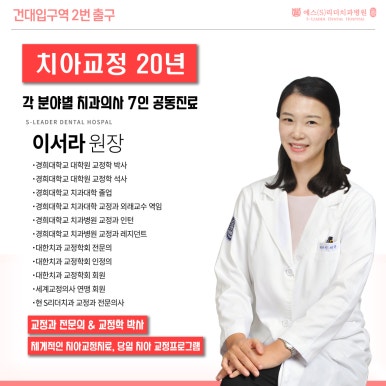
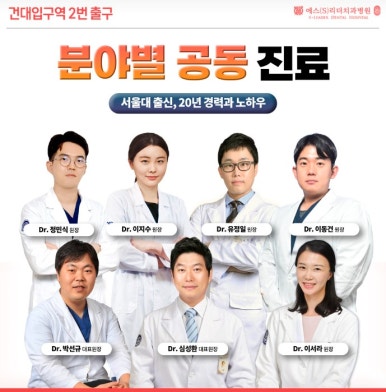
At Konkuk University dental clinic, S Leader Dental, we carefully analyze each patient’s condition and apply mini screws only when truly needed, while also planning the placement position and direction in detail to create more stable orthodontic results.
In addition, to reduce the burden of the procedure, we provide sufficient explanations and attentive treatment, so even those starting orthodontic treatment for the first time can continue with treatment relatively comfortably.
If you are considering screw placement during orthodontic treatment, or if you are wondering, “Is this treatment really necessary for me?”, it is better to confirm it through an accurate diagnosis rather than deciding on your own.
Konkuk University dental clinic, S Leader Dental, will work with you for a more stable and satisfying orthodontic outcome.

 Konkuk University dental clinic :: S (S) Leader Dental Hospital