Hello, we are S Leader Dental Hospital, a Gwangjin-gu implant clinic, now celebrating our 22nd anniversary since our founding.
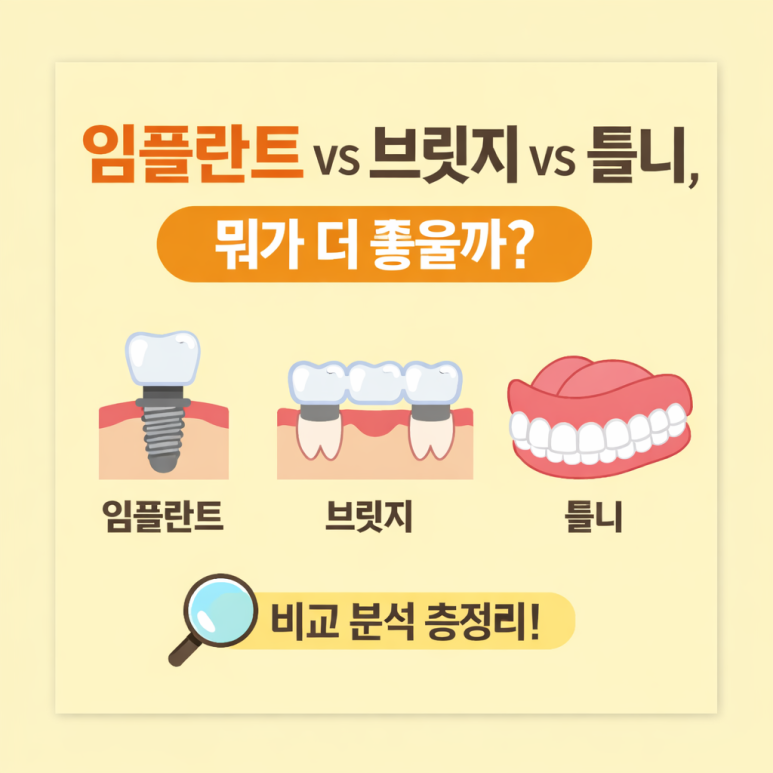
Losing even one tooth brings along more concerns than you might expect. It is not simply a matter of “just one tooth is missing,” but a situation where the choice of treatment can affect cost, comfort, and long-term oral health.
In fact, many people wonder which is better among implants, bridges, and dentures.
Each treatment clearly has its own advantages and limitations, so rather than saying that one is always better, it is important to choose based on your current dental condition and lifestyle.
Today, at S Leader Dental Hospital in Gwangjin-gu, we will compare these three treatment methods and take a closer look at the criteria for making the right choice.
 Teeth change faster than you might think when left untreated.
Sometimes people think it is okay to leave a missing tooth alone if it is just one. But because teeth work together to maintain balance, once one space opens up, the effects gradually spread to the surrounding area.
The first change that appears is the slow shifting of nearby teeth into the empty space. The adjacent tooth may tilt, or the opposing tooth may descend, causing the bite to become misaligned. When this happens, it is not just a matter of appearance; chewing function itself becomes less efficient.
In addition, the gums and alveolar bone (the bone that supports the teeth) gradually decrease as well. This is because the bone that was maintained by stimulation from the tooth begins to be resorbed once that stimulation is gone. If a lot of bone has been lost over time, additional treatment such as bone grafting may be needed later even if you want an implant.
As such, tooth loss is not simply a missing tooth, but a problem that affects the entire oral structure, which is why it is very important to proceed with replacement treatment at the right time.
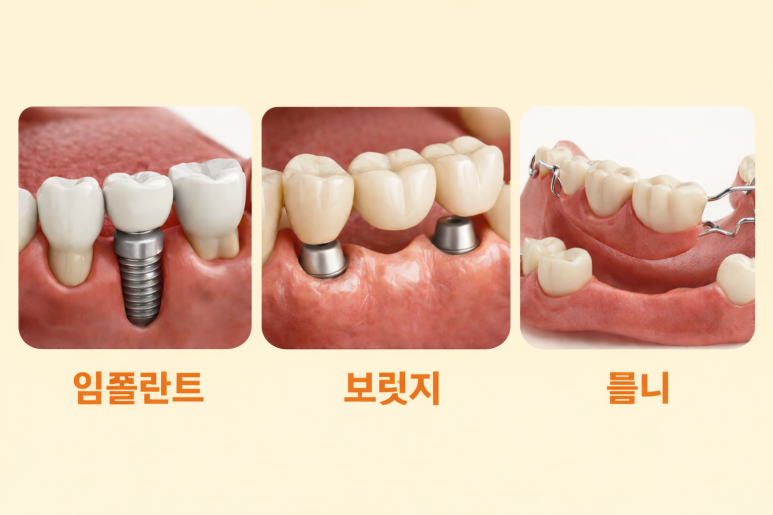 A quick comparison of implants, bridges, and dentures
The three representative ways to replace teeth are as follows.
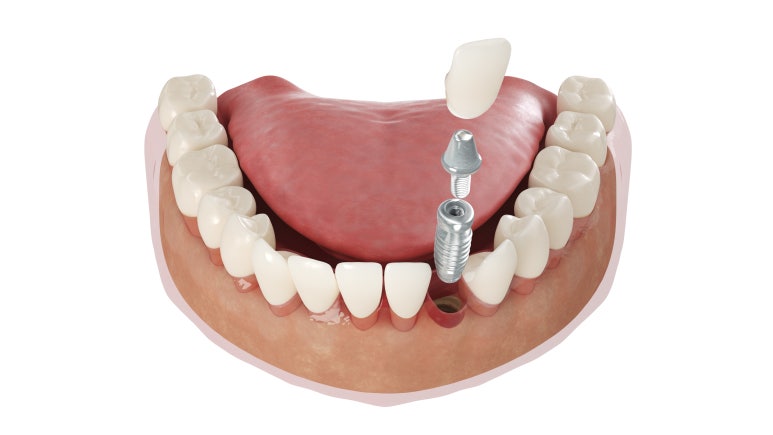
First, an implant involves placing an artificial tooth root into the jawbone at the site where the tooth is missing, and then attaching a prosthetic crown on top.
Because its structure is the closest to a natural tooth, it offers excellent chewing ability and a comfortable feel, and its biggest advantage is that it does not affect the surrounding teeth. In addition, if well maintained, it can be used stably for a long time. However,
you should keep in mind that surgery is required, and the treatment period and cost burden are relatively high.
| Category | Implant | Bridge | Denture |
|---|
| Treatment method | Place an artificial tooth root in the jawbone, then attach a prosthetic crown | Remove the teeth on both sides and make a connected prosthetic restoration | A removable prosthesis placed on top of the gums |
| Effect on surrounding teeth | None (natural teeth preserved) | Yes (teeth on both sides must be removed) | None |
| Chewing force | Similar to natural teeth (strong) | Relatively good | Relatively weak |
| Comfort | Almost no foreign-body sensation | Fairly natural | Foreign-body sensation may be present |
| Fixation | Very excellent (fixed type) | Fixed type | Removable (may move) |
| Treatment period | Relatively long (including surgery) | Shorter | Relatively quick |
| Surgery required | Yes | No | No |
| Cost | On the higher side | Moderate | On the lower side |
| Lifespan | Can be used for more than 10 years with proper care | About 7-10 years | Average 5-7 years (adjustments needed) |
| Recommended for | Loss of 1-2 teeth, when long-term use is desired | When the surrounding teeth have already been treated | Multiple missing teeth, when surgery is difficult |
A bridge uses the teeth on both sides of the missing tooth as supports and places a connected prosthetic restoration over them. The treatment period is relatively
short, and because no surgery is required, it is less burdensome. However, the biggest drawback is that healthy adjacent teeth must be reduced, and over time, burden can be placed on the supporting teeth.
Dentures are removable prostheses used when several teeth are missing or when all teeth have been lost. They have the advantage of being relatively affordable and able to address a wide area of missing teeth at once. However, because they can move in the mouth, a foreign-body sensation may be felt, and chewing force tends to be weaker than with natural teeth or implants. They also require consistent care and an adjustment period.
Because these three treatments each have clear characteristics, it is important to approach the decision not as “which is better?” but as “which is more suitable for the situation?”
 What changes depending on the situation when choosing a treatment?
In actual clinical practice, the treatment direction changes completely depending on the patient’s condition. Even for the same tooth loss, the recommended method differs according to the number of missing teeth, their location, and the condition of the gums.
If only one tooth is missing, an implant is generally considered first. This is because it can restore function most similarly to a natural tooth without affecting the surrounding teeth. In particular, if the teeth on both sides are healthy,
an implant may be a more conservative choice than removing healthy teeth for a bridge.
On the other hand, if the teeth on both sides already need treatment or have crowns on them, a bridge can also be an option. In this case, using the existing teeth may actually be more efficient. However, the long-term burden must also be considered.
If several teeth are missing in a row or all teeth are missing, dentures or implant-supported dentures are considered.
Especially for older patients or those who are concerned about surgery, dentures can be a realistic alternative. On the other hand,
if greater fixation is desired or chewing function needs to be strengthened, implants can be placed in part to stably support the dentures.
The condition of the jawbone is also an important variable. If there is not enough bone, bone grafting may be needed before implant placement, and the patient’s overall health condition and lifestyle habits also affect the treatment plan.
Ultimately, the most important thing is not a simple comparison, but making a treatment choice after accurately diagnosing the current oral condition.
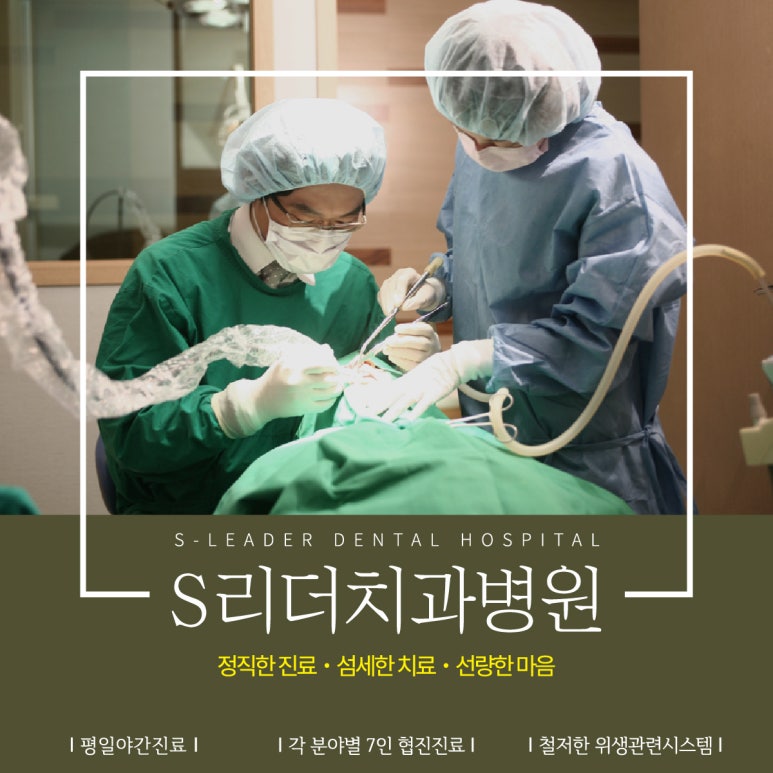
What are the key criteria for choosing between implants, bridges, and dentures, as explained by S Leader Dental Hospital in Gwangjin-gu?
Implants, bridges, and dentures each have clear advantages, but there is no single answer that applies equally to everyone.
The important thing is a personalized choice that considers your tooth condition, gum condition, and the expected period of use.
Even if the situation looks similar on the surface, the treatment direction can actually differ depending on the amount of alveolar bone, the bite condition, and the health of the surrounding teeth. Therefore, rather than deciding based on simple information, it is necessary to establish a plan based on an accurate diagnosis.
Because teeth are structures that cannot be reversed once damaged, the initial choice is very important. Carefully comparing the options and choosing the direction that is most advantageous for you in the long term is ultimately the way to improve satisfaction.
At S Leader Dental Hospital in Gwangjin-gu, we carefully analyze each patient’s oral condition and suggest the most suitable treatment direction among implants, bridges, and dentures.
Rather than recommending only one treatment, we explain a variety of options in detail and help patients understand and make their own decision, so if you are 고민하고 계신다면 치아 상실로 상담을 받아보시길 바랍니다.
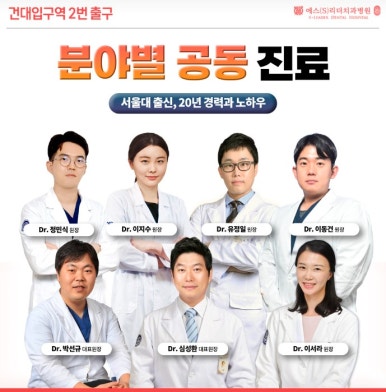

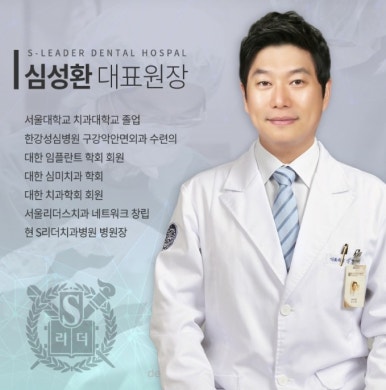
 Gwangjin-gu Implant :: S Leader Dental Hospital