Hello, this is S Leader Dental Hospital, a Dongdaemun-gu dental clinic that is celebrating its 22nd anniversary this year.
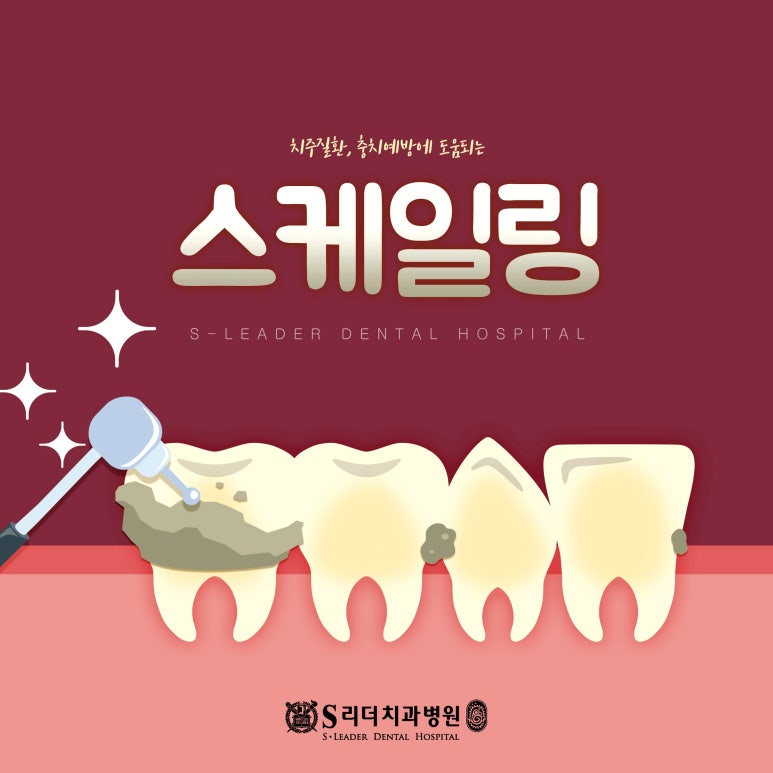
Many people who visit the dental clinic often ask, “If I keep getting scaling regularly, do I not need gum treatment separately?”
In fact, there are quite a few cases where people think of scaling and gum treatment as the same thing, or mistakenly believe that scaling alone can solve all gum problems.
However, even though these two treatments may look similar on the surface, they differ in their purpose, scope, and the timing at which they are needed. In particular, gum disease often has few symptoms in the early stages, making it easy to dismiss as a minor issue, but if the timing is missed,
the scope of treatment can expand quickly.
Therefore, it is most important to accurately distinguish whether your current gum condition is simply at the care stage or whether it has reached the stage where treatment is needed.
Today, at S Leader Dental Hospital in Dongdaemun-gu, we will take a detailed look at the differences between scaling and gum treatment, when each is needed, and what changes can occur if they are left untreated, in a way that is easy for patients to understand.
Scaling, the most basic "prevention-focused treatment."
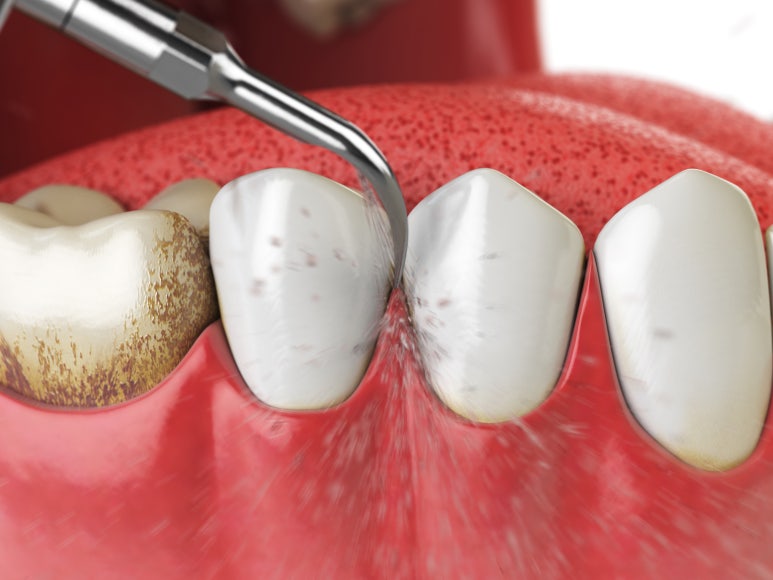
Scaling is the most basic dental treatment for removing tartar and plaque attached to the tooth surface. No matter how carefully we brush our teeth,
as time passes, invisible bacterial film builds up, and as it hardens, it turns into tartar.
This tartar is not just dirt; because it is a major cause of gum inflammation, it is important to have it removed regularly.
In particular, scaling is covered by health insurance and can be received once a year at a relatively low cost, so it can be seen as the starting point of preventive care.
Through scaling, gum inflammation can be prevented and early-stage problems can be stopped from progressing further. It also has the effect of improving bad breath, helping to reduce discomfort in daily life.
However, the important point here is that scaling is, at its core, a stage for managing "problems visible on the surface." If inflammation has already progressed deep into the gums, scaling alone may not be sufficient.
Gum treatment, a treatment that "fundamentally resolves" inflammation that has already progressed.
Gum treatment is a step beyond scaling, and it is the process of reaching deep into the gums rather than just the tooth surface to remove the cause of inflammation. One representative treatment is root planing, which removes
tartar and bacteria attached around the tooth roots, helping the gums recover to a healthy state.
Gum disease does not end with simply swollen gums; it can also affect the bone that supports the teeth (alveolar bone),
so early treatment is very important.
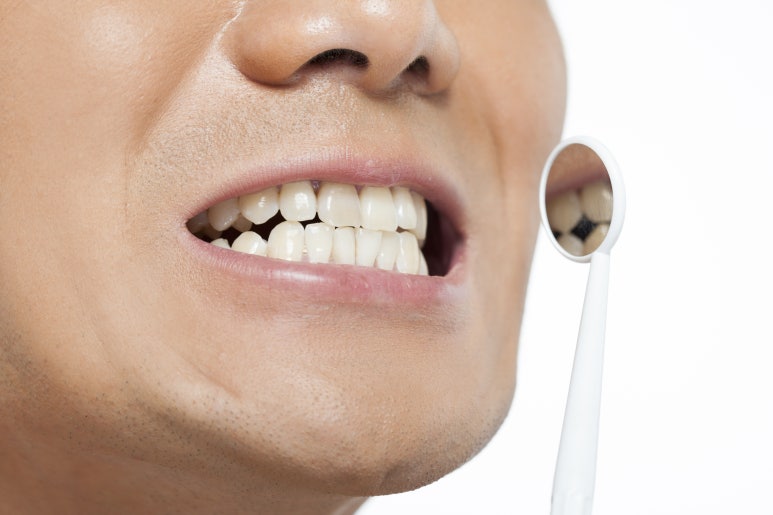
If your gums bleed frequently when brushing, if your gums are swollen and painful when pressed, or if bad breath persists, there is a high possibility that the condition is at a stage where gum treatment is needed rather than simple scaling.
Depending on the condition, gum treatment may be carried out over multiple visits, and because the treatment area is wider, it is a treatment that requires more active management. Its goal is not simply to reduce symptoms, but to prevent further worsening.
Scaling vs. gum treatment: here is how to tell them apart
The difference between the two treatments is more clear than you might think.
Scaling is a treatment that removes tartar from the outside of the teeth to prevent gum disease, while gum treatment is a treatment that removes inflammation that has already progressed deep inside the gums.
Also, scaling is often completed in one relatively short session, but gum treatment is carried out over multiple sessions depending on the condition, and the treatment scope is deeper.
The most important difference is the "timing of treatment." Scaling is a stage of care before a problem occurs, while gum treatment is a stage for resolving a problem after it has already occurred.
Understanding this difference alone can be a great help in determining what treatment you currently need.

What is your condition like? When scaling is enough and when gum treatment is needed
Cases where scaling alone is sufficient are those where tartar has simply accumulated, or the early stage where there is little gum bleeding and the inflammation is not severe.
In such cases, regular scaling and proper brushing habits alone can be enough to manage the condition.
On the other hand, gum treatment is needed when your gums bleed frequently during brushing, when the gums are swollen and painful, or when bad breath persists.
Also, if your teeth feel slightly loose, there is a high chance that gum disease has already progressed to some extent.
In particular, many people think, “It bleeds sometimes, but it should be fine,” and move on, but these small signals often add up and the gum condition worsens over time.
Therefore, even if the symptoms seem minor, it is important to get an accurate diagnosis if they keep recurring.
What happens if treatment is delayed? It progresses faster than you might think.
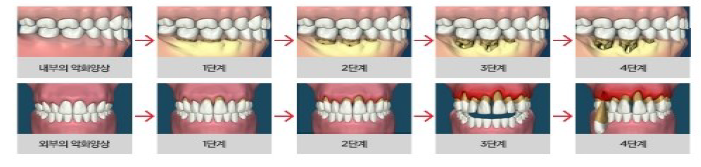
Gum disease is a condition that tends to progress gradually rather than improve on its own. It starts with simple gum inflammation in the early stages, but if left untreated, the bone that supports the teeth gradually decreases.
If this process continues, the teeth begin to loosen, and it can eventually lead to a situation where extraction becomes necessary. In addition,
if a large amount of alveolar bone has been damaged, implant treatment may also become difficult later on.
In particular, gum disease is easy to neglect because it often does not cause much pain, so rather than feeling reassured because there are no symptoms, it is important to check your condition through regular examinations.
In the end, delaying treatment does not simply mean delaying time; it can lead to a larger treatment scope.
Treatment after care is the real treatment.
Receiving scaling or gum treatment does not mean the process is fully over. If proper care is not maintained afterward, the same problem is likely to recur.
It is important to practice proper brushing techniques and use auxiliary hygiene tools such as dental floss or a water flosser together. In particular, the spaces between teeth and the gumline are areas that are difficult to care for with a regular toothbrush alone, so even more attention is needed.
It is also necessary to continuously check the condition of the gums through regular examinations. In the end, the treatment outcome is affected more by "care habits" than by the procedure itself.

Dongdaemun-gu dental clinic, S Leader Dental Hospital
Accurate treatment that matches the gum condition is important.
Scaling and gum treatment are not simply similar treatments; they are different stages of treatment that should be selected according to the current gum condition. If scaling is the start of prevention and management, gum treatment is most accurately understood as the process of correcting an already progressing problem.
What matters is accurately understanding your condition and receiving the right treatment at the right time. Even minor symptoms can be resolved simply if managed early, but if they are missed, the scope of treatment and the burden can only continue to grow.
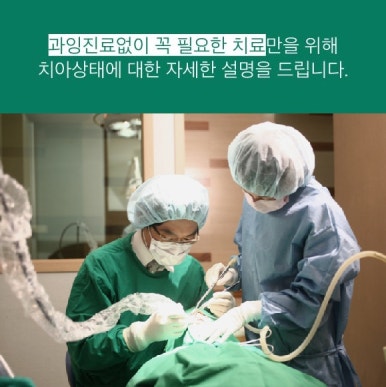
At Dongdaemun-gu dental clinic, S Leader Dental Hospital, we do not carry out treatment based only on visible symptoms. Instead, we comprehensively diagnose the gum condition and the tissues around the teeth, and guide patients only toward the treatments they truly need. Without overtreatment, we provide customized care that matches the current condition, helping patients maintain healthy teeth over the long term.
Since gum health takes a long time to recover once it breaks down, the care you provide now is very important. Even before you feel discomfort, please check your current condition through regular examinations, and if necessary, start appropriate treatment. Small differences in care ultimately create the biggest difference in keeping your teeth for a long time.




Dongdaemun-gu Dental Clinic :: S Leader Dental Hospital