Hello, we are S Leader Dental Hospital, a Songjeong-dong dental clinic marking its 22nd anniversary this year.
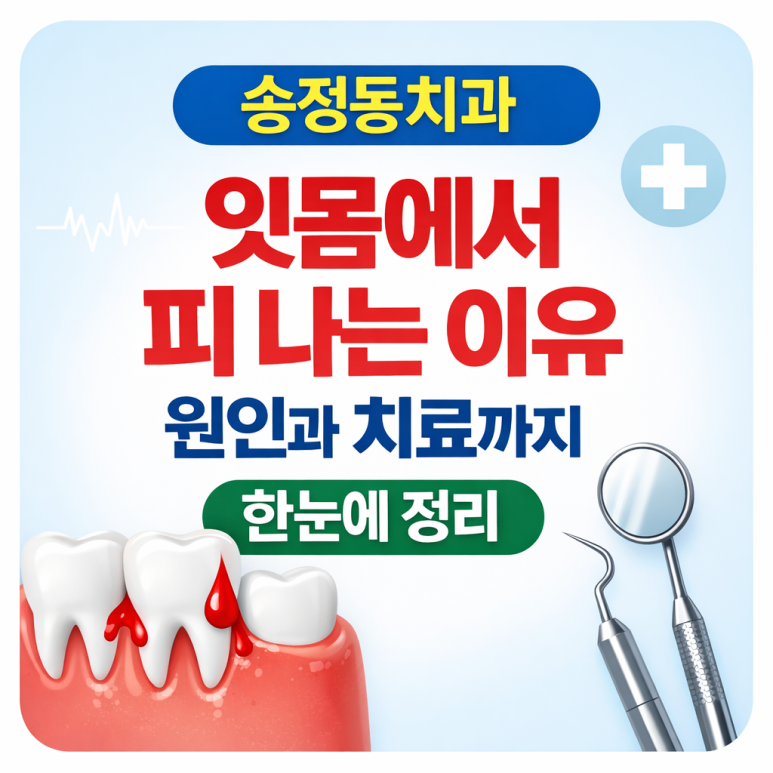
Have you ever looked in the mirror while brushing your teeth and noticed a little blood mixed in with the foam?
At first, it is easy to dismiss as a minor symptom, thinking, “Did I brush too hard?” In fact, in the clinic, many people casually say, “I bleed a little sometimes, but it’s okay, right?”
However, bleeding from the gums is not simply a minor issue; it can be a signal your body is sending. Even if there is no pain, assuming it is fine and leaving it untreated can make the gum condition gradually worsen, so caution is needed.
Today, at Songjeong-dong dental clinic S Leader Dental Hospital, we’ll take a look in an easy-to-understand way from the patient’s perspective at why gums bleed, what symptoms may appear along with it, and how it should be managed and treated.
What are the main causes of gum bleeding?
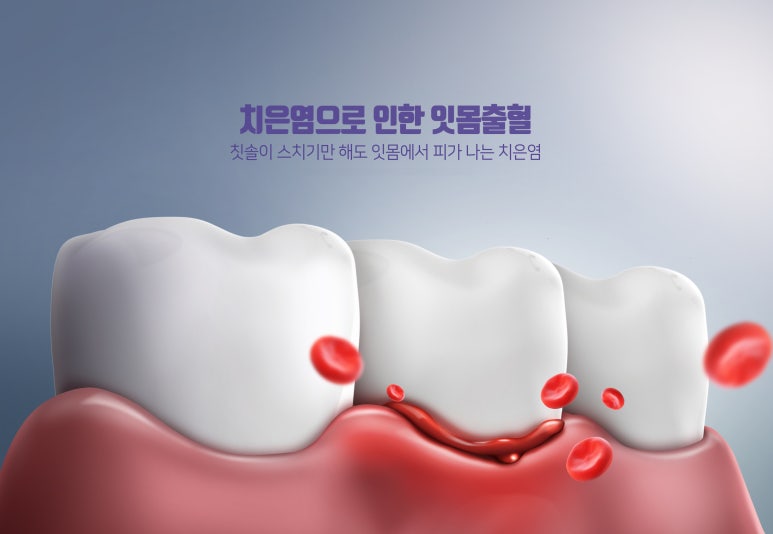
The most common cause of gum bleeding is plaque and tartar that build up on the tooth surface. If brushing is not done properly, food debris and bacteria remain, and as they accumulate, they cause inflammation in the gums. In this state, the gums become sensitive and bleed easily even with minor irritation.
In the early stage, this appears as gingivitis, where the gums swell and bleed, but it can usually recover with relatively simple treatment. However, if left untreated, the inflammation progresses deeper into the gums and develops into periodontitis. From this point on, not only the gums but also the bone that supports the teeth is affected.
Improper brushing habits are also an important cause. A habit of scrubbing too hard can directly damage the gums, while brushing carelessly leaves bacteria behind and triggers inflammation. In other words, brushing correctly is far more important than brushing hard.
In addition, stress, accumulated fatigue, lowered immunity, and hormonal changes can also affect gum health. In particular, if you notice that your gums swell more easily or bleed more when your body is tired, these systemic factors may also be at work.

What symptoms appear when gums bleed?
Bleeding gums are not a simple symptom; they often mean that something is wrong with the gums and other changes are also appearing. The most typical symptom is bleeding while brushing, and along with this, the gums may become red and swollen.
Bad breath may also become worse than usual, which can be a sign caused by inflammation and bacteria building up inside the gums. If these symptoms continue, it is better to view them not as a simple bad breath issue but as a problem related to gum health.
If the condition progresses further, the gums may gradually recede, making the teeth look longer, and you may become more sensitive to cold foods. In severe cases, the teeth may even feel slightly loose, and at this stage the gum disease is likely already significantly advanced.
So rather than thinking, “It’s probably okay because it only seems to be bleeding,” it is important to check for other symptoms as well.
Gum bleeding: how should it be treated? (Treatment methods)
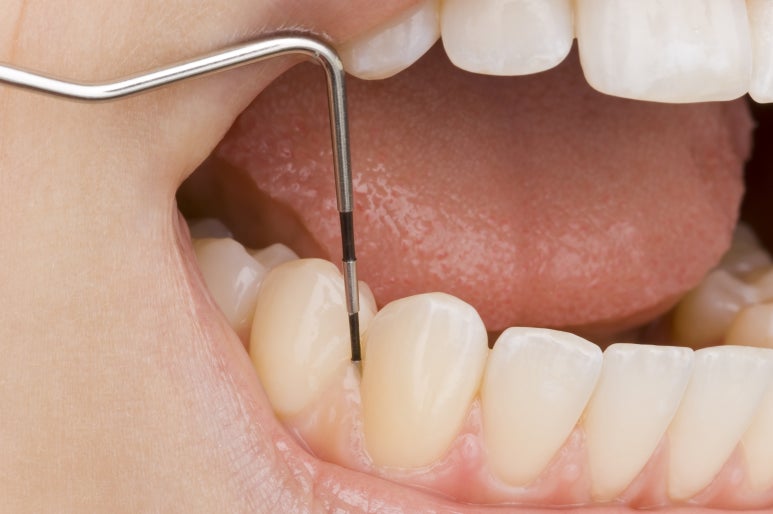
When gums bleed, the first thing to do is accurately check the current condition. Even if things look similar on the surface, the treatment method differs depending on whether it is simple gingivitis or periodontitis that has progressed further.
In the early stage, scaling alone often leads to enough improvement. Simply removing the tartar and bacteria attached to the tooth surface often reduces gum inflammation and naturally stops the bleeding.
However, if the inflammation has progressed deeper, periodontal treatment that reaches inside the gums may be necessary. This is a process of removing bacteria and inflammation from areas that are not visible, and it is an essential treatment for stabilizing gum health.
The important thing is not to “just endure it because it’s bleeding,” but to find out why it is bleeding and receive treatment suited to the cause. If treated early, it may end simply, but if left untreated, the treatment process can become longer, so please keep this in mind.
Gum care methods (care you can do at home)
Just as important as treatment is daily care. Gum disease is closely linked to lifestyle habits, so if daily care is not done properly, it is likely to recur.
First, it is necessary to check your brushing method. Rather than using a toothbrush too hard, it is important to gently and thoroughly clean between the gums and teeth. In particular, the gumline is an area where bacteria easily build up, so extra attention is needed.
Using dental floss or interdental brushes is also very important. It is difficult to completely remove food debris and bacteria between teeth with a toothbrush alone, so using these auxiliary tools together greatly helps maintain gum health.
It is also a good habit to visit the dentist regularly for checkups and scaling. Since early problems that are not visible can be found and managed in advance, this helps keep teeth and gums healthy over the long term.
What gum bleeding means and why management matters at S Leader Dental in Songjeong-dong
Bleeding gums are common, but they are an important signal that should never be taken lightly. Many people leave it untreated because the pain is not severe, but gum disease can progress quietly and then suddenly worsen significantly.
In particular, in the early stage, simple scaling or care may be enough for recovery, but if the timing is missed, gum treatment may not be enough and it can even lead to losing teeth, so early diagnosis and management are more important than anything else.
At Songjeong-dong dental clinic, S Leader Dental, treatment is carried out not by looking at symptoms alone, but based on precise diagnosis that accurately identifies the condition and cause of the gums. Considering each patient’s different oral condition, we guide only the necessary treatment and prioritize preserving natural teeth as much as possible without overtreatment.
We also place importance on providing sufficient explanation about the treatment process and creating an environment where patients can understand and feel at ease. Because we carefully guide proper care methods even after treatment, it is not simply treatment that ends the process—you can continue managing your long-term oral health as well.
If bleeding gums keep recurring, we recommend checking your condition before it gets any later. Not missing even a small symptom now can be the most important first step in protecting your dental health in the future.
Songjeong-dong dental clinic, S Leader Dental Hospital, values each patient’s gums and teeth, and we will always do our best to help you maintain a healthier oral condition.




Songjeong-dong Dental Clinic :: S Leader Dental Hospital