Hello, this is S Leader Dental Hospital, a Muk-dong dental clinic celebrating its 22nd anniversary this year.
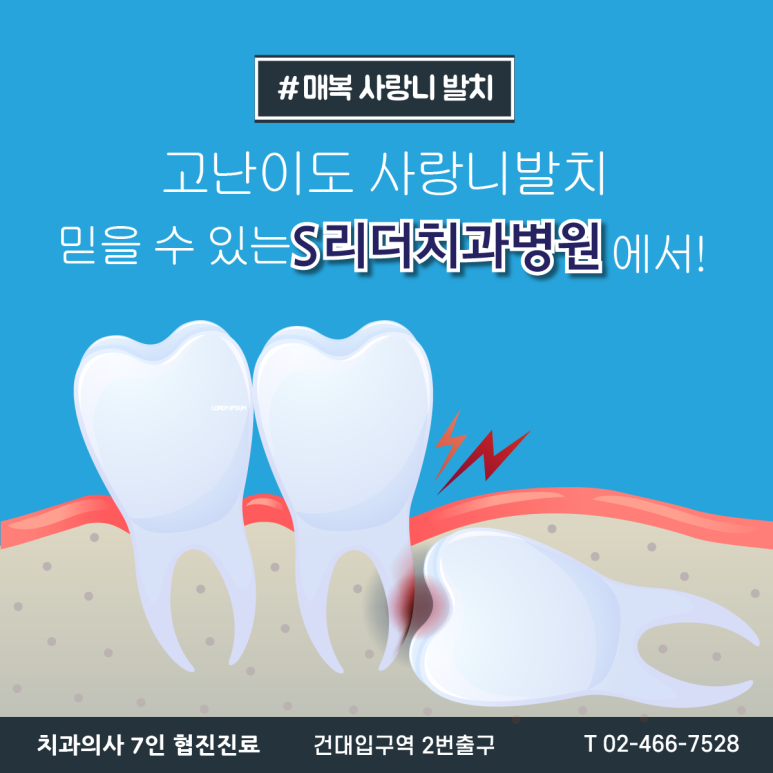
One of the most common questions from patients visiting the dental clinic because of wisdom teeth is, “Do wisdom teeth really need to be removed?” Many people have heard that wisdom teeth must always be extracted, while others have been told that if there is no pain, there is no need to touch them, which often leaves them confused.
In the actual treatment room, patients often say things like, “It doesn’t hurt now, but will it cause problems later?” or “Won’t I end up suffering more if I remove it for no reason?”
These concerns are very natural, something almost everyone has thought about at least once.
So today, at Muk-dong dental clinic, S Leader Dental Hospital, we will explain in a way that is easier to understand the criteria for when wisdom teeth must be extracted and when they do not need to be.

Why do wisdom teeth cause problems?
In simple terms, wisdom teeth are the “last molars that come in late.” They usually emerge in the late teens to early 20s, but by then jawbone growth is mostly complete, so there is often not much room left.
As a result, wisdom teeth often do not come in straight like other teeth. Instead, it is common for them to
✔ tilt sideways,
✔ grow horizontally,
✔ stop after only partially emerging through the gum,
✔ or remain completely buried under the gums (impacted).
Because they often erupt in this “not properly positioned” state, they are difficult to clean with a toothbrush and are more likely to develop problems such as inflammation, pain, and cavities.
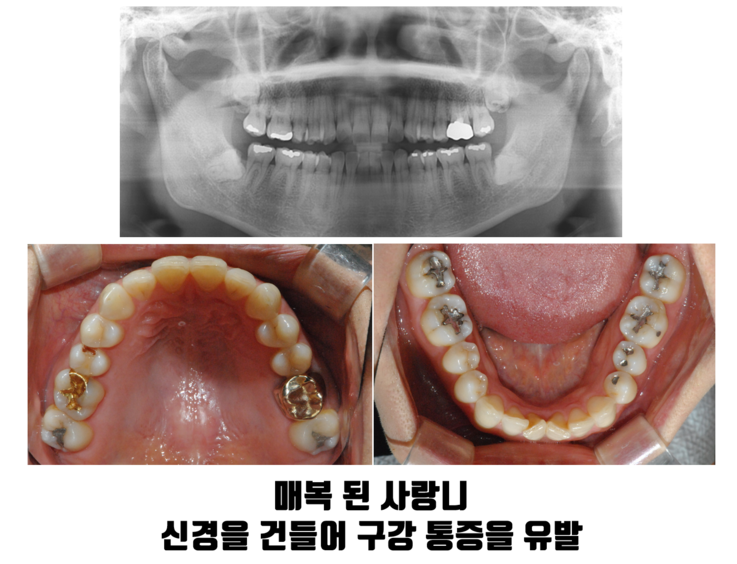
Cases where wisdom teeth definitely need to be removed
There are fairly clear criteria for situations in which wisdom tooth extraction is needed. They are not removed simply because they exist; extraction is considered when they are currently causing problems or are highly likely to cause problems in the future.
The most typical case is an impacted wisdom tooth lying sideways. In this case, the wisdom tooth can push against the molar in front of it and cause pain, and food can easily get trapped between the two teeth, increasing the risk of cavities. In particular, because decay often progresses in areas that are hard to see, it may be discovered late. For that reason, even when there is no pain, extraction is often considered.
Also, wisdom teeth that are only partially erupted through the gums require caution. They may not look like a major problem on the surface, but in reality they create an environment where food gets trapped easily and bacteria can thrive. As a result, the gums may swell and hurt repeatedly before the symptoms settle down, and if this continues, it is likely that inflammation is recurring.
If pain occurs repeatedly, that is also an important factor in deciding treatment. At first, it may feel like simple fatigue or a temporary symptom, but if swelling and pain keep coming back in the same area, it may be a sign that there is a problem in the tissues around the wisdom tooth. If this is left untreated, the inflammation can worsen, so it is important to address the cause early.
If a cavity develops in the wisdom tooth itself, extraction is also considered. Because wisdom teeth are hard to care for due to their location, even if a cavity is treated, there is a relatively high chance it will recur. Therefore, from a long-term perspective, removing the tooth to solve the problem may be the better choice.
Lastly, extraction is considered when the wisdom tooth affects the surrounding teeth. If the wisdom tooth continuously pushes against the tooth in front, the alignment may become disrupted, and especially after orthodontic treatment, the teeth may shift again. These factors are also taken into account when deciding whether to extract.
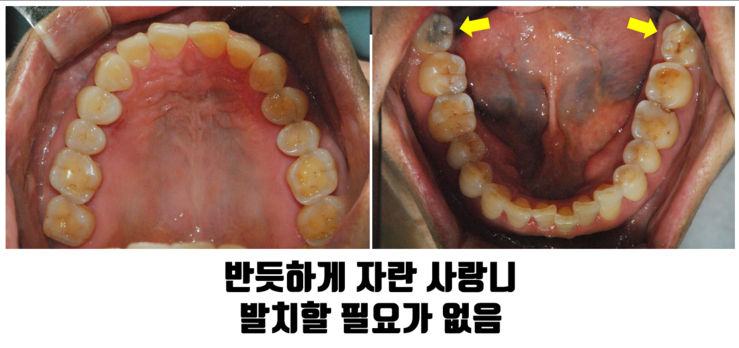
Cases where wisdom teeth do not necessarily need to be removed
Not all wisdom teeth cause problems, so they are not teeth that must always be extracted. If the condition is fine, keeping them as they are can be perfectly possible.
First, if the wisdom tooth is coming in straight and properly, there is no need to remove it.
If the upper and lower teeth bite together well and there is no functional problem, it can be used like a normal molar, so as long as regular care is maintained, keeping it is not a major issue.
Also, if it has remained stable for a long time without pain or inflammation, there is no need to force extraction. However, because wisdom teeth can change over time, it is important to keep checking them through regular examinations.
And if the wisdom tooth is in a position where brushing is easy, it is another case where extraction is not necessarily needed.
If food does not get trapped easily and hygiene is easy to maintain, the likelihood of cavities or inflammation is low.
In addition, if the wisdom tooth is not affecting the surrounding teeth and is maintaining a stable, independent condition, leaving it in place and using it can be a very good option.
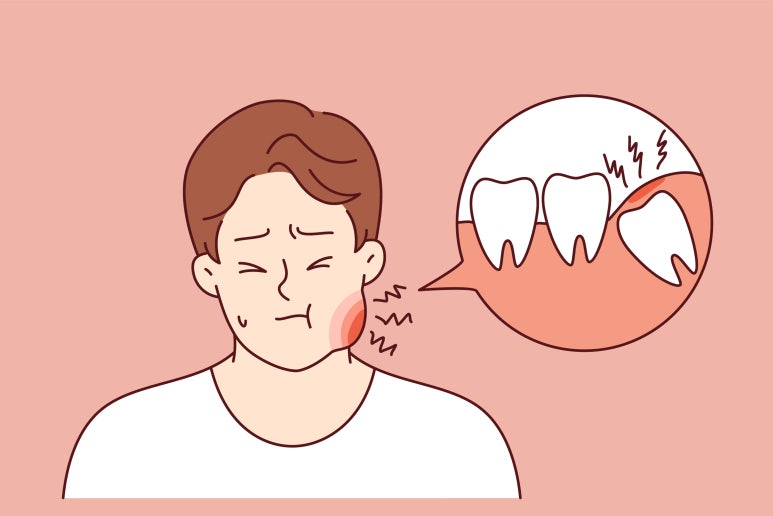
The part that confuses patients the most
One of the questions patients ask most often is, “It’s fine now, but could problems arise later?”
This is not something that can be answered in a single, definite way, but especially in the case of impacted wisdom teeth, the likelihood of problems developing over time is relatively high, so it is important to regularly check their condition.
Also, if orthodontic treatment is planned, wisdom tooth extraction may be considered in advance to secure space for the teeth to move.
And just because there are several wisdom teeth does not mean all of them must be removed. After checking the condition of each tooth, extraction is performed selectively, focusing on the wisdom teeth that are more likely to cause problems.
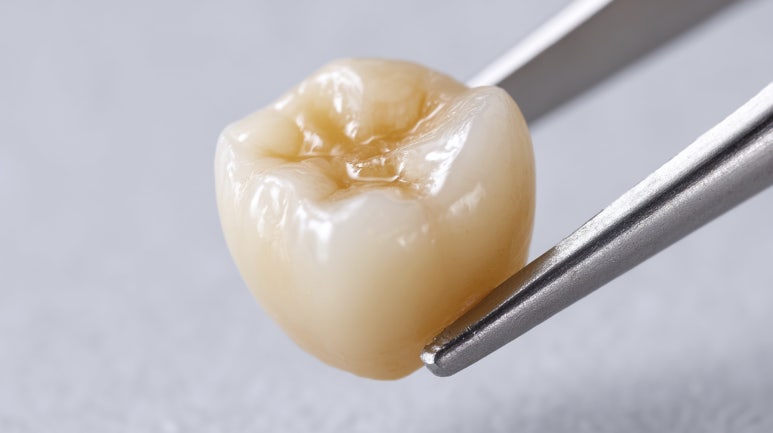
What is the most important criterion for wisdom tooth extraction?
In the end, the most important criterion for deciding whether to extract a wisdom tooth is these two points: “Is it currently causing problems, or is it highly likely to cause problems in the future?”
A wisdom tooth does not need to be removed simply because it exists, and conversely, just because it does not hurt right now does not mean it is completely safe to ignore.
A part that patients often miss is “cases where it is fine now but structurally likely to become a problem.”
For example,
✔ if the wisdom tooth is buried under the gums, or
✔ if it is tilted at an angle,
then even if there is no pain right now, over time it is likely to lead to inflammation, cavities, or damage to the tooth in front.
Therefore, in such cases, it is important not only to look at whether it is “fine now,” but also to consider the risks that may arise in the future.
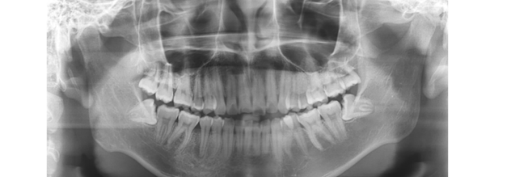
Also, the position and direction of the wisdom tooth, its distance from nearby teeth, and its relationship to the nerves cannot be accurately determined by appearance alone, so it is necessary to confirm the internal structure with an X-ray. Through this, it is possible to determine more precisely whether extraction is needed or whether it is a condition that can be observed a little longer.
The patient’s age and overall health can also be important criteria. In general, younger patients tend to have more flexible bone and faster recovery, so healing after extraction is relatively easier. On the other hand, as people get older, the bone becomes harder and the recovery period may become longer, so if a wisdom tooth is likely to need extraction in the future, planning it while the condition is still relatively good can be helpful.
In the end, wisdom tooth extraction is not decided simply by whether it hurts or does not hurt right now. It must be decided by comprehensively considering the current condition, the likelihood of future changes, and the patient’s overall oral health. Therefore, making the right decision based on an accurate diagnosis is the most important thing.
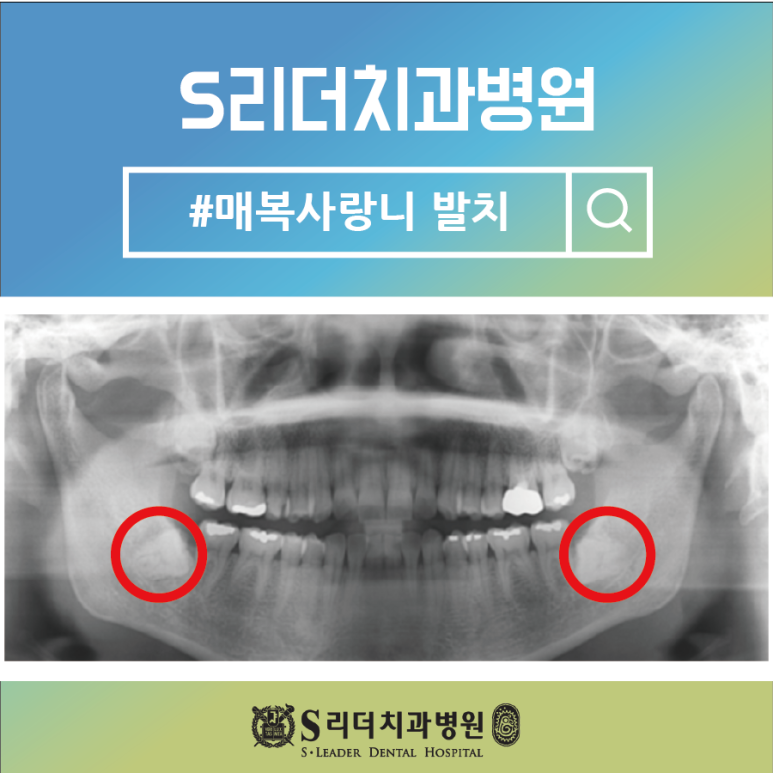
Muk-dong dental clinic, S Leader Dental Hospital only provides treatment for wisdom teeth when it is truly necessary.
There are more factors to consider than simply, “Remove it if it hurts, leave it if it doesn’t.” Even with the same wisdom tooth, the treatment method or timing of extraction can differ depending on where it is located, which direction it is growing, and how it relates to nearby teeth. That is why, rather than making a blanket decision, it is most important to accurately check each individual condition and make a personalized judgment.
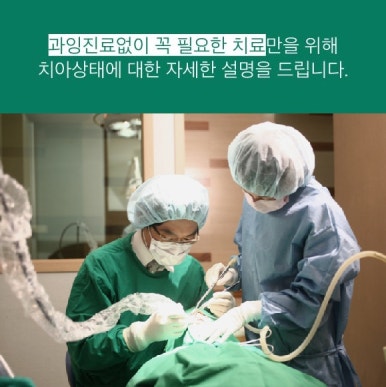
At Muk-dong dental clinic, S Leader Dental Hospital, we do not simply recommend extraction. We fully consider the patient’s current condition and the likelihood of future changes, and we guide treatment only when it is truly necessary. In particular, even for impacted wisdom teeth or cases where extraction is more difficult, we provide detailed explanations through sufficient consultation and precise examinations so that the patient can understand before proceeding with treatment.
Also, to reduce the vague fear surrounding the extraction process, treatment is carried out in a way that minimizes pain and discomfort, and we carefully explain how to manage the area after extraction as well. Many people worry more about “how much it will hurt” than about the extraction itself, and we consider it important to care for those concerns in detail as well.
Simply checking the condition of a wisdom tooth in advance can often help prevent unnecessary pain or major treatment. Even if you do not currently have any particular symptoms, we recommend having an accurate examination once to check the condition of your wisdom teeth.

 Muk-dong dental clinic :: S (S) Leader Dental Hospital