Hello, we are S Leader Dental Hospital, a Gwangjin-gu dental clinic celebrating its 22nd anniversary this year.
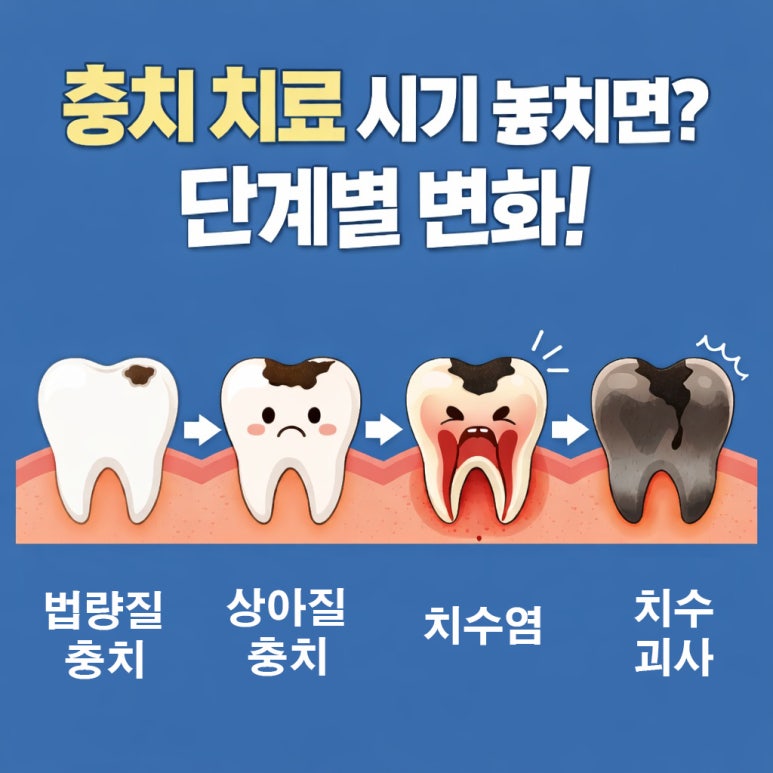
Many people tend to think, “I should get treatment when it hurts,” but in reality, cavities often progress quietly long before pain starts. The problem is that this process is not easy to see, and in the early stages there is usually no discomfort at all. That is why many people naturally miss the right time for treatment, thinking, “It’s only a little sensitive, so it should be fine,” or “I’m busy, I’ll go next time.”
However, cavities are not a condition that stops on its own; they keep progressing. Once they begin, they do not recover naturally and gradually get deeper, which can eventually lead to treatment that could have been simple becoming root canal treatment or even extraction. That is why cavities are a condition in which “how early they are found” has a major impact on treatment outcomes.
Today, at S Leader Dental Hospital in Gwangjin-gu, we will explain realistically how cavities progress by stage and why people often miss the timing.
 How cavities develop (Why do they progress quietly?)
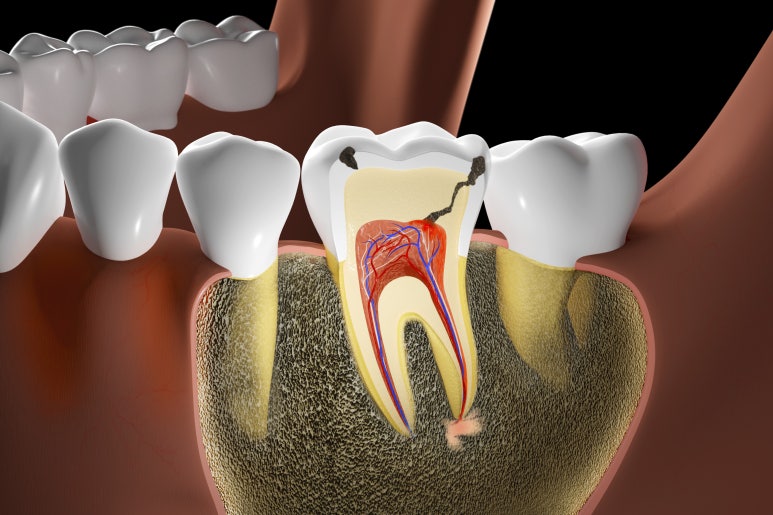
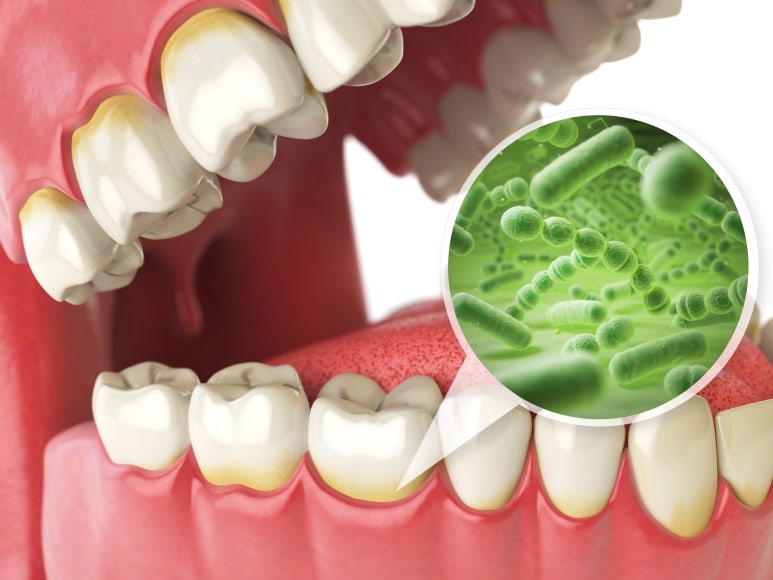
Cavities do not suddenly appear on a particular day; they progress slowly as oral bacteria and daily habits repeat over time. In particular, when sugar intake is frequent or brushing is insufficient, plaque accumulates on the tooth surface, activating bacteria and producing acid. This acid repeatedly attacks the teeth, starting with tiny demineralization and gradually weakening the tissue.
The problem is that this process progresses without pain. The outermost layer of the tooth has no nerves, so early damage is not felt at all, and symptoms only appear once the decay has gone deeper. That is why the belief that “if it doesn’t hurt, there is no cavity” is the most dangerous misconception.
Stage 1: Early cavity - "The stage that is more dangerous because you feel nothing"
Cavities usually begin on the outermost, visible surface of the tooth.
At this stage, there is almost no pain, so most people do not realize they have a cavity at all. Sometimes, when looking in the mirror, the tooth may appear slightly cloudy or show a very subtle color change, but since it does not cause major discomfort in daily life, it is easy to overlook.
So the biggest feature of this stage is the feeling that “nothing is wrong.”
The problem is that this is exactly why people most often miss the timing for treatment.
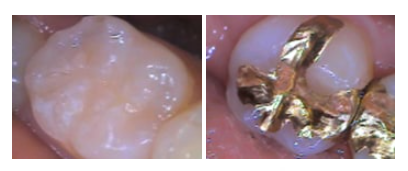
However, this is actually the easiest time to treat it. There is no need to remove much tooth structure, and simple resin treatment or consistent management alone can be enough to prevent the cavity from progressing further.
In fact, cavities at this stage are often discovered incidentally during routine checkups rather than because of pain.
Stage 2: Dentin cavity - "The stage when signals start to appear"
Once the cavity passes through the outer layer and progresses inward, the body begins to send small warning signs.
The most common symptom is sensitivity when eating cold or sweet foods. At first, it may pass quickly, but as it happens more often, you may begin to think, “My teeth seem a little more sensitive lately.”
Food may also frequently get stuck in a certain area, or your mouth may not feel refreshed even after brushing, leaving an unpleasant sense that something remains. At this stage, many people brush it off, thinking, “I’ve been a bit sensitive lately—maybe it’s just because I’m tired,” but in reality, it is often a sign that the cavity is progressing inward.
From this stage onward, simple observation is not enough, and treatment to remove the decayed area and restore it, such as resin treatment, is needed.
It is still relatively simple to treat, but because the decay has already progressed, it is important to know that delaying further may increase the extent of treatment required.
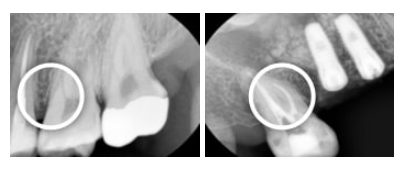
Stage 3: Near-pulp stage - "If it starts hurting, it is already late"
When a cavity progresses deep inside the tooth and close to the nerve, pain becomes clearly noticeable.
Beyond mild sensitivity, sharp or throbbing pain may appear intermittently, and in many cases the pain becomes worse at night.
At this point, most people realize, “This is not something I can just ignore…” and finally visit the dentist.
But the important thing is that by this stage, the cavity is already quite deep.
So treatment is no longer limited to simply removing the cavity; there is a high chance that root canal treatment will also be needed, and the treatment period can naturally become longer.
In fact, this is the stage where many patients hear, “If you had come a little earlier, it could have been finished with a simple treatment.”
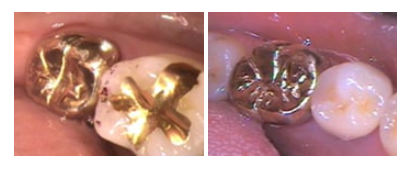
Stage 4: Pulpitis - "The stage where pain interferes with daily life"
When the cavity progresses further and invades the tooth pulp, it moves into a state of pulpitis.
At this stage, pain may be felt even while resting, and throbbing pain often continues even without chewing.
It is no longer just mild sensitivity or a sharp sensation, but pain that makes everyday life uncomfortable.
In particular, as time passes, the pain may repeat or become worse, and it often affects sleep as well.
At this stage, root canal treatment is usually necessary, and it is often not completed in a single visit but spread out over several sessions. Compared with when the cavity first appeared, the treatment process becomes longer, and the difficulty and burden clearly increase.
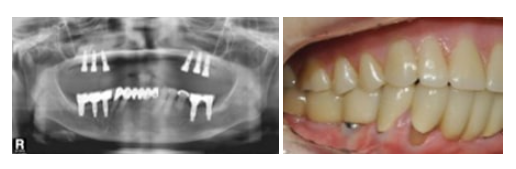
Stage 5: Apical inflammation - "The stage of worrying whether the tooth can be saved"
If pulpitis is left untreated, the tooth nerve eventually dies (necrosis), and the inflammation spreads to the tip of the tooth root.
At this stage, the gums may swell, pus may form, and severe pain may be felt when chewing.
If the condition progresses further, it can even lead to facial swelling.
By this point, it is no longer just a simple cavity problem; it is a condition in which inflammation affects the surrounding tissues as well.
At this stage, it may become difficult to save the tooth, and in some cases extraction may need to be considered.
If the tooth is removed, prosthetic treatment such as an implant or bridge will be needed afterward, so the scope and burden of treatment increase significantly.
In the end, you can understand this stage as having reached the last stage at which the natural tooth may still be preserved.

Why people miss the timing for cavity treatment
Cavities are sometimes delayed simply because people do not know about them, but in reality there are several common reasons. The first is that people do not feel the need for treatment because there is no pain. The second is that even if they feel sensitivity or discomfort, they assume it is temporary and ignore it. The third is that they delay treatment because they are busy or do not have time.
The problem is that all of these reasons eventually lead to “Let’s just wait a little longer.” But cavities do not wait,
so as time passes, the treatment area expands and the likelihood of needing more extensive treatment increases.

Gwangjin-gu dental clinic S Leader Dental Hospital
Cavity treatment changes when you miss the timing
Once a cavity starts progressing, it does not stop on its own, so missing the right time for treatment inevitably changes the outcome. A problem that could have been resolved with a simple treatment in the early stage can, over time, lead to root canal treatment and even extraction. In the end, the most important thing is “when it is discovered.”
Regular checkups are not just for checking the condition of the teeth; they are the most important way to find early cavities that are not visible to the eye. Solving a problem while it is still small is the simplest approach, the least costly, and above all, the best way to preserve your natural teeth for a long time.
At S Leader Dental Hospital, a Gwangjin-gu dental clinic, we do not view cavity treatment simply as a treatment process. We also consider early diagnosis and preventive care so that natural teeth can be preserved for as long as possible. Rather than waiting until pain appears, management before pain develops is the most important thing, so if you usually feel sensitivity or discomfort, or if you need a routine checkup, we recommend visiting without hesitation to accurately check your current condition.






Gwangjin-gu dental clinic :: S (Leader) Dental Hospital